
 Preview
 Send
Send Share
Share
 Details

 Download
 Similars
 X-Ray
X-Ray Diaporama
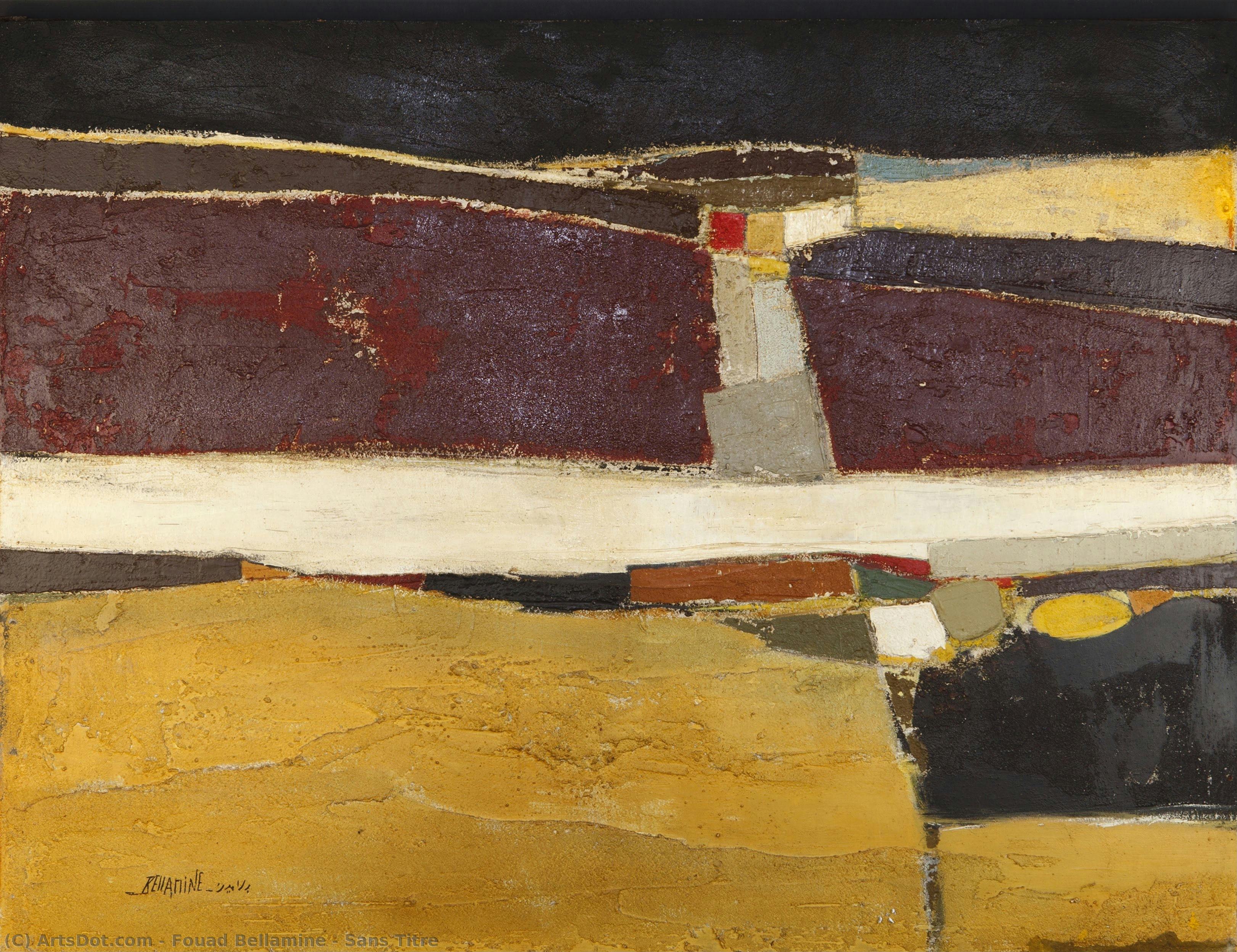
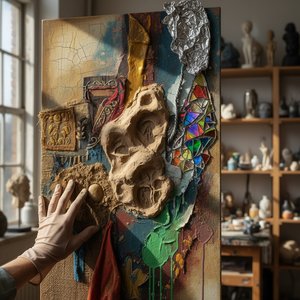
Sans Titre
 Mixed Media
- WallArt
- Contemporary Art
 Contemporary
 72.0 x 97.0 cm
 Barjeel Art Foundation
 Read More
Giclée / Art Print
Museum-quality giclée or canvas print with fast production and flexible finish options. ( Switch to hand made Painting Switch to Image)




































Pick from our preset sizes that match the artwork's original proportions.

You may enter your own dimensions to fit a specific frame or space. If your selected size does not match the original image's proportions, we will either crop the artwork or extend the image with a mirrored or solid-fill edge. A digital mockup will be sent for your approval before production begins.
Please note that the on-screen preview does not reflect the actual cropping or extension. Only the mockup will accurately show the final composition.
While custom sizes are available, we recommend selecting a dimension from the predefined list to preserve the original proportions.
Worldwide Delivery () in 2 weeks instead of standard 4/5 weeks. (11 August)

Free Worldwide Express Shipping

High-Quality Linen Canvas

Full Shipping Insurance

Customs Tax Refund Guarantee

True Color Matching Guarantee

60-Day Return Policy (Defects Only)

100% Money-Back Guarantee

Bulk Discount Offer
 Glass option is only available in size under 110 CM

Sans Titre
Giclée / Art Print
Reproduction Size
-


Total Price
$ 81
Artist Biography
Paul Klee: A Life Painted in Light and Shadow – 1940 and Beyond
The year 1940 marked a pivotal, yet tragically brief, chapter in the life and work of Paul Klee, a Swiss-born German artist whose singular vision continues to resonate across the decades. Born in Bern in 1879, Klee’s artistic journey was one of relentless experimentation, a joyous collision of influences ranging from Jugendstil and Expressionism to Cubism and Surrealism – all filtered through his uniquely perceptive and deeply personal lens. The shadow of war loomed large over Europe during this period, profoundly impacting the lives of artists and shaping their creative output. Klee’s own experiences in 1940, culminating in his untimely death in Zug, Switzerland, are inextricably linked to the turbulent events unfolding across the continent.
Early influences were diverse. Klee's father, a teacher of music theory, instilled in him a deep appreciation for harmony and structure, while his mother, a watercolorist, nurtured his early artistic inclinations. He initially studied at the School of Architecture in Munich but quickly gravitated towards art, enrolling at the Kunstakademie Düsseldorf under Anton von Bekker, where he honed his drawing skills. It was during this period that Klee began to explore Expressionistic techniques, characterized by bold colors and emotionally charged imagery. His early works, such as “The Angel” (1906), reveal a nascent talent for capturing fleeting moments of beauty and introspection.
A crucial turning point in Klee’s career arrived with his encounter with Wassily Kandinsky in Munich in 1912. Kandinsky, a pioneer of abstract art, profoundly influenced Klee's artistic development, encouraging him to move beyond representational forms and embrace the expressive potential of color and line. This collaboration led to a period of intense experimentation, marked by the creation of “Twittering Machine” (1924), a complex and mesmerizing work that exemplifies Klee’s fascination with automatism – a technique aimed at bypassing conscious control and allowing the subconscious to guide the creative process. The Bauhaus school in Germany further broadened his artistic horizons, exposing him to new ideas about design, typography, and the integration of art into everyday life. He taught there from 1928-1930.
The Shadow of War: 1940 and a Final Chapter
As Europe descended into war in 1939, Klee’s life became increasingly complicated. He was a German citizen by birth but had spent much of his adult life in Switzerland, seeking refuge from the rising tide of nationalism and antisemitism. In 1940, he accepted a teaching position at the Kunstakademie Düsseldorf, despite the precarious political situation. However, he was also battling illness – a persistent lung ailment exacerbated by exposure to coal dust during his time as a printmaker. The atmosphere in Germany grew increasingly oppressive, and Klee, along with other refugee artists, faced constant surveillance and restrictions.
It was during this period that Klee began working on “Ships in the Dark,” a series of enigmatic paintings depicting boats adrift at sea under a star-filled sky. These works are often interpreted as metaphors for human existence – fragile vessels navigating an uncertain world. The imagery is imbued with a sense of melancholy and vulnerability, reflecting the anxieties of the time. Alongside this series, he continued to explore his signature style, characterized by playful compositions, vibrant colors, and a distinctive use of line. He also produced numerous drawings and sketches, documenting his observations and experimenting with new techniques.
Tragically, Klee’s health deteriorated rapidly in the spring of 1940. On June 29th, he succumbed to pneumonia at the age of 60, leaving behind a vast and remarkably diverse body of work. His death was sudden and unexpected, cutting short a career that had been marked by relentless innovation and profound artistic vision.
A Legacy of Innovation
Despite his tragically brief life, Paul Klee’s influence on the art world is immeasurable. His pioneering use of color, line, and composition paved the way for many subsequent artists, including those associated with Abstract Expressionism and Pop Art. His exploration of automatism and his embrace of chance as a creative force challenged traditional notions of artistic control and opened up new possibilities for artistic expression.
Klee’s work is characterized by its inherent playfulness and emotional depth. His paintings, drawings, and prints are imbued with a sense of wonder and curiosity, inviting viewers to engage in a dialogue with the artist's subconscious mind. His legacy extends beyond his individual artworks; it resides in his unwavering commitment to experimentation, his willingness to embrace new ideas, and his profound belief in the transformative power of art.
His works are held by major museums worldwide, including the Tate in London, the MoMA in New York, and the Kunsthaus Zürich. Klee’s enduring appeal lies not only in the beauty of his creations but also in their ability to resonate with our deepest emotions and aspirations – a testament to the genius of an artist who dared to paint the world as he saw it.

fouad bellamine
1940 - , Morocco
Quick Facts
- Artistic Movement Or Style: Expressionism, Cubism, Surrealism
- Artists Or Movements Influenced By This Artist:
- Wassily Kandinsky
- Bauhaus
- Artists Who Influenced This Artist:
- Paul Cézanne
- Henri Matisse
- Date Of Birth: 1879-12-18
- Date Of Death: 1940-06-29
- Full Name: Paul Klee
- Nationality: Swiss, German
- Notable Artworks:
- Ships in the Dark
- Twittering Machine
- Place Of Birth: Bern, Switzerland
Related Articles

Crimson Threads of Narrative: Exploring Symbolism & Representation in Artworks Featuring the Red Dress
Explore the rich symbolism of the red dress in art history! From ancient power displays to iconic portraits like Cézanne’s 'Madame Cezanne', discover the cultural and artistic significance behind this captivating color. Expert analysis & insights.
Mixed Media Art for Hospitality: A Professional Guide to Texture, Layering, and High-Impact Interior Design
Elevate hospitality interiors with professional mixed media art. Our guide explores texture, layering, and durability for hotel designers and procurement managers seeking high-impact, custom-commissioned artworks that define luxury guest experiences.
Mark Rothko's Masterpieces: 25 Paintings That Define Abstract Expressionism | OriginalUniqueArt
Explore 25 iconic Mark Rothko paintings that define Abstract Expressionism. Discover the stories, colors & emotions behind these masterpieces. Find museum-quality art reproductions and curated decor ideas at OriginalUniqueArt.com.
Mixed Media Magic: How to Layer Texture and Street Style for High-Impact Art
Master the art of high-impact decor with our trend forecast on mixed media. Discover how to layer street style textures and dimensional elements to create a bold, urban aesthetic for your modern space. Elevate your collection with professional insights into contemporary art trends.
The Tactile Canvas: Exploring Texture as Subject, Materiality & Meaning in Art History
Explore the rich history of texture in art! Discover how artists from Van Gogh to contemporary masters use materiality & technique to create captivating tactile experiences. Deepen your art appreciation with OriginalUniqueArt.


