

 Preview
 Send
Send Share
Share
 Details

 Download
 Similars
 X-Ray
X-Ray Diaporama
 Stats
StatsCastine, Maine


 Read More
Giclée / Art Print
Museum-quality giclée or canvas print with fast production and flexible finish options. ( Buy Hand Made Painting Switch to Digital Image)




P118B $10

P118H $10

P118W $10

P438Z $10

P508JH $12

P508YH $12

P805H $10

P805Z $10

P919BZ $10

P919G $10

P919XJ $10

P959ZH $10

P968JZ $12

W106C $8

W218G $10

W218JH $8

W218Y $10

W307PJ $10

W316G $10

W316PJ $8

W316Y $10

W398PJ $8

W4111J $10

W500HY $15

W500JH $15

W692G $12

W849H $8

W940BG $15

W953PJ $8




Pick from our preset sizes that match the artwork's original proportions.

You may enter your own dimensions to fit a specific frame or space. If your selected size does not match the original image's proportions, we will either crop the artwork or extend the image with a mirrored or solid-fill edge. A digital mockup will be sent for your approval before production begins.
Please note that the on-screen preview does not reflect the actual cropping or extension. Only the mockup will accurately show the final composition.
While custom sizes are available, we recommend selecting a dimension from the predefined list to preserve the original proportions.
Worldwide Delivery () in 2 weeks instead of standard 4/5 weeks. (17 September)

Free Worldwide Express Shipping

High-Quality Linen Canvas

Full Shipping Insurance

Customs Tax Refund Guarantee

True Color Matching Guarantee

100-Day Return Policy (Defects Only)

100% Money-Back Guarantee

Bulk Discount Offer
 Glass option is only available in size under 110 CM

Castine, Maine
Giclée / Art Print
Reproduction Size
-


Total Price
$ 81
Fitz Henry Lane’s Castine, Maine: A Luminist Vision of Coastal Tranquility
Fitz Henry Lane’s “Castine, Maine” (1850) stands as a quintessential example of Luminism—a movement that championed serene landscapes bathed in diffused light and imbued with contemplative emotion. More than just a depiction of a picturesque harbor town nestled on Penobscot Bay, this oil painting embodies the spirit of its era and offers a profound meditation on beauty and solitude. Explore this evocative artwork and delve into its artistic merits.Subject Matter & Composition
The scene captures Castine, Maine—a charming fishing village known for its historic waterfront—against a backdrop of overcast skies. Dominating the canvas is horizontal lines: the horizon itself, stretching across the upper third of the painting; the gently undulating shoreline; and the rooftops of buildings clustered along the harbor edge. This deliberate compositional choice emphasizes stability and grandeur while simultaneously conveying a sense of quiet contemplation. Scattered trees punctuate the grassy foreground, providing visual interest without disrupting the overall harmony. A dirt path winds towards the town, populated by figures—a small group of people engaged in daily life—adding to the feeling of realism and capturing a snapshot of rural New England.Style & Technique: Luminist Impressionism
Lane’s masterful execution aligns perfectly with Luminist principles. Unlike Impressionists who sought to capture fleeting moments of light, Lane prioritized conveying mood and atmosphere above precise detail. His brushwork is loose and expressive, prioritizing tonal gradations and subtle color harmonies over meticulous rendering. The artist skillfully employs atmospheric perspective—a technique borrowed from Hudson River School painters—to create depth and luminosity. Distant buildings appear paler and less defined, simulating the hazy quality of air seen on overcast days. Light filters through the clouds, casting soft shadows across the landscape and illuminating the harbor scene with a gentle glow. Lane’s use of oil paint allows for rich textures and tonal variations that contribute to the painting's immersive experience.Historical Context & Symbolism
Painted in 1850 during the American Romantic Period, “Castine, Maine” reflects the burgeoning interest in landscape painting as a vehicle for spiritual contemplation. Luminism emerged as a reaction against the increasingly frenetic pace of industrialization and urbanization, offering viewers an escape into unspoiled natural beauty. The scene evokes themes of pastoral life—the tranquility of rural existence—and connection to nature—a core value of the Romantic movement. The muted color palette reinforces this mood of serenity, mirroring the melancholic beauty often associated with overcast days. Lane’s depiction of Castine serves as a celebration of Maine's coastal heritage and embodies the Luminist ideal of capturing sublime grandeur in understated elegance.Emotional Impact & Legacy
“Castine, Maine” possesses an enduring emotional resonance—a quiet stillness that invites viewers to pause and appreciate the beauty of the natural world. Lane’s ability to convey mood through tonal harmony and atmospheric perspective elevates this landscape painting beyond mere visual representation. It speaks to a deeper yearning for peace and contemplation, reflecting the Luminist preoccupation with capturing the sublime. Today, reproductions of “Castine, Maine” continue to inspire artists and collectors alike—a testament to Lane's enduring artistic vision and his contribution to American art history.Artist Biography
Early Life and Circumstances
- Born: December 19, 1804, Gloucester, Massachusetts
- Died: August 14, 1865, Gloucester, Massachusetts
- Full Name: Nathaniel Rogers Lane (legally changed to Fitz Henry Lane in 1832)
- Movement: Luminism
Artistic Development and Training
- Lithography Experience: Worked as a lithographer at Pendleton’s Lithography Shop in Boston from 1832 to 1847.
- Early Works: Watercolor "Burning of the Packet Ship 'Boston'" demonstrates developing skill but less refined style than later works.
Style and Major Works: The Luminist Master
Lane is recognized as a leading figure in the Luminist movement, characterized by its emphasis on capturing atmospheric effects, particularly light reflecting on water. His paintings are known for their clarity, precision, and serene depiction of coastal scenes.- Key Characteristics of Lane's Style:
- Atmospheric Perspective: Masterful use of aerial perspective to create a sense of depth and distance.
- Detailed Observation: Meticulous attention to detail in depicting ships, buildings, and landscapes.
- Luminous Light Effects: Capturing the subtle nuances of light and its reflection on water with remarkable accuracy.
- Notable Works:
- "Entrance to Somes Sound from Southwest Harbor" (1852) – exemplifies his ability to capture the tranquility of coastal landscapes.
- "The Fort and Ten Pound Island, Gloucester, Massachusetts" (1847) - showcases a detailed depiction of local landmarks.
- “Lumber Schooners at Evening on Penobscot Bay” (1860) – demonstrates his skill in portraying dramatic lighting conditions.
- "Camden Mountains from the South Entrance to the Harbor" (1859) - captures a picturesque coastal scene with striking clarity.
- “Merchant Brig under Reefed Topsails” (1863)
- “Light House at Camden, Maine” (1851)
- “The Westen Shore with Norman's Woe” (1862)
Legacy and Historical Significance
Fitz Henry Lane’s work gained recognition during his lifetime, though his reputation has grown significantly in the 20th and 21st centuries. He is now considered one of the most important American Luminist painters, celebrated for his unique ability to capture the beauty and tranquility of New England's coastal landscapes. Lane’s paintings offer a valuable historical record of maritime life in 19th-century Gloucester and other coastal communities. His meticulous attention to detail and masterful use of light continue to inspire artists and captivate audiences today, solidifying his place as a significant figure in American art history.
Fitz Henry Lane
1804 - 1865 , United States of America
Quick Facts
- Artistic Movement Or Style: Luminism
- Date Of Birth: December 19, 1804
- Date Of Death: August 14, 1865
- Full Name: Nathaniel Rogers Lane (Fitz Henry Lane)
- Nationality: American
- Notable Artworks:
- Entrance to Somes Sound
- The Fort and Ten Pound Island
- Lumber Schooners at Evening
- Camden Mountains from the South
- Merchant Brig under Reefed Topsails
- Light House at Camden, Maine
- The Westen Shore with Norman's Woe
- Place Of Birth: Gloucester, United States
Related Articles
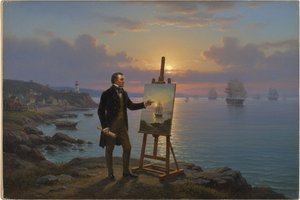
Fitz Henry Lane: Luminosity, Landscape & the American Maritime Tradition – A Collector’s Insight
Explore the luminous world of Fitz Henry Lane, a master of American maritime painting & Luminism. Discover his legacy, techniques, and investment potential for discerning art collectors. Expert insights at OriginalUniqueArt.

Robert Spencer: Luminism, Narrative & the American Landscape Tradition
Explore the captivating world of Luminism & the Hudson River School with our expert analysis. Discover the history, artists, and enduring beauty of 19th-century American landscape painting. Find museum-quality reproductions at OriginalUniqueArt.
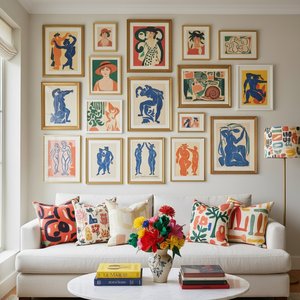
Henri Matisse's Masterpieces: Explore 25 Iconic Paintings & Art Decor Ideas
Journey through Henri Matisse's 25 most iconic paintings! Explore Fauvism, vibrant colors & the stories behind masterpieces like 'The Dance'. Find museum-quality art reproductions and curated decor ideas to elevate your space. Discover all masterpieces on OriginalUniqueArt.com.

Grant Wood & American Regionalism: Identity, Myth & the Rural Landscape
Explore the world of Grant Wood & American Regionalism with OriginalUniqueArt. Discover the symbolism behind 'American Gothic', recurring themes, and the movement's lasting impact on art history. High-quality reproductions available.

Evocations of Place: A Historical Journey Through Landscape Art
Explore the rich history of landscape art with OriginalUniqueArt. Discover renowned artists, movements like Impressionism & Romanticism, and expert guidance for collecting timeless pieces. Find your perfect serene escape today!


