

 Preview
 Send
Send Share
Share
 Details
 Guide
Guide

 Download
 Similars
 X-Ray
X-Ray Diaporama
 Stats
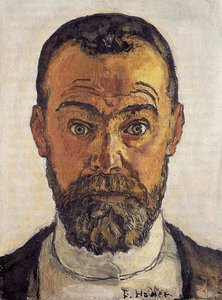
StatsFigure study
 Acrylic On Canvas
- WallArt
- Swiss Symbolism
 1887
1887 28.0 x 13.0 cm
 National Gallery of Bosnia and Herzegovina
 Read More
Giclée / Art Print
Museum-quality giclée or canvas print with fast production and flexible finish options. ( Buy Hand Made Painting Switch to Digital Image)




P118B $10

P118H $10

P118W $10

P438Z $10

P508JH $12

P508YH $12

P805H $10

P805Z $10

P919BZ $10

P919G $10

P919XJ $10

P959ZH $10

P968JZ $12

W106C $8

W218G $10

W218JH $8

W218Y $10

W307PJ $10

W316G $10

W316PJ $8

W316Y $10

W398PJ $8

W4111J $10

W500HY $15

W500JH $15

W692G $12

W849H $8

W940BG $15

W953PJ $8




Pick from our preset sizes that match the artwork's original proportions.

Type the width and the height you need, to fit your frame or your wall. A print can only be cut, never made bigger than the picture, so a size with a different shape loses a part of the image. We send you a digital mockup to approve before we print anything. The picture shown on this page does not show the real cut — only the mockup does.
Worldwide Delivery () in 2 weeks instead of standard 4/5 weeks. (22 October)

Free Worldwide Express Shipping

High-Quality Linen Canvas

Full Shipping Insurance

Customs Tax Refund Guarantee

True Color Matching Guarantee

100-Day Return Policy (Defects Only)

100% Money-Back Guarantee

Bulk Discount Offer
 Glass option is only available in size under 110 CM

Figure study
Giclée / Art Print
Reproduction Size
-


Total Price
$ 81
Figure Study - Ferdinand Hodler: A Portrait of Contemplation
Ferdinand Hodler’s “Figure Study,” created in 1887, stands as a cornerstone of Swiss Symbolist art and embodies the artist's profound engagement with themes of mortality and inner reflection. Executed in graphite on paper, this deceptively simple drawing transcends mere representation to convey a complex psychological landscape—a testament to Hodler’s masterful technique and his unwavering pursuit of universal harmony. The artwork captures a solitary man seated at a table, his posture conveying an air of quiet contemplation as he gazes downwards. Hodler's signature is subtly positioned in the lower portion of the drawing, anchoring it firmly within the artist’s oeuvre and acknowledging its significance as one of his many explorations into human consciousness.- Style: Symbolist – Hodler eschewed naturalistic depiction, prioritizing emotional resonance over literal accuracy. He sought to express inner states rather than external appearances, aligning with the broader Symbolist movement's fascination with dreams, myths, and spiritual symbolism.
- Technique: Hodler employed a technique known as “parallelism,” wherein he layered multiple graphite strokes to achieve tonal gradations that mimic the subtle shifts of light and shadow—a method particularly effective in conveying mood and atmosphere. This meticulous approach demonstrates Hodler’s dedication to capturing not just what is seen but also what is felt.
- Symbolism: The downward gaze represents not merely physical posture but also a deeper psychological preoccupation with mortality and the contemplation of one’s own soul. Hodler’s masterful rendering captures the essence of this existential concern, transforming a simple drawing into a powerful meditation on human experience.
- Emotional Impact: The artwork evokes feelings of serenity, introspection, and melancholy – prompting viewers to consider the significance of stillness and contemplation in navigating life's challenges.
Additional Insights & Context
Exploring Hodler’s broader artistic trajectory reveals a preoccupation with confronting death and exploring the spiritual realm—themes that permeate his entire oeuvre. His influence extends beyond Symbolism, impacting Expressionist painters like Emil Nolde and Oskar Kokoschka who adopted similar stylistic approaches to convey emotional intensity. Examining “Figure Study” alongside these other works underscores Hodler’s pioneering role in redefining artistic expression and challenging conventional notions of beauty. The meticulous graphite technique—a hallmark of his style—demonstrates Hodler's unwavering commitment to capturing the subtleties of human emotion and psychological complexity.- Comparative Analysis: Hodler’s work stands apart from Impressionism due to its rejection of optical realism, prioritizing emotional truth over sensory perception.
Provenance & Significance
“Figure Study” holds a place in art history as one of Hodler's earliest explorations into psychological portraiture—marking a pivotal moment in his artistic development. Its acquisition by the Institute for the protection and reconstruction of cultural monuments underscores its importance as a representative example of Swiss Symbolist art and contributes to its enduring legacy. The artwork’s inclusion in exhibitions celebrating Hodler’s life and work ensures that future generations will continue to appreciate its aesthetic qualities and intellectual depth.- Historical Documentation: Records indicate the artwork was gifted by Besim Korkut, Sarajevo, highlighting its cultural heritage and bolstering its value as a significant piece of Swiss artistic history.
Reproductions & Artistic Inspiration
A high-quality reproduction of “Figure Study” captures Hodler’s masterful technique and evocative tonal palette—allowing viewers to experience the artwork's emotional impact in their own homes. Its understated elegance lends itself beautifully to minimalist interior design schemes, creating a space conducive to contemplation and introspection. Consider framing it with a warm brown border reminiscent of Hodler’s artistic aesthetic—enhancing its visual appeal and honoring the artist’s enduring legacy.- Decorative Applications: “Figure Study” serves as an excellent source of inspiration for interior designers seeking to infuse their spaces with tranquility and intellectual curiosity.
Questions & Answers
Is "Figure study" by Ferdinand Hodler among the sought-after Swiss Symbolism artworks?
Within the Swiss Symbolism movement, "Figure study" has a recognized popularity level.
Where does "Figure study" fall in Ferdinand Hodler's career?
"Figure study" belongs to the Mature Period of Ferdinand Hodler's career. This classification relates the work to the artist's development.
What underlying hue runs through "Figure study" by Ferdinand Hodler?
"Figure study" leans toward an ochre to sepia tone.
Artist Biography
A Life Etched in Symbolism: The World of Ferdinand Hodler
Ferdinand Hodler, a name intrinsically linked to the landscape of Swiss painting and the potent language of symbolism, rose from modest beginnings to become one of the most significant artists of the late 19th and early 20th centuries. Born in Bern, Switzerland, in 1853, his life was profoundly shaped by early loss – a recurring theme that would permeate his artistic vision. The untimely deaths of his father and two younger brothers before he reached adolescence cast a long shadow, instilling within him a deep contemplation of mortality and the fleeting nature of existence. These experiences, interwoven with an acute sensitivity to the beauty and power of the natural world, became central tenets of his evolving oeuvre. Initially apprenticed to decorative painters, Hodler’s innate talent quickly transcended mere craftsmanship; he yearned for formal training and artistic exploration beyond the constraints of commercial work. This ambition led him to Geneva in 1871, where he immersed himself in study, attending science lectures alongside diligently copying masterpieces at the city's museum – a rigorous education that laid the foundation for his future innovations.From Realism to ‘Parallelism’: Forging a Unique Vision
Hodler’s artistic journey was characterized by constant evolution and a relentless pursuit of expressive power. His early works reflected the prevailing realist style of the time – portraits, landscapes, and genre scenes executed with meticulous detail. However, he soon found himself constrained by these conventions, seeking a means to convey deeper emotional truths and philosophical ideas. This quest led him towards Symbolism, a movement that rejected naturalistic representation in favor of subjective experience and evocative imagery. Yet Hodler didn’t simply adopt the tenets of Symbolism; instead, he forged his own unique path, developing what he termed “parallelism.” This distinctive style involved arranging figures and forms in rhythmic, almost geometric patterns, creating a sense of both harmony and tension – a visual representation of interconnectedness. It was an attempt to depict not just *what* he saw, but *how* he felt – the underlying emotional currents that connected all things. The Night, completed in 1890, proved to be a pivotal work, marking his definitive turn towards symbolist imagery and sparking considerable controversy with its depiction of recumbent figures suggestive of death and repose. Despite initial criticism, the painting garnered attention in Paris, establishing Hodler’s reputation beyond Switzerland's borders and signaling the arrival of a truly original voice.Landmarks in Paint: Key Works and Their Significance
Throughout his prolific career, Hodler produced a remarkable body of work that continues to resonate with audiences today. The Day, completed in 1893, stands as one of his most ambitious and celebrated achievements – a monumental historical painting showcasing his mastery of composition and symbolism. Housed at the Kunsthaus Zürich, this artwork is a powerful meditation on life, death, and renewal, rendered with an arresting blend of realism and visionary intensity. The sheer scale and emotional weight of The Day cemented Hodler’s position as a leading figure in European art. Other notable works include numerous depictions of the Swiss Alps, imbued with a sense of awe-inspiring grandeur, and portraits that reveal his profound understanding of human psychology. He frequently revisited themes of loss and mourning, perhaps reflecting his own childhood traumas, but always infused them with a sense of dignity and resilience. His paintings weren’t merely representations; they were emotional landscapes, inviting viewers to contemplate the fundamental questions of existence. Works like Truth II (1897) demonstrate Hodler's ability to blend classical forms with modern sensibilities, creating images that are both timeless and strikingly contemporary – a testament to his innovative spirit.A Lasting Legacy: Influence and Historical Context
Ferdinand Hodler’s influence extended far beyond the borders of Switzerland. His innovative use of symbolism and his development of “parallelism” paved the way for Expressionism, with its emphasis on subjective emotion and distorted forms. Artists who followed in his footsteps recognized him as a precursor to their own explorations of inner experience. Hodler's work also resonated with broader cultural currents of the late 19th and early 20th centuries – a period marked by rapid social change, scientific advancements, and a growing sense of existential anxiety. His paintings offered a visual language for grappling with these complex issues, providing solace and insight in an increasingly uncertain world. Today, Hodler’s works are held in major museums across Europe and beyond, ensuring that his artistic vision continues to inspire and challenge generations of viewers. He remains a towering figure in Swiss art history, celebrated not only for his technical skill but also for his profound emotional depth and unwavering commitment to exploring the mysteries of the human condition.Exploring Hodler Further
- For an in-depth look at his life and work: Wikipedia - Ferdinand Hodler
- Discover more of his paintings at: OriginalUniqueArt - Ferdinand Hodler Collection
- View *The Day* (1893) here: OriginalUniqueArt - The Day
Ferdinand Hodler
1853 - 1918 , Switzerland
Quick Facts
- Artistic Movement Or Style: Symbolism, Parallelism
- Artists Or Movements Influenced By This Artist: ['Expressionism']
- Date Of Birth: 1853
- Date Of Death: 1918
- Full Name: Ferdinand Hodler
- Nationality: Swiss
- Notable Artworks:
- The Night
- The Day
- Truth II
- Place Of Birth: Bern, Switzerland


