Text size

() ·

A painting made for you, by hand

Appenzell

Hand Made Oil Reproduction

Hand-painted oil on canvas in your size and frame, made to order by our artists. ( Switch to Print Switch to Digital Image)

Collectible Description

Canton of Appenzell Innerrhoden (German: Kanton Appenzell Innerrhoden [ˈapn̩tsɛl ˈɪnərˌroːdn̩] ; Romansh: Chantun Appenzell Dadens; French: Canton d'Appenzell Rhodes-Intérieures; Italian: Canton Appenzello Interno), in English sometimes Appenzell Inner-Rhodes, is one of the 26 cantons forming the Swiss Confederation. It is composed of five districts. The seat of the government and parliament is Ap

Artist Biography

A master of Symbolism and Parallelism, Hodler created the monumental The Day. Discover hand-painted reproductions of his iconic works today.

from ·

Chapter 1

How large should it be?

Slide to change the size; the picture on the left shows the frame at its real width. The proportions of the original are kept.

Standard
custom
CM
INCH

Pick from our preset sizes that match the artwork's original proportions.

width
height

Type the width and the height you need, to fit your frame or your wall. This is hand-painted, so for a size with a different shape the artist can paint a bit more around the picture, or cut a bit — you choose. We send you a digital mockup to approve before the painting starts. The picture shown on this page does not show the real result — only the mockup does.

Chapter 2

How should it arrive?

Choose the edges of the stretched canvas

Choose your frame

Corner sample of the WhiteWrap canvas edge finish, stretched on solid wood bars
White $1
Corner sample of the BlurSideWrap canvas edge finish, stretched on solid wood bars
Blurside $1
Corner sample of the ExtendedWrap canvas edge finish, stretched on solid wood bars
Extended $1
Corner sample of the P118B picture frame: moulded polystyrene, 5 cm wide and 3 cm thick
P118B $10
Corner sample of the P118H picture frame: moulded polystyrene, 5 cm wide and 3 cm thick
P118H $10
Corner sample of the P118W picture frame: moulded polystyrene, 5 cm wide and 3 cm thick
P118W $10
Corner sample of the P438Z picture frame: moulded polystyrene, 5.5 cm wide and 3.5 cm thick
P438Z $10
Corner sample of the P508JH picture frame: moulded polystyrene, 7 cm wide and 3.5 cm thick
P508JH $12
Corner sample of the P508YH picture frame: moulded polystyrene, 7 cm wide and 3.5 cm thick
P508YH $12
Corner sample of the P805H picture frame: moulded polystyrene, 5 cm wide and 3.5 cm thick
P805H $10
Corner sample of the P805Z picture frame: moulded polystyrene, 5 cm wide and 3.5 cm thick
P805Z $10
Corner sample of the P919BZ picture frame: moulded polystyrene, 7 cm wide and 3.5 cm thick
P919BZ $10
Corner sample of the P919G picture frame: moulded polystyrene, 7 cm wide and 3.5 cm thick
P919G $10
Corner sample of the P919XJ picture frame: moulded polystyrene, 7 cm wide and 3.5 cm thick
P919XJ $10
Corner sample of the P959ZH picture frame: moulded polystyrene, 5 cm wide and 3 cm thick
P959ZH $10
Corner sample of the P968JZ picture frame: moulded polystyrene, 6 cm wide and 4 cm thick
P968JZ $12
Corner sample of the W106C picture frame: solid wood, 5 cm wide and 3 cm thick
W106C $8
Corner sample of the W218G picture frame: solid wood, 5 cm wide and 3 cm thick
W218G $10
Corner sample of the W218JH picture frame: solid wood, 5 cm wide and 3 cm thick
W218JH $8
Corner sample of the W218Y picture frame: solid wood, 5 cm wide and 3 cm thick
W218Y $10
Corner sample of the W307PJ picture frame: solid wood, 6 cm wide and 3 cm thick
W307PJ $10
Corner sample of the W316G picture frame: solid wood, 6 cm wide and 3 cm thick
W316G $10
Corner sample of the W316PJ picture frame: solid wood, 6 cm wide and 3 cm thick
W316PJ $8
Corner sample of the W316Y picture frame: solid wood, 6 cm wide and 3 cm thick
W316Y $10
Corner sample of the W398PJ picture frame: solid wood, 5 cm wide and 3 cm thick
W398PJ $8
Corner sample of the W4111J picture frame: solid wood, 6.5 cm wide and 3.5 cm thick
W4111J $10
Corner sample of the W500HY picture frame: solid wood, 7 cm wide and 5 cm thick
W500HY $15
Corner sample of the W500JH picture frame: solid wood, 7 cm wide and 5 cm thick
W500JH $15
Corner sample of the W692G picture frame: solid wood, 8 cm wide and 4 cm thick
W692G $12
Corner sample of the W849H picture frame: solid wood, 5 cm wide and 3 cm thick
W849H $8
Corner sample of the W940BG picture frame: solid wood, 7.5 cm wide and 4.5 cm thick
W940BG $15
Corner sample of the W953PJ picture frame: solid wood, 6 cm wide and 3.5 cm thick
W953PJ $8
Corner sample of the H24-GOLD picture frame: carved wood with gesso, 10 cm wide and 6 cm thick
H24-GOLD $30
Corner sample of the H24-SILVER picture frame: carved wood with gesso, 10 cm wide and 6 cm thick
H24-SILVER $30
Corner sample of the H36-GOLD picture frame: carved wood with gesso, 15 cm wide and 6.5 cm thick
H36-GOLD $45
Corner sample of the H36-SILVER picture frame: carved wood with gesso, 15 cm wide and 6.5 cm thick
H36-SILVER $45
Frame preview
Framed

Moulding: . Overall size with the frame: .

Chapter 3

Who paints it, and should anything change?

Examples of what can be changed: Replace face with customer photo; Add pet (e.g., replace cat with dog); Include hidden message in background; Change background landscape or elements.
After order, OriginalUniqueArt.com team will email client for instructions and provide a mockup preview

Worldwide Delivery () in 3/4 weeks instead of standard 5 weeks. (10 November). No compromise on quality.

Chapter 4

The finishing touches

A nameplate, as in a museum?

Engraved Bronze Plaque Details

This elegant plaque features the artist's name and the title of the artwork, finely engraved for a timeless presentation.

It is made from bronze with a refined, elegant finish. The text is precisely laser-engraved for a sharp and permanent result. Measuring 9x2 cm, the plaque is compact yet easy to read. It's built to be durable and scratch-resistant, offering a professional, museum-quality look. Mounting is simple thanks to the included adhesive backing.

Transparent Acrylic Plaque Details

The plaque includes essential engraved details such as the artist's name, the title of the artwork, the date it was created, the type of media used-like oil on canvas or watercolor-a brief description of the piece, and a QR code that links to the complete artwork information.

It is crafted from clear acrylic, offering a sleek, modern appearance. The text is UV-engraved in black to ensure strong visual contrast. With a size of 10x15 cm, it ensures optimal readability. It comes equipped with two metal hooks for secure wall mounting. The plaque is designed to be weather-resistant, making it suitable for various environments, and it includes interactive features that work seamlessly with smartphone scanning.

Black Acrylic Plaque Details

This elegant plaque includes engraved information such as the artist's name, the title of the artwork, the date it was created, the type of media used (like oil on canvas or watercolor), a short description of the artwork, and a QR code for quick access to more information.

The plaque itself is made from refined black acrylic with a premium finish. The text is laser-engraved in white for high contrast and readability. Its size is 10x15 cm, designed to be easy to read. It comes with two metal hooks for professional mounting. The design is sleek and fits any interior style. It is also weather-resistant and durable, with built-in digital integration for mobile compatibility.

A protective varnish?

When do you need it?

Chapter 5

Your painting, as you ordered it

Appenzell

Reproduction Medium

Reproduction Size

-

Elite Senior Artist

More detail, finesse, and extra production time

-

Reproduction Frame

-

-

For artworks or reproductions larger than 105 cm (approximately 41 inches) on any side, the frame will be shipped as a kit, disassembled. This method ensures safe delivery and prevents damage during transport.

Professional assembly required - this is not a DIY product.
The kit must be assembled and the canvas stretched by an experienced professional framer, using wood glue (not supplied), a canvas stretching plier and clamps to hold the bars square while the glue dries. Incorrect assembly or uneven canvas tension can permanently damage the artwork and is not covered by our warranty.

  • All solid wood bars are included, precisely cut to size.

  • Assembled with the screws provided, plus wood glue for the corner joints, which is not supplied and must be sourced by your framer.

  • Professional tools are required and not included: a canvas stretching plier (tensioner) and clamps to hold the bars square while the glue dries.

Important:
The corner joints require wood glue, the bars must be held with clamps until the glue is fully dry, and tightening the canvas on the assembled frame requires a canvas stretching plier. None of these are included in the kit. Please arrange an experienced professional framer before ordering this size.

Nameplate

-

-

Protective Varnish

Glossy Varnish (enhances colors, protects against light/moisture)

-

Customize My Artwork

Examples of what can be changed: Replace face with customer photo; Add pet (e.g., replace cat with dog); Include hidden message in background; Change background landscape or elements.

-

Urgent

Worldwide Delivery () in 3/4 weeks instead of standard 5 weeks. (10 November). No compromise on quality.

-

Express Shipping

Worldwide Delivery () in 5 weeks. (17 November).

Included

Total Price

$ 300

Total Price $ 300

Glass option is only available in size under 110 CM

Included with every order

  • Free Worldwide Express Shipping
  • High-Quality Linen Canvas
  • Full Shipping Insurance
  • Customs Tax Refund Guarantee
  • True Color Matching Guarantee
  • 100-Day Return Policy (Defects Only)
  • 100% Money-Back Guarantee
  • Bulk Discount Offer

Appenzell - Ferdinand Hodler: A Landscape Steeped in Symbolism

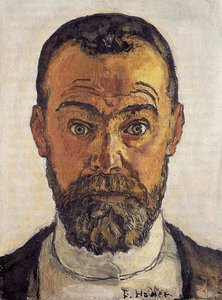
Ferdinand Hodler’s “Appenzell,” painted in 1895, transcends mere depiction of a Swiss alpine vista; it embodies the core tenets of Symbolist art—a deliberate rejection of realism in favor of conveying emotion and spiritual significance. This striking monochrome drawing captures a solitary man standing on a windswept beach, an arresting juxtaposition that immediately draws the viewer into contemplation.

  • Subject Matter: The scene portrays a rugged coastline dominated by towering cliffs and turbulent seas – quintessential elements of the Swiss landscape, meticulously rendered in stark black and white.
  • Composition & Technique: Hodler’s masterful use of ‘parallelism,’ a technique pioneered by him and championed by Maurice Denis, involves layering textures and tonal variations to create an illusion of depth without resorting to traditional shading methods. The artist achieves this remarkable effect through subtle brushstrokes that capture the dynamism of the wind-swept beach.
  • Historical Context: Hodler’s work emerged during a period of profound artistic experimentation in Europe, mirroring the broader Symbolist movement's preoccupation with psychological states and spiritual truths. Influenced by Nietzschean philosophy and Wagnerian opera, Hodler sought to express inner experience rather than objective observation.

Symbolism Beyond Representation

Hodler’s decision to abandon color—a conscious choice reflecting the Symbolists' belief that it obscures the essence of reality—allowed him to focus on conveying mood and emotion. The man in “Appenzell” is positioned centrally, his posture conveying resilience and quiet contemplation against the backdrop of formidable natural forces. This deliberate framing underscores the artist’s intention to explore themes of solitude, vulnerability, and the confrontation with mortality – concepts central to Symbolist thought.

  • Symbolic Elements: The two birds perched atop the cliffs serve as potent symbols of aspiration and freedom, mirroring the man's stance. Their placement reinforces the overarching theme of overcoming obstacles and achieving spiritual enlightenment.
  • Emotional Impact: “Appenzell” evokes a palpable sense of melancholy and grandeur simultaneously. Hodler’s masterful tonal palette—ranging from deepest blacks to delicate whites—captures the raw beauty of the alpine environment while subtly hinting at its inherent indifference to human existence.

A Legacy of Quiet Intensity

Hodler's “Appenzell” stands as a testament to his unwavering commitment to Symbolist principles and his profound sensitivity to the expressive potential of monochrome drawing. It exemplifies the movement’s desire to delve beneath surface appearances, accessing realms of psychological and spiritual experience inaccessible to conventional realism. Today, reproductions of this iconic artwork continue to inspire admiration for its understated elegance and enduring contemplation of the human condition.

  • Provenance: Originally gifted to Besim Korkut in Sarajevo, Bosnia & Herzegovina, it now resides within the National Gallery of Bosnia and Herzegovina’s collection.
  • Further Exploration: To delve deeper into Hodler's artistic journey and discover more masterpieces at OriginalUniqueArt, visit OriginalUniqueArt. Explore his biography on ArtistsDatabase and read an insightful article about Symbolism, Parallelism & the Quest for Universal Harmony at ArticlesDatabase.

Questions & Answers

What use is suggested for "Appenzell" by Ferdinand Hodler?

The suggested use for "Appenzell" by Ferdinand Hodler is accent. It can serve other purposes as well.

What technique was used for "Appenzell" by Ferdinand Hodler?

The medium of "Appenzell" by Ferdinand Hodler is acrylic on canvas. Reproductions aim to render the appearance of this technique.

How strong are the colors of "Appenzell"?

The colors of "Appenzell" by Ferdinand Hodler show a subtle color saturation with a balanced intensity.

More about this painting

Preview AR preview Switch to Print Switch to Digital Image Send
Details Guide Add to favorites Download Similars X-Ray Diaporama Q&A Stats

In numbers

  • 1895the year it was painted
  • 29frames to choose from
  • standard sizes, in its own proportions
  • 5weeks to paint and deliver it
Ferdinand Hodler

Ferdinand Hodler

1853 - 1918, Switzerland

Quick facts about Ferdinand Hodler

  • Artistic Movement Or Style: Symbolism, Parallelism, Realism
  • Artists Or Movements Influenced By This Artist: ['Expressionism']
  • Artists Who Influenced This Artist:
    • Alexandre Calame
    • Dürer
    • Gustave Courbet
    • Hans Holbein
    • Titian
    • Poussin
    • Velázquez
    • Barthélemy Menn
  • Full Name: Ferdinand Hodler
  • Nationality: Swiss
  • Notable Artworks:
    • The Night
    • The Day
    • Truth II
    • Poetry
  • Place Of Birth: Bern, Switzerland
  • Date Of Birth: 1853
  • Date Of Death: 1918

Artist Biography

The Architecture of Mortality

Born in Bern, Switzerland, in 1853, Ferdinand Hodler’s early years were defined by a quiet, persistent grief. Before he reached adolescence, the tuberculosis that claimed his father and two younger brothers left a void in his household. This early encounter with loss became a recurring motif in his work, a shadow that would follow him from the modest beginnings of his apprenticeship to the heights of his professional career. He began his training as a decorative painter, assisting his stepfather with commercial sign-work, a practical education that instilled in him a precise command of line and form. This foundation in craftsmanship provided the technical rigor that would later support his more complex philosophical inquiries.

His move to Geneva in 1871 marked a departure from the commercial demands of his youth. In the city, he sought a more profound engagement with art, attending science lectures and copying the works of masters in the local museum. It was here that he began to move away from the meticulous realism of his early landscapes and portraits. He was no longer content to merely replicate the scenery of the Swiss Alps or the likeness of a sitter; he sought to capture the underlying rhythms of existence. This transition from the objective to the subjective would eventually lead him to develop a visual language entirely his own.

The Logic of Parallelism

Hodler’s most significant contribution to the evolution of modern painting was his theory of parallelism. This was not merely a compositional technique but a way of seeing the world as a series of interconnected, rhythmic patterns. He observed how forms in nature—the slope of a mountain, the curve of a human limb, or the reflection in water—often mirrored one another in a structured, geometric harmony. By arranging figures and landscape elements in these repetitive, rhythmic cadences, he attempted to depict the structural order he believed governed the natural world. This approach allowed him to bridge the gap between the physical reality of a scene and the emotional state of the observer.

His work often occupied the space between Symbolism and a more structured, modern sensibility. In works such as The Night, completed in 1890, he explored themes of repose and mortality through recumbent figures, a subject that challenged the prevailing tastes of the time. His ability to blend classical form with a modern, almost structural intensity is evident in Truth II (1897). He did not rely on the chaotic brushwork of his contemporaries; instead, he used a deliberate, often muted palette of ochres, browns, and greens to create a sense of permanence and weight. His canvases were not mere windows into a scene, but organized environments where the human spirit and the landscape were bound together by a shared geometry.

A Life in Landscapes

The Swiss landscape remained a constant presence in his oeuvre, particularly the grandeur of the Alps. He viewed these mountains not just as topographical features, but as spiritual entities. His depictions of the Eiger, Monch, and Jungfrau, or the views from the Dents du Midi, reflect a desire to translate the scale of the mountains into a language of emotional resonance. He often utilized a layering process, applying thin washes of color over thicker impasto to achieve a specific luminosity, particularly in his later studies of light over Lake Geneva. These works demonstrate a mastery of atmosphere, capturing the hazy, ethereal quality of Alpine light without sacrificing the structural integrity of the terrain.

By the time of his death in Geneva in 1918, Hodler had established himself as a central figure in Swiss art history. His influence can be seen in the development of Expressionism, as his emphasis on subjective emotion and rhythmic form provided a foundation for those who sought to move beyond traditional representation. He remained a painter of profound psychological depth, using the tools of his craft to confront the fundamental questions of life and death. His legacy is found in the way he forced the viewer to look past the surface of the world to find the silent, repeating patterns that hold it together.

Quick Facts

  • Dimensions: 27.5 x 16.2 cm
  • Notable elements or techniques: Parallelism
  • Influences: Swiss Impressionism
  • Medium: pencil, ink, watercolor on paper
  • Movement: Symbolism
  • Title: Appenzell

Art Quiz

There is only one correct answer for each question.

Question 1:
What artistic movement is Ferdinand Hodler primarily associated with?
Question 2:
The image depicts a man standing on the beach. What prominent feature contributes to the overall mood of the scene?
Question 3:
What is the signature on the artwork?
Question 4:
According to Wikipedia, what was Hodler's early life shaped by?
Question 5:
The artwork utilizes a technique known as 'parallelism'. What is the characteristic feature of this artistic approach?