Preview
 Send
Send Share
Share
 Details
 Guide
Guide

 Download
 Similars
 X-Ray
X-Ray Diaporama
 Stats
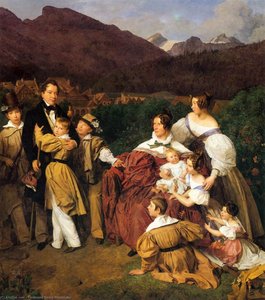
StatsChildren at the Window
 Oil On Canvas
- WallArt
- Biedermeier style
 1853
1853- 19th Century
 85.0 x 69.0 cm
 Residenzgalerie
 Read More
Giclée / Art Print
Museum-quality giclée or canvas print with fast production and flexible finish options. ( Buy Hand Made Painting Switch to Digital Image)




P118B $10

P118H $10

P118W $10

P438Z $10

P508JH $12

P508YH $12

P805H $10

P805Z $10

P919BZ $10

P919G $10

P919XJ $10

P959ZH $10

P968JZ $12

W106C $8

W218G $10

W218JH $8

W218Y $10

W307PJ $10

W316G $10

W316PJ $8

W316Y $10

W398PJ $8

W4111J $10

W500HY $15

W500JH $15

W692G $12

W849H $8

W940BG $15

W953PJ $8




Pick from our preset sizes that match the artwork's original proportions.

You may enter your own dimensions to fit a specific frame or space. If your selected size does not match the original image's proportions, we will either crop the artwork or extend the image with a mirrored or solid-fill edge. A digital mockup will be sent for your approval before production begins.
Please note that the on-screen preview does not reflect the actual cropping or extension. Only the mockup will accurately show the final composition.
While custom sizes are available, we recommend selecting a dimension from the predefined list to preserve the original proportions.
Worldwide Delivery () in 2 weeks instead of standard 4/5 weeks. (12 October)

Free Worldwide Express Shipping

High-Quality Linen Canvas

Full Shipping Insurance

Customs Tax Refund Guarantee

True Color Matching Guarantee

100-Day Return Policy (Defects Only)

100% Money-Back Guarantee

Bulk Discount Offer
 Glass option is only available in size under 110 CM

Children at the Window
Giclée / Art Print
Reproduction Size
-


Total Price
$ 81
Artist Biography
Early Life and Artistic Beginnings
Ferdinand Georg Waldmüller entered the world in Vienna, Austria, on January 15, 1793, a period of significant societal shifts and artistic ferment. His early life was unfortunately marked by hardship; the untimely death of his father cast a shadow over the family’s fortunes, instilling in young Ferdinand an early awareness of life's precariousness—a theme that would later resonate deeply within his art. Despite these challenges, Waldmüller demonstrated a clear aptitude for drawing and painting, leading him to enroll at the Academy of Fine Arts Vienna in 1807. However, his attendance proved somewhat erratic, reflecting perhaps a restless spirit or a dissatisfaction with the rigid academic constraints of the time. Initially, he gravitated towards portraiture, a reliable path for an aspiring artist seeking patronage, but it was the allure of landscapes and genre scenes—depictions of everyday life—that truly captured his imagination and would ultimately define his artistic legacy. These early explorations laid the groundwork for a style characterized by meticulous observation and a profound connection to the natural world.A Career Forged in Realism and Controversy
Waldmüller’s career unfolded as a dynamic interplay between artistic innovation and institutional resistance. He supplemented his income during his formative years by working as a set designer and continuing to paint portraits, often while touring with his wife, the singer Katharina Weidner. This itinerant lifestyle exposed him to diverse environments and broadened his artistic horizons. By the 1820s, Waldmüller had begun to develop a distinctive style—a commitment to realistic depictions of everyday life, particularly in rural settings. He wasn’t interested in idealizing or romanticizing; instead, he sought to capture the world as it truly was, with all its beauty and imperfections. This dedication to realism brought him both acclaim and criticism. In 1819, he secured a professorship at the Academy of Fine Arts Vienna, but his tenure was fraught with conflict. Waldmüller passionately advocated for direct observation from nature—plein air painting—and openly criticized the academy’s emphasis on formulaic instruction and adherence to established conventions. His outspokenness led to repeated clashes with the artistic establishment and ultimately contributed to his forced retirement in 1857. Frequent journeys to Italy, beginning in 1825, and the idyllic Salzkammergut region profoundly influenced his landscape painting, refining his ability to capture light, texture, and atmosphere with remarkable precision.Themes of Rural Life and Social Commentary
Waldmüller’s artistic output is remarkably diverse, encompassing portraits, landscapes, and genre scenes, but a common thread unites these varied subjects: a deep engagement with the realities of 19th-century Austrian life. Works like Venetian Fruit Seller (1826), an early example of his genre painting style, demonstrate his skill in capturing fleeting moments of everyday existence. His self-portrait from 1828 reveals a keen understanding of human psychology and the nuances of character. Louise Mayer (1836) stands as a testament to his mastery of portraiture, while View of Ischl (1838) showcases his evolving landscape abilities. However, it was paintings like On All Souls' Day (1839), The Love Letter (1849), and Bathing Women (c. 1848–1849) that truly distinguished him. These works weren’t merely picturesque depictions of rural life; they were imbued with a socially critical perspective, subtly exposing the hardships faced by ordinary people—the impact of poverty, misfortune, and the complexities of family dynamics. He didn't shy away from portraying the less glamorous aspects of existence, offering a more honest and nuanced representation of society than was typically seen in academic art.Legacy and Historical Significance
Ferdinand Georg Waldmüller is rightfully regarded as one of the most important Austrian painters of the Biedermeier period. His unwavering commitment to natural observation and plein air painting anticipated many of the artistic innovations that would characterize Impressionism decades later. He challenged conventional depictions of rural life, injecting a dose of realism and social commentary into a genre often dominated by idealized imagery. Despite facing criticism and setbacks throughout his career—including forced retirement from the Academy—Waldmüller’s work eventually gained international recognition, culminating in exhibitions at the World Exhibition in Paris (1855) and Buckingham Palace (1856), where he received accolades from Emperor Napoleon III and Queen Victoria respectively. He was knighted shortly before his death on August 23, 1865, in Hinterbrühl, a belated acknowledgment of his artistic contributions. Waldmüller’s legacy extends beyond his individual paintings; he influenced generations of artists with his detailed realism, his focus on everyday subjects, and his courageous willingness to challenge the status quo. He remains a pivotal figure in Austrian art history—a true pioneer who paved the way for new approaches to landscape and genre painting.
Ferdinand Georg Waldmüller
1793 - 1865 , Austria
Quick Facts
- Full Name: Ferdinand Georg Waldmüller
- Nationality: Austrian
- Date Of Birth: 1793
- Date Of Death: 1865
- Place Of Birth: Vienna, Austria
- Notable Artworks:
- Venetian Fruit Seller
- Self-Portrait
- Louise Mayer
- View of Ischl
- On All Souls' Day
- The Love Letter
- Bathing Women
- Artistic Movement Or Style: Biedermeier, Realism
- Artists Or Movements Influenced By This Artist: Impressionism
Related Articles

OriginalUniqueArt.com F.A.Q.: Elevating Interiors with Bespoke Wall Murals & Masterpiece Frescoes
Discover the pinnacle of bespoke interior transformation with OriginalUniqueArt.com. Our master fresco artists create exquisite, hand-painted wall murals and ceiling masterpieces tailored to your estate. Elevate your architectural space with timeless, museum-quality artistry.