- Home

- Print on canvas
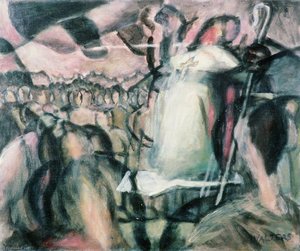
- Evan Walters
- Execution

 Preview
 Buy Painting
 Send
Send Share
Share
 Details

 Download
 Similars
 X-Ray
X-Ray Diaporama
Execution
 Social Realism
 77.0 x 107.0 cm
 Read More
Giclée / Art Print
Museum-quality giclée or canvas print with fast production and flexible finish options.




P118B $10

P118H $10

P118W $10

P438Z $10

P508JH $12

P508YH $12

P805H $10

P805Z $10

P919BZ $10

P919G $10

P919XJ $10

P959ZH $10

P968JZ $12

W106C $8

W218G $10

W218JH $8

W218Y $10

W307PJ $10

W316G $10

W316PJ $8

W316Y $10

W398PJ $8

W4111J $10

W500HY $15

W500JH $15

W692G $12

W849H $8

W940BG $15

W953PJ $8




Pick from our preset sizes that match the artwork's original proportions.

You may enter your own dimensions to fit a specific frame or space. If your selected size does not match the original image's proportions, we will either crop the artwork or extend the image with a mirrored or solid-fill edge. A digital mockup will be sent for your approval before production begins.
Please note that the on-screen preview does not reflect the actual cropping or extension. Only the mockup will accurately show the final composition.
While custom sizes are available, we recommend selecting a dimension from the predefined list to preserve the original proportions.
Worldwide Delivery () in 2 weeks instead of standard 4/5 weeks. (24 July)

Free Worldwide Express Shipping

High-Quality Linen Canvas

Full Shipping Insurance

Customs Tax Refund Guarantee

True Color Matching Guarantee

60-Day Return Policy (Defects Only)

100% Money-Back Guarantee

Bulk Discount Offer
 Glass option is only available in size under 110 CM

Execution
Giclée / Art Print
Reproduction Size
-


Total Price
-
Artist Biography
The Soul of the Welsh Landscape: The Life and Vision of Evan Walters
Evan John Walters stands as a singular figure in the tapestry of Welsh art history, a visionary whose brush bridged the gap between industrial grit and profound artistic expression. Born in 1893 in Llanfylech, nestled within a landscape defined by both rural tradition and the burgeoning shadows of industry, Walters possessed an innate sensitivity to the textures of his homeland. His formative years, spent amidst the valleys of Llangyfelach and Mynyddbach, instilled in him a deep-seated connection to Welsh culture and language—a foundation that would later allow him to translate the heavy atmosphere of mining communities into evocative visual narratives.
His artistic journey was one of both practical discipline and academic refinement. Beginning his training at Morriston Technical School, Walters developed a foundational skill set as a painter and decorator, a craft that granted him a unique, tactile understanding of surface and pigment. This technical grounding was later elevated through rigorous studies at the Swansea School of Ser Art and the Regent Street Polytechnic in London. As he moved toward the Royal Academy Schools, his work began to absorb the broader currents of European modernism, particularly the emotive power of Expressionism, which would eventually infuse his portraits and landscapes with a haunting, psychological depth.
From Camouflage to Character: A Transformative Career
The trajectory of Walters's life was irrevocably altered by the tides of global conflict. In 1915, amidst the upheaval of World War I, he emigrated to America, serving in a capacity that demanded an extraordinary mastery of color and perception: as a camouflage painter. This period of meticulous observation—learning to manipulate light, shadow, and shape to deceive the eye—sharpened his ability to translate complex visual information into powerful artistic statements. It was during this era of global movement that his technical precision met a growing interest in the human condition.
Upon returning to Wales after the war, Walters transitioned into a celebrated portrait artist, renowned for his ability to capture not just a likeness, but the very essence of his subjects. His career was significantly bolstered by the transformative patronage of Winifred Tennant, whose early recognition of his talent provided him with the stability to explore more ambitious themes. Through her commissions, Walters moved beyond simple representation, using the portraiture of the era's influential figures to weave a deeper social commentary into his repertoire.
A Legacy of Texture and Emotion
The enduring significance of Evan Walters lies in his ability to find beauty within the industrial struggle. His oeuvre is characterized by a remarkable versatility, ranging from the intimate warmth found in works like Eve to the vibrant, textured vitality of Still Life with Chrysanthemums. Whether he was depicting the heavy, soot-stained atmosphere of a mining village or the delicate play of light on a floral arrangement, his work remained anchored in a profound respect for the subject's inherent character.
Walters's contributions to 20th-century art are marked by several key elements:
- The Synthesis of Styles: His unique ability to blend classical Royal Academy techniques with the raw, emotive energy of Expressionism.
- Social Documentation: His role in documenting the changing face of Wales, capturing the dignity of the working class and the shifting industrial landscape.
- Technical Mastery: A sophisticated use of color theory and texture, likely influenced by his early experiences in camouflage and decorative arts.
Today, the works of Evan Walters serve as a vital window into a bygone era of Welsh identity. He remains an artist who did not merely observe the world but felt its weight, leaving behind a legacy that continues to resonate with anyone seeking the intersection of historical truth and poetic beauty.

Evan Walters
1892 - 1951
Quick Facts
- Artistic Movement Or Style: Expressionist
- Artists Or Movements Influenced By This Artist: ['Industrial Art']
- Artists Who Influenced This Artist: ['Augustus John']
- Date Of Birth: 1892
- Date Of Death: 1951
- Full Name: Evan John Walters
- Nationality: Welsh
- Notable Artworks:
- Eve
- Self Portrait
- Execution
- Place Of Birth: Llangyfelach, Wales
Related Articles
Honoré Daumier: Social Commentary & Artistic Innovation in 19th-Century France
Explore the life & work of Honoré Daumier, a master of 19th-century French realism and satire. Discover his powerful lithographs, paintings, and sculptures critiquing society – and his lasting influence on modern art.

Reflections of an Age: Social Commentary & Artistic Representation in 18th-Century Society
Explore the social commentary & artistic representation of 18th-century society. Discover Rococo masterpieces, portraiture's power, and shifting historical perspectives. Expert insights for art lovers.
The Digital Portrait Renaissance: Transforming Personal Photography into Timeless Oil Paintings Through Artistic Reproduction
Transform your cherished photos into timeless oil paintings with OriginalUniqueArt's expert artists. Museum-quality reproductions & custom portraits, crafted to last a lifetime. Discover the art of personal legacy.
The Enduring Gaze: A Historical & Artistic Exploration of Portrait Painting Across Cultures
Explore the rich history of portrait painting with expert insights into Renaissance masterpieces & modern innovations. Discover artists, movements & commission a custom oil painting at OriginalUniqueArt.
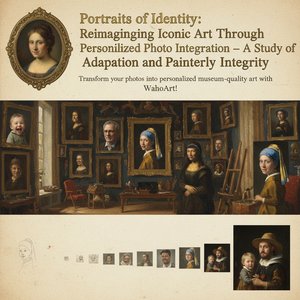
Portraits of Identity: Reimagining Iconic Art Through Personalized Photo Integration – A Study of Artistic Adaptation and Painterly Integrity
Transform your photos into stunning personalized art! OriginalUniqueArt offers museum-quality reproductions & custom portraits in any style. Expert artists, free consultations & worldwide shipping. Create a timeless heirloom today!