Preview
 Send
Send Share
Share
 Details
 Guide
Guide

 Download
 Similars
 X-Ray
X-Ray Diaporama
 Q&A
Q&A Stats
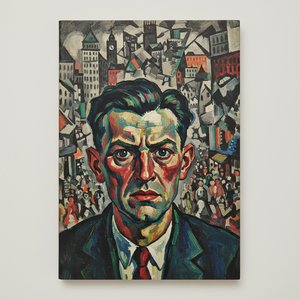
StatsThe Drinker (self-portrait)
 Oil On Canvas
- WallArt
- Expressionism
 1914
1914- Modern
 119.0 x 89.0 cm
 Germanisches Nationalmuseum
 Read More
Giclée / Art Print
Museum-quality giclée or canvas print with fast production and flexible finish options. ( Buy Hand Made Painting Switch to Digital Image)




P118B $10

P118H $10

P118W $10

P438Z $10

P508JH $12

P508YH $12

P805H $10

P805Z $10

P919BZ $10

P919G $10

P919XJ $10

P959ZH $10

P968JZ $12

W106C $8

W218G $10

W218JH $8

W218Y $10

W307PJ $10

W316G $10

W316PJ $8

W316Y $10

W398PJ $8

W4111J $10

W500HY $15

W500JH $15

W692G $12

W849H $8

W940BG $15

W953PJ $8




Pick from our preset sizes that match the artwork's original proportions.

Type the width and the height you need, to fit your frame or your wall. A print can only be cut, never made bigger than the picture, so a size with a different shape loses a part of the image. We send you a digital mockup to approve before we print anything. The picture shown on this page does not show the real cut — only the mockup does.
Worldwide Delivery () in 2 weeks instead of standard 4/5 weeks. (29 October)

Free Worldwide Express Shipping

High-Quality Linen Canvas

Full Shipping Insurance

Customs Tax Refund Guarantee

True Color Matching Guarantee

100-Day Return Policy (Defects Only)

100% Money-Back Guarantee

Bulk Discount Offer
 Glass option is only available in size under 110 CM

The Drinker (self-portrait)
Giclée / Art Print
Reproduction Size
-


Total Price
$ 81
A Window into Kirchner's Psyche: "The Drinker (Self-Portrait)"
Ernst Ludwig Kirchner’s 1914 self-portrait, “The Drinker,” is a powerfully introspective work that encapsulates the anxieties and alienation of early 20th-century Europe. More than just a likeness, it's a raw emotional statement rendered in the vibrant, angular language of Expressionism.
Subject and Composition
The painting depicts Kirchner seated at a table, holding a glass – a solitary figure lost in thought. The composition is strikingly simple: a sparsely furnished interior that throws all focus onto the artist himself. Kirchner’s direct yet distant gaze immediately connects with the viewer, creating an unsettling intimacy while simultaneously hinting at profound inner turmoil. He isn't looking at us; he's looking through us, lost in his own world. The verticality of the composition, emphasized by the figure and table legs, contributes to a sense of isolation and confinement.
Artistic Style and Technique
“The Drinker (Self-Portrait)” is a quintessential example of Kirchner’s mastery of Expressionism. Rejecting traditional representation, he prioritized conveying subjective emotion over objective reality. This is achieved through jarring color combinations – the cool blues and greens of his attire sharply contrast with the warm oranges and reds dominating the background. The distortion of facial features and exaggerated lines are hallmarks of the style, reflecting Kirchner’s emotional intensity and psychological state. Notice how his face appears almost mask-like, a study in yellows and harsh angles. The thick, visible brushstrokes add texture and dynamism to the canvas, further amplifying the painting's emotive power and creating a sense of restless energy.
Historical Context
Created on the eve of World War I, this self-portrait is deeply rooted in its historical moment. Kirchner was a founding member of “Die Brücke” (The Bridge), a group of German Expressionist artists who rebelled against academic traditions and sought to express their inner experiences in response to rapid industrialization and societal change. “The Drinker” embodies the spirit of this avant-garde movement, reflecting the growing sense of unease, fragmentation, and psychological distress that would come to define much of 20th-century art. The painting foreshadows a world on the brink of upheaval, where traditional values were crumbling and individuals felt increasingly disconnected.
Symbolism and Interpretation
The act of drinking itself is laden with symbolism. It can be interpreted as an attempt at escape or solace, perhaps reflecting Kirchner’s coping mechanisms for personal struggles or the anxieties of his time. The glass becomes a focal point – representing both physical sustenance and emotional detachment. His sallow complexion suggests illness, exhaustion, or alienation. Some scholars believe the painting reflects Kirchner's growing disillusionment with urban life and increasing isolation within the artistic community. It’s a portrait not just of Kirchner, but of a man grappling with the complexities of modern existence.
Emotional Impact
“The Drinker (Self-Portrait)” is a profoundly emotive work that resonates deeply with viewers. The bold colors, distorted forms, and direct gaze create an atmosphere of unease and psychological tension. It invites introspection and contemplation about universal themes of loneliness, alienation, and the search for meaning in a rapidly changing world. This painting isn’t merely observed; it's felt.
For Collectors and Interior Designers
This artwork is an exceptional addition to any collection focused on Expressionism or early 20th-century art. Its bold colors and dynamic composition make it a striking focal point in both modern and traditional interiors. The painting’s emotional depth adds character and sophistication to living spaces, offices, or galleries. Consider pairing “The Drinker” with furniture featuring clean lines and neutral tones to allow the artwork's intensity to truly shine.
Here are some ideas for incorporating this piece:
- Living Spaces: Create a gallery wall showcasing Expressionist works, or use “The Drinker” as a statement piece above a fireplace.
- Offices: Inspire creativity and contemplation in a workspace with this thought-provoking portrait.
- Galleries: A cornerstone of any Expressionist exhibition, offering visitors a glimpse into Kirchner’s inner world.
A high-quality reproduction of "The Drinker (Self-Portrait)" allows you to bring the power and intensity of Kirchner’s vision into your home or workspace, sparking conversation and inspiring contemplation for years to come.
Dimensions: 119 x 89 cm
Date: 1914
Current Location: Germanisches Nationalmuseum, Nuremberg, Germany
Questions & Answers
How can I view "The Drinker (self-portrait)" by Ernst Ludwig Kirchner as a slideshow?
A slideshow is available: the Diaporama page of "The Drinker (self-portrait)" by Ernst Ludwig Kirchner.
How intense are the colors in "The Drinker (self-portrait)" by Ernst Ludwig Kirchner?
The colors in "The Drinker (self-portrait)" by Ernst Ludwig Kirchner have a balanced intensity.
Who created "The Drinker (self-portrait)" and what style is it in?
Behind "The Drinker (self-portrait)" stand Ernst Ludwig Kirchner and the Expressionism movement.
Artist Biography
A Life Forged in Expression: The World of Ernst Ludwig Kirchner
Ernst Ludwig Kirchner, a name synonymous with the raw emotional power of German Expressionism, was born into a world poised on the brink of dramatic change. His arrival in Aschaffenburg, Bavaria, in 1880, marked the beginning of a life deeply intertwined with artistic innovation and personal turmoil. The shifting landscapes of his childhood – dictated by his father’s profession – instilled within him a sense of displacement that would later permeate his art. From Frankfurt to Perlen, and finally settling in Chemnitz, young Kirchner absorbed the burgeoning anxieties of a rapidly modernizing Germany. Though initially steered towards architecture at the Königliche Technische Hochschule in Dresden, it was the pull of painting, fueled by an admiration for masters like Albrecht Dürer and a growing dissatisfaction with academic convention, that ultimately defined his path. He found kinship with fellow rebels – Fritz Bleyl, Karl Schmidt-Rottluff, and Erich Heckel – forging bonds that would irrevocably alter the course of 20th-century art.The Bridge Between Worlds: Die Brücke and Artistic Revolution
In 1905, Kirchner became a founding member of *Die Brücke* (“The Bridge”), an artistic collective dedicated to bridging the gap between traditional aesthetics and a more visceral, emotionally charged form of expression. This wasn’t merely a stylistic choice; it was a philosophical stance. The group sought inspiration in sources often overlooked by the established art world – primitive art from Africa and Oceania, the bold colors of Vincent van Gogh, and the haunting psychological depth of Edvard Munch. They rejected the idealized representations of beauty favored by academic painting, instead embracing distortion, jarring color palettes, and expressive brushwork to convey the anxieties and alienation of modern life. Kirchner’s early works, born from this collaborative spirit, pulsed with a restless energy, reflecting the group's shared desire to break free from artistic constraints. The studio became a crucible for experimentation, a space where social norms were challenged alongside artistic conventions. The exploration of the human form, particularly the female nude, within both urban and natural settings, became a recurring motif, allowing Kirchner to investigate movement, emotion, and the complexities of modern existence.Urban Anxieties and Bold Visions: Defining a Style
Kirchner’s artistic style is immediately recognizable for its distinctive characteristics. He wielded color not as a means of faithful representation, but as a tool to evoke emotional responses – vibrant, often non-naturalistic hues that heightened the sense of unease or intensity within his compositions. His brushstrokes were energetic and visible, contributing to the overall feeling of immediacy and raw emotion. Figures and objects were frequently distorted or elongated, reflecting a subjective rather than objective reality. Perhaps most powerfully, Kirchner captured the psychological impact of modern urban life in early 20th-century Germany. Paintings like *The Street* (1908) are not simply depictions of city scenes; they are portraits of alienation, capturing the frenetic energy and emotional detachment of a rapidly changing world. He didn’t shy away from portraying the darker aspects of modernity – the loneliness, the anonymity, the sense of being overwhelmed by the sheer scale of urban existence. This unflinching gaze established him as a chronicler of his time, an artist who dared to confront the anxieties simmering beneath the surface of societal progress.Tragedy and Legacy: A Lasting Impact
Kirchner’s life was tragically marked by personal struggles. The horrors of World War I triggered a severe mental breakdown, forcing him to retreat to Switzerland in search of solace. However, even in exile, he continued to create, his work reflecting the lingering trauma and isolation he experienced. The rise of Nazism brought further hardship; over 600 of his works were confiscated and branded as “degenerate” art – a devastating blow that underscored the political climate’s hostility towards modern artistic expression. Facing persecution and declining health, Kirchner tragically took his own life in Davos, Switzerland, in 1938. Despite this heartbreaking end, Ernst Ludwig Kirchner's legacy remains profoundly influential. He stands as a central figure of German Expressionism, inspiring generations of artists with his bold style, emotionally resonant depictions of modern life, and unwavering commitment to artistic truth. His work continues to be exhibited in major museums worldwide, serving as a powerful reminder of the enduring power of art to confront, challenge, and ultimately illuminate the human condition.- Influenced By: Albrecht Dürer, Vincent van Gogh, Edvard Munch, Primitive Art (African & Oceanic)
- Influenced: Kirchner’s work profoundly impacted subsequent generations of Expressionist and Modern artists. His exploration of psychological themes and his innovative use of color and form continue to inspire contemporary art practices.

Ernst Ludwig Kirchner
1880 - 1938 , Germany
Quick Facts
- Full Name: Ernst Ludwig Kirchner
- Nationality: German
- Date Of Birth: 1880
- Date Of Death: 1938
- Place Of Birth: Aschaffenburg, Germany
- Notable Artworks:
- The Street (1908)
- Leaping Dancer (1912)
- Self-Portrait (1910)
- Five Women (1913)
- Artistic Movement Or Style: Expressionism
- Artists Who Influenced This Artist:
- Albrecht Dürer
- Van Gogh
- Edvard Munch
- Artists Or Movements Influenced By This Artist:
- Expressionism
- Modern artists
Related Articles
Unmasking Emotion: A Definitive Guide to the Raw Power and Visceral Beauty of German Expressionism
Explore the visceral power of German Expressionism. From Ernst Ludwig Kirchner to Die Brücke, discover how bold colors and distorted forms unmask raw human emotion in this expert art history guide for collectors and enthusiasts.
Ernst Ludwig Kirchner: Expressionism's Urban Anxiety & the Fragmentation of Modern Identity
Explore the powerful world of Ernst Ludwig Kirchner and German Expressionism. Discover his iconic paintings, Die Brücke group, and the movement's exploration of urban anxiety & modern identity. Expert analysis for collectors & enthusiasts.
The Vibrant World of Ernst Ludwig Kirchner: A Definitive Guide to German Expressionism
Explore the raw emotion of German Expressionism through a definitive guide to Ernst Ludwig Kirchner. Discover how his bold colors and distorted forms redefined modern art history, from Berlin street scenes to iconic masterpieces.

German Expressionism's 10 Defining Masterpieces | Art for Your Home
Explore 10 defining German Expressionism masterpieces – from Munch's 'The Scream' to Kandinsky’s abstracts. Discover the artists, stories & bold colors behind this powerful art movement. Find museum-quality reproductions at OriginalUniqueArt.com.
The Visceral Cry of a Nation: Exploring Emotion & Distortion in German Expressionism
Explore the powerful world of German Expressionism with OriginalUniqueArt. Discover Kirchner, Nolde & Die Brücke's emotive masterpieces. Learn about this pivotal art movement and its lasting impact on modern art.