 Preview
 Send
Send Share
Share
 Details
 Guide
Guide

 Download
 Similars
 X-Ray
X-Ray Diaporama
 Q&A
Q&A Stats
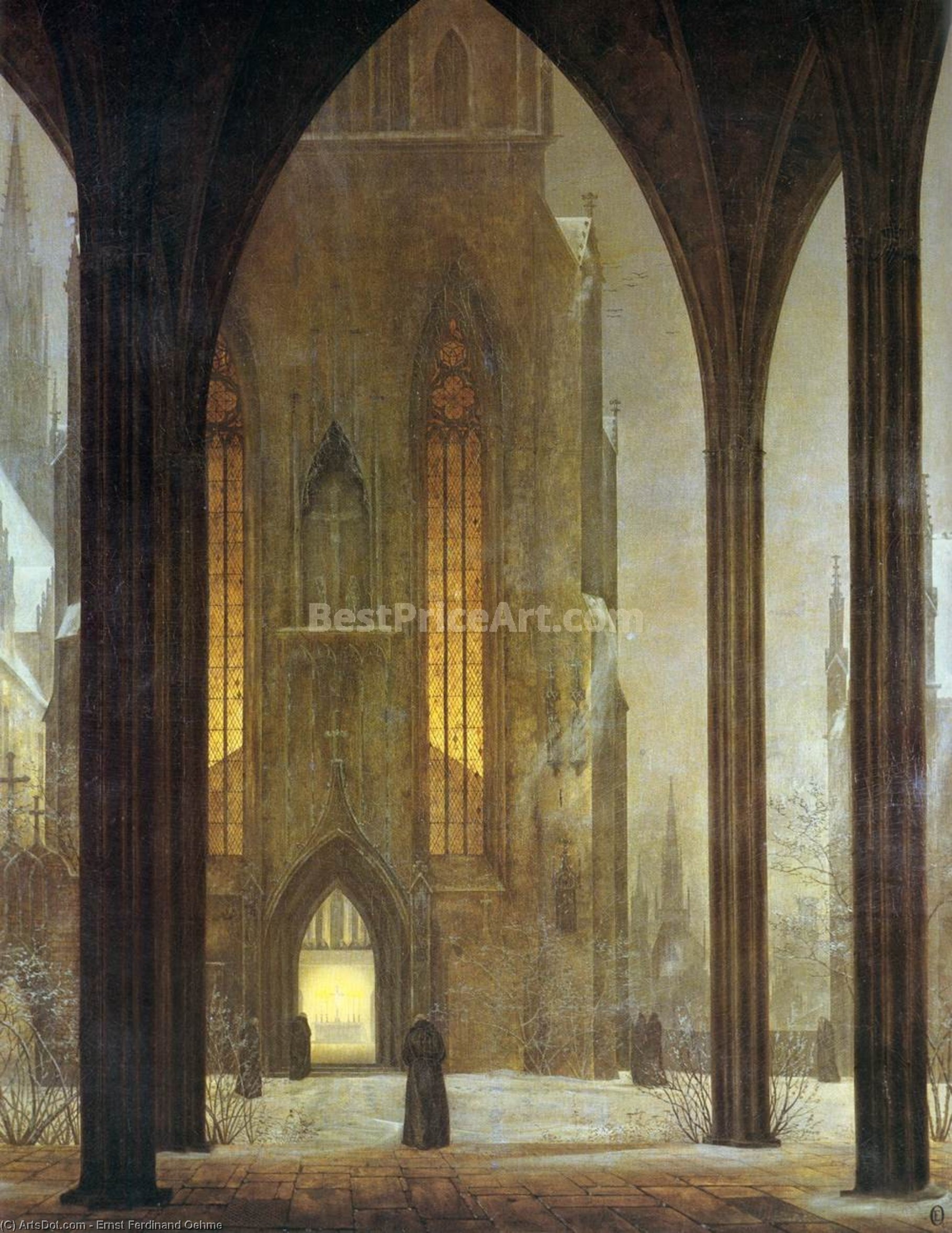
StatsCathedral in Winter

- 127.0 x 100.0 cm


 Read More
Giclée / Art Print
Museum-quality giclée or canvas print with fast production and flexible finish options. ( Buy Hand Made Painting Switch to Digital Image)




P118B $10

P118H $10

P118W $10

P438Z $10

P508JH $12

P508YH $12

P805H $10

P805Z $10

P919BZ $10

P919G $10

P919XJ $10

P959ZH $10

P968JZ $12

W106C $8

W218G $10

W218JH $8

W218Y $10

W307PJ $10

W316G $10

W316PJ $8

W316Y $10

W398PJ $8

W4111J $10

W500HY $15

W500JH $15

W692G $12

W849H $8

W940BG $15

W953PJ $8




Pick from our preset sizes that match the artwork's original proportions.

Type the width and the height you need, to fit your frame or your wall. A print can only be cut, never made bigger than the picture, so a size with a different shape loses a part of the image. We send you a digital mockup to approve before we print anything. The picture shown on this page does not show the real cut — only the mockup does.
Worldwide Delivery () in 2 weeks instead of standard 4/5 weeks. (9 November)

Free Worldwide Express Shipping

High-Quality Linen Canvas

Full Shipping Insurance

Customs Tax Refund Guarantee

True Color Matching Guarantee

100-Day Return Policy (Defects Only)

100% Money-Back Guarantee

Bulk Discount Offer
 Glass option is only available in size under 110 CM

Cathedral in Winter
Giclée / Art Print
Reproduction Size
-


Total Price
$ 81
A Winter Reverie: Ernst Ferdinand Oehme’s Cathedral in Winter
The painting “Cathedral in Winter” by Ernst Ferdinand Oehme, completed in 1821, transcends mere depiction; it embodies a profound meditation on faith and the sublime beauty of nature intertwined. Captured with masterful precision, this artwork transports viewers to a serene Derbyshire landscape dominated by a magnificent cathedral—a testament to Oehme’s ability to distill complex emotions into visual form.Subject Matter and Composition
Oehme's canvas presents a captivating tableau: a gothic cathedral bathed in the diffused glow of winter sunlight. Two towering towers punctuate the skyline, their arched windows admitting shafts of light that illuminate the interior space. Figures—presumably worshippers—are thoughtfully positioned around the towers, fostering a sense of solemn contemplation. Scattered birds add to the scene’s tranquility, perched atop the architectural elements and soaring gracefully against the backdrop of snow-laden branches. The artist's deliberate compositional choices emphasize grandeur and spiritual reverence.Style and Technique: Romantic Luminosity
Oehme’s artistic style aligns squarely with the Romantic movement, a period characterized by an intense fascination with emotion and imagination alongside an appreciation for untamed landscapes. He achieved this ethereal effect through his innovative use of chiaroscuro—the dramatic interplay between light and shadow—a technique perfected by Wright himself. Oehme skillfully employed subtle gradations of tonal color to create depth and atmosphere, capturing the crispness of winter air and the soft luminescence filtering through the cathedral windows. The brushstrokes are loose yet controlled, conveying a palpable sense of movement and dynamism within the stillness of the scene.Historical Context: Derbyshire’s Spiritual Landscape
“Cathedral in Winter” emerged during a time of significant social upheaval—the Industrial Revolution reshaping England's economic fabric. Oehme’s decision to depict this sacred space amidst industrial progress speaks volumes about the Romantic sensibility’s yearning for solace and beauty in contrast to the burgeoning mechanization of daily life. Derbyshire, at that moment, was experiencing considerable growth due to coal mining, yet Oehme prioritized conveying a spiritual experience—a reminder of humanity's connection to something larger than itself.Symbolism: Light as Divine Revelation
The cathedral’s arched windows and the radiant sunlight serve as potent symbols of divine illumination – mirroring the Romantic preoccupation with transcendent experiences. Light is not merely a visual element; it represents enlightenment, hope, and spiritual grace. The birds symbolize freedom and aspiration, mirroring the desire for transcendence that permeated Romantic thought. Oehme's careful attention to detail underscores the importance of perceiving beauty and wonder in even the most commonplace surroundings.Emotional Impact: A Moment of Contemplation
Ultimately, “Cathedral in Winter” evokes a feeling of profound peace and contemplation. The painting invites viewers to pause amidst the hustle and bustle of life and reconnect with their inner selves—a timeless message resonating across generations. Oehme’s masterful rendering captures not just what is seen but also what is felt—creating an artwork that lingers in the memory long after viewing, inspiring awe and reverence for the majesty of God's creation.Questions & Answers
What space is suggested for "Cathedral in Winter" by Ernst Ferdinand Oehme?
The recommended space for "Cathedral in Winter" by Ernst Ferdinand Oehme is a living room. The suggestion can of course be adapted to your interior.
Is a download available for "Cathedral in Winter"?
The image of "Cathedral in Winter" by Ernst Ferdinand Oehme can be downloaded from the artwork's Download page: a high-resolution digital image download.
Is "Cathedral in Winter" by Ernst Ferdinand Oehme kept in the artist's home country?
Yes - the artwork is kept in the artist's home country. "Cathedral in Winter" is held in Germany, while Ernst Ferdinand Oehme was born in Germany.
Artist Biography
A Vision of Romanticism: The Life of Ernst Ferdinand Oehme
Born in the historic city of Dresden, Germany, Ernst Ferdinand Oehme emerged as a profound voice within the German Romantic movement. His journey into the world of fine art began not in a studio, but through the disciplined halls of the Friedrichstadt teacher training college. Before he was recognized as a master of the landscape, he served in a more terrestrial capacity, working as an assistant to a Torschreiber, a role that combined the duties of a gatekeeper and a tax collector. This early life of structured duty provided a stark contrast to the ethereal, atmospheric worlds he would eventually create on canvas. As an auto-didact, Oehme sought out guidance from Carl Wagner, a pursuit that eventually led him to enroll at the Dresden Academy of Fine Arts in 1819.
It was within the walls of the Academy that Oehme’s artistic identity truly began to coalesce. Studying under the Danish painter Johan Christian Clausen Dahl, he became deeply immersed in the nuances of light and landscape. This period of formal education brought him into the orbit of the most significant figures of his era, including the legendary Caspar David Friedrich. Through these connections, Oehiente developed a deep familiarity with the rugged beauty of Saxon Switzerland, a landscape that would become a cornerstone of his creative output. Alongside contemporaries like August Heinrich, he embraced the practice of plein-air painting, capturing the raw, unmediated essence of nature as it unfolded before him.
Atmospheric Mastery and Artistic Evolution
Oehme’s work is characterized by a unique ability to blend architectural grandeur with the moody, often mysterious qualities of the natural world. His early exhibitions, such as his 1821 debut featuring Cathedral in Winter, showcased a profound influence from Friedrich, utilizing light and shadow to evoke a sense of the sublime. In these works, architecture is not merely a structural element but a vessel for spiritual contemplation, often bathed in the diffused glow of winter sunlight or shrouded in the heavy mists of twilight.
As his career progressed, Oehme’s style underwent a fascinating transformation. While his early years were defined by a certain symbolic weight and Romantic mystery—seen vividly in works like Procession in the Mist—his later compositions began to move toward a more grounded realism. By the 1830s, the heavy symbolism of his youth began to recede, replaced by a meticulous attention to natural detail and a less stylized approach to the landscape. This evolution reflected a broader shift in the artistic climate, yet Oehme maintained his signature ability to capture atmospheric perspective and subtle tonal shifts that drew viewers into his tranquil, often melancholic, vistas.
Legacy and Artistic Contributions
The significance of Ernst Ferdinand Oehme lies in his role as a bridge between the intense spiritual symbolism of early German Romanticism and the burgeoning realism of the mid-19th century. His travels, including a period of study in Italy supported by Crown Prince Friedrich Augustus of Saxony, enriched his palette and expanded his understanding of light and composition. He was not merely a painter of scenery but a chronicler of mood, capable of distilling complex human emotions into the quiet stillness of a mountain range or the solemnity of a gothic ruin.
His contributions to the Dresden art scene were marked by both his personal achievements and his connections to the wider European artistic community. Through his work, he helped define the aesthetic of the Saxon landscape, leaving behind a body of work that continues to resonate with those moved by the intersection of nature, architecture, and the human spirit. His legacy is preserved not only in the landscapes he painted but in the enduring influence of the Romantic sensibility he so masterfully embodied.

Ernst Ferdinand Oehme
1797 - 1855 , Germany
Quick Facts
- Artistic Movement Or Style: Romantic painter and illustrator
- Artists Who Influenced This Artist:
- Johan Christian Clausen Dahl
- Caspar David Friedrich
- Full Name: Ernst Ferdinand Oehme
- Nationality: German
- Notable Artworks:
- Cathedral in Winter
- Procession in the Mist
- Place Of Birth: Dresden, Germany
- Date Of Birth: 1797
- Date Of Death: 1855
Related Articles

Mastering the English Landscape: The Top 25 John Constable Artworks
Experience the soul of English landscapes through John Constable's top 25 works. Explore the full collection online at OriginalUniqueArt.com.

The Sublime and the Picturesque: Exploring Emotion & Nature in Romantic Landscape Painting
Explore the emotional power of Romantic landscape painting! Discover the sublime & picturesque traditions, key artists like Friedrich & Cole, and find your perfect artwork at OriginalUniqueArt.
Evoking Nature's Sublime: A Comprehensive Exploration of 19th-Century Landscape Painting
Explore the captivating world of 19th-century landscape painting! Discover renowned artists like Friedrich & Monet, key movements, and find the perfect artwork to bring nature's serenity into your home. Expert insights at OriginalUniqueArt.

Evocations of Place: A Historical Journey Through Landscape Art
Explore the rich history of landscape art with OriginalUniqueArt. Discover renowned artists, movements like Impressionism & Romanticism, and expert guidance for collecting timeless pieces. Find your perfect serene escape today!

Romantic Landscapes: 10 Masterpieces for Your Home | OriginalUniqueArt
Journey through 10 Romantic landscape masterpieces by Friedrich, Turner & Cole. Explore emotional art, sublime nature scenes & iconic 19th-century paintings. Find museum-quality reproductions for your home at OriginalUniqueArt.com – discover the full collection online!


