
 Preview
 Send
Send Share
Share
 Details

 Download
 Similars
 X-Ray
X-Ray Diaporama
 Stats
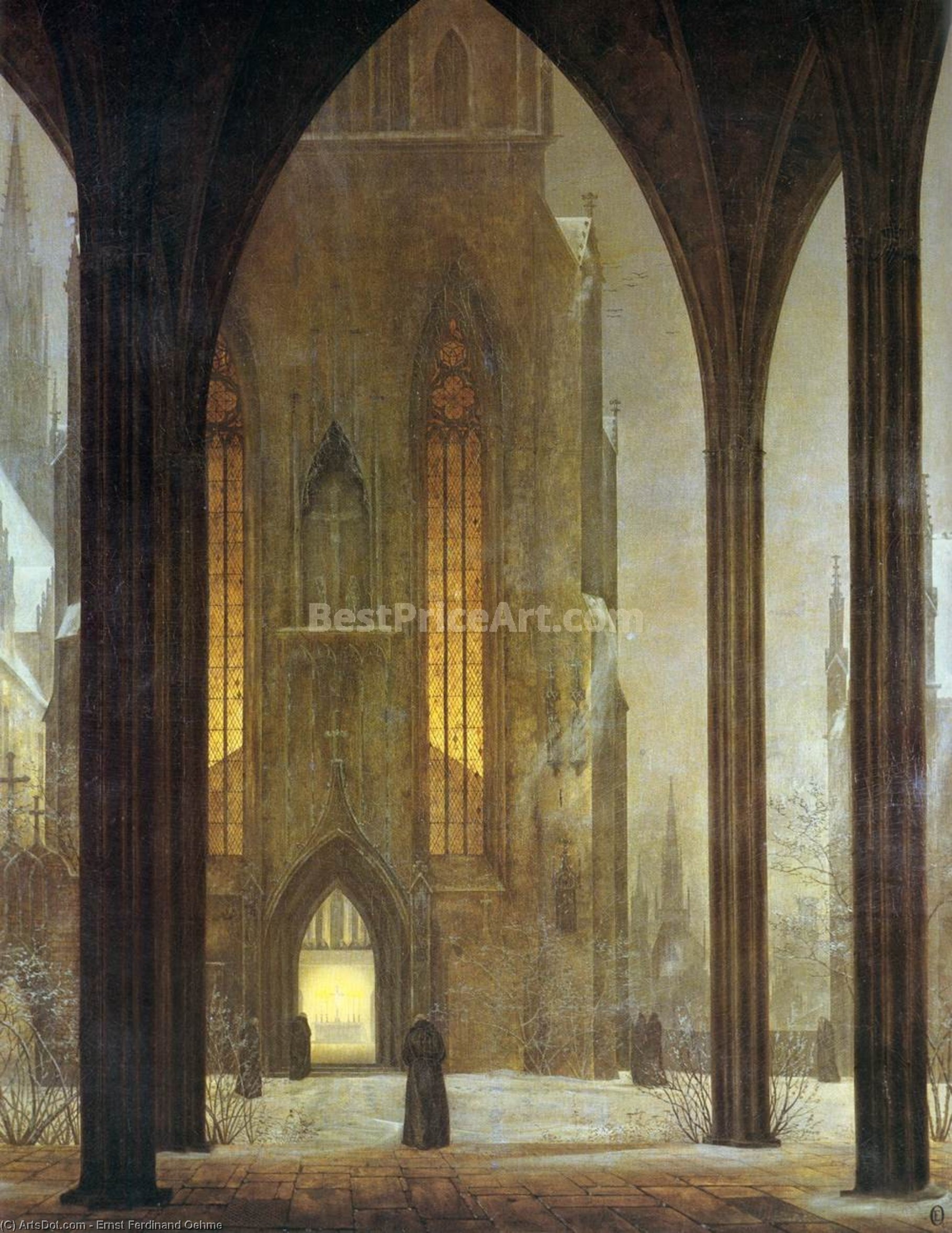
StatsCathedral in Winter
 Acrylic On Canvas
- WallArt
- Romantic Landscape
 1821
1821 127.0 x 100.0 cm
 Gemäldegalerie
 Read More
Hand Made Oil Reproduction
Hand-painted oil on canvas in your size and frame, made to order by our artists. ( Switch to Print Switch to Digital Image)




P118B $10

P118H $10

P118W $10

P438Z $10

P508JH $12

P508YH $12

P805H $10

P805Z $10

P919BZ $10

P919G $10

P919XJ $10

P959ZH $10

P968JZ $12

W106C $8

W218G $10

W218JH $8

W218Y $10

W307PJ $10

W316G $10

W316PJ $8

W316Y $10

W398PJ $8

W4111J $10

W500HY $15

W500JH $15

W692G $12

W849H $8

W940BG $15

W953PJ $8




Pick from our preset sizes that match the artwork's original proportions.

You may enter your own dimensions to fit a specific frame or space. If your selected size does not match the original image's proportions, we will either crop the artwork or extend the painting with additional hand-painted elements. A digital mockup will be sent for your approval before production begins.
Please note that the on-screen preview does not reflect the actual cropping or extension. Only the mockup will accurately show the final composition.
While custom sizes are available, we recommend selecting a dimension from the predefined list to preserve the original proportions.
After order, OriginalUniqueArt.com team will email client for instructions and provide a mockup preview
Worldwide Delivery () in 3/4 weeks instead of standard 5 weeks. (12 September). No compromise on quality.

Free Worldwide Express Shipping

High-Quality Linen Canvas

Full Shipping Insurance

Customs Tax Refund Guarantee

True Color Matching Guarantee

100-Day Return Policy (Defects Only)

100% Money-Back Guarantee

Bulk Discount Offer
 Glass option is only available in size under 110 CM

Cathedral in Winter
Reproduction Medium
Reproduction Size
-


Total Price
$ 300
A Winter Reverie: Ernst Ferdinand Oehme’s Cathedral in Winter
The painting “Cathedral in Winter” by Ernst Ferdinand Oehme, completed in 1821, transcends mere depiction; it embodies a profound meditation on faith and the sublime beauty of nature intertwined. Captured with masterful precision, this artwork transports viewers to a serene Derbyshire landscape dominated by a magnificent cathedral—a testament to Oehme’s ability to distill complex emotions into visual form.Subject Matter and Composition
Oehme's canvas presents a captivating tableau: a gothic cathedral bathed in the diffused glow of winter sunlight. Two towering towers punctuate the skyline, their arched windows admitting shafts of light that illuminate the interior space. Figures—presumably worshippers—are thoughtfully positioned around the towers, fostering a sense of solemn contemplation. Scattered birds add to the scene’s tranquility, perched atop the architectural elements and soaring gracefully against the backdrop of snow-laden branches. The artist's deliberate compositional choices emphasize grandeur and spiritual reverence.Style and Technique: Romantic Luminosity
Oehme’s artistic style aligns squarely with the Romantic movement, a period characterized by an intense fascination with emotion and imagination alongside an appreciation for untamed landscapes. He achieved this ethereal effect through his innovative use of chiaroscuro—the dramatic interplay between light and shadow—a technique perfected by Wright himself. Oehme skillfully employed subtle gradations of tonal color to create depth and atmosphere, capturing the crispness of winter air and the soft luminescence filtering through the cathedral windows. The brushstrokes are loose yet controlled, conveying a palpable sense of movement and dynamism within the stillness of the scene.Historical Context: Derbyshire’s Spiritual Landscape
“Cathedral in Winter” emerged during a time of significant social upheaval—the Industrial Revolution reshaping England's economic fabric. Oehme’s decision to depict this sacred space amidst industrial progress speaks volumes about the Romantic sensibility’s yearning for solace and beauty in contrast to the burgeoning mechanization of daily life. Derbyshire, at that moment, was experiencing considerable growth due to coal mining, yet Oehme prioritized conveying a spiritual experience—a reminder of humanity's connection to something larger than itself.Symbolism: Light as Divine Revelation
The cathedral’s arched windows and the radiant sunlight serve as potent symbols of divine illumination – mirroring the Romantic preoccupation with transcendent experiences. Light is not merely a visual element; it represents enlightenment, hope, and spiritual grace. The birds symbolize freedom and aspiration, mirroring the desire for transcendence that permeated Romantic thought. Oehme's careful attention to detail underscores the importance of perceiving beauty and wonder in even the most commonplace surroundings.Emotional Impact: A Moment of Contemplation
Ultimately, “Cathedral in Winter” evokes a feeling of profound peace and contemplation. The painting invites viewers to pause amidst the hustle and bustle of life and reconnect with their inner selves—a timeless message resonating across generations. Oehme’s masterful rendering captures not just what is seen but also what is felt—creating an artwork that lingers in the memory long after viewing, inspiring awe and reverence for the majesty of God's creation.Artist Biography
Joseph Wright of Derby: Illuminating the Industrial Age
Joseph Wright of Derby, a name synonymous with dramatic lighting and scenes of burgeoning industry in 18th-century England, was more than just a painter; he was a visual chronicler of his time. Born in Derby in 1734, Wright’s life unfolded against the backdrop of rapid social and economic change – the rise of the Industrial Revolution – and he masterfully captured this transformation through his evocative canvases. Initially trained under Hudson in London, Wright quickly returned to his native Derbyshire, establishing a studio that would become renowned for its unique style and subject matter. His career wasn’t one of grand commissions or courtly portraits; instead, he focused on documenting the lives and events unfolding around him, often with a keen eye for social commentary.Early Life and Artistic Training
Wright's early life remains somewhat shrouded in mystery, but it is known that he received his initial artistic training in London under Thomas Hudson, a prominent portraitist associated with the Royal Academy. This period provided him with a solid foundation in traditional techniques and subject matter. However, Wright’s true artistic voice began to emerge as he returned to Derby. He was influenced by Dutch masters, particularly their use of chiaroscuro – the dramatic contrast between light and dark – but he quickly developed his own distinctive style, characterized by dynamic compositions, meticulous detail, and a fascination with capturing fleeting moments of action and emotion. His early portraits demonstrated a skill in rendering character and expression, foreshadowing his later explorations into more complex themes.The Rise of the ‘Industrial Scenes’
Wright's most celebrated works are undoubtedly his “industrial scenes,” paintings that depict events related to the burgeoning industrial activity in the Midlands. These weren’t romanticized depictions of progress; rather, they offered a nuanced and often unsettling portrayal of the realities of factory life, mining operations, and scientific experimentation. Key amongst these is *An Experiment on a Bird in the Air Pump* (1768), arguably his most famous work. This painting, depicting a scientist subjecting a bird to observation within an air pump, brilliantly illustrates the burgeoning spirit of scientific inquiry alongside the potential for exploitation and suffering. The dramatic lighting, the intense expressions of the figures involved, and the claustrophobic setting all contribute to the painting’s powerful impact. Other notable works include *The Slaughtered Horse* (1785), a harrowing depiction of a horse being butchered after an accident in a mine, and *Mr. Shaw's Ballooning Party* (1786), which captures the excitement surrounding early hot air balloon expeditions.Influences and Artistic Style
Wright’s artistic style was remarkably eclectic, drawing inspiration from various sources. As mentioned earlier, he admired Dutch masters like Rembrandt and Vermeer for their masterful use of light and shadow. He also studied the works of contemporary engravers, which likely influenced his meticulous attention to detail and his ability to render complex scenes with precision. Furthermore, Wright’s work was profoundly shaped by the intellectual climate of his time, particularly the rise of Enlightenment ideals and the growing interest in science and industry. The Lunar Society of Birmingham – a group of scientists, philosophers, and industrialists who met regularly in Derby – served as a key source of inspiration for many of his paintings, offering him access to cutting-edge scientific discoveries and providing him with subjects that reflected the spirit of innovation. His use of tenebrism, combined with a keen eye for composition and an ability to capture the psychological intensity of his subjects, set him apart from his contemporaries.Legacy and Historical Significance
Joseph Wright of Derby’s contribution to British art is immense. He was one of the first English painters to achieve widespread recognition for his innovative approach to subject matter and technique. His paintings offer a unique window into the social, economic, and intellectual landscape of 18th-century England, documenting a period of profound transformation with remarkable sensitivity and insight. Wright’s work has been interpreted in various ways – as a celebration of progress, a critique of industrial exploitation, or simply as a record of everyday life. Regardless of one's interpretation, his paintings remain powerfully evocative and continue to resonate with audiences today. He is now recognized as a pivotal figure in the development of British art, paving the way for later generations of artists who sought to capture the complexities of modern life. His legacy endures not only through his remarkable paintings but also through their enduring relevance to our understanding of the Industrial Revolution and its impact on society.
ernst ferdinand oehme
1797 - 1855 , Germany
Quick Facts
- Artistic Movement Or Style: Romanticism, Neoclassicism
- Artists Or Movements Influenced By This Artist:
- Hudson School
- Romanticism
- Artists Who Influenced This Artist:
- Janys Zedres
- Rembrandt
- Date Of Birth: September 3, 1734
- Date Of Death: August 29, 1797
- Full Name: Joseph Wright of Derby
- Nationality: English
- Notable Artworks:
- An Experiment on a Bird in the Air Pump
- The Slaughtered Horse
- A Man Going to His Death
- Place Of Birth: Derby, England
Related Articles

Evocations of Place: A Historical Journey Through Landscape Art
Explore the rich history of landscape art with OriginalUniqueArt. Discover renowned artists, movements like Impressionism & Romanticism, and expert guidance for collecting timeless pieces. Find your perfect serene escape today!

Evoking Nature's Sublime: A Comprehensive Exploration of 19th-Century Landscape Painting
Explore the captivating world of 19th-century landscape painting! Discover renowned artists like Friedrich & Monet, key movements, and find the perfect artwork to bring nature's serenity into your home. Expert insights at OriginalUniqueArt.

The Sublime and the Picturesque: Exploring Emotion & Nature in Romantic Landscape Painting
Explore the emotional power of Romantic landscape painting! Discover the sublime & picturesque traditions, key artists like Friedrich & Cole, and find your perfect artwork at OriginalUniqueArt.

John Constable's Masterpieces: Explore 25 Iconic Landscapes for Your Home
Journey through John Constable's 25 most celebrated landscapes. Explore Romanticism, Dedham Vale & his masterful use of light in iconic paintings like 'Hay Wain'. Find museum-quality art reproductions and elevate your home decor on OriginalUniqueArt.com.

Romantic Landscapes: 10 Masterpieces for Your Home | OriginalUniqueArt
Journey through 10 Romantic landscape masterpieces by Friedrich, Turner & Cole. Explore emotional art, sublime nature scenes & iconic 19th-century paintings. Find museum-quality reproductions for your home at OriginalUniqueArt.com – discover the full collection online!


