Preview
 Send
Send Share
Share
 Details
 Guide
Guide

 Download
 Similars
 X-Ray
X-Ray Diaporama
 Q&A
Q&A Stats
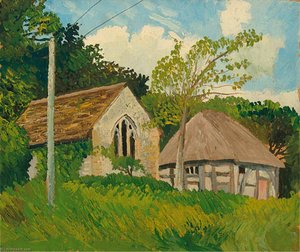
StatsMartello Tower

- 22.0 x 27.0 cm


 Read More
The artwork displayed on this page is protected by copyright law, which means we cannot legally create or sell an identical reproduction. This protection is enforced under international agreements such as the Berne Convention and by national laws, including those outlined by the U.S. Copyright Law - Title 17.
This method fully complies with copyright regulations because it does not involve copying or duplicating the protected artwork. Instead, it is a creative reinterpretation - a new painting that is influenced by the original but not identical to it.
Giclée / Art Print
Museum-quality giclée or canvas print with fast production and flexible finish options. ( Buy Hand Made Painting Switch to Digital Image)




































Pick from our preset sizes that match the artwork's original proportions.

Type the width and the height you need, to fit your frame or your wall. A print can only be cut, never made bigger than the picture, so a size with a different shape loses a part of the image. We send you a digital mockup to approve before we print anything. The picture shown on this page does not show the real cut — only the mockup does.
Worldwide Delivery () in 2 weeks instead of standard 4/5 weeks. (6 November)

Free Worldwide Express Shipping

High-Quality Linen Canvas

Full Shipping Insurance

Customs Tax Refund Guarantee

True Color Matching Guarantee

100-Day Return Policy (Defects Only)

100% Money-Back Guarantee

Bulk Discount Offer
 Glass option is only available in size under 110 CM

Martello Tower
Giclée / Art Print
Reproduction Size
-


Total Price
$ 81
Artist Biography
The Soul of the Sussex Coast
Eric Trayler Cook (1893–1978) was an artist who found his profoundest inspiration in the quiet, rhythmic beauty of the English landscape. Emerging from the vibrant artistic community of Brighton and Hove, Cook did not seek the grand, dramatic vistas that often defined the era; instead, he turned his gaze toward the intimate, the understated, and the serene. His life was deeply intertwined with the geography of Sussex, a region whose rolling hills, coastal edges, and historic architecture provided him with an endless well of emotive subject matter. Born in Brighton to a solicitor, Cook possessed a disciplined intellectual spirit that, when paired with his formal training at the Brighton School of Art, allowed him to approach the canvas with both technical precision and a sensitive, Impressionistic eye. Through his work, one can sense a deep-seated nostalgia for the Edwardian and Victorian landscapes that were slowly transitioning into a new age. He captured a world of stability and tradition, where the weathered textures of stone and thatch spoke of a long, shared history. His paintings are more than mere depictions; they are atmospheric meditations on the passage of time and the enduring presence of the natural and built environments.A Tapestery of Light and Texture
The true mastery of Cook’s technique lay in his ability to translate observed sensations into palpable textures. Influenced by the Impressionistic principles of his instructors, he utilized subtle tonal variations to evoke the soft, diffused light characteristic of the South Coast. He had a remarkable gift for rendering the tactile qualities of his subjects—the rough, ancient stone of a village church, the delicate shingles of a seaside cottage, or the damp, heavy atmosphere of a coastal morning. His brushwork, while controlled, possessed a fluidity that allowed light to dance across his surfaces, creating a sense of movement within seemingly still scenes. His repertoire of subjects often focused on the architectural landmarks and pastoral corners of the region, including:- Ecclesiastical Splendor: Meticulous studies of churches, such as the Church of St Mary the Virgin in Felpham and the historic structures at Wookey and Telscombe.
- Coastal Serenity: Evocative depictions of the seaside around Rottingdean and Brighton, where the sea meets the shore in soft, muted tones.
- Rural Nostalgia: The charming, quiet lanes and historic streets, such as the beautifully rendered West Street in Rye.
An Enduring Artistic Legacy
While Eric Trayler Cook may not have achieved widespread fame during his lifetime, his contribution to the visual record of Sussex is immeasurable. His work serves as a vital historical window, offering contemporary viewers a glimpse into the aesthetic sensibilities and the pastoral tranquility of a bygone era. He captured the essence of a landscape that was both familiar and timeless, preserving the quiet dignity of the English countryside for future generations. Today, his paintings are cherished by collectors and historians alike for their ability to evoke a profound sense of peace. To look upon a Cook landscape is to step into a moment of stillness, where the weight of history and the beauty of nature exist in perfect, harmonious balance. His legacy remains etched in the soft light and enduring textures of the Sussex he so dearly loved.
Eric Trayler Cook
1893 - 1978
Quick Facts
- Full Name: Eric Trayler Cook
- Nationality: British
- Date Of Birth: 1893
- Date Of Death: 1978
- Place Of Birth: Rottingdean
- Notable Artworks: ['Bexhill Church']
- Artistic Movement Or Style: Romanticism
- Artists Who Influenced This Artist: ['John Constable']
- Artists Or Movements Influenced By This Artist: ['Romanticism']