

 Send
Send Share
Share
 Details
 Guide
Guide

 Download
 Similars
 Diaporama
 Stats
StatsArnold Schönberg
 Giclée Print
- Digital
- Abstract Expressionism
 1940
1940- Modern
 8.0 x 12.0 cm
 Arnold Schönberg Center
 Read More
The artwork displayed on this page is protected by copyright law, which means we cannot legally create or sell an identical reproduction. This protection is enforced under international agreements such as the Berne Convention and by national laws, including those outlined by the U.S. Copyright Law - Title 17.
As a respectful and legal alternative, we offer custom, hand-painted artworks inspired by the original. Our skilled and professional artists carefully study the original's style, mood, and artistic essence to create a new, unique piece that evokes the same feeling - while remaining an original creation in its own right.
This method fully complies with copyright regulations because it does not involve copying or duplicating the protected artwork. Instead, it is a creative reinterpretation - a new painting that is influenced by the original but not identical to it.
Hand Made Oil Reproduction
Hand-painted oil on canvas in your size and frame, made to order by our artists. ( Switch to Print Switch to Digital Image)




































Pick from our preset sizes that match the artwork's original proportions.

Type the width and the height you need, to fit your frame or your wall. This is hand-painted, so for a size with a different shape the artist can paint a bit more around the picture, or cut a bit — you choose. We send you a digital mockup to approve before the painting starts. The picture shown on this page does not show the real result — only the mockup does.
After order, OriginalUniqueArt.com team will email client for instructions and provide a mockup preview
Worldwide Delivery () in 3/4 weeks instead of standard 5 weeks. (23 October). No compromise on quality.

Free Worldwide Express Shipping

High-Quality Linen Canvas

Full Shipping Insurance

Customs Tax Refund Guarantee

True Color Matching Guarantee

100-Day Return Policy (Defects Only)

100% Money-Back Guarantee

Bulk Discount Offer
 Glass option is only available in size under 110 CM

Arnold Schönberg
Reproduction Medium
Reproduction Size
-


Total Price
$ 300
Arnold Schönberg – A Moment of Reflection
This intimate black and white photograph, meticulously crafted by Eric Schaal in 1940, offers an unparalleled glimpse into the world of Arnold Schönberg, one of the most influential composers of the 20th century. Captured during a performance of his seminal work, *Pierrot lunaire*, op. 21, at New York’s Town Hall, the image transcends a simple snapshot; it's a poignant dialogue between artist and observer, frozen in time. Schaal’s skillful composition – featuring Schönberg centrally framed, with two indistinct figures subtly positioned in the background – immediately evokes a sense of quiet contemplation and artistic intensity.
The photograph’s stark monochrome palette amplifies its emotional resonance. The absence of color directs our focus entirely onto Schönberg's face, etched with a serious expression that speaks volumes about the profound intellectual and emotional weight of his music. Schaal’s technical mastery is evident in the sharp detail of Schönberg’s attire – a suit and tie suggesting the formality of the occasion – and the subtle play of light and shadow across his features. The inclusion of the two background figures adds an element of realism, hinting at the social context within which this artistic moment unfolded.
The Context: Schönberg and *Pierrot lunaire*
Arnold Schönberg (1874-1951) was a revolutionary figure in music. A pioneer of atonality and serialism, he fundamentally altered Western musical thought. *Pierrot lunaire*, composed between 1912 and 1917, is arguably his most famous work. This song cycle, exploring themes of love, loss, and despair through evocative imagery and unsettling harmonies, represents a pivotal moment in the development of modern music. The photograph’s setting – Town Hall, a venue often hosting significant musical performances – underscores Schönberg's central role within the artistic landscape of early 20th-century New York.
Schönberg’s personal correspondence with Schaal reveals a thoughtful exchange about the photograph itself. His request to retain the image in a transparent envelope, coupled with his instruction not to distribute it for publication, speaks volumes about his desire for control over his own representation and his appreciation for Schaal's dedication. This deliberate act of preservation elevates the photograph beyond a mere documentation of an event; it becomes a cherished artifact reflecting a unique artistic relationship.
Symbolism and Emotional Impact
The image’s power lies not just in its technical execution but also in the inherent symbolism it conveys. Schönberg's serious gaze invites us to contemplate the complexities of his musical vision – a world of dissonance, fragmentation, and profound emotional depth. The photograph captures a moment of intense concentration, suggesting the rigorous intellectual process that underpinned Schönberg’s groundbreaking compositions. The subdued background figures serve as a visual counterpoint, emphasizing Schönberg's central importance and highlighting the solitary nature of artistic creation.
Schaal’s choice to capture this scene in black and white further enhances its timeless quality. The absence of color allows viewers to focus on the essential elements – form, expression, and light – creating a powerful and enduring image that resonates with the viewer long after initial observation. This reproduction offers an exceptional opportunity to own a piece of art history, connecting directly with one of music’s most influential figures.
Specifications
- Title: Arnold Schönberg
- Artist: Eric Schaal
- Date: 1940
- Size: 8 x 12 cm
- Medium: Black and White Photograph
A meticulously hand-painted reproduction of this iconic image is available, offering a faithful representation of Schaal’s original capture. This artwork would be an exceptional addition to any art collection or a striking focal point within interior design settings.
Questions & Answers
How do I download the image of "Arnold Schönberg" by Eric Schaal?
"Arnold Schönberg" by Eric Schaal can be downloaded from the artwork's Download page, as a high-resolution digital image download.
What does "Arnold Schönberg" by Eric Schaal bring to an interior?
The calm atmosphere of "Arnold Schönberg" by Eric Schaal matches its recommended space: a living room.
Can I order an oil reproduction of "Arnold Schönberg"?
Hand-painted copies of "Arnold Schönberg" by Eric Schaal are sold on this website: a hand-painted oil reproduction on linen canvas, ordered from its Hand-Painted Reproduction page.
Artist Biography
A Life Captured in Monochrome
Eric Schaal was a German-American portrait photographer whose lens possessed the rare ability to freeze the profound intellectual and emotional weight of his subjects. Born in Munich, Germany, his early years were steeped in the rich cultural tapestry of Europe. His artistic journey began not with a camera, but through the disciplined study of music; he received training in piano and composition, an education that likely informed the rhythmic and tonal sensitivity he later brought to his photographic compositions. This musical foundation allowed him to perceive the underlying cadence of a moment, transforming simple snapshots into poignant dialogues between the observer and the observed.
The trajectory of Schaal’s life was irrevocably altered by the turbulent political landscape of the 20th century. Due to his Jewish heritage, he was forced to emigrate to the United States in 1936, fleeing the rising tide of National Socialism. This period of displacement and transition marked a pivotal chapter in his development, as he moved from the established studios of Munich to the vibrant, bustling energy of New York City. It was within this new American context that Schaal truly refined his mastery of portraiture, capturing the faces of an era defined by both immense creativity and profound historical tension.
The Art of the Portrait
Schaal’s photographic work is characterized by a meticulous technical mastery and an intimate approach to his subjects. He was particularly renowned for his ability to capture famous contemporaries, creating images that transcend mere documentation to become psychological studies. His work often utilized a stark monochrome palette, where the absence of color served to direct the viewer's focus entirely onto the nuances of expression and the subtle play of light and shadow across a face.
His portfolio includes remarkable encounters with some of the most influential figures of the 20th century:
- Arnold Schönberg: In a celebrated 1940 photograph, Schaal captured the revolutionary composer during a performance of Pierrot lunaire at New York’s Town Hall. The image is noted for its ability to evoke a sense of quiet contemplation and artistic intensity through its skillful framing and emotional resonance.
- Social Chronicles: Beyond individual portraits, Schaal documented the social fabric of New York, capturing scenes such as notable figures dining at the Colony in 1944, thereby providing a window into the high society and public life of the 1940s.
Through his lens, Schaal did more than record appearances; he captured the essence of an era. His ability to blend the formal requirements of portrait photography with a deep, almost musical sensitivity to atmosphere ensured that his work remains a vital historical and artistic record. Though much of his work was published posthumously, the legacy of his vision continues to offer an unparalleled glimpse into the souls of the great thinkers and artists of his time.

Eric Schaal
1905 - 1994 , Germany
Quick Facts
- Artistic Movement Or Style: Portrait photography
- Full Name: Eric Schaal
- Nationality: German-American
- Notable Artworks: ['Arnold Schönberg – A Moment of Reflection']
- Place Of Birth: Munich, Germany
- Date Of Birth: 1905
- Date Of Death: 1994
Related Articles

Dark Masterpieces: 10 Iconic Paintings Dominated by Black Tones |
Explore 10 iconic paintings dominated by black tones, from Rembrandt’s chiaroscuro to Goya's dark expressions. Discover the stories behind these masterpieces & find museum-quality art reproductions for your home at .

Giclée Prints: Archival Quality & Aesthetic Nuances for the Discerning Collector
Explore the world of giclée prints with OriginalUniqueArt. Learn about archival quality, aesthetic nuances & investment potential. Expert guidance for discerning art collectors seeking museum-quality reproductions and lasting value.

The Enduring Legacy of Fine Art Prints: Technique, History & Aesthetic Impact
Explore the rich history & techniques of fine art prints. Discover investment potential, assess authenticity, and learn how to preserve your collection with expert guidance. Trusted insights for discerning collectors.
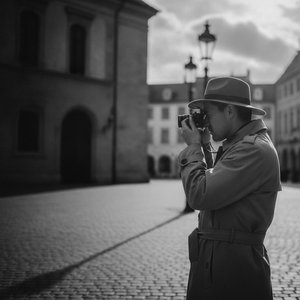
Beyond Color: The Timeless Power and Artistry of Black and White Photography
Explore the profound artistry of black and white photography. From the chemistry of gelatin silver to the chiaroscuro of the Old Masters, discover how monochrome captures the eternal essence of light, form, and emotion for the discerning art collector.

Echoes of Time: Exploring the Enduring Appeal & Historical Context of Vintage Art Prints
Explore the captivating world of vintage art prints! Discover their history, collecting tips & enduring appeal. Expert insights on chromolithography and building a legacy collection with OriginalUniqueArt.
