
 Preview
 Send
Send Share
Share
 Details
 Guide
Guide

 Download
 Similars
 X-Ray
X-Ray Diaporama
 Q&A
Q&A Stats
StatsCigar box Moissonneurs Égyptiens


 Read More
Giclée / Art Print
Museum-quality giclée or canvas print with fast production and flexible finish options. ( Buy Hand Made Painting Switch to Digital Image)




P118B $10

P118H $10

P118W $10

P438Z $10

P508JH $12

P508YH $12

P805H $10

P805Z $10

P919BZ $10

P919G $10

P919XJ $10

P959ZH $10

P968JZ $12

W106C $8

W218G $10

W218JH $8

W218Y $10

W307PJ $10

W316G $10

W316PJ $8

W316Y $10

W398PJ $8

W4111J $10

W500HY $15

W500JH $15

W692G $12

W849H $8

W940BG $15

W953PJ $8




Pick from our preset sizes that match the artwork's original proportions.

Type the width and the height you need, to fit your frame or your wall. A print can only be cut, never made bigger than the picture, so a size with a different shape loses a part of the image. We send you a digital mockup to approve before we print anything. The picture shown on this page does not show the real cut — only the mockup does.
Worldwide Delivery () in 2 weeks instead of standard 4/5 weeks. (5 November)

Free Worldwide Express Shipping

High-Quality Linen Canvas

Full Shipping Insurance

Customs Tax Refund Guarantee

True Color Matching Guarantee

100-Day Return Policy (Defects Only)

100% Money-Back Guarantee

Bulk Discount Offer
 Glass option is only available in size under 110 CM

Cigar box Moissonneurs Égyptiens
Giclée / Art Print
Reproduction Size
-


Total Price
$ 81
Questions & Answers
How strong is the contrast in "Cigar box Moissonneurs Égyptiens" by Émile Gallé?
The contrast level of "Cigar box Moissonneurs Égyptiens" by Émile Gallé is gentle.
Where can I buy a print of "Cigar box Moissonneurs Égyptiens" by Émile Gallé?
"Cigar box Moissonneurs Égyptiens" is available as a fine art print on cotton canvas or archival canvas paper. Orders are placed on its Fine Art Print page, in the size of your choice.
How do the colors of "Cigar box Moissonneurs Égyptiens" relate to each other?
"Cigar box Moissonneurs Égyptiens" by Émile Gallé displays a softly mixed palette color harmony.
Artist Biography
A Life Immersed in Nature and Innovation
Émile Gallé, a name synonymous with the blossoming of French Art Nouveau glass, was born on May 8, 1846, in Nancy, France, into a family deeply rooted in artisanal tradition. His father, Charles Gallé, owned a respected factory producing furniture and porcelain, providing young Émile with an early exposure to the world of design and craftsmanship. However, Gallé’s intellectual curiosity extended far beyond the practicalities of the workshop. He pursued studies in philosophy, botany, and drawing – disciplines that would become inextricably linked to his artistic vision. This unique blend of philosophical inquiry and scientific observation instilled within him a profound appreciation for aesthetics and the interconnectedness between art and the natural world. His early botanical explorations fueled a lifelong fascination with organic forms, which would ultimately define the lyrical beauty of his creations. He wasn’t merely replicating nature; he was seeking to understand its underlying principles and translate them into objects of exquisite artistry.The Alchemy of Glass: Pioneering New Techniques
Following the Franco-Prussian War, Gallé inherited his father's factory and embarked on a journey of relentless experimentation with glassmaking. Dissatisfied with conventional clear glass adorned with simple enamel decoration, he sought to revolutionize the medium itself. He wasn’t content with surface embellishment; he wanted to imbue the glass *with* color and depth, creating pieces that seemed to emanate light from within. This ambition led him to perfect the cameo technique – a laborious process involving layering different colors of glass and then meticulously etching away portions to reveal contrasting hues beneath. The result was breathtaking: intricate designs with remarkable dimensionality and a jewel-like quality. But Gallé’s innovations didn't stop there. He developed heavy, opaque glasses carved or etched with plant motifs, often employing multiple layers of color to achieve an astonishing level of realism. He fearlessly incorporated metallic foils, air bubbles, and other unconventional elements into his work, pushing the boundaries of what was thought possible with glass. These weren’t merely decorative flourishes; they were integral components of his artistic expression, adding texture, depth, and a sense of ethereal beauty to his pieces.Recognition and The École de Nancy
Gallé's groundbreaking work began to attract attention in 1878 at the Paris Exhibition, but it was the 1889 Exposition Universelle that truly cemented his reputation as a leading figure of the Art Nouveau movement. His innovative designs captivated audiences and critics alike, establishing him as a visionary artist who dared to challenge conventional norms. This success wasn’t solely attributable to his individual talent; Gallé recognized the power of collaboration and actively fostered a community of artists and artisans in Lorraine, France. He was a founding member of the École de Nancy – a regional design movement that championed the integration of art into everyday life. The École de Nancy sought to create a total work of art, encompassing everything from architecture and furniture to glassware and jewelry, all unified by a shared aesthetic sensibility. Gallé’s influence extended beyond his own studio; he mentored countless artists and artisans, inspiring them to embrace innovation and craftsmanship. Notable works like the “Hand with Seaweed and Shells” vase, the whimsical “Elephant Vase,” and vases adorned with delicate mayfly designs stand as testaments to his mastery of glass techniques and his profound connection to the natural world.A Lasting Legacy: Art, Culture, and Social Consciousness
Émile Gallé’s legacy transcends the beauty of his individual artworks. He profoundly impacted the development of Art Nouveau, shaping its defining characteristics – flowing lines, organic motifs, and a celebration of nature. His emphasis on craftsmanship and innovation continues to inspire artists and designers today. But Gallé was more than just an artist; he was a humanist deeply committed to social progress. He actively worked to preserve the cultural heritage of Lorraine, supporting local museums and historical societies. Furthermore, he demonstrated a strong sense of social responsibility by organizing evening schools for workers and advocating for human rights organizations. This commitment to both artistic excellence and social justice underscores the depth of his character and the enduring relevance of his vision. Today, extensive collections of Gallé’s work are housed in prestigious institutions such as the Musée d'Orsay in Paris and the Musée des Beaux-Arts de Nancy, ensuring that his artistic legacy continues to captivate and inspire generations to come. His pieces aren’t simply objects; they are windows into a world where art, nature, and humanism converge in harmonious beauty. They remind us of the power of creativity to transform our surroundings and enrich our lives.
Émile Gallé
1846 - 1904 , France
Quick Facts
- Full Name: Émile Gallé
- Nationality: French
- Date Of Birth: 1846
- Date Of Death: 1904
- Place Of Birth: Nancy, France
- Notable Artworks:
- Hand with Seaweed & Shells
- Elephant Vase
- Prunus
- Vase
- Cigar box Moissonneurs Égyptiens
- Artistic Movement Or Style: Art Nouveau
- Artists Or Movements Influenced By This Artist: ['Art Nouveau']
Related Articles

The Enduring Form: Sculpture Across History, Technique & Emotional Resonance
Explore the rich history of sculpture with OriginalUniqueArt. Discover key techniques, influential artists & investment potential for discerning collectors. Expert insights into valuing and collecting timeless masterpieces.
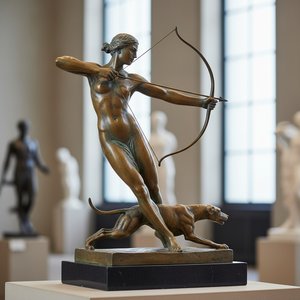
Paul Manship: Reassessing the Master of American Art Deco Sculpture
Explore the captivating world of Paul Manship, a leading figure in American Art Deco sculpture. Discover his iconic works like Prometheus, influence on modernism, and investment potential. Expert insights for collectors.

Bronze Age to Modern Masters: 10 Sculptures That Redefined Art | OriginalUniqueArt
Journey through art history with 10 legendary bronze sculptures – from Michelangelo's David to Rodin’s Thinker. Explore the stories, techniques & timeless beauty of these masterpieces. Find museum-quality reproductions & elevate your home decor on OriginalUniqueArt.com.

Bronze Sculptures That Defined Art History | OriginalUniqueArt
Journey through art history with our Top 10 bronze sculptures! Explore masterpieces by Rodin, Michelangelo & more. Discover stories behind iconic statues and find museum-quality reproductions for your home decor at OriginalUniqueArt.com.

The Enduring Form: Exploring Themes & Techniques in Sculpture Across Historical Periods
Explore the rich history of sculpture from ancient masterpieces to contemporary innovations. Discover key techniques, influential artists & investment potential for discerning art collectors.


