

 Preview
 Send
Send Share
Share
 Details
 Guide
Guide

 Download
 Similars
 X-Ray
X-Ray Diaporama
 Stats
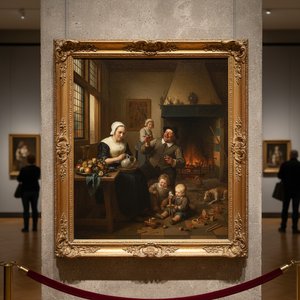
StatsBarnyard Scene
 Dutch Golden Age
 1658
1658 54.0 x 44.0 cm
 Museum of Foreigh Art
 Read More
Hand Made Oil Reproduction
Hand-painted oil on canvas in your size and frame, made to order by our artists. ( Switch to Print Switch to Digital Image)




































Pick from our preset sizes that match the artwork's original proportions.

You may enter your own dimensions to fit a specific frame or space. If your selected size does not match the original image's proportions, we will either crop the artwork or extend the painting with additional hand-painted elements. A digital mockup will be sent for your approval before production begins.
Please note that the on-screen preview does not reflect the actual cropping or extension. Only the mockup will accurately show the final composition.
While custom sizes are available, we recommend selecting a dimension from the predefined list to preserve the original proportions.
After order, OriginalUniqueArt.com team will email client for instructions and provide a mockup preview
Worldwide Delivery () in 3/4 weeks instead of standard 5 weeks. (26 September). No compromise on quality.

Free Worldwide Express Shipping

High-Quality Linen Canvas

Full Shipping Insurance

Customs Tax Refund Guarantee

True Color Matching Guarantee

100-Day Return Policy (Defects Only)

100% Money-Back Guarantee

Bulk Discount Offer
 Glass option is only available in size under 110 CM

Barnyard Scene
Reproduction Medium
Reproduction Size
-


Total Price
$ 300
Artist Biography
A Witness to Disaster: The Life and Art of Egbert van der Poel
Egbert van der Poel, a name perhaps less celebrated than some of his Dutch Golden Age contemporaries, nevertheless occupies a vital and poignant space within the artistic landscape of 17th-century Netherlands. Born in Delft in 1621, into a family of artisans—his father being a goldsmith—Van der Poel’s life unfolded against a backdrop of burgeoning prosperity and, tragically, devastating calamity. While details surrounding his early training remain somewhat elusive, art historical accounts suggest potential tutelage under Esaias van de Velde, known for his expansive landscapes, and Aert van der Neer, master of atmospheric light effects. Further connections are proposed to painter Adriaen Lievensz van der Poel, believed to be his brother, and studies with Cornelis Saftleven in Rotterdam, hinting at a formative period steeped in diverse artistic influences. These early exposures would shape Van der Poel’s own distinctive style, blending detailed observation with a dramatic flair for capturing both the tranquility of everyday life and the chaos of unforeseen events.From Landscapes to Lament: Artistic Development and Key Themes
Van der Poel's artistic journey began with a focus on landscape painting, a popular genre during the Dutch Golden Age. However, he quickly demonstrated an aptitude for *genre* scenes—depictions of everyday life—imbued with a remarkable attention to detail. His early works reveal the subtle influence of his potential mentors; echoes of Van de Velde’s panoramic vistas and Van Neer's evocative use of light can be discerned in his compositions. The dynamic arrangements favored by Saftleven likely contributed to the sense of movement and drama that would become a hallmark of Van der Poel’s style. In 1650, he formally registered with the Guild of St. Luke in Delft as a landscape painter, solidifying his professional standing within the artistic community. A year later, he married Aeltgen Willems van Linschooten in Maassluis, near Rotterdam, and together they would build a family—a son and three daughters—while navigating the complexities of life in a rapidly changing world. But it was an event that shattered the peace of Delft in 1654 that would indelibly mark Van der Poel’s artistic legacy.The Delft Explosion: A Moment Frozen in Time
On October 12, 1654, a catastrophic explosion ripped through Delft, detonating a gunpowder store and leveling much of the city. Living within the affected area at the time, Van der Poel witnessed firsthand the unimaginable devastation. This event became the defining subject of his artistic output. Unlike many artists who might shy away from depicting such horror, Van der Poel confronted it head-on, creating a series of paintings that served as both a historical record and a deeply moving lament for the lives lost and the city shattered. The Explosion of the Delft Magazine, perhaps his most iconic work, vividly portrays the immediate aftermath—a scene of utter chaos, with buildings reduced to rubble, figures scrambling amidst the debris, and smoke billowing into the sky. These paintings are not merely depictions of destruction; they are powerful testaments to human resilience in the face of tragedy. Other works like Barnyard Scene and Fire in a Village, while seemingly disparate subjects, demonstrate his continued fascination with scenes of disruption and dramatic events.Style, Significance, and Lasting Legacy
Van der Poel’s artistic style is characterized by its realism, meticulous attention to detail, and a generally muted color palette that lends a somber tone to his work. He masterfully employed light and shadow to create depth and atmosphere, drawing the viewer into the heart of each scene. His compositions often feature dynamic arrangements of figures and objects, enhancing the overall sense of drama and immediacy. While not as widely celebrated during his lifetime as some of his peers, Van der Poel’s historical significance lies in his unique documentation of the Delft gunpowder explosion—paintings that serve as invaluable visual records of a pivotal moment in Dutch history. He died in Rotterdam in 1664, leaving behind a body of work that continues to resonate with viewers today. His paintings offer a glimpse into the world of the Dutch Golden Age, capturing not only its beauty and prosperity but also its vulnerability and capacity for tragedy. They remind us that even amidst artistic grandeur, there is always room for bearing witness—for remembering, and for honoring those whose stories might otherwise be lost to time.- Born: Delft, Netherlands (1621)
- Died: Rotterdam, Netherlands (1664)
- Known For: Genre scenes, landscapes, depictions of the Delft gunpowder explosion
- Influences: Esaias van de Velde, Aert van der Neer, Cornelis Saftleven

Egbert van der Poel
1621 - 1664 , Netherlands
Quick Facts
- Artistic Movement Or Style: Dutch Golden Age
- Artists Who Influenced This Artist:
- Esaias van de Velde
- Aert van der Neer
- Cornelis Saftleven
- Date Of Birth: 1621
- Date Of Death: 1664
- Full Name: Egbert van der Poel
- Nationality: Dutch
- Notable Artworks:
- The Explosion of the Delft Magazine
- Barnyard Scene
- Fire in a Village
- Place Of Birth: Delft, Netherlands
Related Articles

Dutch Masters: 10 Golden Age Paintings That Still Inspire |
Journey into the Dutch Golden Age! Explore 10 iconic paintings by Rembrandt, Vermeer & Hals. Discover the stories behind these Baroque masterpieces and find museum-quality art reproductions to elevate your home decor on .

Golden Age Reflections: Dutch Baroque Painting & Cultural Innovation
Explore the Dutch Golden Age of painting! Discover key artists like Vermeer & ter Borch, their innovative techniques, and the rich cultural context behind these Baroque masterpieces. Learn about collecting & appreciating this iconic art period.

Golden Light & Dutch Skies: The Timeless Magic of Dutch Golden Age Landscapes
Discover the breathtaking beauty of Dutch Golden Age landscapes. Explore the mastery of light, chiaroscuro, and 17th-century realism through an expert art history lens, celebrating the enduring legacy of the Dutch Masters for discerning collectors and art lovers.
Genre Painting: A Window into Daily Life & Societal Values of the Dutch Golden Age
Explore the captivating world of Dutch Golden Age genre painting! Discover realistic depictions of daily life, masterful artists like Ostade & Metsu, and hidden symbolism. Learn about this influential art movement with OriginalUniqueArt.

Illuminating Innovation: Exploring the Dutch Golden Age of Painting
Explore the Dutch Golden Age of painting with OriginalUniqueArt. Discover Rembrandt, Vermeer & other Masters. Learn about key characteristics, iconic artworks, and lasting influence. Expert insights for collectors & enthusiasts.


