Preview
 Send
Send Share
Share
 Details
 Guide
Guide

 Download
 Similars
 X-Ray
X-Ray Diaporama
 Stats
StatsGrossglockner


 Read More
Hand Made Oil Reproduction
Hand-painted oil on canvas in your size and frame, made to order by our artists. ( Switch to Print Switch to Digital Image)




P118B $10

P118H $10

P118W $10

P438Z $10

P508JH $12

P508YH $12

P805H $10

P805Z $10

P919BZ $10

P919G $10

P919XJ $10

P959ZH $10

P968JZ $12

W106C $8

W218G $10

W218JH $8

W218Y $10

W307PJ $10

W316G $10

W316PJ $8

W316Y $10

W398PJ $8

W4111J $10

W500HY $15

W500JH $15

W692G $12

W849H $8

W940BG $15

W953PJ $8




Pick from our preset sizes that match the artwork's original proportions.

Type the width and the height you need, to fit your frame or your wall. This is hand-painted, so for a size with a different shape the artist can paint a bit more around the picture, or cut a bit — you choose. We send you a digital mockup to approve before the painting starts. The picture shown on this page does not show the real result — only the mockup does.
After order, OriginalUniqueArt.com team will email client for instructions and provide a mockup preview
Worldwide Delivery () in 3/4 weeks instead of standard 5 weeks. (21 October). No compromise on quality.

Free Worldwide Express Shipping

High-Quality Linen Canvas

Full Shipping Insurance

Customs Tax Refund Guarantee

True Color Matching Guarantee

100-Day Return Policy (Defects Only)

100% Money-Back Guarantee

Bulk Discount Offer
 Glass option is only available in size under 110 CM

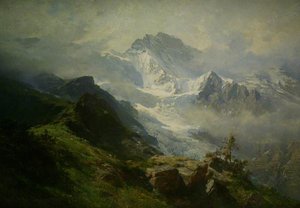
Grossglockner
Reproduction Medium
Reproduction Size
-


Total Price
$ 300
A Sublime Vision of Alpine Majesty
- Subject Matter: Compton’s “Grossglockner” captures the grandeur of Austria's Grossglockner mountain massif, one of Europe’s highest peaks. The painting depicts a panoramic vista showcasing the imposing mountains bathed in soft sunlight, emphasizing their dramatic silhouette against expansive skies.
- Style: This artwork exemplifies Impressionistic tendencies, prioritizing atmospheric effects over precise representation. Compton skillfully blends brushstrokes to convey the ephemeral quality of light and shadow, creating an immersive experience for the viewer akin to witnessing the mountain landscape firsthand.
- Technique: Employing watercolor on paper—a technique favored by artists of his era—Compton achieved remarkable luminosity and tonal subtlety. Layers of translucent washes build up gradually, capturing the nuances of color and texture—the glistening snow surfaces, the textured rock faces, and the billowing clouds—resulting in a breathtakingly realistic depiction.
- Historical Context: Created in 1918, “Grossglockner” emerged during a period of artistic experimentation following Impressionism. The painting reflects the broader fascination with Alpine landscapes prevalent in European art circles at the time, fueled by burgeoning tourism and scientific exploration. Compton’s work aligns perfectly with the Romantic spirit—a yearning for sublime beauty and contemplation amidst untamed nature.
- Symbolism: Beyond its visual splendor, “Grossglockner” carries symbolic resonance. The towering mountains represent resilience, permanence, and spiritual aspiration—themes deeply rooted in Quaker beliefs. Furthermore, the serene atmosphere evokes feelings of tranquility and awe, inviting viewers to reconnect with the grandeur of the natural world.
The painting’s emotional impact is undeniable; it transports us back to a time when artists sought inspiration from the sublime—a concept championed by Edmund Burke and Coleridge—to express profound spiritual truths. Compton's masterful watercolor technique ensures that this vision of Grossglockner remains captivating for generations to come, offering a timeless reminder of the beauty and majesty of Alpine scenery.
Questions & Answers
What is the luminance of "Grossglockner" by Edward Theodore Compton?
"Grossglockner" by Edward Theodore Compton has a luminous luminance. Luminance describes how much light the colors appear to reflect.
What aliases or alternate names does Edward Theodore Compton have?
Edward Theodore Compton is also known as E.T. Compton.
Are the colors of "Grossglockner" by Edward Theodore Compton vivid or muted?
"Grossglockner" by Edward Theodore Compton is recorded with a muted saturation and a monochromatic intensity.
Artist Biography
Edward Theodore Compton: Pioneer of Alpine Watercolor
Edward Theodore Compton, a singular figure in the artistic landscape of late 19th and early 20th century Europe, stands as an extraordinary testament to the intersection of art and adventure. Born in Stoke Newington, London, in 1849, Compton’s upbringing within a Quaker household instilled a profound appreciation for simplicity and moral integrity—values that would undoubtedly shape his artistic vision. Despite attending various art schools including the Royal Academy, he largely pursued self-education, honing his skills through meticulous observation and tireless experimentation. His journey to Darmstadt, Germany, in 1867, marked a pivotal moment, propelling him into a vibrant artistic community led by Grand Duke Ludwig III and fostering an enduring fascination with alpine scenery.- Early Influences: Compton’s formative years were steeped in Quaker spirituality and nurtured by his father's passion for art, exposing him to influential Impressionist painters like Claude Monet and Pierre-Auguste Renoir.
- Academic Training & Darmstadt: Although he didn’t formally graduate from the Royal Academy, Compton benefited greatly from studying alongside Alice, Princess of Hesse, gaining invaluable experience in artistic technique and fostering connections within a burgeoning artistic milieu.
The Alpine Obsession: From Sketches to Masterpieces
A transformative trip to the Bernese Oberland in 1868 ignited Compton’s lifelong devotion to capturing the majesty of the Alps, particularly the iconic trio – Eiger, Mönch and Jungfrau. The breathtaking panorama captivated him, inspiring a series of watercolor paintings that would become synonymous with alpine art. His meticulous sketches documented the rugged terrain and dramatic lighting conditions, demonstrating an unwavering commitment to accuracy alongside artistic sensitivity. This experience cemented his belief in the power of observation as the cornerstone of artistic creation.- Technique: Compton’s distinctive style involved layering thin washes of watercolor pigment onto paper, achieving luminous effects that conveyed the ethereal beauty of mountain landscapes.
- Notable Works: Among his most celebrated paintings are “Deutsch Im Wald von Valdoniello” and “Deutsch Grohmannspitze und (rechts) Fünffingerspitzen,” which exemplify his masterful rendering of alpine vistas.
A Mountaineer’s Eye: Beyond the Canvas
Compton wasn't merely a painter; he was an intrepid mountaineer who ascended over 300 peaks, including 27 first ascents—a remarkable feat that solidified his reputation as one of Britain’s foremost climbers. His expeditions to Austria, Scandinavia, North Africa, Corsica and Spain yielded invaluable visual material for his artwork, informing his compositions with firsthand experience of mountain environments. The photograph “Deutsch Allalin , Strahl und Rimpfischhorn von der Ostflanke des Alphubel” showcases Compton's dedication to topographical accuracy combined with artistic vision.- Impact on Art: Compton’s mountaineering exploits profoundly influenced his art, imbuing his paintings with a sense of dynamism and conveying the challenges faced by climbers in confronting formidable terrain.
- Legacy: Compton's contribution to alpine art is undeniable; he elevated watercolor painting to new heights, establishing it as the medium of choice for depicting mountainous landscapes with unparalleled beauty and realism.
Villa Compton & Continued Artistic Exploration
Settling in Feldafing on Lake Starnberg in 1874, Compton established a tranquil home alongside his wife Auguste Plotz, fostering an environment conducive to artistic pursuits. He continued to travel extensively, documenting his impressions in watercolors and ink drawings—a testament to his unwavering curiosity and artistic impulse. His work reflects not only the grandeur of alpine scenery but also the subtle nuances of light and atmosphere, demonstrating Compton’s mastery of Impressionist techniques.- Later Career: Compton's artistic output remained prolific throughout his life, showcasing a remarkable adaptability to diverse subjects and mediums.
- Historical Significance: Compton’s legacy extends beyond his artistic achievements; he embodies the spirit of exploration and creativity—a figure who seamlessly blended passion for art with daring adventure.
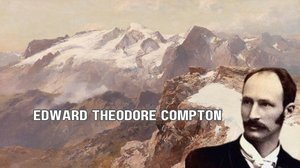
Edward Theodore Compton
1849 - 1921
Quick Facts
- Full Name: Edward Theodore Compton
- Nationality: English
- Date Of Birth: 1849
- Date Of Death: 1921
- Place Of Birth: Stoke Newington, London
- Notable Artworks:
- Deutsch Im Wald von Valdoniello
- Deutsch Grohmannspitze und (rechts) Fünffingerspitzen
- Artistic Movement Or Style: Alpine Art
- Artists Or Movements Influenced By This Artist: ['Impressionism']
Related Articles
Edward Hopper's Masterpieces: 25 Iconic Paintings & Their Enduring Legacy | OriginalUniqueArt
Explore 25 iconic Edward Hopper paintings & their stories. Discover American realism, urban loneliness, and timeless beauty through his masterpieces. Find museum-quality art reproductions & curated decor ideas at OriginalUniqueArt.com.

Ephemeral Visions: Exploring the History & Emotional Resonance of Watercolor Painting
Explore the captivating history of watercolor painting, from ancient techniques to modern masters like Kandinsky & Blake. Discover essential artists, collecting tips & the emotional power of this luminous medium. Expert insights for art enthusiasts.

Watercolor Wonders: 10 Masterpieces That Redefined Art History | OriginalUniqueArt
Journey through 10 legendary watercolor masterpieces by Sargent, Turner & Homer! Explore iconic landscapes, portraits & floral art that redefined history. Find museum-quality reproductions and curated decor ideas at OriginalUniqueArt.com.

Ephemeral Visions: Exploring the Artistic Legacy & Contemporary Practice of Watercolor Painting
Explore the captivating world of watercolor painting! Discover its rich history, essential techniques, influential artists & collecting tips. A comprehensive guide for art enthusiasts from OriginalUniqueArt.

Ephemeral Visions: Exploring the Artistic Legacy & Nuances of Watercolor Painting
Explore the captivating world of watercolor painting! Discover its rich history, essential techniques, influential artists & collecting tips from art experts. A comprehensive guide for enthusiasts.