1872
Thermopylae (Edward Lear, 1872)
Edward Lear (1812–1888) made Thermopylae. It dates from 1872. It is kept at The Ashmolean Museum of Art And Archaeology in Oxford, United Kingdom. It measures 34 × 54 cm.
- 1872
- 34 × 54 cm
- The Ashmolean Museum of Art And Archaeology, Oxford

 Preview

 Hand Made Oil Painting
 Send
 Share
 Fact sheet


 Download
 Similars
 X-Ray
 Diaporama
 Q&A

 Stats
Thermopylae, in brief
- Title
- Thermopylae
- Artist
- Edward Lear (1812–1888)
- Artist born in
- Highgate, United Kingdom
- Date
- 1872
- Dimensions
- 34 × 54 cm
- Where to see it
- The Ashmolean Museum of Art And Archaeology, Oxford, United Kingdom
- Period
- 19th Century
- Subject
- landscape, mountains, nature, people, vista, outdoors
What does Thermopylae depict?
A Vista of Eternal Grandeur
In his 1872 masterpiece, Thermopylae, Edward Lear invites the viewer to step beyond the boundaries of the everyday and into a realm where the majesty of the earth meets the quiet contemplation of the human spirit. The painting presents a breathtaking panorama, capturing a group of figures perched upon a verdant hilltop, their gazes lost in the infinite expanse of a distant mountain range. There is a profound sense of scale at play here; the vastness of the horizon serves as a silent protagonist, dwarfing the small assembly of people while simultaneously connecting them to the ancient, rugged landscape. Lear, a master of capturing both the whimsical and the sublime, uses this composition to explore the delicate equilibrium between humanity and the untamed natural world.
The technique employed in this work reflects the exquisite precision characteristic of the Victorian era's fascination with landscape realism. Through a masterful application of light and shadow, Lear breathes life into the undulating terrain, creating a sense of depth that pulls the eye from the textured foreground toward the hazy, ethereal peaks of the far distance. The brushwork, while controlled, possesses an organic fluidity that mimics the movement of wind through the valleys and the soft diffusion of light across the mountain slopes. For the discerning collector or interior designer, this piece offers a sophisticated interplay of color and atmosphere, making it an ideal focal point for spaces that require a sense of tranquility and intellectual depth.
The Soul of the Landscape
Beyond its visual splendor, Thermopylae resonates with a deep emotional intelligence. The figures within the scene are not merely spectators; they are embodiments of awe. Their presence imbues the landscape with a narrative of shared experience and quiet reverence. There is an inherent symbolism in the choice of the Thermopylae setting—a location steeped in historical weight—yet Lear strips away the violence of conflict to focus on the enduring, peaceful permanence of the earth itself. The painting suggests that even amidst the fleeting nature of human life, there exists a monumental beauty that remains unchanged by time.
For those seeking to curate an environment of inspiration, this reproduction serves as more than just decoration; it is a window into a moment of pure connection. The soft palette and sweeping vistas evoke a feeling of "the sublime," a concept central to 19th-century Romanticism, where the beauty of nature inspires both wonder and a touch of melancholy. Integrating such a work into a home or gallery space provides an anchor of serenity, inviting guests to pause, breathe, and reflect upon the magnificent scale of the world around them.
Which museum holds Thermopylae?
The Ashmolean Museum of Art And Archaeology
Oxford, United Kingdom
Origins and History of the Museum The Ashmolean Museum of Art And Archaeology began with the personal collection of Elias Ashmole, an antiquarian who gifted his treasures to the University in 1677. This act of generosity laid the foundation for what would become Britain's first public museum. The first building was erected between 1678 and 1683 to house these curiosities, which included Roman coins and Egyptian mummies.


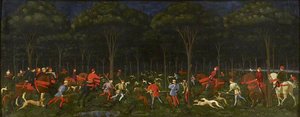
High-resolution images of Thermopylae
Edward Lear, Thermopylae (1872), The Ashmolean Museum of Art And Archaeology. Public domain.
Questions on Thermopylae, answered
Where can I see the original "Thermopylae" by Edward Lear?
"Thermopylae" by Edward Lear is on display at The Ashmolean Museum of Art And Archaeology, Oxford, United Kingdom. The museum listing refers to the original work, not to reproductions.
What is the creation date of "Thermopylae" by Edward Lear?
"Thermopylae" dates from 1872. The date places the work within Edward Lear's career and its era.
What are the dimensions of the original "Thermopylae" by Edward Lear?
"Thermopylae" measures 34 x 54 cm in its original form. Original dimensions are a useful reference when choosing a reproduction size.
What subjects appear in "Thermopylae" by Edward Lear?
The subjects of "Thermopylae" are landscape, mountains, nature, people, vista, outdoors.
Is "Thermopylae" by Edward Lear in the public domain?
"Thermopylae" by Edward Lear is in the public domain - its copyright has expired. This status governs how the image of the work may be reproduced.
Who is the artist behind "Thermopylae"?
The artist behind "Thermopylae" is Edward Lear. The work is catalogued under Edward Lear's name.
Where does "Thermopylae" fall in Edward Lear's career?
"Thermopylae" belongs to the Mature Period of Edward Lear's career. This classification relates the work to the artist's development.
At what age did Edward Lear make "Thermopylae"?
Edward Lear made "Thermopylae" at the age of 60. The artist was born in 1812 and the work is dated 1872.
Why is the copyright status of "Thermopylae" what it is?
"Thermopylae" by Edward Lear is in the public domain - its copyright has expired. Copyright terms are measured from the artist's death, and Edward Lear died in 1888.
About the artist, Edward Lear

1812–1888, United Kingdom
Edward Lear
A Life Painted in Nonsense and Light Edward Lear, a name synonymous with whimsical verse and delightfully peculiar illustrations, was far more than the purveyor of limericks and fantastical creatures that often define his legacy. Born in 1812 in Holloway, North London, into a family teeming with twenty-one children, Lear’s early life was marked by both financial instability and a burgeoning artistic talent. His father, Jeremiah Lear, faced hardship after the Napoleonic Wars, forcing young Edward to begin earning a living through his drawings at the tender age of fifteen. This necessity, however, ignited a lifelong passion that would see him traverse continents and capture the world in vibrant hues and playful lines.
Also by Edward Lear
 Cogoleto, Italy
 Crescenza
 Blue And Yellow Macaw
 View of Taormina in Sicily with Etna in the distance1852
Essays around Thermopylae
 Whispers of Antiquity: The Ethereal Beauty of Ruins in Impressionist ArtStep into a world where time meets light. Explore the enchanting beauty of ruins in Impressionist masterpieces. At OriginalUniqueArt.com, w…
 25 Masterpieces of Giorgio de Chirico: Exploring Metaphysical ArtStep into the haunting dreamscapes of Giorgio de Chirico. Explore 25 iconic Metaphysical paintings, from eerie shadows to surrealist enigma…
 Whistler's Masterpieces: Explore 25 Iconic Paintings & Aesthetic Art for Your HomeJourney through 25 iconic James Abbott McNeill Whistler paintings! Explore his masterpieces of Aestheticism, from 'Nocturne in Black and Go…