Menu
Text size

() ·

A painting made for you, by hand

Masked Ball at the Opera

Hand Made Oil Reproduction

Hand-painted oil on canvas in your size and frame, made to order by our artists. ( Switch to Print Switch to Digital Image)

Collectible Description

A mesmerizing swirl of black attire and mysterious masks defines Edouard Manet's 1873 Impressionist masterpiece Masked Ball at the Opera, inviting you to explore the vibrant elegance of Parisian high society.

Artist Biography

Manet bridged Realism and Impressionism with Olympia. Discover the revolutionary works of this Parisian master.

from ·

Chapter 1

How large should it be?

Slide to change the size; the picture on the left shows the frame at its real width. The proportions of the original are kept.

Standard
custom
CM
INCH

Pick from our preset sizes that match the artwork's original proportions.

width
height

Type the width and the height you need, to fit your frame or your wall. This is hand-painted, so for a size with a different shape the artist can paint a bit more around the picture, or cut a bit — you choose. We send you a digital mockup to approve before the painting starts. The picture shown on this page does not show the real result — only the mockup does.

Chapter 2

How should it arrive?

Choose the edges of the stretched canvas

Choose your frame

Corner sample of the WhiteWrap canvas edge finish, stretched on solid wood bars
White $1
Corner sample of the BlurSideWrap canvas edge finish, stretched on solid wood bars
Blurside $1
Corner sample of the ExtendedWrap canvas edge finish, stretched on solid wood bars
Extended $1
Corner sample of the P118B picture frame: moulded polystyrene, 5 cm wide and 3 cm thick
P118B $10
Corner sample of the P118H picture frame: moulded polystyrene, 5 cm wide and 3 cm thick
P118H $10
Corner sample of the P118W picture frame: moulded polystyrene, 5 cm wide and 3 cm thick
P118W $10
Corner sample of the P438Z picture frame: moulded polystyrene, 5.5 cm wide and 3.5 cm thick
P438Z $10
Corner sample of the P508JH picture frame: moulded polystyrene, 7 cm wide and 3.5 cm thick
P508JH $12
Corner sample of the P508YH picture frame: moulded polystyrene, 7 cm wide and 3.5 cm thick
P508YH $12
Corner sample of the P805H picture frame: moulded polystyrene, 5 cm wide and 3.5 cm thick
P805H $10
Corner sample of the P805Z picture frame: moulded polystyrene, 5 cm wide and 3.5 cm thick
P805Z $10
Corner sample of the P919BZ picture frame: moulded polystyrene, 7 cm wide and 3.5 cm thick
P919BZ $10
Corner sample of the P919G picture frame: moulded polystyrene, 7 cm wide and 3.5 cm thick
P919G $10
Corner sample of the P919XJ picture frame: moulded polystyrene, 7 cm wide and 3.5 cm thick
P919XJ $10
Corner sample of the P959ZH picture frame: moulded polystyrene, 5 cm wide and 3 cm thick
P959ZH $10
Corner sample of the P968JZ picture frame: moulded polystyrene, 6 cm wide and 4 cm thick
P968JZ $12
Corner sample of the W106C picture frame: solid wood, 5 cm wide and 3 cm thick
W106C $8
Corner sample of the W218G picture frame: solid wood, 5 cm wide and 3 cm thick
W218G $10
Corner sample of the W218JH picture frame: solid wood, 5 cm wide and 3 cm thick
W218JH $8
Corner sample of the W218Y picture frame: solid wood, 5 cm wide and 3 cm thick
W218Y $10
Corner sample of the W307PJ picture frame: solid wood, 6 cm wide and 3 cm thick
W307PJ $10
Corner sample of the W316G picture frame: solid wood, 6 cm wide and 3 cm thick
W316G $10
Corner sample of the W316PJ picture frame: solid wood, 6 cm wide and 3 cm thick
W316PJ $8
Corner sample of the W316Y picture frame: solid wood, 6 cm wide and 3 cm thick
W316Y $10
Corner sample of the W398PJ picture frame: solid wood, 5 cm wide and 3 cm thick
W398PJ $8
Corner sample of the W4111J picture frame: solid wood, 6.5 cm wide and 3.5 cm thick
W4111J $10
Corner sample of the W500HY picture frame: solid wood, 7 cm wide and 5 cm thick
W500HY $15
Corner sample of the W500JH picture frame: solid wood, 7 cm wide and 5 cm thick
W500JH $15
Corner sample of the W692G picture frame: solid wood, 8 cm wide and 4 cm thick
W692G $12
Corner sample of the W849H picture frame: solid wood, 5 cm wide and 3 cm thick
W849H $8
Corner sample of the W940BG picture frame: solid wood, 7.5 cm wide and 4.5 cm thick
W940BG $15
Corner sample of the W953PJ picture frame: solid wood, 6 cm wide and 3.5 cm thick
W953PJ $8
Corner sample of the H24-GOLD picture frame: carved wood with gesso, 10 cm wide and 6 cm thick
H24-GOLD $30
Corner sample of the H24-SILVER picture frame: carved wood with gesso, 10 cm wide and 6 cm thick
H24-SILVER $30
Corner sample of the H36-GOLD picture frame: carved wood with gesso, 15 cm wide and 6.5 cm thick
H36-GOLD $45
Corner sample of the H36-SILVER picture frame: carved wood with gesso, 15 cm wide and 6.5 cm thick
H36-SILVER $45
Frame preview
Framed

Moulding: . Overall size with the frame: .

Chapter 3

Who paints it, and should anything change?

Examples of what can be changed: Replace face with customer photo; Add pet (e.g., replace cat with dog); Include hidden message in background; Change background landscape or elements.
After order, OriginalUniqueArt.com team will email client for instructions and provide a mockup preview

Worldwide Delivery () in 3/4 weeks instead of standard 5 weeks. (30 October). No compromise on quality.

Chapter 4

The finishing touches

A nameplate, as in a museum?

Engraved Bronze Plaque Details

This elegant plaque features the artist's name and the title of the artwork, finely engraved for a timeless presentation.

It is made from bronze with a refined, elegant finish. The text is precisely laser-engraved for a sharp and permanent result. Measuring 9x2 cm, the plaque is compact yet easy to read. It's built to be durable and scratch-resistant, offering a professional, museum-quality look. Mounting is simple thanks to the included adhesive backing.

Transparent Acrylic Plaque Details

The plaque includes essential engraved details such as the artist's name, the title of the artwork, the date it was created, the type of media used-like oil on canvas or watercolor-a brief description of the piece, and a QR code that links to the complete artwork information.

It is crafted from clear acrylic, offering a sleek, modern appearance. The text is UV-engraved in black to ensure strong visual contrast. With a size of 10x15 cm, it ensures optimal readability. It comes equipped with two metal hooks for secure wall mounting. The plaque is designed to be weather-resistant, making it suitable for various environments, and it includes interactive features that work seamlessly with smartphone scanning.

Black Acrylic Plaque Details

This elegant plaque includes engraved information such as the artist's name, the title of the artwork, the date it was created, the type of media used (like oil on canvas or watercolor), a short description of the artwork, and a QR code for quick access to more information.

The plaque itself is made from refined black acrylic with a premium finish. The text is laser-engraved in white for high contrast and readability. Its size is 10x15 cm, designed to be easy to read. It comes with two metal hooks for professional mounting. The design is sleek and fits any interior style. It is also weather-resistant and durable, with built-in digital integration for mobile compatibility.

A protective varnish?

When do you need it?

Chapter 5

Your painting, as you ordered it

Masked Ball at the Opera

Reproduction Medium

Reproduction Size

-

Elite Senior Artist

More detail, finesse, and extra production time

-

Reproduction Frame

-

-

For artworks or reproductions larger than 105 cm (approximately 41 inches) on any side, the frame will be shipped as a kit, disassembled. This method ensures safe delivery and prevents damage during transport.

Professional assembly required - this is not a DIY product.
The kit must be assembled and the canvas stretched by an experienced professional framer, using wood glue (not supplied), a canvas stretching plier and clamps to hold the bars square while the glue dries. Incorrect assembly or uneven canvas tension can permanently damage the artwork and is not covered by our warranty.

  • All solid wood bars are included, precisely cut to size.

  • Assembled with the screws provided, plus wood glue for the corner joints, which is not supplied and must be sourced by your framer.

  • Professional tools are required and not included: a canvas stretching plier (tensioner) and clamps to hold the bars square while the glue dries.

Important:
The corner joints require wood glue, the bars must be held with clamps until the glue is fully dry, and tightening the canvas on the assembled frame requires a canvas stretching plier. None of these are included in the kit. Please arrange an experienced professional framer before ordering this size.

Nameplate

-

-

Protective Varnish

Glossy Varnish (enhances colors, protects against light/moisture)

-

Customize My Artwork

Examples of what can be changed: Replace face with customer photo; Add pet (e.g., replace cat with dog); Include hidden message in background; Change background landscape or elements.

-

Urgent

Worldwide Delivery () in 3/4 weeks instead of standard 5 weeks. (30 October). No compromise on quality.

-

Express Shipping

Worldwide Delivery () in 5 weeks. (6 November).

Included

Total Price

$ 650

Total Price $ 650

Glass option is only available in size under 110 CM

Included with every order

  • Free Worldwide Express Shipping
  • High-Quality Linen Canvas
  • Full Shipping Insurance
  • Customs Tax Refund Guarantee
  • True Color Matching Guarantee
  • 100-Day Return Policy (Defects Only)
  • 100% Money-Back Guarantee
  • Bulk Discount Offer

A Midnight Waltz in Paris: The Allure of Manet’s Masked Ball

Step into the flickering candlelight of 1873 Paris, where the air is thick with the scent of perfume, the rustle of silk, and the whispered secrets of the elite. Édouard Manet’s Masked Ball at the Opera is far more than a mere depiction of a social gathering; it is a breathtaking window into the soul of Parisian modernity. As you gaze upon this masterpiece, you are not just an observer but a guest, standing amidst the swirling shadows and brilliant highlights of a crowded opera house lobby. The painting captures that ephemeral, magical moment when identity dissolves behind a porcelain mask, inviting the viewer to lose themselves in the mystery of the crowd.

The composition is a masterful exercise in controlled chaos. Manet expertly layers figures within the mezzanine and the bustling floor below, creating a sense of immense depth that draws the eye through the labyrinthine social scene. While an overwhelming expanse of deep, velvety blacks dominates the canvas—reflecting the formal attire of the era—the painting never feels heavy or stagnant. Instead, Manet uses light as a sculptor’s tool. The glow from unseen chandeliers and windows catches the edges of lace, the sheen of satin, and the pale curves of masks, imbuing the scene with a palpable, electric energy. This deliberate play of light and shadow serves to highlight the fleeting nature of the moment, a core tenet of the Impressionist spirit.

Symbolism and the Art of Disguise

Beyond its visual splendor, the artwork serves as a profound meditation on the complexities of social performance. The recurring motif of the mask acts as a powerful symbol of anonymity and the dual nature of high society. In this gilded world, what is seen is often a carefully constructed facade. The masks allow for a temporary liberation from social hierarchy, yet they also create a sense of profound isolation amidst the throng. For the discerning collector or interior designer, this tension between visibility and concealment offers a rich layer of intellectual depth, making the piece a captivating conversation starter in any sophisticated setting.

Manet’s technique further enhances this emotional resonance. By moving away from the rigid, polished finish of academic painting and embracing looser, more expressive brushstrokes, he captures the very essence of movement and atmosphere. The texture of the oil paint on canvas suggests the vibration of music and the restless motion of the crowd. It is a style that celebrates the "now"—the transient beauty of a single night in Paris that can never be repeated.

A Timeless Addition to the Modern Interior

For those looking to infuse their living spaces with culture and historical grandeur, a high-quality reproduction of Masked Ball at the Opera offers unparalleled inspiration. The painting’s sophisticated palette—anchored by dramatic blacks and punctuated by luminous whites and subtle jewel tones—allows it to integrate seamlessly into a variety of decor styles, from classic European elegance to contemporary minimalist luxury. It brings with it an aura of prestige and a sense of narrative drama that can transform a room.

Owning this work is an invitation to celebrate the beauty of the ephemeral. Whether placed in a grand foyer to greet guests with its bustling energy or in a quiet study to provoke deep reflection on the nature of identity, Manet’s vision remains as potent and provocative today as it was over a century ago. It is a piece for the true connoisseur—someone who appreciates not just the mastery of technique, but the profound emotional journey that great art provides.

Questions & Answers

Which artistic current is "Masked Ball at the Opera" by Édouard Manet part of?

"Masked Ball at the Opera" is a work of Impressionistic Innovation. The movement indicates the artistic tradition the work is part of.

Is there a guide for "Masked Ball at the Opera" by Édouard Manet?

The guide to "Masked Ball at the Opera" is the artwork's Guide page - a printable factsheet showing the artwork with its caption, credit line and identity table (artist, dates, medium, original size, collection).

Where does "Masked Ball at the Opera" fall in Édouard Manet's career?

"Masked Ball at the Opera" represents the Mature Period of Édouard Manet.

More about this painting

Preview AR preview Switch to Print Switch to Digital Image Send
Details Guide Add to favorites Download Similars X-Ray Diaporama Q&A Stats

In numbers

  • 1873the year it was painted
  • 29frames to choose from
  • standard sizes, in its own proportions
  • 5weeks to paint and deliver it
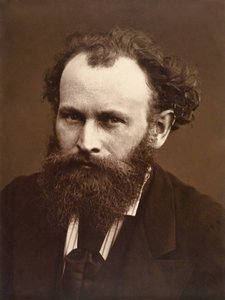
Édouard Manet

Édouard Manet

1832 - 1883, France

Quick facts about Édouard Manet

  • Full Name: Édouard Manet
  • Nationality: French
  • Date Of Birth: 1832
  • Date Of Death: 1883
  • Place Of Birth: Paris, France
  • Notable Artworks:
    • Le Déjeuner sur l'herbe
    • Olympia
    • A Bar at the Folies-Bergère
  • Artistic Movement Or Style: Realism, Impressionism
  • Artists Who Influenced This Artist:
    • Caravaggio
    • Diego Velázquez
    • Gustave Courbet
  • Artists Or Movements Influenced By This Artist:
    • Claude Monet
    • Pierre-Auguste Renoir
    • Edgar Degas
    • Impressionism

Artist Biography

The Architect of Modernity

To look at a canvas by Édouard Manet is to witness the precise moment when the polished illusions of the past collapsed under the weight of contemporary reality. He did not seek to decorate the walls of the bourgeoisie; he sought to confront them. While his contemporaries often retreated into mythological safety, Manet forced the viewer to acknowledge the grit and the glare of 19th-century Paris. His work functions as a blunt instrument that dismantled the academic hierarchy of subjects. He stripped away the comfortable distance provided by historical allegory, replacing it with the unsettling directness of a woman staring back from a modern street or a café.

The impact of his technique remains visible in every brushstroke that prioritizes the physical reality of paint over the illusion of depth. He rejected the seamless, invisible finish demanded by the Salon, opting instead for facture—a visible, energetic application of pigment. By using stark contrasts and a flattened pictorial space, he reminded anyone looking at his work that they were observing a constructed image on a flat surface. This was not an error in perspective; it was a deliberate rejection of the window-like transparency that had dominated Western art since the Renaissance.

A Rebellion Rooted in Tradition

Manet’s radicalism was not born from ignorance of the past, but from a deep, analytical study of it. His time spent copying Old Masters in the Louvre provided him with a technical foundation that he would later use to subvert tradition. He drew heavily from the bold compositions and light manipulation found in the works of Caravaggio and Velázquez. From the Spanish masters, he learned how to utilize black as a positive color and how to employ fluid brushwork to suggest form without excessive detail. This was not an imitation of the past, but a dissection of it.

His early life in Paris suggested a path far removed from the studio. Born into a comfortable family, his father initially pushed for a career in the navy or law. After failing his entrance exams for the naval academy, Manet turned toward the arts under the instruction of Thomas Couture. This tension between his bourgeois origins and his revolutionary output created a unique friction in his work. He possessed the social standing to navigate Parisian intellectual circles, yet he used that access to promote an aesthetic that many found vulgar or incompetent.

The Scandal of the Real

The mid-1860s provided the stage for Manet’s most significant confrontations with the public. The 1863 Salon des Refusés became a site of intense controversy, largely due to his inclusion in the exhibition of rejected works. His painting Le Déjeuner sur l'herbe shocked audiences not merely because of its nudity, but because of its lack of mythological context. The figures were undeniably modern, stripped of the divine or the ancient, leaving only the raw presence of contemporary Parisians. This refusal to idealize his subjects was met with widespread condemnation from critics who found his realism too blunt.

This pattern of provocation continued with Olympia in 1865. By reimagining Titian’s Venus of Urbino through the lens of a contemporary prostitute, Manet stripped away the protective layer of myth. The subject did not invite a gaze of admiration for a goddess; she demanded recognition of a person. This period of his career established the fundamental shift from Realism toward the beginnings of Impressionism. His influence on the movement was structural rather than purely stylistic:

  • He championed the use of alla prima painting, or wet-on-wet technique, to capture immediate atmospheric effects.
  • He introduced a flattened perspective that challenged the mathematical precision of academic composition.
  • He utilized strong, contrasting tones to create a sense of modern, fragmented light.

The Enduring Verdict

Manet’s career was cut short by his death in 1883, yet the trajectory of art had already been irrevocably altered. He acted as the essential bridge between the heavy, grounded themes of Realism and the fleeting, light-focused explorations of the Impressionists. While he never fully adopted the label of an Impressionist and continued to seek recognition from the official Salon, his methods provided the vocabulary for the avant-garde. He proved that the artist's duty was not to provide a beautiful escape, but to document the complexities and contradictions of the era.

Quick Facts

  • Medium: Oil on Canvas
  • Title: Masked Ball at the Opera
  • Movement: Impressionism
  • Location: National Gallery of Art, Washington, D.C.
  • Influences:
    • Caravaggio
    • Velázquez

Art Quiz

There is only one correct answer for each question.

Question 1:
What artistic movement is Édouard Manet’s ‘Masked Ball at the Opera’ primarily associated with?
Question 2:
The painting depicts a scene in which location?
Question 3:
What is the dominant color palette used in ‘Masked Ball at the Opera’?
Question 4:
Why are the women wearing masks?
Question 5:
What stylistic element contributes to Manet’s ability to capture light and atmosphere?