 Preview
 Send
Send Share
Share
 Details

 Download
 Similars
 X-Ray
X-Ray Diaporama
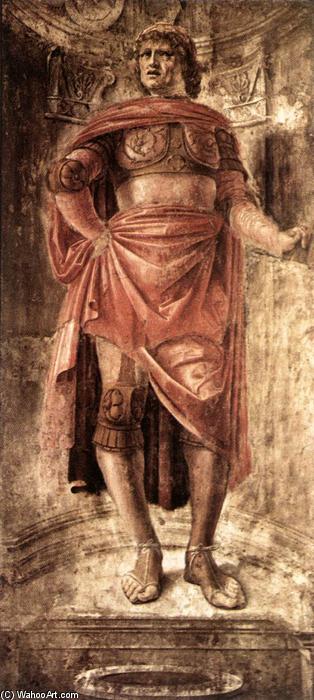
Man with a Broadsword
 Acrylic On Canvas
- WallArt
- High Renaissance
 1481
1481 285.0 x 127.0 cm
 Pinacoteca di Brera
 Read More
Hand Made Oil Reproduction
Hand-painted oil on canvas in your size and frame, made to order by our artists. ( Buy Print Buy Image)




P118B $10

P118H $10

P118W $10

P438Z $10

P508JH $12

P508YH $12

P805H $10

P805Z $10

P919BZ $10

P919G $10

P919XJ $10

P959ZH $10

P968JZ $12

W106C $8

W218G $10

W218JH $8

W218Y $10

W307PJ $10

W316G $10

W316PJ $8

W316Y $10

W398PJ $8

W4111J $10

W500HY $15

W500JH $15

W692G $12

W849H $8

W940BG $15

W953PJ $8




Pick from our preset sizes that match the artwork's original proportions.

You may enter your own dimensions to fit a specific frame or space. If your selected size does not match the original image's proportions, we will either crop the artwork or extend the painting with additional hand-painted elements. A digital mockup will be sent for your approval before production begins.
Please note that the on-screen preview does not reflect the actual cropping or extension. Only the mockup will accurately show the final composition.
While custom sizes are available, we recommend selecting a dimension from the predefined list to preserve the original proportions.
After order, OriginalUniqueArt.com team will email client for instructions and provide a mockup preview
Worldwide Delivery () in 3/4 weeks instead of standard 5 weeks. (20 August). No compromise on quality.

Free Worldwide Express Shipping

High-Quality Linen Canvas

Full Shipping Insurance

Customs Tax Refund Guarantee

True Color Matching Guarantee

60-Day Return Policy (Defects Only)

100% Money-Back Guarantee

Bulk Discount Offer
 Glass option is only available in size under 110 CM

Man with a Broadsword
Reproduction Medium
Reproduction Size
-


Total Price
$ 300
Artwork Description
Man with a Broadsword: A Renaissance Masterpiece Revisited
The Man with a Broadsword, painted by Donato Bramante in 1481, stands as an emblem of the burgeoning humanist spirit and architectural innovation that defined the High Renaissance. Currently residing within the Pinacoteca di Brera in Milan, Italy—a pilgrimage for any devotee of Italian art history—this fresco transcends mere depiction; it embodies a profound engagement with classical ideals and masterful execution. Measuring 285 x 127 cm, the artwork immediately captivates viewers with its bold composition and meticulous attention to detail.Style and Composition: Echoes of Antiquity
Bramante’s genius lies in seamlessly blending Byzantine influences—evident in the monumental scale and solemn grandeur—with the stylistic precepts championed by artists like Filippo Brunelleschi and Leon Battista Alberti. The central figure, rendered in a vibrant red garment adorned with a breastplate and laurel wreath, commands attention against a backdrop of architectural elements reminiscent of Roman temples. This deliberate choice underscores Bramante’s unwavering commitment to reviving classical forms and proportions—a cornerstone of Renaissance artistic philosophy. The upward thrust of the arm suggests dynamism and purposeful action, mirroring the humanist fascination with human potential and heroic virtue.Technique: Trompe-l'œil and Spatial Illusion
What distinguishes “Man with a Broadsword” is Bramante’s pioneering use of trompe-l'œil—a technique designed to deceive the eye into perceiving depth where none exists. The architectural columns and arches surrounding the figure aren’t merely decorative; they contribute to an illusionistic space that expands beyond the confines of the fresco itself. This masterful manipulation of perspective reflects Bramante’s profound understanding of mathematical principles and his desire to emulate the grandeur of ancient Roman architecture, thereby elevating the artwork's emotional impact. The subtle shading and modeling imbue the figure with palpable physicality—a testament to Bramante’s dedication to realism and anatomical accuracy.Historical Context: Milanese Patronage and Renaissance Ideals
Created during Ludovico Sforza’s reign in Milan, “Man with a Broadsword” exemplifies the artistic fervor of the era—a period marked by ambitious architectural projects and an unwavering belief in human reason and beauty. Commissioned for the Sala dei Giganti nella Casa Fontana-Silvestri, it served as part of a larger cycle celebrating prominent figures from classical mythology and history. Bramante’s work embodies the humanist preoccupation with portraying individuals as embodiments of moral virtue—a reflection of the Renaissance's renewed interest in Greco-Roman culture and its ethical precepts.Legacy: Inspiration for Future Generations
“Man with a Broadsword” continues to inspire artists and collectors alike, serving as an enduring symbol of Renaissance artistic excellence. Its influence can be discerned in subsequent frescoes and sculptures throughout Europe—a testament to Bramante’s transformative contribution to the visual arts. Today, OriginalUniqueArt.com offers exquisitely crafted reproductions of this masterpiece, allowing enthusiasts worldwide to experience its beauty and grandeur firsthand. Don't miss the opportunity to immerse yourself in the artistic heritage of Milan and rediscover the timeless allure of Bramante’s vision—a cornerstone of Western art history.- Explore the Pinacoteca di Brera: Visit the Museum
- Discover More About Donato Bramante:Artist Database
- See Related Artwork:Artwork Database
- Learn About Santa Maria presso San Satiro:Museum Database
Artist Biography
Petrus Christus: Bridging the Gap Between Medieval and Renaissance
Petrus Christus, a name largely unknown for centuries, stands as a pivotal figure in the transition between the late Gothic and early Renaissance art of Northern Europe. Born around 1410/1420 in Baarle, near Antwerp, and active primarily in Bruges from 1444 until his death circa 1475/1476, Christus’s legacy rests not on grand, revolutionary works but rather on a quietly innovative approach to painting—one that combined meticulous detail with an emerging sense of volume and perspective. He represents a crucial bridge between the highly stylized, illuminated manuscripts of the medieval period and the burgeoning naturalism of the Renaissance, demonstrating a remarkable ability to absorb and adapt influences from various sources.
Christus’s early life remains somewhat shrouded in mystery. He is believed to have been apprenticed to Jan van Eyck, the most celebrated painter of his time, though the exact nature of this relationship—whether as a true pupil or simply a student working in van Eyck's workshop—is still debated by scholars. The meticulous detail and precise rendering evident in Christus’s work strongly suggest an influence from van Eyck’s groundbreaking realism, particularly in his masterful use of oil paint. However, unlike van Eyck, who often focused on grand narratives and religious scenes, Christus quickly developed a distinctive style, characterized by a remarkable attention to the textures and surfaces of his subjects—from the velvet robes of wealthy patrons to the delicate folds of fabric. His early works were largely commissioned by Bruges’s burgeoning merchant class, reflecting the city's growing wealth and international trade.
A Master of Detail: Technique and Innovation
What immediately distinguishes Christus’s paintings is his extraordinary level of detail. He meticulously rendered every element—every stitch in a garment, every glint of metal, every strand of hair—with an almost obsessive precision. This approach echoes the techniques employed in manuscript illumination, where intricate details were essential for conveying information and beauty. However, unlike the flat, decorative style of illuminated manuscripts, Christus used his meticulous detail to create a sense of three-dimensionality – a crucial step towards Renaissance naturalism. He was among the first artists to convincingly depict volume and space on a two-dimensional surface, employing techniques such as careful observation of light and shadow and an increasingly sophisticated understanding of perspective.
Christus’s development is particularly fascinating when viewed through the lens of scientific analysis. Modern investigations using X-radiography, infrared reflectography, and dendochronological dating have revealed a gradual evolution in his technique. Early works show evidence of underdrawings—a common practice at the time—but later paintings demonstrate an increasingly refined approach to composition and perspective. This suggests that Christus was not simply copying existing styles but actively experimenting with new methods of representation, pushing the boundaries of what was possible within the constraints of medieval painting conventions.
Influences and Patronage
Christus’s artistic journey was shaped by a complex interplay of influences. As mentioned earlier, Jan van Eyck undoubtedly played a significant role in his early development. However, he also drew inspiration from Rogier van der Weyden, another prominent Flemish painter known for his dramatic compositions and expressive figures. Furthermore, Christus's work reveals a strong connection to the artistic traditions of Italy, particularly those of Antonello da Messina and other artists working in the Mediterranean region. Many of his commissions were undertaken by Italian merchants and bankers who had established thriving trade links with Bruges, resulting in paintings that often feature Italian or Spanish provenance. This exposure to Italian art—with its emphasis on color, light, and naturalism—clearly influenced Christus’s style.
The patronage of wealthy Bruges citizens, including the Burgundian dukes, provided Christus with a steady stream of commissions. The Dukes' frequent visits to Bruges created a vibrant artistic environment, attracting artists from across Europe. Christus’s ability to adapt his style to suit the tastes of his patrons—whether they desired a formal portrait or a more intimate devotional scene—demonstrates his versatility and responsiveness to market demands. His portraits, in particular, are notable for their psychological depth and subtle expressions of personality.
Legacy and Rediscovery
For centuries after his death, Petrus Christus remained largely forgotten by art historians. His work was dismissed as eclectic and derivative, overshadowed by the more celebrated figures of Jan van Eyck and Hans Memling. However, in the late 19th century, a renewed interest in Northern Renaissance painting led to a reassessment of Christus’s oeuvre. Scholars began to recognize his innovative techniques and his crucial role in bridging the gap between medieval and Renaissance art. Today, Petrus Christus is increasingly appreciated as one of the most important and influential painters of the early Netherlandish school—a master whose meticulous detail and subtle innovations paved the way for the artistic achievements of subsequent generations.
His surviving works, including the *Portrait of a Carthusian*, the *Portrait of a Young Girl*, and several devotional panels, offer a compelling glimpse into the artistic world of 15th-century Bruges—a city that served as a vital crossroads between Europe and the Mediterranean. Christus’s legacy lies not in grand monuments but in the quiet brilliance of his paintings, which continue to captivate viewers with their remarkable detail, subtle beauty, and profound sense of human presence.

donato bramante
1444 - 1514 , Italy
Quick Facts
- Artistic Movement Or Style: Early Netherlandish
- Artists Or Movements Influenced By This Artist: ['Sandro Botticelli']
- Artists Who Influenced This Artist:
- Jan van Eyck
- Rogier van der Weyden
- Date Of Death: 1475/76
- Full Name: Petrus Christus
- Nationality: Flemish
- Notable Artworks:
- Portrait of a Carthusian
- Portrait of a Young Girl
- Place Of Birth: Baarle, Belgium
Related Articles

The Fresco as Family Legacy: Preserving Heritage Through Wall Art
Explore the rich history & enduring legacy of fresco painting. Discover how to preserve family heritage through stunning wall art. Expert insights & restoration guidance.

The Enduring Legacy of Fresco: Technique, History & Artistic Expression Across Cultures
Explore the rich history & enduring legacy of fresco painting! Discover ancient techniques, Giotto's masterpieces, and modern applications. Expert insights for art lovers & professionals.

The Enduring Legacy of Fresco Painting: Techniques, History & Contemporary Relevance
Explore the rich history & enduring artistry of fresco painting – from Giotto to Michelangelo! Discover techniques, conservation efforts, & modern applications. Learn how OriginalUniqueArt brings this timeless art form to your home.

The Enduring Legacy of Fresco: Technique, History & Artistic Expression
Explore the rich history & enduring artistry of fresco painting. Discover techniques from Giotto to Michelangelo, conservation efforts, & modern applications. Learn how OriginalUniqueArt brings this timeless art form to your home.

Art That Lives With You: The Emotional Power of a Custom Interior Fresco
Discover the emotional power & timeless beauty of custom interior frescoes. Explore history, design tips & expert guidance from – creating lasting legacies.