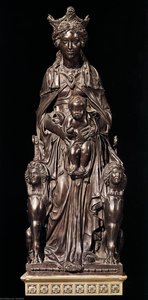
Preview
 Send
Send Share
Share
 Details
 Guide
Guide

 Download
 Similars
 X-Ray
X-Ray Diaporama
 Stats
StatsSouth pulpit
 Acrylic On Canvas
- WallArt
- Early Renaissance
 1460
1460 123.0 x 292.0 cm
 San Lorenzo
 Read More
Giclée / Art Print
Museum-quality giclée or canvas print with fast production and flexible finish options. ( Buy Hand Made Painting Switch to Digital Image)




P118B $10

P118H $10

P118W $10

P438Z $10

P508JH $12

P508YH $12

P805H $10

P805Z $10

P919BZ $10

P919G $10

P919XJ $10

P959ZH $10

P968JZ $12

W106C $8

W218G $10

W218JH $8

W218Y $10

W307PJ $10

W316G $10

W316PJ $8

W316Y $10

W398PJ $8

W4111J $10

W500HY $15

W500JH $15

W692G $12

W849H $8

W940BG $15

W953PJ $8




Pick from our preset sizes that match the artwork's original proportions.

You may enter your own dimensions to fit a specific frame or space. If your selected size does not match the original image's proportions, we will either crop the artwork or extend the image with a mirrored or solid-fill edge. A digital mockup will be sent for your approval before production begins.
Please note that the on-screen preview does not reflect the actual cropping or extension. Only the mockup will accurately show the final composition.
While custom sizes are available, we recommend selecting a dimension from the predefined list to preserve the original proportions.
Worldwide Delivery () in 2 weeks instead of standard 4/5 weeks. (27 September)

Free Worldwide Express Shipping

High-Quality Linen Canvas

Full Shipping Insurance

Customs Tax Refund Guarantee

True Color Matching Guarantee

100-Day Return Policy (Defects Only)

100% Money-Back Guarantee

Bulk Discount Offer
 Glass option is only available in size under 110 CM

South pulpit
Giclée / Art Print
Reproduction Size
-


Total Price
$ 81
The Sculptor's Soul: Donatello and the Heart of Florence
Donatello’s Passion Pulpit, a monumental bronze ensemble housed within the Basilica of San Lorenzo in Florence, isn’t merely a religious depiction; it’s a visceral embodiment of the artist’s revolutionary spirit and a profound meditation on suffering, faith, and the human condition. Completed shortly before Donatello's death in 1466, this extraordinary work represents a pivotal moment in Renaissance sculpture – a departure from the stylized elegance of his early career towards a raw, emotionally charged realism that would profoundly influence generations of artists to come. The pulpit itself, a towering structure with imposing red columns, immediately commands attention, but it’s the twelve intricately sculpted panels adorning its surface that truly captivate and disturb.
Donatello's genius lies in his ability to imbue these biblical scenes – the Flagellation of Christ, the arrest of John the Baptist, the Crucifixion, and the deposition – with an unprecedented level of dramatic intensity. He abandons the idealized forms favored by previous generations, opting instead for figures contorted in agony, their bodies ravaged by pain and despair. The musculature is powerfully rendered, conveying not just physical strength but also the sheer weight of suffering. Notice how Christ’s body, depicted during the Flagellation, is brutally exposed, his wounds raw and bleeding – a stark contrast to the serene depictions found in earlier religious sculpture. This isn't a distant, ethereal representation of sacrifice; it’s an immediate, unflinching portrayal of human torment.
A Renaissance Revolution: Breaking with Tradition
The Passion Pulpit stands as a defiant rejection of the prevailing artistic conventions of its time. While Donatello had previously mastered classical forms and employed elements of the International Gothic style – evident in his earlier works like the bronze David – here he unleashes a torrent of emotion, prioritizing expressive power over formal perfection. He draws heavily on Roman sculpture, particularly the depictions of suffering found in imperial portraiture, adapting their dramatic intensity to convey the emotional weight of Christian narratives. The influence of classical antiquity is palpable, yet Donatello transforms these borrowed elements into something entirely new – a distinctly Florentine vision of religious experience.
The use of bronze itself is crucial to understanding the work’s impact. Bronze allowed Donatello to achieve an unprecedented level of detail and texture, capturing the nuances of muscle, skin, and fabric with remarkable precision. The surface of the panels is polished to a high sheen, reflecting light and intensifying the drama of each scene. Furthermore, the sheer scale of the sculpture – nearly twelve feet tall – creates an immersive experience for the viewer, drawing them into the heart of the narrative.
Symbolism and Emotional Resonance
Beyond its technical brilliance, the Passion Pulpit is rich in symbolic meaning. The figures are not simply representations of biblical events; they embody universal themes of suffering, betrayal, redemption, and faith. The stark contrast between the earthly realm – depicted as chaotic and violent – and the heavenly realm – represented by the angels ascending above – underscores the central theological message of sacrifice and salvation. The placement of the figures within the architectural framework of the pulpit further enhances this symbolic dimension, creating a dynamic interplay between sculpture and space.
The emotional impact of the Passion Pulpit is undeniable. It’s a work that demands attention, provoking contemplation and challenging viewers to confront the uncomfortable realities of human existence. Donatello's masterful manipulation of form, texture, and composition creates an experience that is both deeply moving and profoundly unsettling – a testament to his genius as one of the greatest sculptors in history.
Artist Biography
early life and career
donato di niccolò di betto bardi, known as donatello, was born in florence, italy around 1386. he studied classical sculpture, which heavily influenced his development of an early renaissance style. this new approach to art and culture would eventually become the hallmark of the florentine renaissance.key works and innovations
donatello's most famous work, david, was the first freestanding nude male sculpture since antiquity. commissioned by the medici family, it showcased his innovative style and technical expertise. other notable works include:- st. louis of toulouse (now in the museum of the basilica di santa croce), which featured a classical frame designed by donatello.
- the sacrifice of isaac, created for the campanile of santa maria del fiore in florence, characterized by strong portrait details.
- crucifix (1425) for santa croce, which portrayed christ in a moment of agony.
artistic style and legacy
donatello's style can be divided into broad phases, beginning with the development of expressiveness and classical monumentality. his work was not immediately accepted by the community but eventually became the most popular, influencing other italian courts and european artists. key art movements:personal life and working style
donatello was known for being amiable and well-liked, but poor at the business side of his career. he tended to accept more commissions than he could handle, often completing works late or handing them over to other sculptors. notable artworks and artists:- leonardo da vinci: annunciation (detail)
- amico aspertini: statua di pan/leone che azzanna un cavallo
- michelangelo buonarroti: tondo pitt
museums and art collections:
- museo della collegiata (empoli, italy): a hidden gem of the renaissance, featuring works by francesco botticini and raffaello botticini.
- the early italian renaissance art movement

Donatello
1386 - 1466 , Italy
Quick Facts
- Artistic Movement Or Style: Early Renaissance
- Artists Or Movements Influenced By This Artist:
- Italian Renaissance
- Early Renaissance
- Florentine Renaissance
- Artists Who Influenced This Artist: ['Classical sculpture']
- Date Of Birth: c. 1386
- Date Of Death: 1466
- Full Name: Donatello di Niccolò
- Nationality: Italian
- Notable Artworks:
- David
- St. Louis of Toulouse
- Sacrifice of Isaac
- Crucifix
- Place Of Birth: Florence, Italy
Related Articles

Bronze Sculptures That Defined Art History | OriginalUniqueArt
Journey through art history with our Top 10 bronze sculptures! Explore masterpieces by Rodin, Michelangelo & more. Discover stories behind iconic statues and find museum-quality reproductions for your home decor at OriginalUniqueArt.com.
The Enduring Legacy of Bronze: History, Technique & Artistic Expression for the Collector
Explore the rich history & enduring appeal of bronze sculpture with expert insights for collectors at OriginalUniqueArt. Learn about casting techniques, iconic artists, and collecting tips.

The Enduring Legacy of Bronze: A Historical & Artistic Exploration for the Collector
Explore the rich history & enduring appeal of bronze sculpture with expert insights for collectors at OriginalUniqueArt. Learn about casting techniques, iconic artists, collecting tips & contemporary interpretations.
The Enduring Legacy of Bronze Sculpture: History, Techniques & Contemporary Interpretations
Explore the rich history & enduring appeal of bronze sculpture. Learn about casting techniques, iconic artists, collecting tips, & contemporary interpretations. Expert insights for discerning art collectors.

Bronze Age to Modern Masters: 10 Sculptures That Redefined Art | OriginalUniqueArt
Journey through art history with 10 legendary bronze sculptures – from Michelangelo's David to Rodin’s Thinker. Explore the stories, techniques & timeless beauty of these masterpieces. Find museum-quality reproductions & elevate your home decor on OriginalUniqueArt.com.