Send
Send Share
Share
 Details
 Guide
Guide

 Download
 Similars
 Diaporama
 Stats
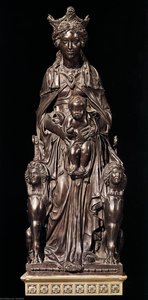
StatsCrucifixion
 Bronze
- Sculpture
- Renaissance Sculpture
 1465
1465- Renaissance
 93.0 x 70.0 cm
 Museo Nazionale del Bargello
 Read More
Giclée / Art Print
Museum-quality giclée or canvas print with fast production and flexible finish options. ( Buy Hand Made Painting Switch to Digital Image)




































Pick from our preset sizes that match the artwork's original proportions.

Type the width and the height you need, to fit your frame or your wall. A print can only be cut, never made bigger than the picture, so a size with a different shape loses a part of the image. We send you a digital mockup to approve before we print anything. The picture shown on this page does not show the real cut — only the mockup does.
Worldwide Delivery () in 2 weeks instead of standard 4/5 weeks. (21 October)

Free Worldwide Express Shipping

High-Quality Linen Canvas

Full Shipping Insurance

Customs Tax Refund Guarantee

True Color Matching Guarantee

100-Day Return Policy (Defects Only)

100% Money-Back Guarantee

Bulk Discount Offer
 Glass option is only available in size under 110 CM

Crucifixion
Giclée / Art Print
Reproduction Size
-


Total Price
$ 81
A Moment Frozen in Time: Donatello’s Crucifixion
The bronze sculpture “Crucifixion” by Donatello stands as an enduring testament to the artistic fervor of the Florentine Renaissance, capturing not merely a biblical narrative but also the profound emotional complexities inherent within it. Created in 1465 for Santa Croce Basilica in Florence, this masterpiece transcends its religious subject matter to become a cornerstone of humanist ideals and sculptural innovation.The Artist’s Vision: Classical Influence Meets Spiritual Depth
Donatello (1386-1466), born into a family of sculptors, emerged as one of the foremost figures shaping the artistic landscape of his era. His formative years were steeped in classical sculpture—the rediscovery and emulation of Greek and Roman forms fueled an unprecedented stylistic revolution. Unlike preceding medieval art, which prioritized stylized representations and symbolic ornamentation, Donatello championed anatomical accuracy and naturalistic detail, mirroring the humanist preoccupation with human form and intellect. This commitment to realism is palpable throughout his oeuvre, most notably in “David,” a monumental statue that redefined nude sculpture and cemented Donatello’s reputation as a pioneer of Renaissance aesthetics.Technical Mastery: Bronze Casting and Anatomical Precision
The Crucifixion exemplifies Donatello's unparalleled technical skill. Crafted from bronze—a material chosen for its durability and ability to capture subtle nuances of form—the sculpture underwent a complex casting process, utilizing the lost wax method. This technique allowed for exceptional precision in replicating human anatomy, resulting in a remarkably lifelike depiction of Jesus Christ on the cross. Donatello meticulously studied cadavers to achieve an unprecedented level of anatomical accuracy, surpassing previous artistic conventions and establishing a new standard for sculptural representation. The surface finish is polished to a luminous sheen, enhancing the sculpture’s visual impact and conveying a sense of solemn grandeur.Symbolism and Narrative Resonance: A Reflection of Renaissance Thought
Beyond its technical brilliance, “Cruifixion” resonates deeply with the philosophical currents of the Renaissance. The sculpture portrays Jesus Christ in agony—a deliberate choice that underscores the humanist preoccupation with human suffering and mortality. Unlike depictions emphasizing divine majesty, Donatello’s portrayal focuses on Christ's physical torment, prompting contemplation on themes of compassion, sacrifice, and redemption. The positioning of Christ’s body—with arms outstretched—is a deliberate allusion to classical iconography, symbolizing humility and acceptance of divine judgment. Furthermore, the sculpture’s placement within Santa Croce Basilica served as a powerful visual reminder of Christian faith and spiritual devotion.Emotional Impact: A Timeless Expression of Suffering
“Cruifixion” continues to captivate viewers centuries after its creation due to its profound emotional impact. Donatello skillfully conveys Christ's anguish through subtle gestures and facial expressions—a testament to his mastery of psychological realism. The sculpture’s solemn atmosphere evokes feelings of empathy and reverence, prompting reflection on the human condition and the significance of faith. Its enduring presence within Santa Croce Basilica ensures that “Cruifixion” remains a poignant symbol of Christian piety and artistic excellence, inspiring awe and contemplation for generations to come.Further Exploration
For those interested in delving deeper into Donatello’s legacy, consider visiting Museo Nazionale del Bargello in Florence, where David resides alongside numerous other sculptures showcasing his distinctive style. Examining reproductions of “Crucifixion” can offer valuable insight into the artistic innovations that defined the Florentine Renaissance and solidified Donatello's place as one of history’s greatest sculptors.Questions & Answers
What color harmony does "Crucifixion" by Donatello display?
The colors of "Crucifixion" by Donatello show a balanced harmony harmony. Harmony describes how the colors relate to each other.
What stage of Donatello's career does "Crucifixion" (1465) belong to?
Given its 1465 date, "Crucifixion" falls in Donatello's Early Renaissance.
Is "Crucifixion" typical of what Donatello usually created?
Among Donatello's recorded themes - classicalidealism, religiousfaith, humanformrepresentation, medicipatronage, sculpturalinnovation - "Crucifixion" brings its own focus on christianity, religion, sculpture, florence, renaissanceart, jesuschrist, crosssymbolism.
Artist Biography
early life and career
donato di niccolò di betto bardi, known as donatello, was born in florence, italy around 1386. he studied classical sculpture, which heavily influenced his development of an early renaissance style. this new approach to art and culture would eventually become the hallmark of the florentine renaissance.key works and innovations
donatello's most famous work, david, was the first freestanding nude male sculpture since antiquity. commissioned by the medici family, it showcased his innovative style and technical expertise. other notable works include:- st. louis of toulouse (now in the museum of the basilica di santa croce), which featured a classical frame designed by donatello.
- the sacrifice of isaac, created for the campanile of santa maria del fiore in florence, characterized by strong portrait details.
- crucifix (1425) for santa croce, which portrayed christ in a moment of agony.
artistic style and legacy
donatello's style can be divided into broad phases, beginning with the development of expressiveness and classical monumentality. his work was not immediately accepted by the community but eventually became the most popular, influencing other italian courts and european artists. key art movements:personal life and working style
donatello was known for being amiable and well-liked, but poor at the business side of his career. he tended to accept more commissions than he could handle, often completing works late or handing them over to other sculptors. notable artworks and artists:- leonardo da vinci: annunciation (detail)
- amico aspertini: statua di pan/leone che azzanna un cavallo
- michelangelo buonarroti: tondo pitt
museums and art collections:
- museo della collegiata (empoli, italy): a hidden gem of the renaissance, featuring works by francesco botticini and raffaello botticini.
- the early italian renaissance art movement

Donatello
1386 - 1466 , Italy
Quick Facts
- Full Name: Donatello di Niccolò
- Nationality: Italian
- Date Of Birth: 1386
- Date Of Death: 1466
- Place Of Birth: Florence, Italy
- Notable Artworks:
- David
- St. Louis of Toulouse
- Sacrifice of Isaac
- Crucifix
- Artistic Movement Or Style: Early Renaissance
- Artists Who Influenced This Artist: ['Classical sculpture']
- Artists Or Movements Influenced By This Artist:
- Italian Renaissance
- Early Renaissance
- Florentine Renaissance
Related Articles

Bronze Age to Modern Masters: 10 Sculptures That Redefined Art | OriginalUniqueArt
Journey through art history with 10 legendary bronze sculptures – from Michelangelo's David to Rodin’s Thinker. Explore the stories, techniques & timeless beauty of these masterpieces. Find museum-quality reproductions & elevate your home decor on OriginalUniqueArt.com.

The Enduring Legacy of Bronze: A Historical & Artistic Exploration for the Collector
Explore the rich history & enduring appeal of bronze sculpture with expert insights for collectors at OriginalUniqueArt. Learn about casting techniques, iconic artists, collecting tips & contemporary interpretations.
The Enduring Legacy of Bronze: History, Technique & Artistic Expression for the Collector
Explore the rich history & enduring appeal of bronze sculpture with expert insights for collectors at OriginalUniqueArt. Learn about casting techniques, iconic artists, and collecting tips.
The Enduring Legacy of Bronze Sculpture: History, Techniques & Contemporary Interpretations
Explore the rich history & enduring appeal of bronze sculpture. Learn about casting techniques, iconic artists, collecting tips, & contemporary interpretations. Expert insights for discerning art collectors.

Bronze Sculptures That Defined Art History | OriginalUniqueArt
Journey through art history with our Top 10 bronze sculptures! Explore masterpieces by Rodin, Michelangelo & more. Discover stories behind iconic statues and find museum-quality reproductions for your home decor at OriginalUniqueArt.com.