Preview
 Send
Send Share
Share
 Details
 Guide
Guide

 Download
 Similars
 X-Ray
X-Ray Diaporama
 Stats
StatsCiborium


 Read More
Hand Made Oil Reproduction
Hand-painted oil on canvas in your size and frame, made to order by our artists. ( Switch to Print Switch to Digital Image)




P118B $10

P118H $10

P118W $10

P438Z $10

P508JH $12

P508YH $12

P805H $10

P805Z $10

P919BZ $10

P919G $10

P919XJ $10

P959ZH $10

P968JZ $12

W106C $8

W218G $10

W218JH $8

W218Y $10

W307PJ $10

W316G $10

W316PJ $8

W316Y $10

W398PJ $8

W4111J $10

W500HY $15

W500JH $15

W692G $12

W849H $8

W940BG $15

W953PJ $8




Pick from our preset sizes that match the artwork's original proportions.

Type the width and the height you need, to fit your frame or your wall. This is hand-painted, so for a size with a different shape the artist can paint a bit more around the picture, or cut a bit — you choose. We send you a digital mockup to approve before the painting starts. The picture shown on this page does not show the real result — only the mockup does.
After order, OriginalUniqueArt.com team will email client for instructions and provide a mockup preview
Worldwide Delivery () in 3/4 weeks instead of standard 5 weeks. (21 October). No compromise on quality.

Free Worldwide Express Shipping

High-Quality Linen Canvas

Full Shipping Insurance

Customs Tax Refund Guarantee

True Color Matching Guarantee

100-Day Return Policy (Defects Only)

100% Money-Back Guarantee

Bulk Discount Offer
 Glass option is only available in size under 110 CM

Ciborium
Reproduction Medium
Reproduction Size
-


Total Price
$ 300
A Glimpse into Sacred Space: Donatello's Ciborium
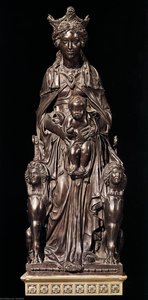
Donatello’s 1432 *Ciborium*, currently residing within the Treasury of St. Peter’s Basilica, offers a profound and remarkably intimate window into the artistic sensibilities of the Early Renaissance in Florence. More than simply a container for the Eucharist, this sculpted masterpiece is a carefully constructed dialogue between classical antiquity, Christian iconography, and the burgeoning humanist ideals that defined the era. Donatello, already establishing his signature style—characterized by expressive realism and a masterful command of both form and emotion—crafted this work not just as an object of religious devotion but as a testament to his evolving artistic vision.
The ciborium itself is a marvel of Carrara marble, meticulously carved with a sophisticated architectonic composition. Pilasters frame the central relief, creating a sense of depth and drawing the viewer’s eye towards the heart of the piece: a depiction of Mary holding the infant Jesus. This image, often referred to as *Madonna della Febbre* (Our Lady of the Fever), is not merely a representation of the Virgin but embodies a potent symbol of compassion and divine grace. The choice of this particular Madonna—a figure associated with healing and protection—underscores the ciborium’s function as a sacred space intended for contemplation and prayer.
Classical Echoes and Renaissance Innovation
Donatello's debt to classical sculpture is immediately apparent in the *Ciborium*. The composition echoes the grandeur of Roman triumphal arches, with its soaring attic and carefully arranged figures. However, Donatello doesn’t simply replicate ancient forms; he imbues them with a distinctly Renaissance sensibility. Notice the horizontal orientation of the deposition scene—a deliberate departure from the verticality often favored in medieval sculpture—and the use of drapery that is both realistically rendered and subtly theatrical. The inclusion of putti, playful cherubs drawn from classical mythology, further reinforces this fusion of styles.
The upper relief depicts the deposition of Christ, a scene rich with symbolic meaning. The curtains drawn back by these youthful figures—a direct reference to ancient Greco-Roman depictions of mourning—reveal the body of Christ, presented in a manner that is both vulnerable and dignified. The careful attention to detail – from the folds of Mary’s robes to the expressions on the faces of the surrounding angels – speaks volumes about Donatello's technical skill and his desire to capture not just the likeness but also the essence of each figure.
Symbolism, Light, and Spiritual Resonance
Beyond its formal elements, the *Ciborium* is saturated with symbolism. The use of light—particularly in the depiction of Christ’s body—is crucial. The rays emanating from the heavens suggest divine intervention and the promise of salvation. The placement of angels at the base of the ciborium further emphasizes the sacred nature of the space, acting as intermediaries between humanity and God. The overall effect is one of profound reverence and devotion, inviting viewers to contemplate the mysteries of faith.
Donatello’s *Ciborium* stands as a pivotal work in his artistic development—a testament to his ability to synthesize classical influences with Christian iconography and humanist ideals. It's a piece that continues to resonate today, offering a glimpse into the spiritual landscape of Renaissance Florence and demonstrating Donatello’s enduring legacy as one of art history’s most innovative and influential figures.
Questions & Answers
What is the emotional tone of "Ciborium" by Donatello?
"Ciborium" is associated with a spiritual feeling. The emotional tone describes the impression the work gives.
How can I get a print of "Ciborium" by Donatello?
"Ciborium" is available as a fine art print on cotton canvas or archival canvas paper. Orders are placed on its Fine Art Print page, in the size of your choice.
Who is "Ciborium" suggested for as a present, and for what use?
The gift recommendation for "Ciborium" by Donatello combines wedding with statement.
Artist Biography
early life and career
donato di niccolò di betto bardi, known as donatello, was born in florence, italy around 1386. he studied classical sculpture, which heavily influenced his development of an early renaissance style. this new approach to art and culture would eventually become the hallmark of the florentine renaissance.key works and innovations
donatello's most famous work, david, was the first freestanding nude male sculpture since antiquity. commissioned by the medici family, it showcased his innovative style and technical expertise. other notable works include:- st. louis of toulouse (now in the museum of the basilica di santa croce), which featured a classical frame designed by donatello.
- the sacrifice of isaac, created for the campanile of santa maria del fiore in florence, characterized by strong portrait details.
- crucifix (1425) for santa croce, which portrayed christ in a moment of agony.
artistic style and legacy
donatello's style can be divided into broad phases, beginning with the development of expressiveness and classical monumentality. his work was not immediately accepted by the community but eventually became the most popular, influencing other italian courts and european artists. key art movements:personal life and working style
donatello was known for being amiable and well-liked, but poor at the business side of his career. he tended to accept more commissions than he could handle, often completing works late or handing them over to other sculptors. notable artworks and artists:- leonardo da vinci: annunciation (detail)
- amico aspertini: statua di pan/leone che azzanna un cavallo
- michelangelo buonarroti: tondo pitt
museums and art collections:
- museo della collegiata (empoli, italy): a hidden gem of the renaissance, featuring works by francesco botticini and raffaello botticini.
- the early italian renaissance art movement

Donatello
1386 - 1466 , Italy
Quick Facts
- Full Name: Donatello di Niccolò
- Nationality: Italian
- Date Of Birth: 1386
- Date Of Death: 1466
- Place Of Birth: Florence, Italy
- Notable Artworks:
- David
- St. Louis of Toulouse
- Sacrifice of Isaac
- Crucifix
- Artistic Movement Or Style: Early Renaissance
- Artists Who Influenced This Artist: ['Classical sculpture']
- Artists Or Movements Influenced By This Artist:
- Italian Renaissance
- Early Renaissance
- Florentine Renaissance
Related Articles

Bronze Age to Modern Masters: 10 Sculptures That Redefined Art | OriginalUniqueArt
Journey through art history with 10 legendary bronze sculptures – from Michelangelo's David to Rodin’s Thinker. Explore the stories, techniques & timeless beauty of these masterpieces. Find museum-quality reproductions & elevate your home decor on OriginalUniqueArt.com.

The Enduring Form: Sculpture Across History, Technique & Emotional Resonance
Explore the rich history of sculpture with OriginalUniqueArt. Discover key techniques, influential artists & investment potential for discerning collectors. Expert insights into valuing and collecting timeless masterpieces.

The Enduring Form: Exploring Themes & Techniques in Sculpture Across Historical Periods
Explore the rich history of sculpture from ancient masterpieces to contemporary innovations. Discover key techniques, influential artists & investment potential for discerning art collectors.
The Enduring Legacy of Bronze Sculpture: History, Techniques & Contemporary Interpretations
Explore the rich history & enduring appeal of bronze sculpture. Learn about casting techniques, iconic artists, collecting tips, & contemporary interpretations. Expert insights for discerning art collectors.

Bronze Sculptures That Defined Art History | OriginalUniqueArt
Journey through art history with our Top 10 bronze sculptures! Explore masterpieces by Rodin, Michelangelo & more. Discover stories behind iconic statues and find museum-quality reproductions for your home decor at OriginalUniqueArt.com.