

 Preview
 Send
Send Share
Share
 Details
 Guide
Guide

 Download
 Similars
 X-Ray
X-Ray Diaporama
 Stats
StatsInterface 27-28
 Contemporary
 1979
1979 44.0 x 61.0 cm
 Serralves Foundation
 Read More
The artwork displayed on this page is protected by copyright law, which means we cannot legally create or sell an identical reproduction. This protection is enforced under international agreements such as the Berne Convention and by national laws, including those outlined by the U.S. Copyright Law - Title 17.
This method fully complies with copyright regulations because it does not involve copying or duplicating the protected artwork. Instead, it is a creative reinterpretation - a new painting that is influenced by the original but not identical to it.
Giclée / Art Print
Museum-quality giclée or canvas print with fast production and flexible finish options. ( Buy Hand Made Painting Switch to Digital Image)




P118B $10

P118H $10

P118W $10

P438Z $10

P508JH $12

P508YH $12

P805H $10

P805Z $10

P919BZ $10

P919G $10

P919XJ $10

P959ZH $10

P968JZ $12

W106C $8

W218G $10

W218JH $8

W218Y $10

W307PJ $10

W316G $10

W316PJ $8

W316Y $10

W398PJ $8

W4111J $10

W500HY $15

W500JH $15

W692G $12

W849H $8

W940BG $15

W953PJ $8




Pick from our preset sizes that match the artwork's original proportions.

Type the width and the height you need, to fit your frame or your wall. A print can only be cut, never made bigger than the picture, so a size with a different shape loses a part of the image. We send you a digital mockup to approve before we print anything. The picture shown on this page does not show the real cut — only the mockup does.
Worldwide Delivery () in 2 weeks instead of standard 4/5 weeks. (22 October)

Free Worldwide Express Shipping

High-Quality Linen Canvas

Full Shipping Insurance

Customs Tax Refund Guarantee

True Color Matching Guarantee

100-Day Return Policy (Defects Only)

100% Money-Back Guarantee

Bulk Discount Offer
 Glass option is only available in size under 110 CM

Interface 27-28
Giclée / Art Print
Reproduction Size
-


Total Price
$ 81
Artist Biography
The Alchemy of Impermanence: The Life and Vision of Dieter Roth
Born in Hanover, Germany, on April 21, 1930, Dieter Roth—often referred to by the variation Diter Rot—emerged as one of the most radical and boundary-pushing figures of the twentieth-century avant-garde. His artistic journey was never a linear progression toward perfection, but rather a profound exploration of decay, transformation, and the beautiful instability of existence. Moving through the cultural landscapes of Europe, Roth developed a practice that defied the static nature of traditional fine art, choosing instead to embrace the organic processes of life and death. His work serves as a visceral meditation on the passage of time, where the boundaries between the creator, the medium, and the environment are perpetually blurred.
Roth’s creative evolution was deeply intertwined with the experimental spirit of the Fluxus movement. As a co-founder of the magazine Spirale, he became a central node in a network of artists dedicated to breaking down the walls between high art and everyday life. This period of his life was marked by an intense curiosity regarding how objects interact with their surroundings. He did not merely seek to represent reality; he sought to engage with its physical degradation. His fascination with found materials—ranging from discarded newspapers and magazines to the much more provocative use of organic matter—allowed him to create works that were living, breathing, and ultimately, dying.
Materiality and the Aesthetics of Decay
What truly distinguishes Roth’s oeuvre is his fearless approach to medium. While many artists of his era sought permanence through oil on canvas or carved stone, Roth found profound meaning in the ephemeral. He became renowned for his sculptures that incorporated rotting foodstuffs, a technique that challenged the very notion of what an art object could be. In pieces such as Insel, the artist utilized decomposing organic elements to create a sensory experience that engaged not just the eyes, but the sense of smell and the awareness of biological change. This focus on impermanence turned his sculptures into performances of natural entropy, where the artwork changed shape, color, and texture every day it remained on display.
Beyond his sculptural experiments, Roth revolutionized the concept of the book. His artist's books were far from passive objects of reading; they were tactile, interactive landscapes. By designing books with pages that readers could rearrange or manipulate, he dismantled the traditional hierarchy of narrative and structure. This approach mirrored his interest in Concrete Art and the deconstruction of form, inviting a participatory experience that transformed the viewer into an active collaborator. His editioned prints and works on paper further showcased this mastery of technique, blending experimental textures with a deep-seated connection to the raw materials of the modern world.
Legacy and Artistic Influence
The historical significance of Dieter Roth lies in his ability to expand the vocabulary of contemporary art. He drew inspiration from the psychological depth of Expressionism, finding echoes of the raw emotion found in the works of Edvard Munch and Francis Bacon, yet he applied these influences to a much more physical, materialist framework. His legacy is felt in every movement that seeks to challenge the sanctity of the museum object and every artist who finds beauty in the discarded or the decomposing.
Throughout his career, Roth’s work was celebrated in prestigious institutions, including the Museum Folkwang in Essen, Germany, ensuring that his radical experiments were documented within the canon of art history. Though he passed away in 1998, his impact remains undiminished. He left behind a body of work that continues to provoke thought about the nature of creation and the inevitability of dissolution, reminding us that there is a profound, haunting beauty to be found in the very process of falling apart.

Dieter Rot, Diter Rot
1930 - 1998 , Germany
Quick Facts
- Date Of Birth: 1930
- Date Of Death: 1998
- Place Of Birth: Hanover, Germany
Related Articles

Own the Unrepeatable: Discover Exclusive Original Artist NFTs and Digital Masterpieces at OriginalUniqueArt
Elevate your digital portfolio with exclusive, unrepeatable original artist NFTs at OriginalUniqueArt. Discover a curated selection of premium digital masterpieces and generative abstractions designed for the discerning collector seeking true scarcity and artistic prestige.
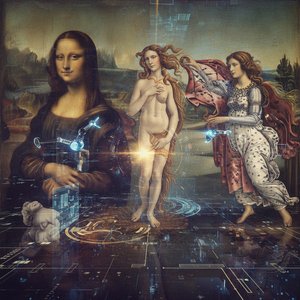
Digital Collage: Merging Art History and Technological Innovation into Modern Masterpieces
Explore the profound evolution of digital collage, where art history meets modern technology. Discover how contemporary masters merge classical techniques with digital innovation to create breathtaking new masterpieces for the modern collector.

Mastering Digital Collage: An Expert Guide to Layering Art, Texture, and Imagination
Elevate your digital artistry with our expert guide to mastering collage. Learn professional techniques for layering textures, blending imagery, and creating profound visual narratives through advanced digital composition and modern creative workflows.

Abstract Expressionism's 10 Defining Masterpieces |
Explore 10 defining Abstract Expressionism masterpieces by Pollock, Rothko & de Kooning. Discover the stories behind these iconic paintings and find museum-quality art reproductions to elevate your home decor on .

Digital Collage Unleashed: How to Remix Reality into High-Impact Pop Art
Master the art of digital collage. Discover how to remix pop culture icons, glitch aesthetics, and vibrant textures into high-impact Pop Art for modern urban spaces. Elevate your collection with bold, trend-setting visual strategies from the experts in contemporary graphic art.

