() ·

A painting made for you, by hand

St. Paul

Hand Made Oil Reproduction

Hand-painted oil on canvas in your size and frame, made to order by our artists. ( Switch to Print Switch to Digital Image)

Collectible Description

Velázquez’s influence extended beyond portraiture, shaping subsequent generations of artists—particularly Impressionists—who sought to emulate his innovative use of light and color. His legacy continues to inspire admiration for his artistic vision and technical prowess.

Artist Biography

Diego Velázquez: A master of the Spanish Golden Age! Explore his stunning realism, court portraits & iconic works like ‘Las Meninas.’ Discover the legacy of a Baroque genius.

from ·

Chapter 1

How large should it be?

Slide to change the size; the picture on the left shows the frame at its real width. The proportions of the original are kept.

Standard
custom
CM
INCH

Pick from our preset sizes that match the artwork's original proportions.

width
height

Type the width and the height you need, to fit your frame or your wall. This is hand-painted, so for a size with a different shape the artist can paint a bit more around the picture, or cut a bit — you choose. We send you a digital mockup to approve before the painting starts. The picture shown on this page does not show the real result — only the mockup does.

Chapter 2

How should it arrive?

Choose the edges of the stretched canvas

Choose your frame

Corner sample of the WhiteWrap canvas edge finish, stretched on solid wood bars
White $1
Corner sample of the BlurSideWrap canvas edge finish, stretched on solid wood bars
Blurside $1
Corner sample of the ExtendedWrap canvas edge finish, stretched on solid wood bars
Extended $1
Corner sample of the P118B picture frame: moulded polystyrene, 5 cm wide and 3 cm thick
P118B $10
Corner sample of the P118H picture frame: moulded polystyrene, 5 cm wide and 3 cm thick
P118H $10
Corner sample of the P118W picture frame: moulded polystyrene, 5 cm wide and 3 cm thick
P118W $10
Corner sample of the P438Z picture frame: moulded polystyrene, 5.5 cm wide and 3.5 cm thick
P438Z $10
Corner sample of the P508JH picture frame: moulded polystyrene, 7 cm wide and 3.5 cm thick
P508JH $12
Corner sample of the P508YH picture frame: moulded polystyrene, 7 cm wide and 3.5 cm thick
P508YH $12
Corner sample of the P805H picture frame: moulded polystyrene, 5 cm wide and 3.5 cm thick
P805H $10
Corner sample of the P805Z picture frame: moulded polystyrene, 5 cm wide and 3.5 cm thick
P805Z $10
Corner sample of the P919BZ picture frame: moulded polystyrene, 7 cm wide and 3.5 cm thick
P919BZ $10
Corner sample of the P919G picture frame: moulded polystyrene, 7 cm wide and 3.5 cm thick
P919G $10
Corner sample of the P919XJ picture frame: moulded polystyrene, 7 cm wide and 3.5 cm thick
P919XJ $10
Corner sample of the P959ZH picture frame: moulded polystyrene, 5 cm wide and 3 cm thick
P959ZH $10
Corner sample of the P968JZ picture frame: moulded polystyrene, 6 cm wide and 4 cm thick
P968JZ $12
Corner sample of the W106C picture frame: solid wood, 5 cm wide and 3 cm thick
W106C $8
Corner sample of the W218G picture frame: solid wood, 5 cm wide and 3 cm thick
W218G $10
Corner sample of the W218JH picture frame: solid wood, 5 cm wide and 3 cm thick
W218JH $8
Corner sample of the W218Y picture frame: solid wood, 5 cm wide and 3 cm thick
W218Y $10
Corner sample of the W307PJ picture frame: solid wood, 6 cm wide and 3 cm thick
W307PJ $10
Corner sample of the W316G picture frame: solid wood, 6 cm wide and 3 cm thick
W316G $10
Corner sample of the W316PJ picture frame: solid wood, 6 cm wide and 3 cm thick
W316PJ $8
Corner sample of the W316Y picture frame: solid wood, 6 cm wide and 3 cm thick
W316Y $10
Corner sample of the W398PJ picture frame: solid wood, 5 cm wide and 3 cm thick
W398PJ $8
Corner sample of the W4111J picture frame: solid wood, 6.5 cm wide and 3.5 cm thick
W4111J $10
Corner sample of the W500HY picture frame: solid wood, 7 cm wide and 5 cm thick
W500HY $15
Corner sample of the W500JH picture frame: solid wood, 7 cm wide and 5 cm thick
W500JH $15
Corner sample of the W692G picture frame: solid wood, 8 cm wide and 4 cm thick
W692G $12
Corner sample of the W849H picture frame: solid wood, 5 cm wide and 3 cm thick
W849H $8
Corner sample of the W940BG picture frame: solid wood, 7.5 cm wide and 4.5 cm thick
W940BG $15
Corner sample of the W953PJ picture frame: solid wood, 6 cm wide and 3.5 cm thick
W953PJ $8
Corner sample of the H24-GOLD picture frame: carved wood with gesso, 10 cm wide and 6 cm thick
H24-GOLD $30
Corner sample of the H24-SILVER picture frame: carved wood with gesso, 10 cm wide and 6 cm thick
H24-SILVER $30
Corner sample of the H36-GOLD picture frame: carved wood with gesso, 15 cm wide and 6.5 cm thick
H36-GOLD $45
Corner sample of the H36-SILVER picture frame: carved wood with gesso, 15 cm wide and 6.5 cm thick
H36-SILVER $45
Frame preview
Framed

Moulding: . Overall size with the frame: .

Chapter 3

Who paints it, and should anything change?

Examples of what can be changed: Replace face with customer photo; Add pet (e.g., replace cat with dog); Include hidden message in background; Change background landscape or elements.
After order, OriginalUniqueArt.com team will email client for instructions and provide a mockup preview

Worldwide Delivery () in 3/4 weeks instead of standard 5 weeks. (2 November). No compromise on quality.

Chapter 4

The finishing touches

A nameplate, as in a museum?

Engraved Bronze Plaque Details

This elegant plaque features the artist's name and the title of the artwork, finely engraved for a timeless presentation.

It is made from bronze with a refined, elegant finish. The text is precisely laser-engraved for a sharp and permanent result. Measuring 9x2 cm, the plaque is compact yet easy to read. It's built to be durable and scratch-resistant, offering a professional, museum-quality look. Mounting is simple thanks to the included adhesive backing.

Transparent Acrylic Plaque Details

The plaque includes essential engraved details such as the artist's name, the title of the artwork, the date it was created, the type of media used-like oil on canvas or watercolor-a brief description of the piece, and a QR code that links to the complete artwork information.

It is crafted from clear acrylic, offering a sleek, modern appearance. The text is UV-engraved in black to ensure strong visual contrast. With a size of 10x15 cm, it ensures optimal readability. It comes equipped with two metal hooks for secure wall mounting. The plaque is designed to be weather-resistant, making it suitable for various environments, and it includes interactive features that work seamlessly with smartphone scanning.

Black Acrylic Plaque Details

This elegant plaque includes engraved information such as the artist's name, the title of the artwork, the date it was created, the type of media used (like oil on canvas or watercolor), a short description of the artwork, and a QR code for quick access to more information.

The plaque itself is made from refined black acrylic with a premium finish. The text is laser-engraved in white for high contrast and readability. Its size is 10x15 cm, designed to be easy to read. It comes with two metal hooks for professional mounting. The design is sleek and fits any interior style. It is also weather-resistant and durable, with built-in digital integration for mobile compatibility.

A protective varnish?

When do you need it?

Chapter 5

Your painting, as you ordered it

St. Paul

Reproduction Medium

Reproduction Size

-

Elite Senior Artist

More detail, finesse, and extra production time

-

Reproduction Frame

-

-

For artworks or reproductions larger than 105 cm (approximately 41 inches) on any side, the frame will be shipped as a kit, disassembled. This method ensures safe delivery and prevents damage during transport.

Professional assembly required - this is not a DIY product.
The kit must be assembled and the canvas stretched by an experienced professional framer, using wood glue (not supplied), a canvas stretching plier and clamps to hold the bars square while the glue dries. Incorrect assembly or uneven canvas tension can permanently damage the artwork and is not covered by our warranty.

  • All solid wood bars are included, precisely cut to size.

  • Assembled with the screws provided, plus wood glue for the corner joints, which is not supplied and must be sourced by your framer.

  • Professional tools are required and not included: a canvas stretching plier (tensioner) and clamps to hold the bars square while the glue dries.

Important:
The corner joints require wood glue, the bars must be held with clamps until the glue is fully dry, and tightening the canvas on the assembled frame requires a canvas stretching plier. None of these are included in the kit. Please arrange an experienced professional framer before ordering this size.

Nameplate

-

-

Protective Varnish

Glossy Varnish (enhances colors, protects against light/moisture)

-

Customize My Artwork

Examples of what can be changed: Replace face with customer photo; Add pet (e.g., replace cat with dog); Include hidden message in background; Change background landscape or elements.

-

Urgent

Worldwide Delivery () in 3/4 weeks instead of standard 5 weeks. (2 November). No compromise on quality.

-

Express Shipping

Worldwide Delivery () in 5 weeks. (9 November).

Included

Total Price

$ 300

Total Price $ 300

Glass option is only available in size under 110 CM

Included with every order

  • Free Worldwide Express Shipping
  • High-Quality Linen Canvas
  • Full Shipping Insurance
  • Customs Tax Refund Guarantee
  • True Color Matching Guarantee
  • 100-Day Return Policy (Defects Only)
  • 100% Money-Back Guarantee
  • Bulk Discount Offer

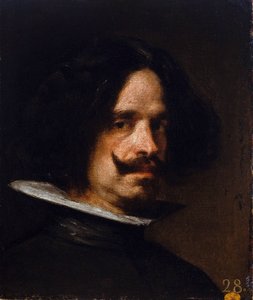
A Window into Spiritual Solitude

To stand before Diego Velázquez’s St. Paul is to enter a silent, sacred dialogue with the divine. Painted around 1620, this profound portrait transcends the boundaries of mere religious iconography, offering instead an intimate glimpse into the very essence of contemplative faith. The central figure, depicted as the ascetic St. Paul the Hermit, emerges from a sea of shadow, his weathered face etched with the dignity of a life dedicated to spiritual purification. His graying temples and full, textured beard are rendered with such startling realism that one can almost sense the weight of his prayers. There is an unmistakable psychological depth here; Velamente does not merely paint a saint, but captures a moment of profound internal movement, where the boundaries between the physical man and his spiritual devotion begin to dissolve into a singular, breathtaking expression of piety.

The Alchemy of Light and Shadow

Velázquez’s technical prowess is nowhere more evident than in his command of the Baroque aesthetic. Through the dramatic use of chiaroscuro, the artist orchestrates a breathtaking interplay between light and darkness that breathes life into the canvas. The lighting is not merely a tool for visibility but a narrative force, striking the subject's features to highlight the soft, well-worn folds of his humble brown robe and the contemplative furrow of his brow. By employing sfumato—the subtle, smoky blending of tones—he softens the edges of reality, creating an ethereal atmosphere that pulls the viewer into the painting’s somber, introspective world. The palette, dominated by earthy ochres and deep umbers, reinforces a sense of groundedness and humility, making the artwork feel both ancient and timelessly present. This masterful manipulation of pigment ensures that every shadow holds a secret and every highlight tells a story of grace.

A Legacy of Grandeur and Grace

Created during the height of the Spanish Golden Age under the reign of Philip IV, this portrait reflects the intense religious fervor and humanist ideals of the Counter-Reformation era. As a court painter to the Habsburgs, Velázquez was a master at documenting the intersection of power and morality, and in St. Paul, he finds a way to represent the monumental through the personal. For the modern collector or interior designer, this piece offers much more than historical interest; it provides a sophisticated anchor for any curated space. The painting's muted, organic tones and profound emotional gravity allow it to integrate seamlessly into contemporary environments, whether they are characterized by minimalist grandeur or classical opulence. To display such a work is to invite a sense of quiet strength and intellectual depth into a room, making it an enduring choice for those who seek art that speaks to the soul as much as it does to the eye.

Questions & Answers

How was "St. Paul" made, and how big is it?

The original "St. Paul" by Diego Velázquez is an oil on canvas work measuring 78 x 99 cm. Technique and size describe the original object.

Where can I find a guide to "St. Paul"?

The guide to "St. Paul" is the artwork's Guide page - a printable factsheet showing the artwork with its caption, credit line and identity table (artist, dates, medium, original size, collection).

What is "St. Paul" about?

The themes present in "St. Paul" by Diego Velázquez include saint paul, religious figure, baroque painting, portraiture, light shadow, spanish art, velázquez legacy. Together they summarize the artwork's subject matter.

More about this painting

Preview AR preview Switch to Print Switch to Digital Image Send
Details Guide Add to favorites Download Similars X-Ray Diaporama Q&A Stats

In numbers

  • 1620the year it was painted
  • 29frames to choose from
  • standard sizes, in its own proportions
  • 5weeks to paint and deliver it
Diego Velázquez

Diego Velázquez

1599 - 1660, Spain

Quick facts about Diego Velázquez

  • Artistic Movement Or Style: Baroque, Realism
  • Artists Or Movements Influenced By This Artist:
    • Manet
    • Picasso
    • Courbet
  • Artists Who Influenced This Artist: ['Titian']
  • Date Of Birth: 1599
  • Date Of Death: 1660
  • Full Name: Diego Rodríguez de Silva y Velázquez
  • Nationality: Spanish
  • Notable Artworks:
    • Las Meninas
    • The Surrender of Breda
    • Venus at Her Mirror
    • Pope Innocent X
  • Place Of Birth: Seville, Spain

Artist Biography

The Master of Light and Shadow: Diego Velázquez

Diego Rodríguez de Silva y Velázquez, born in Seville in 1599, occupies a singular position in the history of art—not merely as a Spanish master, but as a pivotal figure whose innovations resonated across centuries. His life unfolded during Spain’s Golden Age, a period defined by imperial power and cultural efflorescence, and his artistry became inextricably linked to the grandeur and complexities of the Habsburg court. From humble beginnings, Velázquez ascended to become more than just a painter; he was a visual interpreter of an empire, capturing its rulers, courtiers, and everyday life with unprecedented realism and psychological depth. His journey began under the tutelage of Francisco de Herrera el Viejo and, crucially, with Francisco Pacheco, whose rigorous training instilled in him a foundation in technique, proportion, and classical learning. However, it was Velázquez’s innate talent—an extraordinary sensitivity to light, color, and human character—that truly set him apart. Even early works like *Old Woman Frying Eggs* hinted at the revolutionary approach he would take to genre painting, imbuing commonplace scenes with a dignity and immediacy previously unseen.

Ascension to the Court of Philip IV

In 1623, at the age of twenty-four, Velázquez made the transformative decision to relocate to Madrid, seeking patronage in the heart of Spanish power. This move proved pivotal. He quickly gained recognition and was appointed court painter to King Philip IV in 1628, a position he would hold for the remainder of his life. This appointment wasn’t simply about securing employment; it granted Velázquez unprecedented access to the royal family and nobility, allowing him to become their chronicler through paint. Unlike many court artists who idealized their subjects, Velázquez strived for unflinching realism. He depicted Philip IV not as a remote symbol of authority, but as a man—intelligent, melancholic, and burdened by responsibility. This commitment to truthfulness, combined with his masterful technique, earned him the king’s trust and increasing artistic freedom. His early court portraits demonstrate an evolving style, moving away from the rigid formality of earlier Spanish portraiture towards a more naturalistic and psychologically insightful approach. The influence of Venetian masters like Titian—whose works Philip IV avidly collected—is evident in Velázquez's increasingly fluid brushwork and rich color palettes. He absorbed the lessons of Venetian painting, particularly its emphasis on color and loose brushwork, transforming them into something uniquely his own.

The Zenith of Artistic Innovation: *Las Meninas* and Beyond

Velázquez’s artistic genius reached its apex in the 1650s, culminating in the creation of his masterpiece, *Las Meninas* (1656). This painting is not merely a portrait; it's a complex meditation on art itself. It depicts the Infanta Margarita Teresa surrounded by her maids of honor, dwarfs, and other members of the court, while Velázquez himself stands before a large canvas, seemingly caught in the act of painting. The inclusion of the king and queen reflected in a mirror at the back of the room adds another layer of intrigue, blurring the lines between observer and observed, reality and representation. *Las Meninas* is a tour de force of perspective, composition, and psychological insight, challenging viewers to question their own role in the act of looking. It’s a painting about seeing, being seen, and the very nature of artistic creation. Other significant works from this period include *The Surrender of Breda*, a powerful depiction of Spanish victory with remarkable humanity, and portraits like *Dona Mariana of Austria*, showcasing his ability to capture both regal dignity and inner vulnerability. His technique continued to evolve, characterized by loose brushwork, subtle gradations of tone, and an extraordinary sensitivity to light and atmosphere—a hallmark that would profoundly influence generations of artists to come.

Legacy and Enduring Influence

Diego Velázquez died in Madrid in 1660, leaving behind a body of work that would profoundly influence the course of Western art. His emphasis on realism, his innovative use of light and shadow, and his psychological depth broke new ground in painting. He wasn’t merely recording appearances; he was capturing the essence of human experience. In the 19th century, French Realist painters like Gustave Courbet looked to Velázquez as a model for their own commitment to depicting life without idealization. Édouard Manet, deeply inspired by *Las Meninas*, directly referenced Velázquez’s composition in his own works, demonstrating the enduring power of the Spanish master's vision. In the 20th century, artists such as Pablo Picasso and Francis Bacon engaged with Velázquez's paintings through reinterpretations and homages, recognizing his continuing relevance to modern art. Picasso, for example, created a series of variations on *Las Meninas*, exploring its compositional structure and psychological complexities. Today, Velázquez’s masterpieces are housed in museums around the world, most notably at the Museo del Prado in Madrid, where visitors can experience firsthand the brilliance of this extraordinary artist. His legacy continues to inspire awe and admiration, solidifying his place as one of the greatest painters who ever lived—a master of light, shadow, and the human spirit.

Key Works & Collections

  • *Las Meninas* (1656): Museo del Prado, Madrid - Arguably his most famous work, a complex portrait of the royal family.
  • *The Surrender of Breda* (1634-1635): Museo del Prado, Madrid – A powerful depiction of Spanish victory with remarkable humanity.
  • *Venus at Her Mirror* (c. 1647–1651): Museo del Prado, Madrid - Demonstrates his skill in balancing realism and beauty.
  • *Dona Mariana of Austria, Queen of Spain* (1649): Museo del Prado, Madrid – A stunning portrait showcasing regal elegance.
  • *Portrait of Pope Innocent X* (1650): Galleria Doria Pamphilj, Rome - A striking and unconventional portrayal of the pontiff.
  • *Self-Portrait* (1643): Musée des Beaux-Arts, Valence – Reveals a dignified and introspective artist.

His works are prominently featured in: Museo del Prado (Madrid), Musée des Beaux-Arts (Valence), and numerous other prestigious collections worldwide.

Quick Facts

  • Title: St. Paul
  • Medium: Oil on canvas
  • Notable elements or techniques: Dramatic chiaroscuro; meticulous realism
  • Year: 1620
  • Artist: Diego Rodríguez de Silva y Velázquez
  • Dimensions: 78 x 99 cm

Art Quiz

There is only one correct answer for each question.

Question 1:
Who is the artist responsible for the painting 'St. Paul'?
Question 2:
Which artistic technique is specifically mentioned as being used by Velázquez to create an ethereal quality through the subtle blending of tones?
Question 3:
The dramatic use of light and shadow (chiaroscuro) in this portrait is a defining characteristic of which art period?
Question 4:
What does the subject's brown robe and contemplative expression primarily embody in the context of the painting?
Question 5:
Around which year was this masterpiece executed?