() ·

A painting made for you, by hand

Bretagne

Hand Made Oil Reproduction

Hand-painted oil on canvas in your size and frame, made to order by our artists. ( Switch to Print Switch to Digital Image)

Collectible Description

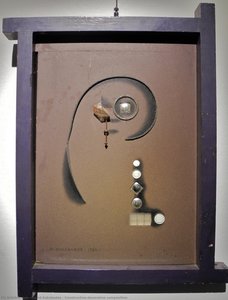
Experience the tranquil beauty of 'Bretagne' by David Kakabadze, a stunning watercolor capturing a solitary windmill amidst a serene coastal landscape. Evokes nostalgia and resilience.

Artist Biography

Leading Georgian avant-garde painter, graphic artist, and scenic designer.

from ·

Chapter 1

How large should it be?

Slide to change the size; the picture on the left shows the frame at its real width. The proportions of the original are kept.

Standard
custom
CM
INCH

Pick from our preset sizes that match the artwork's original proportions.

width
height

Type the width and the height you need, to fit your frame or your wall. This is hand-painted, so for a size with a different shape the artist can paint a bit more around the picture, or cut a bit — you choose. We send you a digital mockup to approve before the painting starts. The picture shown on this page does not show the real result — only the mockup does.

Chapter 2

How should it arrive?

Choose the edges of the stretched canvas

Choose your frame

Corner sample of the WhiteWrap canvas edge finish, stretched on solid wood bars
White $1
Corner sample of the BlurSideWrap canvas edge finish, stretched on solid wood bars
Blurside $1
Corner sample of the ExtendedWrap canvas edge finish, stretched on solid wood bars
Extended $1
Corner sample of the P118B picture frame: moulded polystyrene, 5 cm wide and 3 cm thick
P118B $10
Corner sample of the P118H picture frame: moulded polystyrene, 5 cm wide and 3 cm thick
P118H $10
Corner sample of the P118W picture frame: moulded polystyrene, 5 cm wide and 3 cm thick
P118W $10
Corner sample of the P438Z picture frame: moulded polystyrene, 5.5 cm wide and 3.5 cm thick
P438Z $10
Corner sample of the P508JH picture frame: moulded polystyrene, 7 cm wide and 3.5 cm thick
P508JH $12
Corner sample of the P508YH picture frame: moulded polystyrene, 7 cm wide and 3.5 cm thick
P508YH $12
Corner sample of the P805H picture frame: moulded polystyrene, 5 cm wide and 3.5 cm thick
P805H $10
Corner sample of the P805Z picture frame: moulded polystyrene, 5 cm wide and 3.5 cm thick
P805Z $10
Corner sample of the P919BZ picture frame: moulded polystyrene, 7 cm wide and 3.5 cm thick
P919BZ $10
Corner sample of the P919G picture frame: moulded polystyrene, 7 cm wide and 3.5 cm thick
P919G $10
Corner sample of the P919XJ picture frame: moulded polystyrene, 7 cm wide and 3.5 cm thick
P919XJ $10
Corner sample of the P959ZH picture frame: moulded polystyrene, 5 cm wide and 3 cm thick
P959ZH $10
Corner sample of the P968JZ picture frame: moulded polystyrene, 6 cm wide and 4 cm thick
P968JZ $12
Corner sample of the W106C picture frame: solid wood, 5 cm wide and 3 cm thick
W106C $8
Corner sample of the W218G picture frame: solid wood, 5 cm wide and 3 cm thick
W218G $10
Corner sample of the W218JH picture frame: solid wood, 5 cm wide and 3 cm thick
W218JH $8
Corner sample of the W218Y picture frame: solid wood, 5 cm wide and 3 cm thick
W218Y $10
Corner sample of the W307PJ picture frame: solid wood, 6 cm wide and 3 cm thick
W307PJ $10
Corner sample of the W316G picture frame: solid wood, 6 cm wide and 3 cm thick
W316G $10
Corner sample of the W316PJ picture frame: solid wood, 6 cm wide and 3 cm thick
W316PJ $8
Corner sample of the W316Y picture frame: solid wood, 6 cm wide and 3 cm thick
W316Y $10
Corner sample of the W398PJ picture frame: solid wood, 5 cm wide and 3 cm thick
W398PJ $8
Corner sample of the W4111J picture frame: solid wood, 6.5 cm wide and 3.5 cm thick
W4111J $10
Corner sample of the W500HY picture frame: solid wood, 7 cm wide and 5 cm thick
W500HY $15
Corner sample of the W500JH picture frame: solid wood, 7 cm wide and 5 cm thick
W500JH $15
Corner sample of the W692G picture frame: solid wood, 8 cm wide and 4 cm thick
W692G $12
Corner sample of the W849H picture frame: solid wood, 5 cm wide and 3 cm thick
W849H $8
Corner sample of the W940BG picture frame: solid wood, 7.5 cm wide and 4.5 cm thick
W940BG $15
Corner sample of the W953PJ picture frame: solid wood, 6 cm wide and 3.5 cm thick
W953PJ $8
Corner sample of the H24-GOLD picture frame: carved wood with gesso, 10 cm wide and 6 cm thick
H24-GOLD $30
Corner sample of the H24-SILVER picture frame: carved wood with gesso, 10 cm wide and 6 cm thick
H24-SILVER $30
Corner sample of the H36-GOLD picture frame: carved wood with gesso, 15 cm wide and 6.5 cm thick
H36-GOLD $45
Corner sample of the H36-SILVER picture frame: carved wood with gesso, 15 cm wide and 6.5 cm thick
H36-SILVER $45
Frame preview
Framed

Moulding: . Overall size with the frame: .

Chapter 3

Who paints it, and should anything change?

Examples of what can be changed: Replace face with customer photo; Add pet (e.g., replace cat with dog); Include hidden message in background; Change background landscape or elements.
After order, OriginalUniqueArt.com team will email client for instructions and provide a mockup preview

Worldwide Delivery () in 3/4 weeks instead of standard 5 weeks. (1 November). No compromise on quality.

Chapter 4

The finishing touches

A nameplate, as in a museum?

Engraved Bronze Plaque Details

This elegant plaque features the artist's name and the title of the artwork, finely engraved for a timeless presentation.

It is made from bronze with a refined, elegant finish. The text is precisely laser-engraved for a sharp and permanent result. Measuring 9x2 cm, the plaque is compact yet easy to read. It's built to be durable and scratch-resistant, offering a professional, museum-quality look. Mounting is simple thanks to the included adhesive backing.

Transparent Acrylic Plaque Details

The plaque includes essential engraved details such as the artist's name, the title of the artwork, the date it was created, the type of media used-like oil on canvas or watercolor-a brief description of the piece, and a QR code that links to the complete artwork information.

It is crafted from clear acrylic, offering a sleek, modern appearance. The text is UV-engraved in black to ensure strong visual contrast. With a size of 10x15 cm, it ensures optimal readability. It comes equipped with two metal hooks for secure wall mounting. The plaque is designed to be weather-resistant, making it suitable for various environments, and it includes interactive features that work seamlessly with smartphone scanning.

Black Acrylic Plaque Details

This elegant plaque includes engraved information such as the artist's name, the title of the artwork, the date it was created, the type of media used (like oil on canvas or watercolor), a short description of the artwork, and a QR code for quick access to more information.

The plaque itself is made from refined black acrylic with a premium finish. The text is laser-engraved in white for high contrast and readability. Its size is 10x15 cm, designed to be easy to read. It comes with two metal hooks for professional mounting. The design is sleek and fits any interior style. It is also weather-resistant and durable, with built-in digital integration for mobile compatibility.

A protective varnish?

When do you need it?

Chapter 5

Your painting, as you ordered it

Bretagne

Reproduction Medium

Reproduction Size

-

Elite Senior Artist

More detail, finesse, and extra production time

-

Reproduction Frame

-

-

For artworks or reproductions larger than 105 cm (approximately 41 inches) on any side, the frame will be shipped as a kit, disassembled. This method ensures safe delivery and prevents damage during transport.

Professional assembly required - this is not a DIY product.
The kit must be assembled and the canvas stretched by an experienced professional framer, using wood glue (not supplied), a canvas stretching plier and clamps to hold the bars square while the glue dries. Incorrect assembly or uneven canvas tension can permanently damage the artwork and is not covered by our warranty.

  • All solid wood bars are included, precisely cut to size.

  • Assembled with the screws provided, plus wood glue for the corner joints, which is not supplied and must be sourced by your framer.

  • Professional tools are required and not included: a canvas stretching plier (tensioner) and clamps to hold the bars square while the glue dries.

Important:
The corner joints require wood glue, the bars must be held with clamps until the glue is fully dry, and tightening the canvas on the assembled frame requires a canvas stretching plier. None of these are included in the kit. Please arrange an experienced professional framer before ordering this size.

Nameplate

-

-

Protective Varnish

Glossy Varnish (enhances colors, protects against light/moisture)

-

Customize My Artwork

Examples of what can be changed: Replace face with customer photo; Add pet (e.g., replace cat with dog); Include hidden message in background; Change background landscape or elements.

-

Urgent

Worldwide Delivery () in 3/4 weeks instead of standard 5 weeks. (1 November). No compromise on quality.

-

Express Shipping

Worldwide Delivery () in 5 weeks. (8 November).

Included

Total Price

$ 300

Total Price $ 300

Glass option is only available in size under 110 CM

Included with every order

  • Free Worldwide Express Shipping
  • High-Quality Linen Canvas
  • Full Shipping Insurance
  • Customs Tax Refund Guarantee
  • True Color Matching Guarantee
  • 100-Day Return Policy (Defects Only)
  • 100% Money-Back Guarantee
  • Bulk Discount Offer

A Glimpse of Coastal Georgia: "Bretagne" by David Kakabadze

This evocative watercolor painting, “Bretagne,” created in 1921 by Georgian artist David Kakabadze, transports the viewer to a tranquil coastal scene. The artwork depicts a solitary windmill standing proudly on a small island or hill, surrounded by water – a visual poem of resilience and quiet contemplation. Kakabadze’s masterful use of color and loose brushwork captures not just the appearance of the landscape but also its underlying mood, inviting viewers into a world steeped in nostalgia and gentle melancholy. The piece is part of Kakabadze's exploration of European avant-garde movements filtered through his unique Georgian perspective, making it a significant work within his oeuvre.

Impressionistic Technique & Artistic Style

Kakabadze’s style firmly aligns with Impressionism and Post-Impressionism, evident in the painting’s expressive brushwork and simplified forms. The watercolor technique is beautifully showcased through the transparency of colors and visible brushstrokes, creating a sense of fluidity and movement, particularly within the depiction of water. Rather than striving for photographic realism, Kakabadze prioritizes capturing the *atmosphere* and emotional essence of the scene. Notice how the lines are loose and gestural, contributing to an overall impressionistic feel. The windmill itself, while outlined with more deliberate strokes, retains a fluidity that prevents it from appearing rigid or overly structured. The limited color palette – dominated by earthy tones like ochre and terracotta contrasted with cool blues and greens – further enhances the painting’s subdued and contemplative mood.

Historical Context & Influences

"Bretagne" was painted during a pivotal period in Kakabadze's career, while he resided in Paris (1919-1927). This time exposed him to the vibrant artistic landscape of Europe, where he participated in exhibitions with the Société des Artistes Indépendants. While influenced by European "leftist" art movements – including Cubism and Futurism – Kakabadze consistently infused his work with elements of Georgian national traditions. His background in natural sciences also informed his keen observation of light and form. The choice of “Bretagne” (Brittany) as a subject, though painted far from the region, suggests an appreciation for its rugged coastal beauty and perhaps a symbolic connection to landscapes evoking solitude and resilience – themes prevalent in Kakabadze’s broader artistic output.

Symbolism & Emotional Resonance

Beyond its aesthetic appeal, "Bretagne" carries layers of symbolic meaning. The isolated windmill can be interpreted as representing perseverance, the enduring strength of tradition, or the inexorable passage of time. The muted colors and tranquil scene evoke a sense of calm contemplation, inviting viewers to reflect on themes of solitude, rural life, and the beauty found in simplicity. The flattened perspective contributes to this feeling of intimacy, drawing the viewer closer to the subject and fostering an emotional connection with the landscape. Kakabadze’s ability to convey such depth of emotion through seemingly simple imagery is a testament to his artistic skill and profound understanding of human experience.

Materials & Dimensions

This captivating artwork was created using watercolor paints on paper, measuring 22 x 28 cm (approximately 8.7 x 11 inches). The visible brushstrokes and slightly granular texture characteristic of watercolor further enhance the painting’s impressionistic quality, adding visual interest and contributing to its overall charm.

Questions & Answers

What is the perceived brightness of "Bretagne" by David Kakabadze?

Overall, "Bretagne" is recorded as brilliant. Perceived brightness describes how light or dark the work appears.

Who is the artist behind "Bretagne"?

"Bretagne" was created by David Kakabadze. The information on this page describes David Kakabadze's original work.

Where can I see a preview of "Bretagne"?

To preview a reproduction of "Bretagne" by David Kakabadze, open the artwork's Preview page.

More about this painting

Preview AR preview Switch to Print Switch to Digital Image Send
Details Guide Add to favorites Download Similars X-Ray Diaporama Q&A Stats

In numbers

  • 1921the year it was painted
  • 29frames to choose from
  • standard sizes, in its own proportions
  • 5weeks to paint and deliver it
David Kakabadze

David Kakabadze

1889 - 1952, Georgia

Quick facts about David Kakabadze

  • Full Name: David Kakabadze
  • Nationality: Georgian
  • Date Of Birth: 1889
  • Date Of Death: 1952
  • Place Of Birth: Kutaisi, Georgia
  • Notable Artworks:
    • Sailboats
    • Bretagne
    • Sketch for getting…
  • Artistic Movement Or Style: Avant-garde, Cubism
  • Artists Or Movements Influenced By This Artist: ['Numerous artists']

Artist Biography

A Pioneer of Georgian Modernism: The Life and Art of David Kakabadze

David Kakabadze, born in the village of Kukhi near Khoni, Georgia, in 1889, stands as a pivotal figure in the development of twentieth-century Georgian art. His career was one of remarkable innovation, seamlessly blending the burgeoning currents of European avant-garde movements with a deep reverence for his native Georgian traditions. Kakabadze wasn’t merely an artist; he was a polymath – a painter, graphic artist, scenic designer, art scholar, cinematic innovator, and even an amateur photographer. This multifaceted approach to creativity defined his artistic journey and cemented his legacy as one of Georgia's most important modernist masters. His early life, though rooted in the simplicity of a peasant family, was marked by intellectual curiosity fostered through sponsorship that allowed him to pursue studies at St. Petersburg University, graduating with a degree in natural sciences in 1916. Simultaneously, he honed his artistic skills under Dmitroyev-Kavkazsky and immersed himself in the study of Georgia’s rich artistic heritage. This dual education – scientific rigor combined with artistic sensitivity – would become a hallmark of his work.

Parisian Encounters and Artistic Transformation

Following a brief period teaching and painting in Tbilisi, Kakabadze embarked on a transformative chapter of his life in Paris from 1919 to 1927. This sojourn placed him at the epicenter of the European avant-garde, exposing him to Cubism, Futurism, and other radical artistic experiments. He actively participated in exhibitions with the Société des Artistes Indépendants, forging connections with fellow Georgian artists Lado Gudiashvili and Shalva Kikodze. It was during this period that Kakabadze’s style underwent a dramatic evolution. Initially captivated by the landscapes of his native Imereti province, he began to explore “subjectless painting,” experimenting with unconventional materials like metal, mirror glass, and stained glass in place of traditional paints. This exploration wasn't merely about technical innovation; it was a quest to redefine the very essence of pictorial representation. He delved deeply into Cubism, absorbing its fragmented forms and analytical approach, yet always maintaining a distinct artistic voice that prevented his work from becoming mere imitation. His theoretical writings during this time, published in Parisian art journals, demonstrate a profound engagement with the intellectual underpinnings of modern art, establishing him as a thought leader within the modernist community.

Innovation Beyond the Canvas: Cinema and Stage Design

Kakabadze’s inventive spirit extended far beyond painting. Recognizing the potential of new technologies, he began experimenting with cinema in the early 1920s, driven by a desire to overcome what he perceived as film's inherent limitations. He designed and patented a stereoscopic film projector that created the illusion of three-dimensionality without the need for glasses – a remarkable feat of engineering and artistic vision that positioned him as a pioneer of 3D cinema decades before it became mainstream. This inventive streak also manifested in his stage designs, particularly during his collaboration with the renowned Georgian theatre director Kote Marjanishvili after returning to Georgia in 1927. His sets were not merely backdrops but immersive environments incorporating innovative techniques like projections, light effects, and collage-like constructions, transforming the theatrical experience into a dynamic interplay of space and illusion. He created impressive set designs for films by Noutsa Gogoberidze and Michail Kalatosov.

Return to Georgia and Enduring Legacy

Kakabadze’s return to Georgia in 1927 coincided with the rise of Soviet power and the imposition of Socialist Realism as the dominant artistic style. This presented a significant challenge for an artist whose work was deeply rooted in abstraction and experimentation. While he continued to contribute to Georgian art through stage design, documentary filmmaking focused on preserving cultural heritage, and teaching at the Tbilisi State Academy of Arts, his modernist inclinations increasingly clashed with the prevailing ideological demands. Despite facing pressure and eventual marginalization, Kakabadze remained committed to his artistic principles. His later landscapes, while reflecting a shift in style, still retained a unique sensibility informed by his earlier explorations. David Kakabadze passed away in 1952, leaving behind a body of work that was largely overlooked for decades. However, in recent years, there has been a growing recognition of his importance as a key figure in Georgian modernism and a significant contributor to the broader European avant-garde movement. His innovative spirit, intellectual depth, and unwavering commitment to artistic exploration continue to inspire artists today, ensuring his enduring legacy as a true visionary.

Key Works and Collections

Some of Kakabadze’s most notable works include Sailboats, Bretagne, and Sketch for Getting Various Grades of Light in a Single Electric Bulb. These pieces exemplify his ability to synthesize European artistic trends with Georgian cultural identity. His work can be found in prominent collections around the world, including the Art Palace of Georgia – Museum of Cultural History in Tbilisi, the Berardo Collection Museum in Lisbon, and the Thyssen-Bornemisza Museum in Madrid. Furthermore, a significant collection of his early works resides at Yale University, testament to his international recognition during his lifetime. His contributions extend beyond individual paintings; it’s the breadth of his artistic inquiry – encompassing painting, cinema, stage design, and theoretical writing – that truly defines his remarkable legacy.

Quick Facts

  • Artistic style: Impressionistic/Post-Impressionistic
  • Medium: Watercolor on paper
  • Dimensions: 22 x 28 cm
  • Influences:
    • European 'leftist' art
    • Georgian traditions
  • Movement: Avant-garde

Art Quiz

There is only one correct answer for each question.

Question 1:
What artistic style best characterizes David Kakabadze’s ‘Bretagne’?
Question 2:
What is the dominant medium used in the creation of ‘Bretagne’?
Question 3:
The description notes a 'muted and somewhat melancholic atmosphere.' Which element of the artwork contributes most to this feeling?
Question 4:
What is a potential symbolic interpretation of the isolated windmill depicted in ‘Bretagne’?
Question 5:
David Kakabadze spent a significant period living and working in which European city?