Preview
 Send
Send Share
Share
 Details
 Guide
Guide

 Download
 Similars
 X-Ray
X-Ray Diaporama
 Stats
StatsPeter Getting out of Nick's Pool


 Read More
The artwork displayed on this page is protected by copyright law, which means we cannot legally create or sell an identical reproduction. This protection is enforced under international agreements such as the Berne Convention and by national laws, including those outlined by the U.S. Copyright Law - Title 17.
This method fully complies with copyright regulations because it does not involve copying or duplicating the protected artwork. Instead, it is a creative reinterpretation - a new painting that is influenced by the original but not identical to it.
Giclée / Art Print
Museum-quality giclée or canvas print with fast production and flexible finish options. ( Buy Hand Made Painting Switch to Digital Image)




P118B $10

P118H $10

P118W $10

P438Z $10

P508JH $12

P508YH $12

P805H $10

P805Z $10

P919BZ $10

P919G $10

P919XJ $10

P959ZH $10

P968JZ $12

W106C $8

W218G $10

W218JH $8

W218Y $10

W307PJ $10

W316G $10

W316PJ $8

W316Y $10

W398PJ $8

W4111J $10

W500HY $15

W500JH $15

W692G $12

W849H $8

W940BG $15

W953PJ $8




Pick from our preset sizes that match the artwork's original proportions.

You may enter your own dimensions to fit a specific frame or space. If your selected size does not match the original image's proportions, we will either crop the artwork or extend the image with a mirrored or solid-fill edge. A digital mockup will be sent for your approval before production begins.
Please note that the on-screen preview does not reflect the actual cropping or extension. Only the mockup will accurately show the final composition.
While custom sizes are available, we recommend selecting a dimension from the predefined list to preserve the original proportions.
Worldwide Delivery () in 2 weeks instead of standard 4/5 weeks. (12 October)

Free Worldwide Express Shipping

High-Quality Linen Canvas

Full Shipping Insurance

Customs Tax Refund Guarantee

True Color Matching Guarantee

100-Day Return Policy (Defects Only)

100% Money-Back Guarantee

Bulk Discount Offer
 Glass option is only available in size under 110 CM

Peter Getting out of Nick's Pool
Giclée / Art Print
Reproduction Size
-


Total Price
$ 81
David Hockney's *Peter Getting out of Nick's Pool*: A Moment of Quiet Intrigue
David Hockney’s *Peter Getting out of Nick’s Pool* isn’t merely a depiction of a summer afternoon; it’s an invitation. An invitation to pause, to observe, and perhaps even to contemplate the subtle complexities of human interaction. Painted in 1969, this iconic work exemplifies Hockney's mastery of pop art – his ability to elevate the commonplace into something profoundly beautiful and thought-provoking. The scene unfolds with a deceptively simple elegance: Peter Joe Talbot, a close friend of Hockney’s, stands poised at the edge of a swimming pool, his back turned towards the viewer, creating an immediate sense of mystery and vulnerability. Two chairs flank him, suggesting a moment of respite, while a vibrant potted plant adds a touch of unexpected color to the otherwise cool palette.
Pop Art’s Embrace of Everyday Life
*Peter Getting out of Nick’s Pool* emerged from the burgeoning pop art movement of the mid-1960s, a reaction against the perceived elitism and abstraction of traditional fine art. Artists like Hockney sought to engage with the visual culture of their time – advertising, comic books, and popular music – reflecting the changing social landscape of Britain. This painting perfectly embodies this ethos; it’s not about grand narratives or historical themes, but rather a snapshot of ordinary life, rendered with remarkable clarity and precision. The bold colors, characteristic of Hockney's style, are applied with clean, confident lines, creating an image that feels both immediate and timeless.
Technique and Composition: A Study in Balance
Hockney’s technique is instantly recognizable – a masterful blend of observation and artistic license. He employs a slightly flattened perspective, typical of pop art, to emphasize the two-dimensionality of the scene. The composition is remarkably balanced, with Peter positioned centrally, drawing the viewer's eye while the surrounding elements – the chairs, the plant, and the pool itself – contribute to a sense of depth and spatial awareness. Note the careful consideration given to light; it pools around Peter, highlighting his form and adding to the painting’s luminous quality. The use of acrylic paint allowed for rapid execution and vibrant color mixing, crucial to Hockney's style.
Symbolism and Emotional Resonance
The most compelling aspect of *Peter Getting out of Nick’s Pool* is its ambiguity. Peter’s back turned invites speculation – what is he thinking? What is he about to do? This deliberate lack of narrative engagement forces the viewer to actively participate in the scene, projecting their own emotions and interpretations onto the image. The painting speaks to themes of isolation, contemplation, and perhaps even a touch of melancholy. It's a quiet moment captured in time, imbued with a profound sense of human vulnerability.
A Legacy of Pop Art Masterpieces
David Hockney’s *Peter Getting out of Nick’s Pool* stands as a testament to his enduring influence on the art world. Its impact extends beyond its aesthetic qualities, offering a valuable insight into the cultural and artistic currents of the 1960s. A meticulously crafted hand-painted reproduction offers an unparalleled opportunity to experience this iconic work firsthand, bringing Hockney’s vision into your home or office. OriginalUniqueArt provides exceptional quality reproductions that capture the essence of this masterpiece.
Questions & Answers
Where is "Peter Getting out of Nick's Pool" suggested to be displayed, considering its palette?
The neutrals colors of "Peter Getting out of Nick's Pool" by David Hockney match its recommended space: a living room.
How strong is the contrast in "Peter Getting out of Nick's Pool" by David Hockney?
"Peter Getting out of Nick's Pool" by David Hockney shows a gentle contrast between its light and dark areas.
Where should a reproduction of "Peter Getting out of Nick's Pool" by David Hockney be hung?
With its square shape, a reproduction of "Peter Getting out of Nick's Pool" is suggested for a living room.
Does "Peter Getting out of Nick's Pool" by David Hockney use strong contrasts or soft harmonies?
The color composition of "Peter Getting out of Nick's Pool" by David Hockney combines a gentle contrast with a discordant palette harmony.
What is "Peter Getting out of Nick's Pool" made with, and in which style?
"Peter Getting out of Nick's Pool" is made in oil on canvas, in the Pop Art style.
What saturation and intensity does "Peter Getting out of Nick's Pool" by David Hockney show?
The color of "Peter Getting out of Nick's Pool" is balanced soft in saturation and vivid in intensity.
Can I order an oil reproduction of "Peter Getting out of Nick's Pool"?
You can order a hand-painted reproduction of "Peter Getting out of Nick's Pool" by David Hockney directly on this page: a hand-painted oil reproduction on linen canvas, made to order.
What is a reproduction of "Peter Getting out of Nick's Pool" by David Hockney recommended for?
A reproduction of "Peter Getting out of Nick's Pool" by David Hockney is recommended for reflective. This suggestion follows from the work's subject, mood and colors.
Artist Biography
A Life Painted in Light: The World of David Hockney
David Hockney, born July 9, 1937, in the industrial heartland of Yorkshire, England, is more than simply a painter; he’s a visual polymath whose career has spanned painting, drawing, printmaking, stage design, and photography. His story begins amidst the grit and determination of Bradford, a landscape that instilled within him a keen observational eye, even as his father, Kenneth Hockney, fostered a spirit of independent thought through conscientious objection during World War II. This early environment shaped a young artist who would consistently challenge conventions and forge his own path. Formal education at Wellington Primary School and Bradford Grammar School laid the foundation for a career that would redefine British art in the 20th and 21st centuries, culminating in studies at Bradford College of Art and later, the prestigious Royal College of Art in London. It was during these formative years that Hockney began to articulate a unique artistic voice, one that blended Pop sensibilities with a distinctly British perspective.The Rise of a Pop Icon and Beyond
The 1960s witnessed Hockney’s ascent as a pivotal figure within the burgeoning Pop Art movement. However, unlike some contemporaries who wholeheartedly embraced American commercial culture, Hockney brought a uniquely British sensibility to the genre. His work exploded with vibrant color and bold lines, depicting scenes that were both familiar and subtly subversive. A Bigger Splash (1966), perhaps his most iconic early piece, encapsulates this perfectly – a seemingly simple depiction of a swimming pool becomes a meditation on Californian leisure, artifice, and the very act of seeing. This wasn’t merely representation; it was an exploration of how we perceive reality. His double portraits, like American Collectors (Fred and Marcia Weisman), demonstrate his remarkable ability to capture not just likeness but also the essence of personality and relationship. Hockney didn't shy away from personal themes either, notably exploring gay love with openness and vulnerability in works such as We Two Boys Together Clinging (1961), challenging societal norms at a time when homosexuality was largely taboo. This willingness to confront difficult subjects head-on cemented his position as a groundbreaking artist.Experimentation, Innovation, and the Rescue of Painting
Hockney’s artistic curiosity has never been confined to a single medium. Throughout his career, he's relentlessly experimented with new technologies and approaches. From his early embrace of lithography and etching to his later explorations of photography – particularly his use of Polaroid composites in the 1980s – Hockney consistently pushed the boundaries of what art could be. He famously declared painting wasn’t dead but needed “rescuing” from its own conventions, leading him to develop innovative techniques like perspective distortions and fragmented viewpoints. This desire to revitalize painting led to ambitious projects such as Pearblossom Hwy., 11–18th April 1986, a complex photomontage that challenged traditional notions of space and representation. His stage designs for opera, including sets for Mozart's The Magic Flute and Stravinsky's The Rake’s Progress, further demonstrate his versatility and ability to translate his visual language into a different artistic realm. More recently, he has embraced the digital medium, creating stunning landscapes on iPads that showcase his continued fascination with light, color, and perspective – proving that innovation knows no bounds.Recognition, Legacy, and Enduring Influence
David Hockney’s contributions to the art world have been widely recognized throughout his illustrious career. He was appointed Order of the Companion of Honour (CH) in 2018, a testament to his profound impact on British culture. Prior to that, he was elected a Fellow of the Royal Society (FRS) in 2003 and received the Laureate of the Praemium Imperiale for Painting in 2000. His works are held in major museum collections worldwide, and can be readily accessed through online platforms, ensuring his art continues to inspire new generations. Hockney’s influence extends beyond the visual arts; he has become a cultural icon, celebrated for his wit, intelligence, and unwavering commitment to artistic exploration. His work is not merely about what he depicts but *how* he depicts it – a constant questioning of perception and representation that continues to resonate with audiences today. He remains an active force in the art world, continually challenging expectations and inspiring artists across disciplines.Further Explorations
- Place Furstenberg, Paris: A captivating example of Hockney’s interior scenes, showcasing his mastery of color and composition.
- Oona Zlamany: A poignant portrait that blends realism with Pop Art influences, revealing the sitter's contemplative nature.
- Lawn Sprinkled: A vibrant depiction of suburban life, characterized by geometric forms and a playful use of color.
- Discover more about fellow British Pop artist Pauline Boty.
- Explore the works of Frank Lisle, a painter who influenced Hockney’s early development.
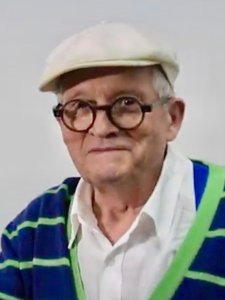
David Hockney
1937 - , United Kingdom
Quick Facts
- Full Name: David Hockney
- Nationality: British
- Date Of Birth: 1937
- Place Of Birth: Bradford, United Kingdom
- Notable Artworks:
- A Bigger Splash
- Portrait of an Artist
- We Two Boys Together
- Artistic Movement Or Style: Pop Art
- Artists Who Influenced This Artist: ['Francis Bacon']
- Artists Or Movements Influenced By This Artist: ['Pauline Boty']
Related Articles
David Hockney: A Retrospective on Pop Art's Chronicler of Light, Space, and the Everyday
Explore the life & work of David Hockney, Pop Art's master chronicler. Discover his iconic paintings, Californian landscapes, and lasting influence on modern art. Expert analysis for collectors.
Roy Lichtenstein's Masterpieces: 25 Iconic Pop Artworks for Your Home | OriginalUniqueArt
Explore Roy Lichtenstein's 25 most iconic Pop Art masterpieces! Discover the stories behind 'Drowning Girl', 'Look Mickey' & more. Find museum-quality reproductions and elevate your home decor with OriginalUniqueArt. Explore the full collection online.
Giclée Prints Explained: The Ultimate Guide to Museum-Quality Art Reproductions
Master the nuances of Giclée printing with our expert guide. Discover how pigment-based inks and museum-grade substrates create fade-resistant, high-fidelity art reproductions designed for discerning collectors seeking unparalleled quality and longevity.

Giclée Prints: Archival Quality & Aesthetic Nuances for the Discerning Collector
Explore the world of giclée prints with OriginalUniqueArt. Learn about archival quality, aesthetic nuances & investment potential. Expert guidance for discerning art collectors seeking museum-quality reproductions and lasting value.
Pop Art Icons: 10 Masterpieces That Revolutionized Modern Decor |
Explore 10 defining Pop Art masterpieces – from Warhol’s iconic Marilyn to Lichtenstein's bold dots. Discover the stories behind these revolutionary artworks & find museum-quality reproductions for your home at .