Introduction
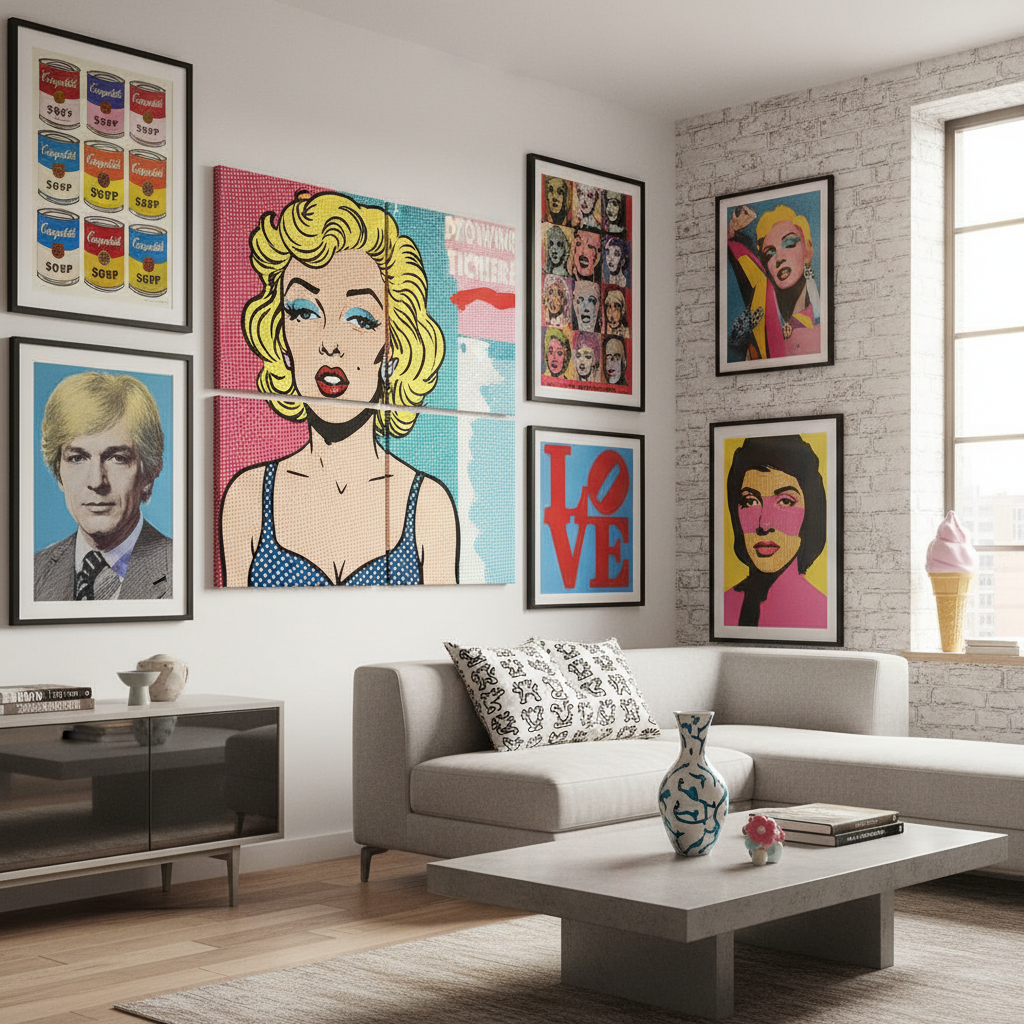
Imagine a world saturated with advertising, celebrity culture, and mass-produced objects… now envision artists daring to elevate these everyday elements into the realm of high art. That’s the captivating essence of Pop Art – a movement that exploded onto the scene in the mid-20th century, challenging traditional notions of what constituted ‘art’ and forever altering the landscape of creative expression.
Born from post-war optimism and burgeoning consumerism, Pop Art emerged as both a celebration and critique of this new society. Following the austerity of World War II, a wave of prosperity swept across America and Britain, bringing with it an unprecedented access to goods, media, and popular imagery. Artists like Andy Warhol, Roy Lichtenstein, and Claes Oldenburg responded by incorporating these elements – comic strips, soup cans, billboards – into their work, blurring the lines between ‘high’ and ‘low’ culture.
This wasn't simply about replicating images; it was a radical act of democratization. Pop Art brought art closer to the people, reflecting their lived experiences and challenging the elitism often associated with the art world. The bold colors, playful compositions, and ironic undertones captured the spirit of an era defined by rapid change and cultural upheaval.
But why do these artworks continue to resonate so powerfully today? In a world even *more* saturated with imagery than ever before, Pop Art’s commentary on consumerism, celebrity, and mass media feels remarkably prescient. These pieces aren't just relics of the past; they are timeless reflections on our own culture, prompting us to question the images we consume and the values they represent.
Over the following list, we will explore ten masterpieces that defined this groundbreaking movement – artworks that not only captured a moment in time but continue to shape our understanding of art and its relationship to society. Prepare to be captivated by the vibrant energy, provocative themes, and enduring legacy of Pop Art.
Marilyn Diptych - Andy Warhol
 Marilyn Diptych - Andy Warhol
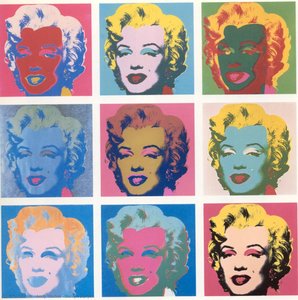
To stand before Andy Warhol’s 1962 Marilyn Diptych is to encounter not just an artwork, but a cultural touchstone – a requiem for an icon rendered in the vibrant language of Pop Art.
This monumental piece transcends portraiture, becoming a poignant meditation on fame, mortality, and the relentless churn of mass media. Fifty near-identical images of Marilyn Monroe, sourced from a publicity still, are silkscreened onto a canvas nearly six feet tall. The deliberate repetition mirrors the ubiquitous presence of celebrity faces in magazines and television – a world where image is endlessly reproduced.
The Diptych’s power lies in its dichotomy. The left panel bursts with artificial color, suggesting a constructed reality, while the right side presents the same images in stark black and white. This shift evokes Monroe’s tragic death, or perhaps the fading of her image into history. Imperfections within the silkscreen process – misalignments and smudges – aren't flaws but integral to the artwork’s meaning, hinting at fragility and impermanence.
Warhol’s rejection of traditional artistic techniques, favoring mechanical reproduction, was revolutionary. Marilyn Diptych embodies the Pop Art movement’s challenge to elitism, bringing art closer to the people while simultaneously critiquing the commodification of celebrity. It remains a deeply resonant work today, prompting us to question our own relationship with fame and the images that shape our perceptions.
Whaam! - Roy Lichtenstein
 Whaam! - Roy Lichtenstein
To encounter Roy Lichtenstein’s 1963 Whaam! is to be instantly immersed in a world of explosive energy and calculated artifice – a defining moment of Pop Art that continues to reverberate through contemporary culture.
This large-scale work isn't merely a depiction of aerial combat; it’s a powerful commentary on the detached, stylized representation of violence prevalent in mid-20th century American society. Lichtenstein boldly appropriated imagery from comic books – traditionally considered lowbrow – and elevated it to the realm of fine art, meticulously recreating the techniques of commercial printing.
The iconic Ben-Day dot system, painstakingly hand-painted, creates areas of solid color through tiny, precisely placed dots, mirroring mass production. The bold black outlines, simplified forms, and onomatopoeic “WHAAAM!” are instantly recognizable hallmarks of the comic book style. Created during the Cold War era, Whaam! reflects anxieties surrounding conflict but offers a distanced, almost clinical view.
The stark contrast between dynamic action and explosive aftermath creates visual tension. While visually arresting, the work evokes a complex emotional response – exciting yet unsettling. It challenges viewers to consider how media shapes our perception of events. A reproduction of Whaam! brings this vibrant and thought-provoking energy into any space, serving as a powerful statement piece that sparks conversation and invites contemplation.
Drowning girl - Roy Lichtenstein
 Drowning girl - Roy Lichtenstein
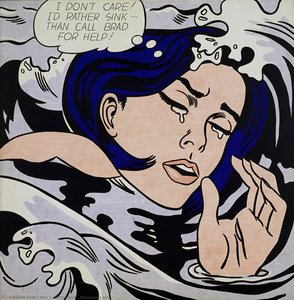
Roy Lichtenstein’s 1963 Drowning Girl is more than a painting; it's a poignant distillation of melodrama, capturing the emotional turbulence beneath the surface of mid-century American life.
This iconic work immediately draws attention with its bold lines, vivid colors, and expressive subject matter – a woman seemingly lost in despair. The swirling chaos of the background amplifies this sense of inner turmoil, while her striking blue hair creates an arresting focal point. Drowning Girl exemplifies Pop Art’s fascination with comic book aesthetics, elevating traditionally ‘lowbrow’ imagery to the realm of fine art.
Lichtenstein meticulously recreated the techniques of commercial printing, most notably the Ben-Day dot system, adding a tactile quality and echoing mass production. The speech bubble – “I DON'T CARE! I’D RATHER SINK — THAN CALL BRAD FOR HELP!” – adds a layer of specificity to her distress, hinting at a complex narrative.
Its inclusion in the Top 10 reflects its profound influence on artistic expression and cultural commentary. Drowning Girl challenges us to consider the detached handling of intense emotions within popular culture, prompting reflection on themes of isolation, despair, and the search for connection. A reproduction of this masterpiece brings a captivating energy into any space, inviting contemplation and sparking conversation.
Flag - Jasper Johns
 Flag - Jasper Johns
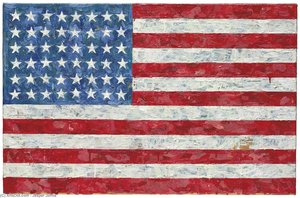
To stand before Jasper Johns’ Flag is to encounter a symbol stripped bare – not as an act of disrespect, but as an invitation to reconsider its very essence.
This pivotal work (1954-55) bridged the gap between Abstract Expressionism and Pop Art, fundamentally altering the course of 20th-century art. It’s instantly recognizable yet profoundly unconventional – a deliberate deconstruction of American iconography that challenges viewers to question their relationship with familiar imagery.
Johns avoids precise replication; proportions are subtly off-kilter, lines blurred, and colors deviate from perfection. This isn't a celebratory rendering but an investigation into the flag’s cultural weight and symbolic power. The revolutionary encaustic technique – layering oil paint with melted beeswax – creates a richly textured surface, almost sculptural in quality.
Its inclusion among the Top 10 reflects its groundbreaking influence on artistic expression. Johns paved the way for Pop Art’s embrace of popular culture by elevating everyday objects to the level of high art. A reproduction of Flag brings this captivating energy and intellectual curiosity into any space, inviting contemplation and sparking a renewed appreciation for the power of symbols.
Girl with ball - Roy Lichtenstein
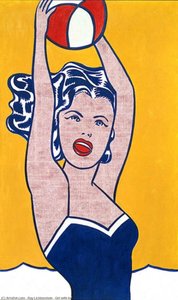 Girl with ball - Roy Lichtenstein
Roy Lichtenstein’s 1961 Girl with Ball is a captivating burst of energy – a distillation of mid-century American leisure and the idealized beauty that defined it.
This iconic work exemplifies Pop Art’s embrace of popular culture, transforming an advertisement into a striking statement on contemporary life. The vertically oriented composition focuses on a woman playing volleyball, her upward reach exuding movement and vitality. Bold outlines, simplified forms, and a vibrant color palette – pink skin tones, dark blue hair, and a navy swimsuit – create a graphic impact that is instantly recognizable.
The artwork’s inclusion among the Top 10 reflects its innovative approach to representation and its lasting influence on artistic expression. Lichtenstein deliberately minimized texture, favoring smooth, flat areas of color reminiscent of commercial printing techniques. This creates a sense of detachment and artifice, prompting viewers to question the nature of reality and the images that shape our perceptions.
Today, Girl with Ball continues to resonate with its playful energy and bold aesthetic. Its visual language – clean lines, vibrant colors, and stylized forms – finds echoes in contemporary design sensibilities, adding a touch of retro charm and sophisticated vibrancy to any space.
Marilyn, leo castelli gallery, new york - Andy Warhol
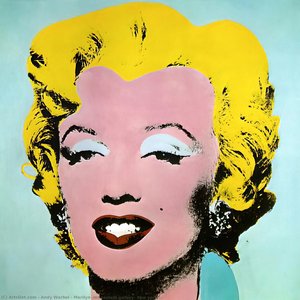 Marilyn, leo castelli gallery, new york - Andy Warhol
To gaze upon Andy Warhol’s Marilyn, leo castelli gallery, new york is to encounter a legend distilled – an icon rendered with both reverence and detachment.
This striking portrait exemplifies Warhol’s mastery of Pop Art, blending commercial art techniques with fine art sensibilities. The composition centers on Monroe’s face, dominating the frame against a light blue gradient. Bold yellow hair, soft pink skin tones, deep red lips, and stark black outlines create a graphic impact that is instantly recognizable.
Its inclusion among the Top 10 reflects its pivotal role in challenging traditional notions of artistic subject matter. Warhol’s use of silkscreen printing – a technique mirroring mass production itself – allowed for bright, flat colors and precise lines, transforming Monroe into a commodity while simultaneously elevating her to an enduring symbol.
Today, Marilyn continues to resonate with its vibrant energy and conceptual depth. Its visual language – clean lines, bold colors, and stylized forms – finds echoes in contemporary design sensibilities, adding a touch of retro glamour and sophisticated intrigue to any space.
Campbell'S Soup Can (tomato) - Andy Warhol
 Campbell'S Soup Can (tomato) - Andy Warhol
Imagine a pantry shelf bathed in soft kitchen light… then envision that everyday scene transformed into an icon by Andy Warhol’s Campbell's Soup Can (Tomato) .
This quintessential example of Pop Art elevates the mundane to the realm of high art, challenging traditional notions of artistic subject matter. The single soup can, rendered with meticulous detail and bold colors, becomes a powerful commentary on consumer culture and the commodification of everyday objects.
Warhol’s distinctive style – clean lines, graphic quality, and a deliberate lack of emotional expression – mimics commercial printing methods. The silkscreen technique allows for precise repetition, reinforcing the can's cultural significance and questioning the boundaries between high art and popular culture.
Today, Campbell's Soup Can (Tomato) continues to resonate with its vibrant energy and conceptual depth. Its presence in a space evokes a sense of nostalgia and familiarity, adding a touch of retro charm and sophisticated intrigue – a subtle yet powerful statement about the world we inhabit.
Still life no. 20 - Tom Wesselmann
 Still life no. 20 - Tom Wesselmann
To stand before Tom Wesselmann’s Still Life No. 20 is to step into a vibrant, meticulously constructed world – a snapshot of post-war American domesticity frozen in time.
This pivotal work within the Pop Art movement offers more than just a depiction of everyday objects; it's a sophisticated exploration of representation itself, blurring boundaries between high art and popular imagery. The open cabinet overflowing with household goods seamlessly transitions into a sink area, creating a visual rhythm that guides the eye across the canvas.
Wesselmann’s signature style – bold colors, clean lines, and a playful juxtaposition of realism and abstraction – embodies the movement's rejection of Abstract Expressionism. The precise execution suggests a combination of painting and collage techniques, while dominant primary colors amplify the vibrancy of the objects before us.
Its inclusion among the Top 10 reflects its lasting influence on artistic expression. A reproduction of Still Life No. 20 brings this captivating energy into any space, inviting contemplation and sparking a renewed appreciation for the beauty found in the ordinary.
Pool 2 figures - David Hockney
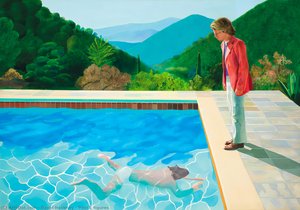 Pool 2 figures - David Hockney
Unveiling Pool 2 figures by David Hockney is like discovering a hidden oasis – a serene yet subtly unsettling scene that lingers long after the initial gaze.
This captivating artwork stands among the world’s Top 10 for its masterful interplay of natural and man-made elements, evoking feelings of calm contemplation alongside an undercurrent of mystery. The composition—a woman at the edge of a pool gazing down at a submerged figure—is rendered with Hockney's signature vibrant color palette and precise technique.
The harmonious blend of realism and abstraction embodies the spirit of Pop Art, while its exploration of themes like leisure, identity, and human connection resonates deeply. The striking contrast between the cool blues of the pool and the woman’s red jacket draws the eye, creating a focal point that invites introspection.
A reproduction of Pool 2 figures brings this timeless elegance into any space, adding a touch of refined sophistication and sparking conversation for generations to come.
A bigger splash - David Hockney
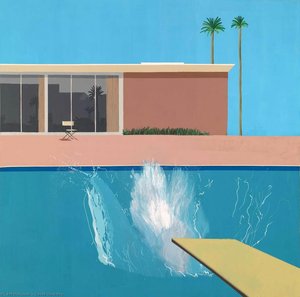 A bigger splash - David Hockney
Imagine the sun warming your skin, a gentle breeze rustling through palm leaves… then the sudden, exhilarating shock of cool water as someone dives into a pristine pool – this is the essence captured in David Hockney’s iconic A Bigger Splash .
This masterpiece epitomizes the vibrant energy and bold aesthetic of Pop Art. The large-scale painting isn't merely a depiction of a swimming pool; it’s a moment frozen in time, a dynamic interplay between serenity and motion that continues to captivate viewers decades later.
Hockney’s meticulous technique—clean lines, geometric shapes, and bright acrylic colors—creates a sense of both realism and artifice. The absence of the diver invites us to project ourselves into the scene, experiencing the cool splash and the Californian sunshine.
A reproduction of A Bigger Splash brings this timeless elegance and playful energy into any space, evoking feelings of calm, recreation, and a touch of mid-century modern sophistication.
Conclusion
As we close our journey through these ten defining works of Pop Art, it’s not merely a farewell to historic treasures, but an invitation to welcome living presences into your own world. These paintings—from Warhol's iconic portraits to Hockney’s sun-drenched pools—are more than just canvases and colors; they are echoes of human experience, reflections of our collective imagination, and bold statements about the beauty found in everyday life.
To live with a piece of Pop Art is to invite a spark of that original energy into your home. It’s to be reminded daily of the power of creativity, the joy of color, and the enduring spirit of innovation. Each brushstroke carries a story, each hue evokes an emotion—a subtle yet profound connection to the artists who dared to challenge conventions and redefine our perception of art.
We at believe that these masterpieces deserve not just admiration in museums, but a place within the spaces where life unfolds. Our hand-painted reproductions are crafted with meticulous care, ensuring that every detail—every texture, every shade—captures the essence of the original work.
Explore our full collection and discover the piece that resonates most deeply with your own heart. Let these vibrant visions transform your surroundings, inspire new conversations, and remind you—every day—of the boundless beauty that surrounds us.