Send
Send Share
Share
 Details
 Guide
Guide

 Download
 Similars
 Diaporama
 Q&A
Q&A Stats
StatsCondé


 Read More
Giclée / Art Print
Museum-quality giclée or canvas print with fast production and flexible finish options. ( Buy Hand Made Painting Switch to Digital Image)




































Pick from our preset sizes that match the artwork's original proportions.

Type the width and the height you need, to fit your frame or your wall. A print can only be cut, never made bigger than the picture, so a size with a different shape loses a part of the image. We send you a digital mockup to approve before we print anything. The picture shown on this page does not show the real cut — only the mockup does.
Worldwide Delivery () in 2 weeks instead of standard 4/5 weeks. (29 October)

Free Worldwide Express Shipping

High-Quality Linen Canvas

Full Shipping Insurance

Customs Tax Refund Guarantee

True Color Matching Guarantee

100-Day Return Policy (Defects Only)

100% Money-Back Guarantee

Bulk Discount Offer
 Glass option is only available in size under 110 CM

Condé
Giclée / Art Print
Reproduction Size
-


Total Price
$ 81
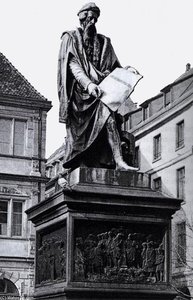
David d’Angers' Condé: A Monumental Ode to Republican Virtue
Condé by Pierre-Jean David d’Angers is more than just a sculpture; it’s a testament to the ideals of the French Revolution and a masterful demonstration of neoclassical artistic principles. Created in 1817, shortly after Napoleon’s return to power, this bronze statue embodies the spirit of civic duty and heroic grandeur that characterized the era—a deliberate echo of David’s own influential studio style. Situated within the Château de Chantilly’s Musée Condé, it stands as a centerpiece of French artistic heritage, inviting contemplation on themes of leadership, sacrifice, and unwavering commitment to republican values.Subject Matter & Composition
The sculpture depicts François Gérard, Marquis de Condé (1563 – 1628), a prominent Huguenot noble who bravely defended Protestant faith during the Wars of Religion. David meticulously captures Condé’s posture—seated upon a simple pedestal—suggesting dignity and repose amidst turbulent times. One arm is raised in gesture, perhaps conveying authority or offering solace, while the other rests on his thigh, symbolizing steadfastness and resilience. The sculptor's careful attention to anatomical detail ensures that Condé appears as both physically imposing and emotionally resonant, reflecting the heroic ideal championed by neoclassical artists.Style & Technique: Neoclassical Precision
David’s technique exemplifies the hallmarks of neoclassicism—a stylistic movement rooted in admiration for ancient Greek and Roman art. The bronze casting process itself speaks volumes about the era's mastery of metallurgy and sculptural craftsmanship. David employed a patina, achieved through controlled oxidation, to imbue the sculpture with a rich surface texture that enhances its visual depth and conveys the passage of time. The smooth skin of Condé contrasts sharply with the textured fabric draped around his torso, creating a dynamic interplay of surfaces that contributes significantly to the artwork’s expressive power. Like Michelangelo's David, this statue strives for idealized beauty—a deliberate departure from Rococo frivolity—reflecting the Enlightenment’s belief in reason and moral virtue.Historical Context & Symbolism
Condé’s commission coincided with Napoleon III’s desire to commemorate Condé’s unwavering loyalty to the Bourbon monarchy during his exile, a paradoxical gesture that underscores the complexities of French political sentiment at the time. However, David skillfully transcends partisan considerations, elevating Condé's figure to represent universal ideals—namely, courage, honor, and devotion to public service. The statue serves as a powerful reminder of France’s turbulent past and its enduring commitment to republican virtues.Emotional Impact & Artistic Legacy
Viewing Condé evokes feelings of solemn contemplation and admiration for the human spirit’s capacity for fortitude in adversity. David's masterful rendering captures not merely physical likeness but also an inner state—a profound sense of dignity and resolve—that transcends historical specificity. Like many monumental sculptures of its time, Condé continues to inspire awe and provoke reflection on themes of leadership and moral responsibility. Its enduring presence within the Musée Condé ensures that David d’Angers' legacy as a sculptor of heroic idealism will continue to resonate with audiences for generations to come.Questions & Answers
What use is suggested for "Condé" by David d'Angers?
A reproduction of "Condé" by David d'Angers is recommended for accent. This suggestion follows from the work's subject, mood and colors.
How strong are the colors of "Condé"?
The colors of "Condé" by David d'Angers show a muted saturation with a monochromatic intensity.
What is the emotional tone of "Condé" by David d'Angers?
"Condé" by David d'Angers conveys a calm emotional tone.
Artist Biography
Pierre-Jean David d’Angers: The Sculptor of Heroic Idealism
Pierre-Jean David d’Angers (1788 – 1856) stands as a pivotal figure in the neoclassical artistic landscape of France, embodying the spirit of republican idealism and monumental sculptural achievement. Born in Angers, Loiret, his early life was marked by familial ties to the Republican army—his father, a wood carver and sculptor himself, participated valiantly against the Chouan rebellion—a formative experience that instilled within him a profound appreciation for civic duty and artistic expression as instruments of national pride. This heritage profoundly shaped his artistic trajectory, propelling him toward a distinguished career centered on sculpting and modeling, particularly during the influential period of Jacques-Louis David’s studio.- Early Training & Influences: David's formative years were spent honing his craft under Jean-Jacques Delusse and Philippe-Laurent Roland in Paris, absorbing the stylistic precepts of Romanticism alongside the enduring legacy of classical sculpture. Notably, he encountered Antonio Canova—a sculptor whose meticulous attention to anatomical detail and emotive portrayal captivated David’s imagination—establishing a crucial connection with the artistic traditions of Rome that would define his oeuvre.
- The École des Beaux-Arts & The Prix de Rome: Recognizing his talent, David secured admission to the École des Beaux-Arts in 1808 where he excelled, culminating in victory at the École’s competition for *tête d'expression* and subsequently claiming the prestigious Prix de Rome in 1811. This scholarship afforded him unparalleled access to Roman artistic ideals and allowed him to develop his sculptural technique—characterized by a masterful command of marble and bronze—further refining his ability to capture human emotion and heroic grandeur.
- Roman Period & Artistic Evolution: David’s five-year sojourn in Rome proved transformative, fostering collaborations with fellow artists and immersing himself in the artistic fervor of the era. He meticulously studied the works of Michelangelo Buonarroti and Bernini, absorbing their techniques and stylistic sensibilities—influences that would permeate his subsequent sculptures and etchings. During this time he undertook expeditions to Venice, Naples and Florence, broadening his artistic horizons and enriching his understanding of classical art history.
- Monumental Sculpture & Notable Commissions: David’s reputation soared as a sculptor during the Restoration period, securing commissions for monumental works that cemented his place in French cultural history. Among his most celebrated achievements are the Pantheon frieze—a breathtaking depiction of Roman mythology commissioned to commemorate Napoleon Bonaparte's triumph—the equestrian statue of Marshal Jacques-Nicolas Gobert erected in Père Lachaise Cemetery—and the monumental sculpture commemorating the Greek liberator Markos Botsaris, a testament to David’s commitment to portraying heroic figures with unwavering conviction.
- Legacy & Recognition: David’s prolific output encompassed over 500 medallions and busts, capturing portraits of luminaries from across Europe—including Voltaire, Rousseau, Goethe, Napoleon Bonaparte, and Friedrich Schiller—demonstrating his versatility as an artist and cementing his enduring influence on subsequent generations of sculptors. His unwavering dedication to classical ideals and his ability to convey profound emotion through sculptural form ensured that David d’Angers would remain a revered figure in the annals of French art history, securing his place among the foremost sculptors of his time.
Key Works & Artistic Style
David’s artistic style is characterized by an unwavering commitment to neoclassical principles—specifically anatomical accuracy, idealized beauty, and dramatic composition—reflecting the influence of Michelangelo Buonarroti and Bernini. He skillfully employed marble and bronze to convey emotion and grandeur, prioritizing clarity of form and expressive gesture above mere decorative embellishment. His sculptures are imbued with a palpable sense of pathos and nobility, capturing moments of profound human experience with meticulous detail and unwavering conviction. The Pantheon frieze exemplifies his mastery of monumental sculpture, presenting an ambitious undertaking that celebrates Roman mythology and commemorates Napoleon Bonaparte’s victory—a testament to David's ambition and artistic vision. Similarly, the equestrian statue of Marshal Gobert stands as a symbol of French military prowess and civic virtue, demonstrating David’s ability to elevate sculptural form into a vehicle for conveying complex narratives and emotional resonance.
David d'Angers
1788 - 1856 , France
Quick Facts
- Full Name: Pierre-Jean David d'Angers
- Nationality: French
- Date Of Birth: 1788
- Date Of Death: 1856
- Place Of Birth: Angers, France
- Notable Artworks:
- Pantheon frieze
- Gutenberg at Strassburg
- Artistic Movement Or Style: Neoclassical art
- Artists Who Influenced This Artist: Jacques-Louis David
- Artists Or Movements Influenced By This Artist: Antonio Canova
Related Articles
Raphael's Masterpieces: 25 Iconic Paintings & Renaissance Art for Your Home
Explore 25 breathtaking Raphael paintings! Journey through the Italian Renaissance with masterpieces like 'School of Athens' & iconic Madonnas. Find museum-quality art reproductions and elevate your home decor on OriginalUniqueArt.com.
The Enduring Legacy of Bronze: History, Technique & Artistic Expression for the Collector
Explore the rich history & enduring appeal of bronze sculpture with expert insights for collectors at OriginalUniqueArt. Learn about casting techniques, iconic artists, and collecting tips.

Bronze Sculptures That Defined Art History | OriginalUniqueArt
Journey through art history with our Top 10 bronze sculptures! Explore masterpieces by Rodin, Michelangelo & more. Discover stories behind iconic statues and find museum-quality reproductions for your home decor at OriginalUniqueArt.com.

Bronze Age to Modern Masters: 10 Sculptures That Redefined Art | OriginalUniqueArt
Journey through art history with 10 legendary bronze sculptures – from Michelangelo's David to Rodin’s Thinker. Explore the stories, techniques & timeless beauty of these masterpieces. Find museum-quality reproductions & elevate your home decor on OriginalUniqueArt.com.

The Enduring Legacy of Bronze: A Historical & Artistic Exploration for the Collector
Explore the rich history & enduring appeal of bronze sculpture with expert insights for collectors at OriginalUniqueArt. Learn about casting techniques, iconic artists, collecting tips & contemporary interpretations.