

 Preview
 Send
Send Share
Share
 Details
 Guide
Guide

 Download
 Similars
 X-Ray
X-Ray Diaporama
 Stats
StatsJan Both
 Acrylic On Canvas
- WallArt
- Dutch Baroque Landscape
 14.0 x 12.0 cm
 Fitzwilliam College
 Read More
Giclée / Art Print
Museum-quality giclée or canvas print with fast production and flexible finish options. ( Buy Hand Made Painting Switch to Digital Image)




P118B $10

P118H $10

P118W $10

P438Z $10

P508JH $12

P508YH $12

P805H $10

P805Z $10

P919BZ $10

P919G $10

P919XJ $10

P959ZH $10

P968JZ $12

W106C $8

W218G $10

W218JH $8

W218Y $10

W307PJ $10

W316G $10

W316PJ $8

W316Y $10

W398PJ $8

W4111J $10

W500HY $15

W500JH $15

W692G $12

W849H $8

W940BG $15

W953PJ $8




Pick from our preset sizes that match the artwork's original proportions.

Type the width and the height you need, to fit your frame or your wall. A print can only be cut, never made bigger than the picture, so a size with a different shape loses a part of the image. We send you a digital mockup to approve before we print anything. The picture shown on this page does not show the real cut — only the mockup does.
Worldwide Delivery () in 2 weeks instead of standard 4/5 weeks. (23 October)

Free Worldwide Express Shipping

High-Quality Linen Canvas

Full Shipping Insurance

Customs Tax Refund Guarantee

True Color Matching Guarantee

100-Day Return Policy (Defects Only)

100% Money-Back Guarantee

Bulk Discount Offer
 Glass option is only available in size under 110 CM

Jan Both
Giclée / Art Print
Reproduction Size
-


Total Price
$ 81
Jan Both: A Master of Atmospheric Landscape
Cornelis van Poelenburgh’s “A Landscape with the Judgement of Paris,” painted circa 1645-50, stands as a testament to the burgeoning artistic fervor of the Dutch Golden Age. Executed by Jan Both and Cornelis van Poelenburgh, this captivating landscape captures a serene hillside vista bathed in soft light—a scene imbued with profound symbolic resonance that speaks volumes about humanist ideals prevalent during its creation.
- Subject Matter: The painting depicts a tranquil mountainous terrain dominated by rolling hills and distant peaks. At the center of the composition is a small group of figures engaged in the mythological Judgment of Paris, symbolizing beauty, wisdom, and strength – elements considered crucial for moral virtue during the Renaissance.
- Style & Technique: Both artists employed meticulous oil on copper technique, renowned for its luminosity and durability. The artist’s masterful brushstrokes create a palpable sense of atmosphere, capturing subtle gradations of color and texture that evoke the feeling of a crisp winter day. Van Poelenburgh's signature style is characterized by idealized landscapes reminiscent of Roman villas—a deliberate homage to classical art and philosophy.
- Historical Context: Produced during the reign of William III, “A Landscape with the Judgement of Paris” reflects the broader artistic trends of its time. The Dutch Republic experienced a period of unprecedented prosperity and cultural achievement, fueled by maritime trade and intellectual curiosity. Artists like Both and van Poelenburgh sought to elevate the human spirit through depictions of sublime beauty—a response to the philosophical debates surrounding God’s relationship with humanity.
- Symbolism: The positioning of the figures amidst the landscape serves as a powerful metaphor for moral contemplation. The judges represent the pursuit of virtue, while the hillside symbolizes stability and serenity – ideals that underpinned humanist thought and artistic expression.
The painting’s emotional impact is undeniable—it invites viewers to pause and contemplate the grandeur of nature alongside the complexities of human judgment. Its delicate palette and masterful execution exemplify the highest standards of Dutch landscape painting, securing its place as a cornerstone of Baroque art history. Reproductions offer an exceptional opportunity to appreciate this iconic artwork's beauty and intellectual depth.
- Further Exploration: Interested in delving deeper into Jan Both’s oeuvre? Explore his other celebrated landscapes at Museum Smidt Van Gelder, where you can admire masterpieces alongside fellow Dutch Masters like Goyen and Moretti.
- Comparative Inspiration: Consider examining “Winter Landscape” by Denis van Alsloot (Art UK) for insights into the stylistic nuances of Dutch landscape painting during this era.
- Related Artwork: Admire “The Adoration of the Magi” by Bartholomeus Breenbergh (Art UK) to appreciate a similar exploration of mythological themes within a landscape setting.
Questions & Answers
How well known is "Jan Both" by Cornelis Van Poelenburch?
The popularity level recorded for "Jan Both" by Cornelis Van Poelenburch is recognized.
What is "Jan Both" about, and what atmosphere does it have?
"Jan Both" shows landscape, roman mythology, religious scene, dutch painting, classical composition, figures, atmospheric perspective, and its recorded mood is serene.
What color harmony does "Jan Both" by Cornelis Van Poelenburch display?
The color harmony of "Jan Both" is recorded as strong color unity.
Artist Biography
early life and training
cornelis van poelenburgh, a prominent dutch landscape painter, was born in utrecht, netherlands in 1594. he initially trained with abraham bloemaert, a renowned artist of the time. this foundational training laid the groundwork for van poelenburch's future success.artistic career and influences
van poelenburch's travels to rome in the early 17th century significantly influenced his work, making him a leading representative of the first generation of dutch landscape painters active in italy. his small-scale paintings, often featuring italianate landscapes with small figures enacting biblical or mythological scenes, showcased his unique style. notable works:- satyrs spying on nymphs (after 1627), a characteristic example of van poelenburch's work, featuring archaic landscapes with figures bathing. (view on OriginalUniqueArt)
- council of the gods (c. 1630), a painting showcasing van poelenburch's idealized hilly landscape and roman-inspired goddesses, now housed in the mauritshuis (the hague, netherlands). (view on OriginalUniqueArt)
legacy and later life
van poelenburch's work was highly regarded by his contemporaries, including the grand duke of tuscany and the dutch stadholder. he later returned to utrecht, where he passed away in 1667, just a few years after his old teacher abraham bloemaert. key points:- born in utrecht, netherlands in 1594
- trained with abraham bloemaert
- influenced by his time in rome
- known for small-scale italianate landscapes with figures
- died in utrecht in 1667 view cornelis van poelenburch's artworks on OriginalUniqueArt learn more about cornelis van poelenburgh on wikipedia

Cornelis Van Poelenburch
1594 - 1667 , Netherlands
Quick Facts
- Full Name: Cornelis van Poelenburgh
- Nationality: Dutch
- Date Of Birth: 1594
- Date Of Death: 1667
- Place Of Birth: Utrecht, Netherlands
- Notable Artworks:
- Satyrs spying on nymphs
- Council of the gods
- Artistic Movement Or Style: Dutch Landscape, Romanate
- Artists Who Influenced This Artist: ['Abraham Bloemaert']
- Artists Or Movements Influenced By This Artist: ['Claude Lorraine']
Related Articles
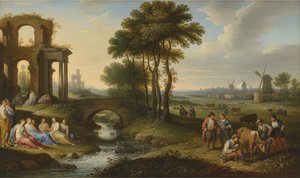
Cornelis van Poelenburch: Bridging Mannerism & the Dutch Baroque Landscape
Discover Cornelis van Poelenburch, a pivotal Dutch Baroque landscape painter bridging Mannerism & Italianate styles. Explore his life, key works, and lasting influence on 17th-century art with OriginalUniqueArt.
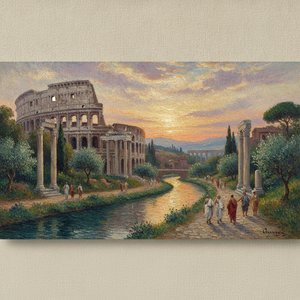
Capturing Eternal Glory: Impressionist Visions of the Roman Empire's Timeless Grandeur
Explore the breathtaking intersection of Roman grandeur and Impressionist light. Discover how masters like Monet reimagined classical ruins through vibrant, emotive brushstrokes. A cultural journey for true art lovers seeking to bring eternal glory into their homes.
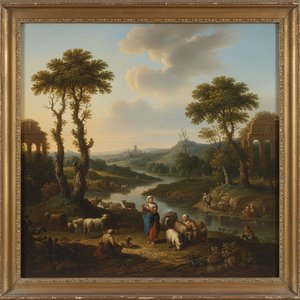
Nicolaes Berchem: Dutch Golden Age Pastoralism & the Evolution of Landscape Painting
Explore the captivating world of Nicolaes Berchem, a leading Dutch Golden Age painter. Discover his idyllic landscapes, masterful technique & lasting influence on art history. Learn more at OriginalUniqueArt.

Golden Light & Dutch Skies: The Timeless Magic of Dutch Golden Age Landscapes
Discover the breathtaking beauty of Dutch Golden Age landscapes. Explore the mastery of light, chiaroscuro, and 17th-century realism through an expert art history lens, celebrating the enduring legacy of the Dutch Masters for discerning collectors and art lovers.

Golden Light & Dutch Skies: Bringing the Magic of Dutch Golden Age Landscapes into Your Home
Transform your home with the breathtaking light of Dutch Golden Age landscapes. Discover how hand-painted oil reproductions of masterworks like Ruisdael and Vermeer bring timeless elegance, atmosphere, and soulful texture to modern interiors. Elevate your space with museum-quality art.


