

 Send
Send Share
Share
 Details
 Guide
Guide

 Download
 Similars
 Diaporama
 Stats
StatsLucretia


 Read More
Giclée / Art Print
Museum-quality giclée or canvas print with fast production and flexible finish options. ( Buy Hand Made Painting Switch to Digital Image)




































Pick from our preset sizes that match the artwork's original proportions.

You may enter your own dimensions to fit a specific frame or space. If your selected size does not match the original image's proportions, we will either crop the artwork or extend the image with a mirrored or solid-fill edge. A digital mockup will be sent for your approval before production begins.
Please note that the on-screen preview does not reflect the actual cropping or extension. Only the mockup will accurately show the final composition.
While custom sizes are available, we recommend selecting a dimension from the predefined list to preserve the original proportions.
Worldwide Delivery () in 2 weeks instead of standard 4/5 weeks. (26 September)

Free Worldwide Express Shipping

High-Quality Linen Canvas

Full Shipping Insurance

Customs Tax Refund Guarantee

True Color Matching Guarantee

100-Day Return Policy (Defects Only)

100% Money-Back Guarantee

Bulk Discount Offer
 Glass option is only available in size under 110 CM

Lucretia
Giclée / Art Print
Reproduction Size
-


Total Price
$ 81
The Echoes of Classical Grace: An Encounter with Lucretia
To stand before this depiction of Lucretia is to encounter a moment suspended between profound virtue and tragic destiny. The figure, rendered in what appears to be richly toned wood or terracotta, possesses an arresting physicality that speaks volumes without uttering a single word. Her form is captured in a state of exquisite vulnerability; the gentle downward tilt of her head suggests deep introspection, perhaps wrestling with an unbearable moral choice. Notice the dynamic asymmetry in her pose—the extended left arm reaching into an unseen space, balanced by the subtle bend at the knee. This careful orchestration of weight and line transforms what might seem like a simple nude study into a narrative tableau vivant, inviting the viewer to contemplate the weight of honor and sacrifice.
Mastery in Form: Technique and Materiality
The technical execution here is nothing short of masterful. The artist has achieved an anatomical accuracy that speaks to rigorous study, characteristic of the high Renaissance period. One can almost feel the texture of the carved material—the subtle roughness juxtaposed against the idealized smoothness of the skin. The delineation of musculature and contour is handled with a meticulous hand, suggesting the sculptor’s deep understanding of human structure. While the piece eschews overt drapery, the implied lines of the body are treated as if they were draped in the finest classical fabric, lending an air of timeless dignity to the raw material. This level of detailed carving elevates the work beyond mere representation; it becomes a study in idealized human potential.
Historical Resonance and Symbolism
Lucretia herself is steeped in Roman legend—a figure whose virtue became synonymous with the defense of the Republic against tyranny. By choosing this subject, the artist taps into an enduring wellspring of classical symbolism: the ultimate sacrifice for moral integrity. The reddish-brown patina grounds the piece in a tangible history, connecting the viewer directly to the artistic currents that revered antiquity. It is a meditation on feminine strength, not through overt action, but through profound stillness and bearing.
Bringing Antiquity Home: Decorating with Narrative Depth
For the discerning collector or designer, this piece offers more than mere ornamentation; it provides an intellectual anchor for any space. Imagine its presence in a drawing-room corner, bathed in soft, diffused light that will play across its varied textures. It introduces a sophisticated dialogue between classical ideals and contemporary living. Whether placed atop a console table or nestled within a gallery setting, the sculpture commands attention through its quiet power. Owning this reproduction is acquiring a piece of enduring narrative—a tangible echo of Florentine artistic genius designed to inspire contemplation and elevate the surrounding atmosphere with an undeniable sense of grace.
Artist Biography
Sandro Botticelli: The Poet of Florence
Alessandro di Mariano Filipepi, better known as Sandro Botticelli, remains one of the most beloved and instantly recognizable figures in the history of Western art. Born in Florence in 1445, he emerged from a family deeply rooted in the Florentine artisan world – his father was a tanner, a craft intimately connected to the city’s identity. While initially apprenticed to a goldsmith, Botticelli's true passion lay in painting, a path guided by the influential master Filippo Lippi, whose dynamic style and mastery of technique profoundly shaped the young artist’s development. This early exposure to Lippi’s approach—characterized by a vibrant palette, expressive figures, and a keen awareness of linear perspective—laid the foundation for Botticelli's distinctive artistic voice. Botticelli’s formative years were marked by a deliberate study of classical antiquity, a trend increasingly prevalent in Renaissance Florence. He meticulously examined sculptures from the Roman era, absorbing their idealized forms and graceful compositions. This fascination with the past would become a defining characteristic of his work, informing his choice of subjects and influencing his artistic style. His early works demonstrate a clear debt to the Gothic tradition, yet they quickly evolved into something uniquely his own—a synthesis of classical ideals and Renaissance innovation. The name Botticelli itself is derived from “Botticello,” a diminutive form of Giovanni Botticeli, his elder brother who operated as a pawnbroker.The Birth of Venus and Primavera: Defining the Florentine Renaissance
Botticelli’s artistic reputation soared with the creation of two monumental works that have become synonymous with the spirit of the Florentine Renaissance: *The Birth of Venus* (1486) and *Primavera* (c. 1477-1482). *The Birth of Venus*, depicting the goddess Venus emerging from a giant scallop shell, captivated audiences with its ethereal beauty and allegorical complexity. The painting’s delicate colors, flowing drapery, and graceful figures embody the Renaissance fascination with classical mythology and humanism. Similarly, *Primavera* is a complex tapestry of mythological figures—Venus, Flora, Zephyrus, Mercury, and Cupid—arranged within a lush, idealized landscape. The painting's intricate details, vibrant hues, and symbolic references to Neoplatonic philosophy reflect Botticelli’s engagement with contemporary intellectual currents. These works weren’t merely decorative; they were carefully constructed narratives designed to evoke profound emotions and convey complex ideas.A Painter of Patrons and Portraits
Botticelli's career was inextricably linked to the patronage system that flourished in Renaissance Florence. He served several prominent families, including the Medici, the de’ Medici, and the Pitti, providing them with a continuous stream of commissions for religious paintings, allegorical scenes, and portraits. His portraiture, particularly his depictions of members of the Medici family, is notable for its psychological depth and subtle elegance. He captured not just physical likenesses but also conveyed a sense of character and personality—a remarkable achievement for the time. Botticelli’s ability to adapt his style to suit the tastes of his patrons demonstrates his versatility as an artist and his understanding of the social dynamics of Renaissance Florence.Later Years and Legacy
As Botticelli aged, his artistic style underwent a subtle transformation. His later works, such as *Adoration of the Magi* (1482), exhibit a greater emphasis on linear clarity and a more restrained palette compared to his earlier, more exuberant paintings. Some scholars believe that this shift reflects a growing disillusionment with the political turmoil and religious conflicts that plagued Florence during his later years. Despite these changes, Botticelli’s artistic legacy remains undiminished. His paintings continue to inspire awe and admiration for their beauty, grace, and profound symbolic meaning. He is remembered not only as one of the greatest painters of the Florentine Renaissance but also as a poet—a master of visual storytelling who captured the spirit of his age with unparalleled skill and sensitivity. Botticelli died in Florence in 1510 at the age of 65, leaving behind a body of work that continues to resonate with audiences centuries later. His influence on subsequent generations of artists is undeniable, cementing his place as a pivotal figure in the history of Western art.
conrad meit
1485 - 1551 , Germany
Quick Facts
- Artistic Movement Or Style: Early Renaissance, Renaissance
- Artists Or Movements Influenced By This Artist: ['Giorgio Vasari']
- Artists Who Influenced This Artist: ['Filippo Lippi']
- Date Of Birth: 1445, Florence Italy
- Date Of Death: May 17, 1510, Florence (aged 65)
- Full Name: Alessandro di Mariano Filipepi
- Nationality: Italian
- Notable Artworks:
- Birth of Venus
- Primavera
- Place Of Birth: Florence Italy
Related Articles

Bronze Age to Modern Masters: 10 Sculptures That Redefined Art | OriginalUniqueArt
Journey through art history with 10 legendary bronze sculptures – from Michelangelo's David to Rodin’s Thinker. Explore the stories, techniques & timeless beauty of these masterpieces. Find museum-quality reproductions & elevate your home decor on OriginalUniqueArt.com.

The Enduring Form: Exploring Themes & Techniques in Sculpture Across Historical Periods
Explore the rich history of sculpture from ancient masterpieces to contemporary innovations. Discover key techniques, influential artists & investment potential for discerning art collectors.

The Enduring Form: Sculpture Across History, Technique & Emotional Resonance
Explore the rich history of sculpture with OriginalUniqueArt. Discover key techniques, influential artists & investment potential for discerning collectors. Expert insights into valuing and collecting timeless masterpieces.
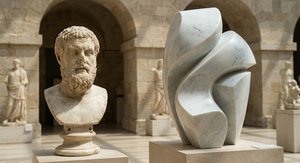
The Enduring Allure of Marble in Art History: From Classical Sculpture to Modern Abstraction
Explore the captivating history of marble sculpture from ancient Greece to modern art. Discover renowned artists like Canova & Michelangelo, carving techniques, and investment insights at OriginalUniqueArt.

Bronze Sculptures That Defined Art History | OriginalUniqueArt
Journey through art history with our Top 10 bronze sculptures! Explore masterpieces by Rodin, Michelangelo & more. Discover stories behind iconic statues and find museum-quality reproductions for your home decor at OriginalUniqueArt.com.


