Preview
 Send
Send Share
Share
 Details
 Guide
Guide

 Download
 Similars
 X-Ray
X-Ray Diaporama
 Stats
StatsUntitled


 Read More
The artwork displayed on this page is protected by copyright law, which means we cannot legally create or sell an identical reproduction. This protection is enforced under international agreements such as the Berne Convention and by national laws, including those outlined by the U.S. Copyright Law - Title 17.
This method fully complies with copyright regulations because it does not involve copying or duplicating the protected artwork. Instead, it is a creative reinterpretation - a new painting that is influenced by the original but not identical to it.
Giclée / Art Print
Museum-quality giclée or canvas print with fast production and flexible finish options. ( Buy Hand Made Painting Switch to Digital Image)




P118B $10

P118H $10

P118W $10

P438Z $10

P508JH $12

P508YH $12

P805H $10

P805Z $10

P919BZ $10

P919G $10

P919XJ $10

P959ZH $10

P968JZ $12

W106C $8

W218G $10

W218JH $8

W218Y $10

W307PJ $10

W316G $10

W316PJ $8

W316Y $10

W398PJ $8

W4111J $10

W500HY $15

W500JH $15

W692G $12

W849H $8

W940BG $15

W953PJ $8




Pick from our preset sizes that match the artwork's original proportions.

Type the width and the height you need, to fit your frame or your wall. A print can only be cut, never made bigger than the picture, so a size with a different shape loses a part of the image. We send you a digital mockup to approve before we print anything. The picture shown on this page does not show the real cut — only the mockup does.
Worldwide Delivery () in 2 weeks instead of standard 4/5 weeks. (25 October)

Free Worldwide Express Shipping

High-Quality Linen Canvas

Full Shipping Insurance

Customs Tax Refund Guarantee

True Color Matching Guarantee

100-Day Return Policy (Defects Only)

100% Money-Back Guarantee

Bulk Discount Offer
 Glass option is only available in size under 110 CM

Untitled
Giclée / Art Print
Reproduction Size
-


Total Price
$ 81
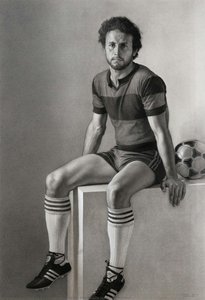
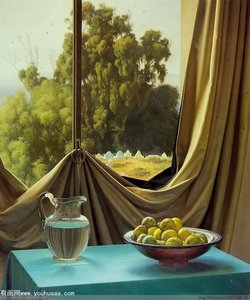
A Symphony in Light and Shadow: Claudio Bravo’s “Untitled (915)”
Claudio Bravo’s “Untitled (915),” completed in 1997, stands as a testament to the enduring power of hyperrealism—a style championed by Bravo himself that meticulously captures reality with astonishing accuracy. More than just a depiction of a sheep lying on its side, this painting delves into profound themes of vulnerability and contemplation, inviting viewers to ponder the complexities of existence.
Bravo’s masterful technique employs oil paints layered upon canvas with painstaking precision. He achieves remarkable textural depth by applying thin glazes that build up gradually, creating a surface that mimics the wool’s natural irregularities—a deliberate choice reflecting Bravo's fascination with capturing subtle nuances of form and color. The artist’s meticulous attention to detail extends beyond mere representation; it seeks to evoke an emotional response.
Historically situated within the broader context of Latin American art, “Untitled (915)” aligns itself with a tradition rooted in classical realism but infused with Surrealist sensibilities. Bravo draws inspiration from Renaissance masters like Leonardo da Vinci and Michelangelo, prioritizing anatomical correctness and idealized beauty while simultaneously exploring subconscious imagery—a duality that characterizes much of his oeuvre.
Symbolically, the sheep’s posture embodies stillness and acceptance. Its closed eyes suggest a state of peaceful repose, mirroring the artist's own desire to convey serenity and introspection. The muted palette—dominated by browns and whites—further reinforces this mood, creating an atmosphere of quiet contemplation. Bravo skillfully utilizes light and shadow to sculpt the form of the sheep, emphasizing its contours and highlighting the interplay between illumination and darkness.
“Untitled (915)” transcends mere visual representation; it’s a meditation on beauty, vulnerability, and the human condition. Bravo's unwavering commitment to hyperrealism ensures that every brushstroke contributes to an immersive experience—a captivating glimpse into the artist’s vision of the world.
Exploring Claudio Bravo’s Artistic Legacy
Born in Valparaíso, Chile, in 1936, Claudio Bravo embarked on a remarkable artistic journey marked by unwavering dedication and intellectual curiosity. Initially discouraged by his father's pragmatic outlook—who viewed art as impractical—Bravo persevered thanks to the guidance of Miguel Venegas Cifuentes, who instilled in him a foundational realist style that would define his distinctive aesthetic.
Early commissions solidified Bravo’s reputation as a portraitist within Chile, showcasing his exceptional skill in capturing likeness and conveying emotion. However, Bravo's artistic ambitions extended far beyond traditional portraiture; he relentlessly pursued new avenues of expression—exploring sculpture, printmaking, and experimental film—demonstrating an unparalleled versatility.
His formative training under Venegas Cifuentes provided him with a bedrock of technical proficiency, shaping his approach to painting and establishing the hallmark of his oeuvre: meticulous detail and masterful tonal control. Bravo’s stylistic evolution reflects a profound engagement with artistic movements such as Surrealism and Cubism—influences that enriched his visual vocabulary and propelled him toward groundbreaking innovations.
Notable Works Beyond “Untitled (915)”
Bravo's artistic output encompasses a diverse range of projects, each imbued with his signature stylistic hallmarks. Among his most celebrated paintings are “Untitled (574),” a portrait rendered in realistic style that captures the enigmatic gaze of its subject—a testament to Bravo’s ability to convey psychological depth through visual representation.
Furthermore, Bravo's exploration of sculpture solidified his reputation as a multifaceted artist. His monumental sculptures—often inspired by mythological narratives and imbued with symbolic resonance—demonstrate his mastery of form and material—a remarkable achievement considering the challenges posed by working in three dimensions.
Recognition and Influence
Claudio Bravo’s artistic achievements garnered international acclaim, establishing him as one of Chile's most influential artists. His work has been exhibited extensively throughout Europe and North America, cementing his place within the canon of 20th-century art history.
Bravo’s unwavering commitment to hyperrealism—characterized by its uncompromising pursuit of photographic accuracy—inspired generations of painters and solidified his legacy as a pioneer of stylistic innovation. His enduring influence continues to resonate in contemporary artistic discourse, underscoring the significance of Bravo's contribution to Latin American art.
Questions & Answers
Which period of Claudio Bravo's career does "Untitled" belong to?
"Untitled" belongs to the Mature Period of Claudio Bravo's career. This classification relates the work to the artist's development.
Can I watch "Untitled" as a full-screen slideshow?
The diaporama of "Untitled" can be watched on the artwork's Diaporama page.
How can I get a digital file of "Untitled" by Claudio Bravo?
To get a digital file of "Untitled" by Claudio Bravo, order a high-resolution digital image download on its Digital Image page.
Artist Biography
A Chilean Visionary: The Life and Art of Claudio Bravo
Claudio Bravo, a name synonymous with hyperrealism, emerged from the vibrant cultural landscape of Valparaíso, Chile, in 1936. His journey was one of remarkable dedication to his craft, evolving from early portrait commissions undertaken to excel in school to becoming an internationally celebrated artist whose works bridge European traditions and Latin American sensibilities. Born into a family where artistic inclination wasn’t immediately encouraged – his father, a businessman, initially viewed art as impractical – Bravo nonetheless found support that nurtured his burgeoning talent. This came through the guidance of Miguel Venegas Cifuentes, who provided Bravo's sole formal training for nearly a decade, instilling in him a foundational realist style that would become the hallmark of his oeuvre. Even as a young man, Bravo’s skill was evident; he quickly gained recognition as a portraitist within Chile, but an insatiable desire to explore the wider art world beckoned him towards Europe.From Madrid Society to the Allure of Packages
The late 1950s saw Bravo embark on a transformative period in Madrid, Spain. Establishing himself as a sought-after portraitist among high society, he honed his technical skills and developed an acute understanding of light and form – influences deeply rooted in the works of Renaissance and Baroque masters like Velázquez, Zurbarán, and Cotán. These artists weren’t merely admired; they were studied intensely, informing Bravo's meticulous approach to composition, lighting, and subject matter. He painted prominent figures—from Franco’s daughter to Ferdinand and Imelda Marcos—but a shift was brewing within his artistic vision. Around 1963, inspired by the simple beauty of wrapped packages brought home by his sisters and the abstract color fields of artists like Mark Rothko, Bravo began incorporating these everyday objects into his paintings. This marked the beginning of his iconic “package” period, an exploration of concealment, mystery, and the inherent aesthetic qualities found in the mundane. His first major exhibition at Galería Fortuny showcased this new direction, captivating audiences with its unexpected subject matter and breathtaking realism.Tangier’s Embrace: A Synthesis of Influences
In 1972, Bravo sought a change of scenery, relocating to Tangier, Morocco, where he would reside for much of the remainder of his life. This move proved pivotal, allowing him to synthesize the diverse influences that had shaped his artistic journey. While continuing to accept portrait commissions and create meticulously detailed still lifes, he expanded his creative repertoire to include drawings, lithographs, engravings, and even figural bronze sculptures. Tangier’s unique light, vibrant culture, and proximity to both Europe and Africa infused his work with a new energy and spiritual depth. The influence of Surrealism became increasingly apparent in his compositions, characterized by dreamlike juxtapositions and ethereal backgrounds. Bravo wasn't simply replicating reality; he was interpreting it through a lens informed by Renaissance technique, Baroque drama, and the evocative power of the subconscious.A Legacy of Hyperrealism and Enduring Impact
Claudio Bravo’s death in 2011 marked the end of an era, but his artistic legacy continues to resonate with collectors and art enthusiasts worldwide. He is rightfully recognized as a leading figure in hyperrealism, celebrated for his unparalleled technical mastery, meticulous attention to detail, and ability to imbue even the most ordinary subjects with profound emotional resonance. His paintings are held in prestigious collections such as The Metropolitan Museum of Art, the Museo Nacional de Bellas Artes in Santiago, and the Museum Ludwig in Cologne, a testament to his enduring significance within art history. Bravo’s work transcends mere imitation; it is an exploration of perception, symbolism, and the beauty inherent in both the tangible and the intangible. He demonstrated that hyperrealism wasn't simply about replicating reality but about revealing its hidden depths and evoking a powerful emotional response in the viewer.- His influence can be seen in contemporary artists who strive for similar levels of technical precision and evocative storytelling.
- Bravo’s ability to elevate everyday objects into works of art challenges conventional notions of beauty and artistic merit.
- He remains a source of inspiration for those seeking to master the fundamentals of painting while pushing the boundaries of realism.

Claudio Bravo
1936 - 2011 , Chile
Quick Facts
- Artistic Movement Or Style: Hyperrealism
- Artists Or Movements Influenced By This Artist: Hyperrealism
- Artists Who Influenced This Artist:
- Velázquez
- Zurbarán
- Sánchez Cotán
- Dalí
- Date Of Birth: 1936
- Date Of Death: 2011
- Full Name: Claudio Bravo
- Nationality: Chilean
- Notable Artworks:
- Untitled (509)
- Untitled (401)
- Untitled (426)
- Place Of Birth: Valparaíso, Chile
Related Articles
Surrealist Painting Masterpieces: 10 Artworks That Redefined Reality | OriginalUniqueArt
Journey into the dreamlike world of Surrealism! Explore 10 masterpieces by Dali, Magritte & Miró that redefined art. Discover their stories & find museum-quality reproductions to elevate your home decor on OriginalUniqueArt.com.
Surrealist Dreamscapes: A Curated Journey Through the Subconscious Majesty of Surrealism
Embark on a sophisticated journey through Surrealist dreamscapes. Explore the profound symbolism of masters like Dalí and discover how to curate breathtaking, museum-quality surrealist art for your private collection with expert guidance.
Surrealism's Visionaries: 10 Masterpieces for Your Home | OriginalUniqueArt
Journey into the dreamlike world of Surrealism! Explore 10 masterpieces by Dali, Magritte & Miró that redefined art. Discover their stories & find museum-quality reproductions to elevate your home decor on OriginalUniqueArt.com.
Sacred Narratives Embodied: A Comprehensive Exploration of Religious Iconography in Art History
Explore the rich history of religious iconography in art! Discover symbolism, movements & masterpieces from Byzantine to Renaissance periods. Expert insights for collectors and enthusiasts at OriginalUniqueArt.
Beyond Reality: The Dreamlike Power of Surrealist Expressionism and the Subconscious Mind
Explore the profound depths of Surrealist Expressionism. Discover how masters like Dalí used dream logic and subconscious imagery to redefine reality through emotionally resonant, museum-quality art.