
 Preview
 Send
Send Share
Share
 Details
 Guide
Guide

 Download
 Similars
 X-Ray
X-Ray Diaporama
 Q&A
Q&A Stats
StatsCliffs at Belle-Ile

 Read More
Get a print-ready file that goes far beyond the web preview. Every digital image we sell comes from a high-resolution master in our stock database — usually 5,000 to 15,000 pixels wide — so you can print large, crop tightly, or reproduce fine detail with confidence.
No file leaves our studio untouched. A digital expert checks the colors against the original painting and corrects them if needed, then improves clarity and detail with professional retouching tools — always staying faithful to the artist's brushwork and style. The result is an image that looks like the painting, not like a filtered scan.
You approve before you're done: our expert sends the image by e-mail within 72 hours for your review. Not satisfied? Ask for improvements or corrections, or request a refund if the quality falls short.
This is the quality relied on by publishers, design studios, galleries and print shops.
Digital Image
Download a high-resolution file for personal display, printing, and creative projects. ( Switch to Print Buy Hand Made Painting)
Included in Every Digital Image Order
Expert Digital Delivery, Guaranteed
When you choose OriginalUniqueArt.com, you're not just getting an image - you're receiving a professionally enhanced digital artwork, crafted with precision and backed by a satisfaction guarantee. Here's everything that comes with your order, automatically:

Fast Email Delivery
Your high-resolution digital image file will be emailed to you within 72 hours of ordering - ready for immediate use.

AI-Enhanced Digital File
Your artwork is professionally optimized using advanced AI tools and manual editing, ensuring maximum detail, clarity, and color accuracy.

Free Lifetime Re-Delivery
Accidentally deleted or lost your file? No worries - we'll resend it to you anytime, free of charge.

No Import Fees - Ever
Enjoy your artwork instantly with zero customs, duties, or delivery fees - digital downloads are always tax-free.

Color Accuracy Guarantee
We ensure your digital image reflects the original colors as closely as possible using professional tools and color management.

100-Day Satisfaction Guarantee
If you're not satisfied with your digital image, we'll revise it or refund 100% within 100 days - no questions asked.

100% Money-Back Guarantee
Not satisfied? Get a full refund within 100 days of receiving your digital file - no questions asked.

Bulk Order Discounts
Buy 3 images, save 10% - Buy 5, save 15% - Buy 10+, save 20%. Great for creative projects, galleries, and agencies.
A Symphony of Light and Stone: Exploring Claude Monet’s Cliffs at Belle-Ile
Claude Monet, a name synonymous with Impressionism, wasn't merely a painter of landscapes; he was a chronicler of fleeting moments, a poet of light and color. Born in Paris on November 14, 1840, his early life took an unexpected turn when his family relocated to Le Havre, Normandy, at the age of five. While initially destined for a commercial career by his father, young Claude’s innate artistic talent quickly surfaced, manifesting first in charcoal caricatures sold locally – a testament to both his skill and entrepreneurial spirit. However, it was his encounter with Eugène Boudin that proved pivotal. Boudin didn't just teach Monet *how* to paint; he instilled within him the revolutionary idea of painting en plein air—directly from nature—a practice that would define his entire artistic journey. Monet’s formal training began in Paris, briefly at the Académie Suisse and later under Charles Gleyre. It was here he forged lasting friendships with fellow artists like Pierre-Auguste Renoir and Camille Pissarro, establishing a core group dedicated to pushing the boundaries of artistic convention. Their shared ambition was to capture not just what they *saw*, but how light transformed the visual world—a radical departure from the academic tradition that prioritized meticulous detail and idealized representations. This pursuit of atmospheric impression would become Monet’s signature style, forever altering the course of art history.The Belle-Ile Vision: Capturing Coastal Drama
“Cliffs at Belle-Ile,” painted in 1881 during Monet's prolific Normandy period, exemplifies this groundbreaking approach perfectly. The subject matter itself—the rugged coastline of Belle-Ile Saint Germain—was chosen deliberately to showcase the transformative power of sunlight on water and rock formations. Monet wasn’t interested in rendering a precise topographical map; instead, he sought to convey the *feeling* of being present at that particular moment – the salty air, the crashing waves, the shifting hues of dawn or dusk. This dedication to capturing ephemeral beauty is palpable throughout the canvas.Technique and Impressionistic Brushstrokes
Monet’s technique—characterized by loose, visible brushstrokes—was revolutionary for its time. He applied paint in short, broken dashes of color, allowing the pigments to blend optically on the viewer's eye rather than relying on traditional glazing methods. This layering of translucent colors creates a shimmering effect that mimics the way light scatters across the surface of water and stone. The artist meticulously observed how the changing conditions of illumination affected the palette—from pale blues and greens at sunrise to warmer oranges and reds as the day progressed—translating these observations into an astonishingly vibrant depiction.Symbolism Beyond Representation
More than just a visual record, “Cliffs at Belle-Ile” carries symbolic weight. The cliffs themselves represent permanence and solidity against the ceaseless movement of the sea, symbolizing the enduring beauty of nature despite its constant flux. Monet’s masterful use of color—particularly his bold juxtapositions of complementary hues—further enhances this symbolism. These colors aren't merely decorative; they vibrate with energy and communicate a profound sense of emotion – awe, wonder, and perhaps even melancholy as the day draws to a close.A Legacy Enduring Impression
“Cliffs at Belle-Ile” stands as one of Monet’s most iconic works, cementing his place among the titans of Impressionism. Its influence extends far beyond the art world, inspiring countless artists and designers who strive to emulate its luminous quality and expressive dynamism. Today, a high-quality reproduction allows admirers worldwide to experience the breathtaking beauty of Monet's vision—a testament to his enduring legacy as a pioneer of modern painting. Explore “Cliffs at Belle-Ile” on OriginalUniqueArt.com: Cliffs at Belle-Ile Learn more about Claude Monet: Claude Monet Discover other Impressionist painQuestions & Answers
What other names is Claude Monet known by?
Claude Monet is also known as Oscar-Claude Monet, Claude Oscar Monet.
Toward which tone does "Cliffs at Belle-Ile" lean?
The dominant hue of "Cliffs at Belle-Ile" by Claude Monet is green to violet spectrum. The hue is the underlying tone of the palette.
Is "Cliffs at Belle-Ile" free of copyright?
The copyright answer for "Cliffs at Belle-Ile" by Claude Monet: the work is in the public domain - its copyright has expired. This determines whether reproductions of the image may be freely made.
Artist Biography
A Life Shaped by Light and Water
The story of Oscar-Claude Monet begins in the streets of Paris, though his heart was often found wandering the salt-misted air of Le Havre. As a young boy, he moved to Normandy, where his father initially hoped he would follow a path in commerce. Yet, the boy possessed a restless eye for detail, finding early success by selling charcoal caricatures to local acquaintances. It was during these formative years that a chance encounter with Eugène Boudin changed everything. Boudin did not merely offer lessons in oil paint; he introduced the young man to the practice of painting en plein air, teaching him to set his easel directly within the unpredictable elements of nature.
This early training instilled a lifelong obsession with the fleeting moment. When the Franco-Prussian War forced him into the streets of London, Monet found himself absorbing the atmospheric effects seen in the works of J.M.W. Turner. He returned to France with a new understanding of how mist and light could dissolve solid forms. In Paris, he sought formal instruction under Charles Gleyre, where he formed deep bonds with fellow painters like Auguste Renoir. These friendships were forged in a shared desire to break away from the rigid, dark constraints of the academic Salon, seeking instead a way to record the world as it was actually perceived by the eye.
The Rebellion of Impression
The year 1874 marked a turning point for this group of rebels. Dissatisfied with conservative standards, they organized their own independent exhibitions. It was during one such showing that his painting, Impression, Sunrise, gave a name to a movement that many initially viewed with derision. The term "Impressionism" emerged from the very criticism meant to mock his loose brushstrokes and unfinished appearance. Monet did not recoil from this label; he embraced it, using it to define a style centered on the subjective sensation of a scene.
His technique became a study in optical truth. He applied unmixed colors side-by-side, a method known as broken color, allowing the viewer's eye to blend the hues. He rejected traditional dark grounds, opting instead for light-colored primers that added a new brightness to his canvases. His work often focused on the following elements:
- The use of rapid, visible brushstrokes to capture movement.
- The study of how sunlight alters the appearance of a single subject over time.
- The rejection of linear perspective in favor of asymmetrical, flattened arrangements influenced by Japanese prints.
Giverny and the Final Vision
In 1883, Monet settled in Giverny, creating a sanctuary that would become his most profound subject. He transformed his property into an elaborate garden, complete with a water lily pond and a Japanese bridge. This was no mere landscape; it was a living laboratory where he could observe the interplay of light on water and foliage under controlled conditions. The gardens at Giverny provided him with a steady stream of inspiration for decades.
The later years of his life were defined by the monumental Water Lilies series. These vast canvases, often painted while he struggled with cataracts, moved toward a near-abstract state where the horizon line vanished entirely. He painted the same pond repeatedly, documenting the way shadows danced across the surface at dusk or how morning mist clung to the lilies. Through these works, he achieved a sense of immersion, inviting anyone who looked upon them to lose themselves in a world of pure, shifting color. He left behind a legacy that fundamentally altered the trajectory of modern art, proving that the most transient moment could be captured through the power of paint.
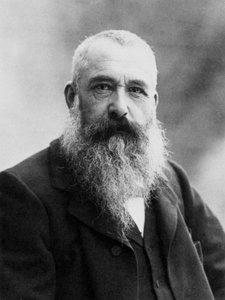
Claude Monet
1840 - 1926 , France
Quick Facts
- Full Name: Oscar-Claude Monet
- Nationality: French
- Date Of Birth: 1840
- Date Of Death: 1926
- Place Of Birth: Paris, France
- Notable Artworks:
- Impression, Sunrise
- Water Lilies
- Haystacks
- Rouen Cathedral
- Artistic Movement Or Style: Impressionism
- Artists Who Influenced This Artist:
- Eugène Boudin
- J.M.W. Turner
- Artists Or Movements Influenced By This Artist: ['Modern Art']