 Preview
 Send
Send Share
Share
 Details
 Guide
Guide

 Download
 Similars
 X-Ray
X-Ray Diaporama
 Q&A
Q&A Stats
StatsSeascape: Tempest

- 78.0 x 156.0 cm


 Read More
Giclée / Art Print
Museum-quality giclée or canvas print with fast production and flexible finish options. ( Buy Hand Made Painting Switch to Digital Image)




P118B $10

P118H $10

P118W $10

P438Z $10

P508JH $12

P508YH $12

P805H $10

P805Z $10

P919BZ $10

P919G $10

P919XJ $10

P959ZH $10

P968JZ $12

W106C $8

W218G $10

W218JH $8

W218Y $10

W307PJ $10

W316G $10

W316PJ $8

W316Y $10

W398PJ $8

W4111J $10

W500HY $15

W500JH $15

W692G $12

W849H $8

W940BG $15

W953PJ $8




Pick from our preset sizes that match the artwork's original proportions.

Type the width and the height you need, to fit your frame or your wall. A print can only be cut, never made bigger than the picture, so a size with a different shape loses a part of the image. We send you a digital mockup to approve before we print anything. The picture shown on this page does not show the real cut — only the mockup does.
Worldwide Delivery () in 2 weeks instead of standard 4/5 weeks. (6 November)

Free Worldwide Express Shipping

High-Quality Linen Canvas

Full Shipping Insurance

Customs Tax Refund Guarantee

True Color Matching Guarantee

100-Day Return Policy (Defects Only)

100% Money-Back Guarantee

Bulk Discount Offer
 Glass option is only available in size under 110 CM

Seascape: Tempest
Giclée / Art Print
Reproduction Size
-


Total Price
$ 81
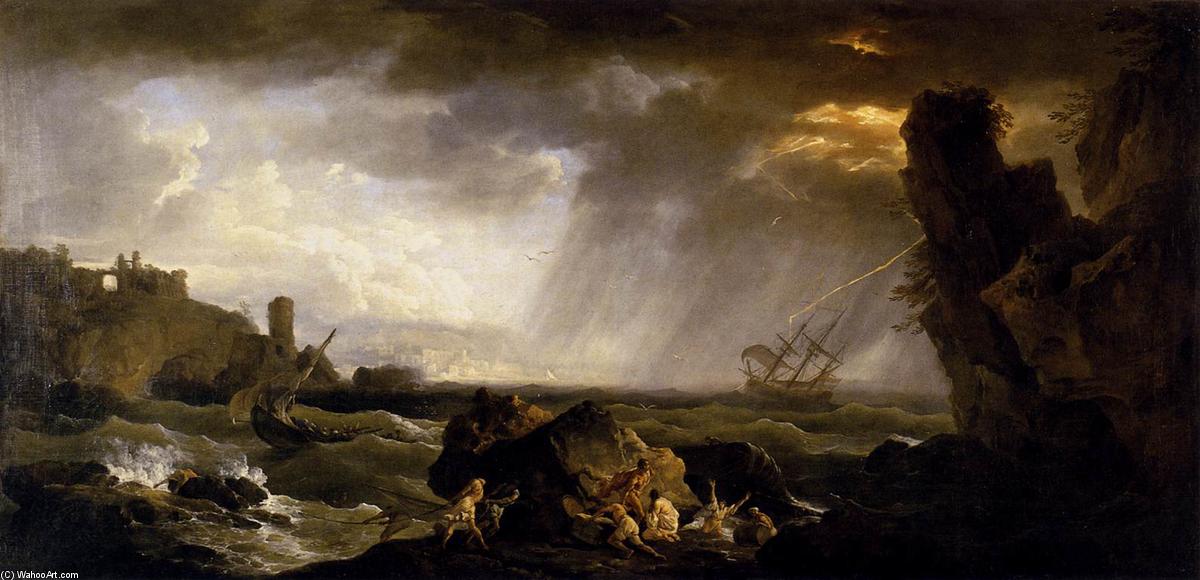
A Tempestuous Vision: Vernet’s “Seascape: Tempest”
Claude-Joseph Vernet's "Seascape: Tempest," painted in 1735, isn’t merely a depiction of a storm at sea; it’s a visceral embodiment of nature’s raw power and the precariousness of human existence. More than two centuries after its creation, this oil on canvas continues to resonate with viewers, drawing them into the heart of the tempestuous scene with an immediacy rarely achieved in landscape painting. Vernet, a master of maritime light and atmosphere, elevates the seascape beyond simple representation, transforming it into a dramatic narrative filled with both terror and sublime beauty.
The painting immediately commands attention through its masterful use of color and composition. Dark blues and greens dominate the canvas, swirling together to create an illusion of relentless motion. The sky is choked with ominous clouds, pregnant with impending violence, while flashes of orange – likely representing a brief glimpse of sunlight piercing through the storm – offer fleeting moments of intense visual contrast. The waves themselves are rendered with remarkable detail; each crest and trough sculpted with meticulous care, conveying their immense force and unpredictable nature. The artist’s strategic use of light and shadow further amplifies this sense of drama, highlighting the chaotic energy of the scene while simultaneously creating a profound feeling of depth.
Rococo Drama and the Dawn of Romanticism
“Seascape: Tempest” is firmly rooted in the Rococo style, yet it anticipates the burgeoning Romantic movement. The emphasis on dynamic movement, emotional intensity, and the sublime – the awe-inspiring power of nature – are hallmarks of both styles. Vernet’s work represents a pivotal moment in art history, bridging the gap between the formal elegance of the late Baroque and the passionate individualism that would characterize the Romantics. The painting's loose brushwork and dramatic lighting, combined with its focus on the overwhelming force of nature, foreshadowed the Romantic fascination with untamed landscapes and the emotional experience of confronting the sublime.
Interestingly, Vernet’s background as a horse painter subtly informs his seascape. The dynamism and powerful musculature of his equine subjects are echoed in the surging waves and the desperate struggle for survival depicted in the foreground. The figures clinging to the rocks – rendered with a remarkable degree of realism despite the chaotic environment – evoke a sense of vulnerability and resilience, mirroring the themes often explored in Vernet’s equestrian compositions.
Symbolism of Survival and Fate
Beyond its technical brilliance, “Seascape: Tempest” is rich in symbolic meaning. The shipwreck itself represents human fallibility and the ultimate powerlessness of man against the forces of nature. The figures clinging to the rocks embody a desperate struggle for survival, highlighting the fragility of life. Yet, amidst this scene of devastation, there’s also a sense of awe and wonder—a recognition of the grandeur and majesty of the natural world. The lighthouse in the background, a beacon of hope against the storm, symbolizes guidance and resilience, suggesting that even in the darkest moments, there is always a path forward.
A Timeless Masterpiece
“Seascape: Tempest” remains a profoundly moving work of art, captivating viewers with its dramatic intensity and evocative power. Its masterful composition, skillful use of color and light, and rich symbolic content combine to create an unforgettable experience. Whether viewed in the Louvre’s hallowed halls or reproduced as a stunning print, Vernet's masterpiece continues to inspire contemplation on the relationship between humanity and nature—a theme that resonates deeply with audiences today. It is a testament to the artist’s ability to capture not just a scene, but an entire emotional landscape.
Questions & Answers
What is the recommended print size for "Seascape: Tempest" by Claude-Joseph Vernet?
The recommended print size for "Seascape: Tempest" by Claude-Joseph Vernet is medium.
Do the colors of "Seascape: Tempest" appear strong or soft?
The color intensity of "Seascape: Tempest" is monochromatic. Intensity describes how strong the colors appear.
What palette and what feeling does "Seascape: Tempest" combine?
The earthy palette of "Seascape: Tempest" by Claude-Joseph Vernet goes together with its dramatic emotional tone. Color is one of the ways a work conveys feeling.
Artist Biography
A Master of Maritime Light: The Life and Art of Claude-Joseph Vernet
Claude-Joseph Vernet, born in Bordeaux in 1714, wasn’t initially destined for the grand landscapes and dramatic seascapes that would define his legacy. His earliest artistic inclinations revealed a fascination with horses—a passion evident even in childhood, sketching these noble creatures from the tender age of five. This early devotion to animal anatomy, particularly equine form, would subtly inform his later work, lending a dynamic energy and realism to figures within broader compositions. Vernet’s formal training began under his father, Antoine Vernet, a decorative painter, and Nicolas-Bernard Lépicié, providing him with a solid academic foundation before he ventured towards the artistic heart of Europe: Rome. It was in Italy that Vernet truly discovered his calling, captivated not only by classical landscapes but also by the raw power and beauty of the sea. The sight of whales off the coast of Marseille proved pivotal, igniting a lifelong obsession with maritime subjects.From Roman Studies to Royal Commissions
Vernet’s time in Rome wasn't merely about replicating existing styles; it was an immersive study of light, atmosphere, and the interplay between humanity and nature. He absorbed influences from masters like Claude Lorrain and Salvator Rosa, blending their approaches into a uniquely personal vision. While Lorrain offered idealized serenity, Rosa provided dramatic intensity—Vernet skillfully synthesized these elements, creating scenes that were both visually stunning and emotionally resonant. Upon his return to France in 1753, Vernet’s talent quickly gained recognition. A pivotal moment arrived with a commission from Louis XV to paint a series of views of French seaports. This ambitious project—eventually encompassing fifteen paintings—established Vernet as the premier marine painter of his time. These weren't simply topographical records; they were evocative portrayals of national pride, showcasing France’s maritime power and its connection to the sea. Intérieur du port de Marseille (1754), for example, isn’t just a depiction of a bustling harbor—it’s an ode to commerce, industry, and the vibrant lifeblood of the city.A Legacy Forged in Light and Tempest
Vernet's artistic skill lay not only in his precise rendering of ships and harbors but also in his masterful handling of light and atmosphere. He understood how sunlight glinted off water, how clouds gathered before a storm, and how these elements could dramatically alter the mood of a scene. His paintings often feature dramatic skies, turbulent waters, and figures caught in moments of both peril and resilience. A View of the Port of Naples with Mount Vesuvius in the Background (1774), exemplifies this talent—the imposing presence of Vesuvius looms over the bustling port, a reminder of nature’s power while simultaneously highlighting human activity. This ability to balance grandeur and intimacy is a hallmark of his work. Beyond maritime scenes, Vernet also explored landscapes and hunting subjects, always maintaining a keen eye for detail and an understanding of animal anatomy—a skill honed in his youth.Family, Influence, and Enduring Significance
The artistic lineage continued with Vernet’s son, Antoine Charles Horace Vernet (also known as Carle Vernet), who followed in his father's footsteps, achieving renown for his own dynamic battle scenes and hunting art. This familial connection underscores the importance of tradition and mentorship within the French artistic community of the 18th century. Claude-Joseph Vernet’s influence extended beyond his immediate family; he helped to elevate landscape painting to a position of prominence in French art. His work paved the way for later generations of artists, inspiring them to explore the beauty and power of the natural world. Though he passed away in 1789, on the cusp of revolutionary change, Vernet’s legacy endures. His paintings continue to captivate viewers with their atmospheric depth, technical brilliance, and evocative storytelling—a testament to a life dedicated to capturing the essence of light, sea, and the human spirit.
Claude-Joseph Vernet
1714 - 1789 , France
Quick Facts
- Full Name: Claude-Joseph Vernet
- Nationality: French
- Date Of Birth: 1714
- Date Of Death: 1789
- Place Of Birth: Bordeaux, France
- Notable Artworks:
- Intérieur du port de Marseille
- A view of the port of Naples
- Artistic Movement Or Style: Landscape, Seascape
- Artists Who Influenced This Artist:
- Claude Lorrain
- Bernardino Fergioni
- Artists Or Movements Influenced By This Artist: ['Antoine Charles Horace Vernet']
Related Articles

Mastering the English Landscape: The Top 25 John Constable Artworks
Experience the soul of English landscapes through John Constable's top 25 works. Explore the full collection online at OriginalUniqueArt.com.

Evocations of Place: A Historical Journey Through Landscape Art
Explore the rich history of landscape art with OriginalUniqueArt. Discover renowned artists, movements like Impressionism & tonalism, and expert guidance for collecting timeless pieces. Find your perfect serene escape today!

Romantic Landscapes: 10 Masterpieces for Your Home | OriginalUniqueArt
Journey through 10 Romantic landscape masterpieces by Friedrich, Turner & Cole. Explore emotional art, sublime nature scenes & iconic 19th-century paintings. Find museum-quality reproductions for your home at OriginalUniqueArt.com – discover the full collection online!

Evocations of Place: A Historical Journey Through Landscape Art
Explore the rich history of landscape art with OriginalUniqueArt. Discover renowned artists, movements like Impressionism & Romanticism, and expert guidance for collecting timeless pieces. Find your perfect serene escape today!
The Allure of the Horizon: A Comprehensive Exploration of Seascape Art Through History & Emotion
Explore the captivating world of seascape art! Discover its history, key artists & movements – from Dutch Masters to Impressionism. Expert insights for collectors and enthusiasts at OriginalUniqueArt.