Preview
 Send
Send Share
Share
 Details
 Guide
Guide

 Download
 Similars
 X-Ray
X-Ray Diaporama
 Stats
StatsA Seashore
 Oil On Copper
- Rococo Style
 1776
1776 62.0 x 85.0 cm
 National Gallery
 Read More
Giclée / Art Print
Museum-quality giclée or canvas print with fast production and flexible finish options. ( Buy Hand Made Painting Switch to Digital Image)




P118B $10

P118H $10

P118W $10

P438Z $10

P508JH $12

P508YH $12

P805H $10

P805Z $10

P919BZ $10

P919G $10

P919XJ $10

P959ZH $10

P968JZ $12

W106C $8

W218G $10

W218JH $8

W218Y $10

W307PJ $10

W316G $10

W316PJ $8

W316Y $10

W398PJ $8

W4111J $10

W500HY $15

W500JH $15

W692G $12

W849H $8

W940BG $15

W953PJ $8




Pick from our preset sizes that match the artwork's original proportions.

Type the width and the height you need, to fit your frame or your wall. A print can only be cut, never made bigger than the picture, so a size with a different shape loses a part of the image. We send you a digital mockup to approve before we print anything. The picture shown on this page does not show the real cut — only the mockup does.
Worldwide Delivery () in 2 weeks instead of standard 4/5 weeks. (24 October)

Free Worldwide Express Shipping

High-Quality Linen Canvas

Full Shipping Insurance

Customs Tax Refund Guarantee

True Color Matching Guarantee

100-Day Return Policy (Defects Only)

100% Money-Back Guarantee

Bulk Discount Offer
 Glass option is only available in size under 110 CM

A Seashore
Giclée / Art Print
Reproduction Size
-


Total Price
$ 81
A Moment of Coastal Harmony: Exploring Vernet’s “A Seashore”
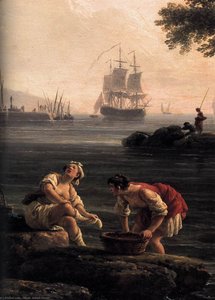
Claude-Joseph Vernet's "A Seashore," painted in 1776, isn’t merely a depiction of a coastal scene; it’s an immersive experience, a carefully constructed tableau that captures the essence of Rococo artistry and the burgeoning fascination with maritime life during the late 18th century. Executed in oil on copper – a medium prized for its ability to render both delicate detail and vibrant color – the painting transports us to a serene, yet subtly dynamic, coastal landscape. The choice of copper itself speaks volumes about Vernet’s ambition: it allowed him to achieve an unprecedented level of luminosity and atmospheric depth, hallmarks of his distinctive style.
The composition immediately draws the eye into a scene brimming with activity and tranquility. Figures are scattered across the foreground – fishermen casting their lines, individuals enjoying the view, perhaps anticipating a boat’s arrival – each rendered with a remarkable degree of realism that belies the painting's Rococo sensibilities. These figures aren’t simply decorative elements; they ground the scene in a tangible reality, suggesting a community interwoven with the rhythms of the sea. The harbor in the middle ground, complete with moored boats and a prominent lighthouse, establishes a sense of place, hinting at a thriving coastal town or port.
The Rococo Palette and Light’s Dance
Vernet masterfully employs the principles of Rococo – lightness, elegance, and an exuberant embrace of nature – while simultaneously grounding his work in a deep understanding of light and shadow. The color palette is dominated by earthy tones: ochres, browns, and muted blues create a warm, inviting atmosphere, reminiscent of a late afternoon sun filtering through coastal clouds. Notice how the artist skillfully uses chiaroscuro—the dramatic contrast between light and dark—to sculpt forms and imbue the scene with depth. The sky, filled with billowing clouds in shades of gray and blue, isn’t merely a backdrop; it actively participates in the narrative, suggesting an impending storm or simply the quiet beauty of a coastal twilight.
Furthermore, the use of oil on copper is crucial to understanding Vernet's technique. This medium allowed him to build up layers of color with incredible precision, capturing the subtle nuances of light reflecting off water and stone. The resulting surface possesses a remarkable luminosity—a quality that’s particularly evident in the depiction of the waves and the shimmering reflections on the boats. It is this mastery of light that elevates “A Seashore” beyond a simple landscape painting; it becomes a study in atmosphere and perception.
Historical Context and Vernet's Maritime Vision
“A Seashore” must be viewed within the context of 18th-century France, a period marked by both aristocratic indulgence and a growing fascination with the sea. Vernet’s work reflects this duality—the painting celebrates the pleasures of coastal life while subtly hinting at the power and unpredictability of the ocean. Born in Bordeaux in 1714, Vernet initially focused on animal studies, particularly horses, which instilled in him an appreciation for anatomical accuracy and dynamic movement – qualities he later applied to his landscapes. His time in Rome profoundly shaped his artistic vision, exposing him to classical ideals and inspiring a deep love for the sea.
Vernet’s interest in maritime subjects extended beyond mere scenic depictions; he was deeply invested in capturing the drama of naval battles and the spectacle of whaling expeditions. This fascination with the ocean is evident throughout his oeuvre, and “A Seashore” serves as a beautiful prelude to his more dramatic works. The inclusion of details like the lighthouse – a vital navigational aid – underscores Vernet’s commitment to portraying a realistic and functional coastal environment.
An Echo of Elegance: Reproduction Possibilities
OriginalUniqueArt offers meticulously crafted, hand-painted reproductions of “A Seashore” that faithfully capture the original's beauty and nuance. Our skilled artists utilize archival-quality materials and techniques to ensure that each reproduction retains the painting’s luminous quality and atmospheric depth. Whether you seek a statement piece for your living room or a charming addition to your coastal-themed décor, our reproductions provide an authentic and luxurious way to experience Vernet's masterpiece. Consider the scale – 62 x 85 cm – to perfectly complement your space and immerse yourself in this timeless scene of coastal harmony.
Questions & Answers
Which reproduction size is suggested for "A Seashore" by Claude-Joseph Vernet?
The recommended print size for "A Seashore" by Claude-Joseph Vernet is medium.
What technique was used for "A Seashore" by Claude-Joseph Vernet?
"A Seashore" is executed in oil on copper.
Is "A Seashore" by Claude-Joseph Vernet kept in the artist's home country?
No - the artwork is kept abroad. The birth country of Claude-Joseph Vernet is France, and the museum holding the original of "A Seashore" is in United Kingdom.
Artist Biography
A Master of Maritime Light: The Life and Art of Claude-Joseph Vernet
Claude-Joseph Vernet, born in Bordeaux in 1714, wasn’t initially destined for the grand landscapes and dramatic seascapes that would define his legacy. His earliest artistic inclinations revealed a fascination with horses—a passion evident even in childhood, sketching these noble creatures from the tender age of five. This early devotion to animal anatomy, particularly equine form, would subtly inform his later work, lending a dynamic energy and realism to figures within broader compositions. Vernet’s formal training began under his father, Antoine Vernet, a decorative painter, and Nicolas-Bernard Lépicié, providing him with a solid academic foundation before he ventured towards the artistic heart of Europe: Rome. It was in Italy that Vernet truly discovered his calling, captivated not only by classical landscapes but also by the raw power and beauty of the sea. The sight of whales off the coast of Marseille proved pivotal, igniting a lifelong obsession with maritime subjects.From Roman Studies to Royal Commissions
Vernet’s time in Rome wasn't merely about replicating existing styles; it was an immersive study of light, atmosphere, and the interplay between humanity and nature. He absorbed influences from masters like Claude Lorrain and Salvator Rosa, blending their approaches into a uniquely personal vision. While Lorrain offered idealized serenity, Rosa provided dramatic intensity—Vernet skillfully synthesized these elements, creating scenes that were both visually stunning and emotionally resonant. Upon his return to France in 1753, Vernet’s talent quickly gained recognition. A pivotal moment arrived with a commission from Louis XV to paint a series of views of French seaports. This ambitious project—eventually encompassing fifteen paintings—established Vernet as the premier marine painter of his time. These weren't simply topographical records; they were evocative portrayals of national pride, showcasing France’s maritime power and its connection to the sea. Intérieur du port de Marseille (1754), for example, isn’t just a depiction of a bustling harbor—it’s an ode to commerce, industry, and the vibrant lifeblood of the city.A Legacy Forged in Light and Tempest
Vernet's artistic skill lay not only in his precise rendering of ships and harbors but also in his masterful handling of light and atmosphere. He understood how sunlight glinted off water, how clouds gathered before a storm, and how these elements could dramatically alter the mood of a scene. His paintings often feature dramatic skies, turbulent waters, and figures caught in moments of both peril and resilience. A View of the Port of Naples with Mount Vesuvius in the Background (1774), exemplifies this talent—the imposing presence of Vesuvius looms over the bustling port, a reminder of nature’s power while simultaneously highlighting human activity. This ability to balance grandeur and intimacy is a hallmark of his work. Beyond maritime scenes, Vernet also explored landscapes and hunting subjects, always maintaining a keen eye for detail and an understanding of animal anatomy—a skill honed in his youth.Family, Influence, and Enduring Significance
The artistic lineage continued with Vernet’s son, Antoine Charles Horace Vernet (also known as Carle Vernet), who followed in his father's footsteps, achieving renown for his own dynamic battle scenes and hunting art. This familial connection underscores the importance of tradition and mentorship within the French artistic community of the 18th century. Claude-Joseph Vernet’s influence extended beyond his immediate family; he helped to elevate landscape painting to a position of prominence in French art. His work paved the way for later generations of artists, inspiring them to explore the beauty and power of the natural world. Though he passed away in 1789, on the cusp of revolutionary change, Vernet’s legacy endures. His paintings continue to captivate viewers with their atmospheric depth, technical brilliance, and evocative storytelling—a testament to a life dedicated to capturing the essence of light, sea, and the human spirit.
Claude-Joseph Vernet
1714 - 1789 , France
Quick Facts
- Full Name: Claude-Joseph Vernet
- Nationality: French
- Date Of Birth: 1714
- Date Of Death: 1789
- Place Of Birth: Bordeaux, France
- Notable Artworks:
- Intérieur du port de Marseille
- A view of the port of Naples
- Artistic Movement Or Style: Landscape, Seascape
- Artists Who Influenced This Artist:
- Claude Lorrain
- Bernardino Fergioni
- Artists Or Movements Influenced By This Artist: ['Antoine Charles Horace Vernet']
Related Articles

The Enduring Legacy of Oil on Canvas: Technique, History & Aesthetic Impact
Explore the rich history & techniques of oil painting – from Renaissance masters to Impressionism. Discover pigments, layering methods, and why this timeless medium endures. Expert insights for artists & art enthusiasts.

The Luminous Legacy of Oil on Copper: Unveiling the Rare Medium of Renaissance Brilliance
Discover the breathtaking brilliance of oil on copper. Explore how this rare Renaissance medium creates unmatched luminosity and depth, perfect for collectors seeking timeless elegance and museum-quality mastery in their home decor.

Oil on Canvas: A Historical & Technical Exploration of a Timeless Artistic Medium
Explore the rich history & enduring techniques of oil painting on canvas. Discover the science behind its longevity, conservation practices, and contemporary relevance. Expert insights for art enthusiasts.

Rococo's Radiant Legacy: 10 Masterpieces for Your Home |
Indulge in the elegance of Rococo! Explore 10 masterpieces by Fragonard, Boucher & Watteau. Discover the stories behind these iconic paintings and bring timeless art to your home with museum-quality reproductions from .

The Enduring Power of Painting: A Historical & Contemporary Exploration of Form and Emotion
Explore the rich history & enduring techniques of oil painting with OriginalUniqueArt. Discover masterpieces, learn about art collecting, and find authentic handmade reproductions crafted by skilled artists.