

 Preview
 Send
Send Share
Share
 Details

 Download
 Similars
 X-Ray
X-Ray Diaporama
Flute


 Read More
Hand Made Oil Reproduction
Hand-painted oil on canvas in your size and frame, made to order by our artists. ( Buy Print Buy Image)




P118B $10

P118H $10

P118W $10

P438Z $10

P508JH $12

P508YH $12

P805H $10

P805Z $10

P919BZ $10

P919G $10

P919XJ $10

P959ZH $10

P968JZ $12

W106C $8

W218G $10

W218JH $8

W218Y $10

W307PJ $10

W316G $10

W316PJ $8

W316Y $10

W398PJ $8

W4111J $10

W500HY $15

W500JH $15

W692G $12

W849H $8

W940BG $15

W953PJ $8




Pick from our preset sizes that match the artwork's original proportions.

You may enter your own dimensions to fit a specific frame or space. If your selected size does not match the original image's proportions, we will either crop the artwork or extend the painting with additional hand-painted elements. A digital mockup will be sent for your approval before production begins.
Please note that the on-screen preview does not reflect the actual cropping or extension. Only the mockup will accurately show the final composition.
While custom sizes are available, we recommend selecting a dimension from the predefined list to preserve the original proportions.
After order, OriginalUniqueArt.com team will email client for instructions and provide a mockup preview
Worldwide Delivery () in 3/4 weeks instead of standard 5 weeks. (29 August). No compromise on quality.

Free Worldwide Express Shipping

High-Quality Linen Canvas

Full Shipping Insurance

Customs Tax Refund Guarantee

True Color Matching Guarantee

60-Day Return Policy (Defects Only)

100% Money-Back Guarantee

Bulk Discount Offer
 Glass option is only available in size under 110 CM

Flute
Reproduction Medium
Reproduction Size
-


Total Price
$ 300
Artist Biography
The Architect of Sound: The Legacy of Charles Joseph Sax
In the heart of nineteenth-century Belgium, amidst the rhythmic sounds of craftsmanship and the delicate precision of woodturning, a legacy was being forged that would forever alter the landscape of orchestral music. Charles Joseph Sax (1790–1865) was far more than a mere craftsman; he was a master of acoustic architecture. Born into a lineage of skilled artisans in Dinant, Sax inherited a profound reverence for material and form from his father, Antoine Joseph Sax. This ancestral connection to the tactile world of wood and metal provided the essential foundation upon which he would build a career defined by technical excellence and musical innovation.
The journey of Charles Joseph Sax is one of strategic movement and artistic evolution. Following the shifting political tides of post-Napoleonic Europe, Sax transitioned from the quiet workshops of his youth toward the vibrant cultural epicenter of Brussels. By establishing his workshop near the prestigious Brussels opera house, he positioned himself at the very pulse of musical life. This was a deliberate placement, allowing him to witness firsthand the needs of the era's most demanding performers and composers. His early repertoire of creations—ranging from the ethereal clarity of flutes to the deep, resonant tones of bassoons and clarinets—reflected a man deeply attuned to the nuances of wind and breath.
A Masterpiece of Craftsmanship and Patronage
The artistry of Sax was characterized by an uncompromising pursuit of perfection. He did not merely assemble instruments; he sculpted them to achieve superior intonation and acoustic brilliance. His reputation for excellence soon transcended local borders, attracting the gaze of the most influential musical minds of the nineteenth century. The renowned music critic François-Joseph Fétis famously lauded Sax’s horn as the finest orchestral instrument of its time, a testament to the maker's ability to marry mechanical precision with soulful resonance. Such high praise paved the way for royal recognition, earning him prestigious commissions from figures such as Wilhelm I, the King of Prussia.
Beyond the wind instruments that brought him fame, Sax’s versatility was a hallmark of his workshop. His expertise extended into the delicate realms of string and percussion, where he applied his mastery to the construction of:
- Pianos, which required a sophisticated understanding of tension and resonance;
- Harps, demanding both structural strength and aesthetic grace;
- Guitars, where the delicate balance of wood and string met his meticulous touch.
The Foundation of a Musical Revolution
While Charles Joseph Sax’s own name is etched in the history of instrument making, his most profound contribution to music may be seen in the shadow of his greatest achievement: the mentorship of his son, Adolphe Sax. The workshop of the elder Sax served as a living laboratory where the principles of acoustics and metallurgy were passed down through generations. It was within this environment of rigorous discipline and creative experimentation that Adolphe learned to manipulate sound, eventually leading to the invention of the saxophone, the saxhorn, and the saxotromba.
The historical significance of Charles Joseph Sax lies in this seamless bridge between tradition and revolution. He provided the technical vocabulary and the structural groundwork that allowed his son to transform the brass and woodwind families forever. As we look back upon his life, we see a man who mastered the old world so that the new world could sing. His instruments, some of which are preserved in the hallowed halls of great museums today, remain silent witnesses to a period of unparalleled musical ingenuity, reminding us that every great innovation begins with a foundation of meticulous, dedicated craft.

charles-joseph sax
1790 - 1865 , Belgium
Quick Facts
- Artistic Movement Or Style: Instrument Craftsmanship
- Artists Or Movements Influenced By This Artist: ['Adolphe Sax']
- Artists Who Influenced This Artist: ['Antoine Joseph Sax']
- Date Of Birth: 1790
- Date Of Death: 1865
- Full Name: Charles Joseph Sax
- Nationality: Belgian
- Notable Artworks: ['Flute']
- Place Of Birth: Dinant, Belgium
Related Articles

19th Century Masterpieces: 10 Paintings That Defined an Era | OriginalUniqueArt
Journey through 19th century art with OriginalUniqueArt! Explore 10 iconic paintings – from Monet & Renoir to Courbet – and discover the stories behind Romanticism, Realism & Impressionism. Find museum-quality reproductions for your home decor. Explore the full collection online!

The Symphony of Canvas: Capturing the Timeless Resonance of Musical Instruments in Fine Art Masterpieces
Explore the profound connection between music and fine art. From ancient iconography to Impressionist masterpieces, discover how legendary instruments are captured on canvas with unparalleled artistry and historical depth for the discerning collector.

Charles Fraser: A Life Immersed in Light and Landscape – Exploring the Scottish Colourist's Vision
Discover the captivating world of Charles Fraser (1782-1860), a leading American artist renowned for his serene landscapes and detailed portraits of Southern life. Explore his legacy & find museum-quality reproductions at OriginalUniqueArt.
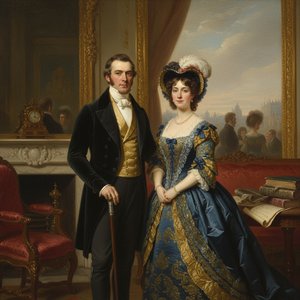
Reflections of an Era: Identity & Status in 19th-Century Portraiture
Explore the fascinating world of 19th-century portraiture! Discover how art revealed identity, social status & legacy. Expert analysis & insights into masterpieces and artists.

Charles Haslewood Shannon: A Study in Aestheticism, Symbolism & Fin-de-Siècle Portraiture
Explore the captivating portraits of Charles Haslewood Shannon, a leading figure of Aestheticism & Symbolism. Discover his classic style, influences, and lasting legacy in British art. View artworks & learn more.


