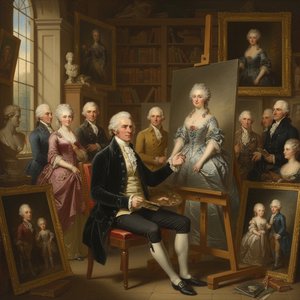
The Rise of Portraiture: Beyond Likeness and into Social Commentary
For centuries, portraiture served a straightforward purpose: to capture the physical resemblance of an individual. But the 19th century witnessed a profound shift in this tradition, transforming portraits from mere representations into powerful statements about identity, social standing, and the very essence of being. This era, marked by rapid societal change and burgeoning artistic movements, saw artists move beyond simple likenesses to explore the psychological depths of their sitters and the complex world they inhabited. The rise of a wealthy middle class eager to participate in the visual culture previously reserved for nobility fueled this demand, creating a vibrant market for portraits that reflected not just *who* someone was, but *how* they wished to be perceived.
Early 19th-century portraiture often echoed the formality of earlier periods. Artists like Karl Joseph Stieler, exemplified in his exquisite “Portrait of the Family of Joseph, Duke of Saxe-Altenburg,” meticulously rendered aristocratic elegance and regal family bonds. These paintings weren’t simply depictions; they were carefully constructed narratives designed to reinforce power and lineage. The precise detail, neoclassical style, and idealized poses all contributed to a sense of permanence and authority. However, even within these seemingly rigid conventions, subtle nuances began to emerge – a fleeting expression, a particular arrangement of objects – hinting at the individual personalities beneath the surface.
Noble Bearing, Regal Display: Portraits as Markers of Aristocratic Status
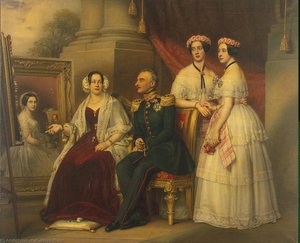 Portrait of the Family of Joseph, Duke of Saxe-Altenburg
Discover the exquisite 1848 portrait of the Saxe-Altenburg family by Karl Joseph Stieler. A stunning neoclassical oil painting capturing noble elegance, intricate details, and regal family bonds. Perfect for art collectors.
Before the 19th century, portraiture was largely the domain of the aristocracy. Commissioning a portrait was an expensive undertaking, reserved for those who could afford to immortalize themselves and their families. These paintings functioned as visual declarations of wealth, power, and social position. The very act of being painted signified status; it was a privilege denied to most. The settings chosen – grand interiors, expansive landscapes – further emphasized the sitter’s affluence and connection to land and property. Clothing, jewelry, and accessories were meticulously rendered, serving as symbols of prestige and taste.
Artists understood their role in constructing this image of nobility. They weren't simply recorders; they were collaborators in shaping a desired perception. The pose itself was crucial – upright posture, direct gaze, and controlled gestures conveyed confidence and authority. Consider the subtle power dynamics within family portraits: the positioning of figures, the way hands are placed, all communicated hierarchies and relationships. These paintings were not just about individual likenesses; they were about maintaining a social order through visual representation.
The Middle Class Gaze: Democratizing Identity Through Portraiture
 Émile Friant
Explore the realist paintings of Émile Friant (1863-1932), a French artist celebrated for evocative portraits, genre scenes & patriotic works like 'La Toussaint'. Discover his Salon successes and influence on late 19th/early 20th century art.
As the 19th century progressed, the rise of a prosperous middle class began to challenge the aristocracy’s monopoly on portraiture. A new demand emerged for portraits that reflected their own aspirations and values – portraits that weren't necessarily about inherited wealth but about self-made success and domestic virtue. This shift led to a more accessible and diverse range of styles and subjects.
Artists like Émile Friant captured this changing landscape with evocative portraits depicting scenes of everyday life, such as “La Toussaint,” showcasing the importance of family and community. The focus shifted from grand displays of wealth to intimate moments and relatable emotions. Portraits became less about projecting power and more about preserving memories and celebrating personal connections. This democratization of portraiture didn’t necessarily mean a complete abandonment of symbolism; however, the symbols themselves changed – reflecting middle-class values like education, hard work, and piety.
Realism & Intimacy: Capturing the Inner Lives of 19th-Century Sitters
 Jew praying
Experience Repin's 'Jew Praying,' a poignant 1875 masterpiece capturing devotion and age. This realistic oil painting showcases masterful detail & emotion.
The Realist movement profoundly impacted portraiture in the 19th century. Artists sought to depict their subjects with unflinching honesty, rejecting idealized representations in favor of capturing the nuances of everyday life and the psychological complexities of the individual. This approach led to a greater emphasis on intimacy and emotional depth.
Ilya Repin’s work exemplifies this shift. His “Jew Praying” (1875) is a poignant masterpiece that captures devotion and age with masterful detail and emotion, moving beyond mere physical representation to explore the sitter's inner life. Similarly, his “The Concert in the Assembly of Nobility” blends realism with Impressionistic brushwork, revealing subtle emotions and social dynamics within a specific moment in Russian society. These paintings weren’t simply about *what* people looked like; they were about *how* they felt, their hopes, fears, and vulnerabilities.
Artists as Interpreters: Style, Technique, and the Construction of Persona
 Thomas Hovenden
Thomas Hovenden (1840-1895): Irish realist painter celebrated for poignant depictions of American farm life, dignified portraits—especially of African Americans—and his influential teaching at PAFA.
The artist's hand played a crucial role in shaping the final portrait. Style, technique, and artistic choices weren’t neutral; they actively contributed to the construction of the sitter’s persona. Different artists brought different sensibilities to their work, resulting in portraits that varied significantly in tone and interpretation.
Thomas Hovenden, for example, was celebrated for his poignant depictions of American farm life and dignified portraits—especially of African Americans. His approach emphasized empathy and respect, challenging prevailing social norms. Bertha Wegmann, a pioneering Danish portraitist, focused on realistic depictions of 19th/20th-century life, capturing the individuality of her sitters with remarkable sensitivity. The choice of brushstroke, color palette, and lighting all contributed to the overall impression – creating portraits that were not simply likenesses but carefully crafted interpretations of character and personality.
Portraits and Legacy: Preserving Memory and Shaping Historical Narratives
Ultimately, 19th-century portraiture was about more than just capturing a moment in time; it was about preserving memory and shaping historical narratives. Portraits served as visual testaments to individual lives, family lineages, and societal values. They were intended to be passed down through generations, serving as reminders of the past and symbols of continuity.
Today, these portraits offer us a unique window into the world of the 19th century – allowing us to connect with individuals who lived long ago and gain insights into their lives, aspirations, and challenges. At OriginalUniqueArt.com, we are dedicated to making these masterpieces accessible to all, offering high-quality reproductions that capture the beauty, detail, and emotional depth of these iconic works. Whether you’re seeking a stunning addition to your home or a meaningful gift for a loved one, our collection offers a diverse range of portraits that celebrate the enduring power of art and the human spirit. Explore expertly recreated masterpieces and commission custom portraits – preserving legacies and shaping your own visual narrative.