Preview
 Send
Send Share
Share
 Details
 Guide
Guide

 Download
 Similars
 X-Ray
X-Ray Diaporama
 Stats
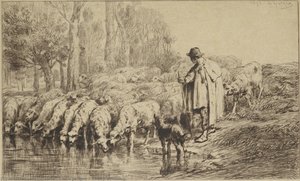
StatsSheep drinking.


 Read More
Giclée / Art Print
Museum-quality giclée or canvas print with fast production and flexible finish options. ( Buy Hand Made Painting Switch to Digital Image)




P118B $10

P118H $10

P118W $10

P438Z $10

P508JH $12

P508YH $12

P805H $10

P805Z $10

P919BZ $10

P919G $10

P919XJ $10

P959ZH $10

P968JZ $12

W106C $8

W218G $10

W218JH $8

W218Y $10

W307PJ $10

W316G $10

W316PJ $8

W316Y $10

W398PJ $8

W4111J $10

W500HY $15

W500JH $15

W692G $12

W849H $8

W940BG $15

W953PJ $8




Pick from our preset sizes that match the artwork's original proportions.

Type the width and the height you need, to fit your frame or your wall. A print can only be cut, never made bigger than the picture, so a size with a different shape loses a part of the image. We send you a digital mockup to approve before we print anything. The picture shown on this page does not show the real cut — only the mockup does.
Worldwide Delivery () in 2 weeks instead of standard 4/5 weeks. (24 October)

Free Worldwide Express Shipping

High-Quality Linen Canvas

Full Shipping Insurance

Customs Tax Refund Guarantee

True Color Matching Guarantee

100-Day Return Policy (Defects Only)

100% Money-Back Guarantee

Bulk Discount Offer
 Glass option is only available in size under 110 CM

Sheep drinking.
Giclée / Art Print
Reproduction Size
-


Total Price
$ 81
Charles-Émile Jacque’s “Sheep Drinking”: A Testament to Barbizon Landscape Painting
The painting "Sheep Drinking," executed by Charles-Émile Jacque in 1878, stands as a quintessential example of the Barbizon School's artistic vision—a movement that profoundly reshaped French landscape painting and captivated audiences across Europe. More than just a depiction of rural pastoral life, it embodies a deliberate rejection of academic conventions and an unwavering commitment to capturing the essence of nature’s grandeur with uncompromising realism. Jacque’s work isn’t merely aesthetically pleasing; it's imbued with symbolic resonance reflecting the intellectual currents of his time.A Return to Rustic Roots: The Barbizon School Context
Born in Paris in 1813, Jacque’s early life was marked by military service—a formative experience that instilled a disciplined eye for detail and observation – skills he would later translate into his artistic practice. Unlike the prevailing Salon style of the mid-nineteenth century, which favored idealized representations of classical subjects and meticulous perspective, the Barbizon School championed plein air painting—working directly from nature—as its primary method. Artists like Millet, Corot, and Rousseau sought to emulate the luminous qualities of Claude Lorrain’s landscapes, prioritizing atmospheric effects and tonal harmonies over precise anatomical accuracy. Jacque's embrace of this movement signaled a deliberate break from artistic dogma, aligning him with a burgeoning interest in elevating rural life as an embodiment of moral virtue and spiritual contemplation.Technique and Style: Etching’s Influence
Jacque’s mastery lay primarily in etching and drypoint—media he skillfully utilized to produce numerous prints that captured the subtle nuances of the French countryside. His technique demonstrates a profound understanding of tonal gradation, achieved through meticulous layering of lines and hatching. The artist painstakingly rendered the woolly texture of sheep’s fleece and the dappled sunlight filtering through foliage, demonstrating an astonishing level of observational precision. Notably, Jacque's etching style owes considerable debt to Rembrandt—a stylistic kinship characterized by dramatic chiaroscuro (the interplay between light and dark)—creating a palpable sense of depth and emotion within his compositions. This influence is evident in the way Jacque’s prints convey not just visual information but also psychological atmosphere.Symbolism Beyond Representation
“Sheep Drinking” transcends mere topographical depiction; it speaks to broader themes of simplicity, humility, and communion with God—values central to Romantic idealism. The shepherd tending his flock represents a connection to the earth and a rejection of urban materialism. The sheep themselves symbolize innocence and vulnerability, mirroring humanity’s dependence on nature's bounty. Jacque’s deliberate choice of subject matter reflects the Barbizon School’s conviction that art should serve as a moral guide—inspiring viewers to contemplate the beauty and sanctity of rural existence.Emotional Resonance: Baudelaire’s Admiration
Charles Baudelaire, a poet whose aesthetic sensibilities profoundly shaped the intellectual landscape of his era, recognized Jacque's etching prowess as exceptional. Baudelaire lauded Jacque's ability to evoke profound emotional responses through understated visual language—a testament to the artist’s skill in conveying atmosphere and capturing the sublime beauty of the natural world. “Sheep Drinking,” like Jacque’s other prints, continues to resonate with audiences today, offering a timeless glimpse into a bygone era and reminding us of the enduring power of art to inspire contemplation and elevate our understanding of human experience.Questions & Answers
Can I see "Sheep drinking." by Charles-Émile Jacque under different lights?
The X-Ray page of "Sheep drinking." by Charles-Émile Jacque is an interactive viewer that lets you slide through eleven optical layers of the artwork's image, including an X-ray style view.
What mood would "Sheep drinking." bring to a space?
"Sheep drinking." by Charles-Émile Jacque has a calm atmosphere and is recommended for a living room. The mood is what the work brings to the space around it.
What are the date and style of "Sheep drinking." by Charles-Émile Jacque?
"Sheep drinking." by Charles-Émile Jacque is dated 1878 and belongs to Barbizon Landscape School.
Artist Biography
A Life Rooted in the French Countryside
Charles-Émile Jacque, born in Paris in 1813, wasn’t destined for a conventional artistic path. His early life took an unexpected turn with seven years of service in the French army. Yet, even within the regimented structure of military life, his innate talent found expression – not through painting initially, but through the meticulous skill of map engraving. This foundational training, demanding precision and observation, would prove surprisingly pivotal to his later artistic endeavors, instilling a dedication to detail that became a hallmark of his work. It was an unlikely beginning for a painter who would become synonymous with the idyllic beauty of rural France, yet it speaks volumes about Jacque’s adaptability and inherent artistry. Upon leaving the army, he briefly pursued illustration and caricature, contributing to Parisian journals before finding his true calling in the realm of etching and painting.Embracing Barbizon and a Pastoral Vision
The mid-19th century saw Jacque drawn towards Barbizon, a small village that would become the epicenter of a revolutionary artistic movement. Fleeing cholera epidemics plaguing Paris, he joined Jean-François Millet and other like-minded artists in seeking inspiration directly from nature. This marked a decisive shift away from academic conventions and toward a more honest, realistic portrayal of life. Jacque wholeheartedly embraced this new approach, dedicating himself to capturing the essence of rural existence – the quiet dignity of shepherds tending their flocks, the gentle rhythm of farm labor, the simple beauty of livestock in sun-dappled fields. His paintings weren’t merely depictions of scenes; they were imbued with a deep sense of tranquility and harmony, reflecting a profound appreciation for the natural world. He wasn't simply *painting* sheep or barns; he was conveying a feeling, an atmosphere—a reverence for the pastoral life that resonated deeply with audiences.Master of Mediums: Painting and Printmaking
Jacque’s artistic prowess extended beyond painting. He became renowned as a master etcher and engraver, reviving 17th-century techniques and pushing the boundaries of printmaking. His etchings were lauded for their boldness and well-conceived subject matter, earning him praise from critics like Charles Baudelaire. Henri Béraldi distinguished two distinct periods in Jacque’s graphic work: an early phase inspired by Dutch vignettes, characterized by spontaneity, and a later period marked by larger, more detailed plates demonstrating meticulous craftsmanship. This dual mastery – of both brush and burin – allowed him to reach a wider audience and solidify his reputation as a significant figure in the art world. He didn’t see painting and printmaking as separate disciplines but rather as complementary avenues for expressing his artistic vision. His illustrations for literary classics, including editions of Goldsmith's *The Vicar of Wakefield* and Wordsworth’s *Picturesque Greece*, further showcased his versatility and skill.Legacy and Lasting Influence
Charles-Émile Jacque died in 1894, leaving behind a rich artistic legacy that continues to captivate viewers today. He played a vital role in shaping the development of Realism in French art, paving the way for future generations of artists who sought to depict life with honesty and sensitivity. His dedication to portraying rural life elevated genre painting – scenes from everyday existence – to a position of prominence within the artistic landscape.- A Pioneer of Etching Revival: Jacque’s revival of 17th-century etching techniques significantly impacted printmaking.
- Influence on Millet: His early work and etchings profoundly influenced his friend and fellow Barbizon School artist, Jean-François Millet.
- Champion of Rural Life: He immortalized the beauty and dignity of rural life in France, creating a lasting visual record of a disappearing way of existence.

Charles-Émile Jacque
1813 - 1894 , France
Quick Facts
- Artistic Movement Or Style: Barbizon School
- Artists Or Movements Influenced By This Artist: ['Realism']
- Artists Who Influenced This Artist: ['Adriaen van Ostade']
- Date Of Birth: 1813
- Date Of Death: 1894
- Full Name: Charles-Émile Jacque
- Nationality: French
- Notable Artworks:
- Little Blue Boy
- The Sheepfold
- Shepherdess
- Place Of Birth: Paris, France
Related Articles
Charles-François Daubigny: Pioneering Atmospheric Light & Barbizon Realism
Explore the life & art of Charles-François Daubigny, a pivotal Barbizon School painter. Discover his innovative landscapes, mastery of light, and influence on Impressionism. High-quality reproductions available.
Etching Masters: 10 Legendary Prints That Revolutionized Art | OriginalUniqueArt
Journey through 10 legendary etching masterpieces by Rembrandt, Dürer & Goya. Explore the history of printmaking and discover timeless art for your home. Find museum-quality reproductions at OriginalUniqueArt.com.

Evoking Nature's Sublime: A Comprehensive Exploration of 19th-Century Landscape Painting
Explore the captivating world of 19th-century landscape painting! Discover renowned artists like Friedrich & Monet, key movements, and find the perfect artwork to bring nature's serenity into your home. Expert insights at OriginalUniqueArt.

Romantic Landscapes: 10 Masterpieces for Your Home | OriginalUniqueArt
Journey through 10 Romantic landscape masterpieces by Friedrich, Turner & Cole. Explore emotional art, sublime nature scenes & iconic 19th-century paintings. Find museum-quality reproductions for your home at OriginalUniqueArt.com – discover the full collection online!
The Barbizon School: A Professional Guide to Naturalism and Landscape Mastery for Interior Designers
Explore the Barbizon School's mastery of naturalism. An expert guide for hotel designers and procurement managers on sourcing high-quality landscape reproductions to elevate hospitality and corporate interiors with authentic, large-scale fine art solutions.