Oil Edition
 Everything about Soap Bubbles







































 For artworks or reproductions larger than 105 cm (approximately 41 inches) on any side, the frame will be shipped as a kit, disassembled. This method ensures safe delivery and prevents damage during transport.


A Moment Suspended in Time
In the delicate dance of light and air captured within Charles Amédée Philippe Van Loo’s Soap Bubbles, we find ourselves transported to the heart of the 18th-century Rococo era. This exquisite oil on canvas, painted in 1764, is far more than a mere depiction of childhood play; it is a masterclass in capturing the ephemeral. The scene centers on three children, their faces alight with the pure, unadulterated joy of a fleeting moment. As they blow iridescent spheres into the atmosphere, the bubbles catch the light, shimmering with a spectrum of colors that seem to defy the stillness of the frame. Van Loo employs a breathtaking trompe-l'oeil technique, presenting the children through what appears to be an oval window, creating an intimate sense of peering into a private, enchanted world.
The composition is balanced with a sophisticated grace characteristic of the French school. To the left, a solitary chair anchors the scene, while a mirror in the background provides a subtle depth, reflecting the room and expanding the viewer's perception of space. This clever use of reflection not only adds dimension but also invites us to contemplate the layers of reality presented within the painting. The soft, luminous textures of the children's clothing and the translucent quality of the bubbles demonstrate Van Loo’s extraordinary command over oil pigments, allowing him to manipulate light to create a sense of tactile softness and ethereal brilliance.
The Poignant Symbolism of the Vanitas
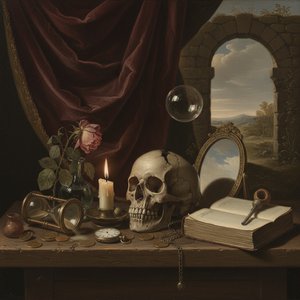
Beyond its surface beauty, Soap Bubbles carries a profound philosophical weight. To the discerning eye, the bubbles serve as a classic Vanitas motif—a symbolic reminder of the transience of life and the impermanence of earthly pleasures. Just as a soap bubble is beautiful yet destined to burst in an instant, so too are the moments of youth and human existence. This layer of melancholy hidden beneath the playful exterior provides a captivating tension that elevates the work from a charming genre painting to a deep meditation on mortality. It is this duality—the celebration of life alongside the recognition of its fragility—that gives the piece such enduring emotional resonance.
For collectors and decorators alike, this painting offers a unique opportunity to introduce a narrative of depth into a living space. The artwork’s historical prestige, having once graced the collections of the Prussian imperial family, brings an air of aristocratic elegance to any interior. Whether placed in a sun-drenched morning room or a sophisticated study, a high-quality reproduction of this masterpiece serves as a conversation piece that invites contemplation. It is a work that does not merely decorate a wall; it breathes life, history, and a touch of poetic nostalgia into the very soul of a home.
Questions & Answers
Is this Soap Bubbles painted by hand or printed?
Painted by hand: a trained painter copies Soap Bubbles in oil on linen canvas.
What size should I choose for Soap Bubbles?
The original measures 89 x 89 cm. Sizes run from 31.5 x 31.8 cm ($200) to 238.6 x 240.6 cm ($2071); the table on this page lists the main steps and their prices.
How long does delivery take?
Delivery takes 4 to 5 weeks, with free worldwide express shipping; an urgent production option is offered on this page. You can return it within 100 days for a full refund, with no condition.
Where is the original Soap Bubbles?
The original is in the collection of the National Gallery of Art, Washington.
What medium did Charles Amédée Philippe Van Loo use for Soap Bubbles?
Oil On Canvas.
More about this painting
 Preview

 Send
 Share
 Details
 Fact sheet


 Download
 Similars
 X-Ray
 Diaporama
 Q&A

 Stats