

 Preview
 Send
Send Share
Share
 Details

 Download
 Similars
 X-Ray
X-Ray Diaporama
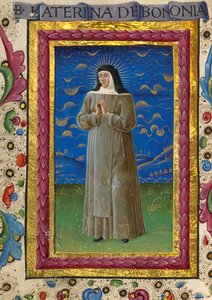
Breviary with Miniatures
 1452
1452 200.0 x 300.0 cm
 Convent of the Corpus Domini
 Read More
Giclée / Art Print
Museum-quality giclée or canvas print with fast production and flexible finish options. ( Buy Hand Made Painting Buy Image)




































Pick from our preset sizes that match the artwork's original proportions.

You may enter your own dimensions to fit a specific frame or space. If your selected size does not match the original image's proportions, we will either crop the artwork or extend the image with a mirrored or solid-fill edge. A digital mockup will be sent for your approval before production begins.
Please note that the on-screen preview does not reflect the actual cropping or extension. Only the mockup will accurately show the final composition.
While custom sizes are available, we recommend selecting a dimension from the predefined list to preserve the original proportions.
Worldwide Delivery () in 2 weeks instead of standard 4/5 weeks. (21 August)

Free Worldwide Express Shipping

High-Quality Linen Canvas

Full Shipping Insurance

Customs Tax Refund Guarantee

True Color Matching Guarantee

60-Day Return Policy (Defects Only)

100% Money-Back Guarantee

Bulk Discount Offer
 Glass option is only available in size under 110 CM

Breviary with Miniatures
Giclée / Art Print
Reproduction Size
-


Total Price
$ 81
Artist Biography
The Radiant Spirit of Caterina Vigri
In the golden light of the Italian Renaissance, few figures embody the intersection of profound mysticism and exquisite artistry as gracefully as Caterina Vigri. Known to history as Saint Catherine of Bologna, her life was a tapestry woven from the threads of courtly elegance and monastic devotion. Born in 1413 into an aristocratic Bolognese family, Caterina was raised within the vibrant cultural atmosphere of the Este court in Ferrara. As the daughter of a diplomat serving the Marquis Niccolò III d’Este, she was immersed in a world where humanist learning, music, and fine arts flourished. This early exposure to a liberal education—encompassing Latin, music, and the delicate art of manuscript illumination—provided the foundational tools for what would become one of the most spiritually resonant artistic legacies of the fifteenth century.
The trajectory of Caterina’s life was irrevocably altered by the tragic political intrigues of the Ferrarese court. Following the execution of her patroness, Parisina Malatesta, in 1425, a profound spiritual calling drew Caterina away from the splendor of secular life toward the quietude of religious service. She joined a community of laywomen in Ferrara, eventually guiding them toward the reformed Observant Poor Clare order. This transition from lady-in-waiting to mistress of novices marked the beginning of her dual identity as both a spiritual leader and a dedicated creator. Her art was never merely decorative; it was an extension of her prayer, a visual manifestation of the divine mysteries she encountered in her moments of mystical ecstasy.
Mastery of the Miniature and Devotional Light
Caterina’s artistic output is most profoundly realized in the realm of breviary illumination. Within the intimate confines of these liturgical books, she achieved a level of precision and emotional depth that far surpassed the requirements of mere ornamentation. Her technique involved the painstaking application of watercolor pigments and gold leaf onto parchment, a process that demanded immense patience and an almost superhuman control over fine detail. Unlike the grand, sweeping frescoes of her contemporaries, Vigri’s work invited a closer, more personal gaze. She possessed a rare ability to capture nuanced human emotion and sacred atmosphere within miniature frames, using luminous colors to guide the viewer's eye toward the divine.
Her most celebrated achievement remains her personally illustrated breviary, a relic of immense spiritual and artistic value. In these pages, the boundaries between the artist’s hand and the saint’s soul dissolve. Through delicate brushstrokes, she rendered biblical scenes that felt both tangibly real and ethereally transcendent. Beyond her illuminations, other works attributed to her, such as Saint Ursula and her Maidens and the Madonna of the Peach, showcase a mastery of composition and a subtle elegance that reflect the sophisticated aesthetic of the Ferrarese school. Her ability to blend the observational realism of the Renaissance with a profound symbolic language allowed her to communicate complex theological truths to both the learned and the devout.
Legacy of an Artist-Saint
The historical significance of Caterina Vigri extends far beyond the borders of her convent walls. She remains one of the most prominent examples of the female artist in the Renaissance, a period when women’s access to formal artistic training was often severely restricted. Her legacy is characterized by several enduring contributions:
- Spiritual Literature: Beyond her visual art, she authored the influential treatise The Seven Spiritual Weapons, which provided guidance on overcoming temptation through Christ-like devotion.
- Foundational Leadership: She played a pivotal role in establishing the convent of Corpus Domini in Bologna, creating a sanctuary for both religious life and artistic expression.
- Iconographic Influence: Her miniature style helped define a specific mode of devotional art that emphasized intimacy, clarity, and emotional resonance.
- Cultural Symbolism: As a canonized saint whose incorrupt body became a subject of veneration, her life serves as a bridge between the intellectual rigor of the Renaissance and the deep piety of the Catholic tradition.
Today, the works of Caterina Vigri continue to inspire awe, standing as testaments to the power of art to serve as a vessel for the sacred. Her ability to transform parchment into a window to the heavens ensures her place in the pantheon of great Italian masters, reminding us that the smallest stroke of a brush can carry the weight of eternal devotion.
caterina vigri
1747 - 1794 , Italy
Quick Facts
- Artistic Movement Or Style: Miniature Illuminations
- Date Of Birth: 1747
- Date Of Death: 1794
- Full Name: Caterina Vigri
- Nationality: Italian
- Notable Artworks: ['Breviary with Miniatures']
- Place Of Birth: Bologna


