
A Sanctuary of Faith and Art: The Convent of the Corpus Domini in Bologna
Nestled within the historic heart of Bologna, Italy, lies a treasure often overlooked – the Convent of the Corpus Domini. More than just a religious building, this serene complex offers a profound journey through centuries of Italian history, artistic devotion, and architectural elegance. A visit here is an invitation to step back in time, to appreciate the quiet beauty of monastic life, and to witness the enduring legacy of faith expressed through exquisite art. Unlike many bustling tourist destinations, the Convent provides a tranquil escape, a space for contemplation and genuine cultural immersion – a truly special find for those seeking an authentic Italian experience.
The Convent’s story begins in 1478 with the construction of its magnificent chapel, dedicated to the Feast of Corpus Christi. This central element reflects the profound importance of this liturgical celebration within the Catholic faith—a visual and spiritual representation of Christ's body. Over subsequent centuries, the building has undergone careful renovations and expansions, each layer adding to its rich tapestry of styles. The initial structure, a testament to late Gothic design, gradually evolved through Renaissance influences, culminating in elements of Baroque ornamentation. The exterior, constructed from rough brickwork, speaks to its humble origins, while the interior reveals a masterful blend of artistic techniques and materials – a deliberate contrast that underscores the convent’s journey through time.
A Collection Rooted in Devotion
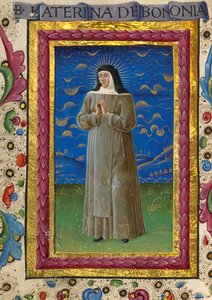
While specific details regarding the Convent's complete collection are not widely publicized, its historical context strongly suggests a remarkable assemblage centered around religious devotion. The Convent is renowned for its exquisite devotional works, spanning various periods and reflecting the artistic sensibilities of different eras. Early examples likely include illuminated manuscripts – particularly Breviaries with Miniatures like the one available on OriginalUniqueArt.com, showcasing intricate details and vibrant colors that would have served as tools for prayer and contemplation. The Convent’s historical connection to Saint Catherine de' Vigri, a renowned mystic and artist who resided here from 1431 until her death in 1463, is central to its artistic identity. Her legacy is powerfully represented through numerous works, including her own illuminated breviary, which demonstrates her exceptional skill as an illuminator and her deep spiritual understanding.
Further enriching the collection are notable examples of Italian architectural design and artistry. The chapel itself stands as a masterpiece of Renaissance aesthetics, featuring impressive frescoes depicting scenes from the life of Christ and the Virgin Mary. The work of Marcantonio Franceschini is particularly noteworthy, with his “Glory of Angels” fresco adorning the apse, while Enrico Haffner’s floral decorations add a touch of delicate beauty to the space. The Quadratura ceiling by Luigi Quaini creates an illusion of infinite height, drawing the eye upwards towards the heavens – a testament to the skill and ambition of Renaissance architects.
A Legacy of Monastic Life
The Convent’s architecture isn't merely decorative; it embodies centuries of monastic history. As a convent—an enclosed community for religious individuals—the building represents a vital part of Bologna’s religious and cultural heritage. The term ‘convent’ originates from Latin, signifying a gathering place, and historically, convents provided opportunities for women to excel in education and creative pursuits, with abbesses often playing significant roles in secular life. The Convent's design reflects this dual role – a place of worship and residence—with its cloistered courtyards offering privacy and seclusion while also providing spaces for communal activities and artistic endeavors.
The Convent’s history is inextricably linked to the Order of Poor Clares, a branch of the Franciscan order known for their austere lifestyle and dedication to prayer. The nuns who resided here lived in poverty, relying on charity and manual labor to sustain themselves. Their lives were governed by strict rules of silence and obedience, fostering an atmosphere of spiritual contemplation and artistic creation. The presence of Saint Catherine de’ Vigri, a prominent figure within the Order, further cemented the Convent's reputation as a center of religious devotion and artistic excellence.
A Unique Encounter
What truly distinguishes the Convent of the Corpus Domini is its relative obscurity amidst Bologna’s vibrant tourist scene. It offers a rare opportunity to experience authentic Italian monastic life, far removed from the crowds and commercialism of more popular attractions. The current museum within the complex showcases works related to Saint Catherine de' Vigri, including her writings and objects associated with her life. A visit here is not just a sightseeing excursion; it’s an invitation to connect with a rich history of faith, art, and community—a testament to the enduring power of spiritual devotion in Italy.
Open Tuesday through Sunday, the Convent welcomes visitors seeking a peaceful retreat and a deeper understanding of Italian religious heritage. It remains a vital part of Bologna’s cultural landscape, offering a glimpse into a world where faith, art, and contemplation converge to create an unforgettable experience.