Text size

() ·

A painting made for you, by hand

Seashore by Moonlight

Hand Made Oil Reproduction

Hand-painted oil on canvas in your size and frame, made to order by our artists. ( Switch to Print Switch to Digital Image)

Collectible Description

Artist Biography

Caspar David Friedrich (1774-1840): German Romantic painter of evocative landscapes & symbolic art exploring nature, spirituality & the sublime. Pioneer of the movement.

from ·

Chapter 1

How large should it be?

Slide to change the size; the picture on the left shows the frame at its real width. The proportions of the original are kept.

Standard
custom
CM
INCH

Pick from our preset sizes that match the artwork's original proportions.

width
height

Type the width and the height you need, to fit your frame or your wall. This is hand-painted, so for a size with a different shape the artist can paint a bit more around the picture, or cut a bit — you choose. We send you a digital mockup to approve before the painting starts. The picture shown on this page does not show the real result — only the mockup does.

Chapter 2

How should it arrive?

Choose the edges of the stretched canvas

Choose your frame

Corner sample of the WhiteWrap canvas edge finish, stretched on solid wood bars
White $1
Corner sample of the BlurSideWrap canvas edge finish, stretched on solid wood bars
Blurside $1
Corner sample of the ExtendedWrap canvas edge finish, stretched on solid wood bars
Extended $1
Corner sample of the P118B picture frame: moulded polystyrene, 5 cm wide and 3 cm thick
P118B $10
Corner sample of the P118H picture frame: moulded polystyrene, 5 cm wide and 3 cm thick
P118H $10
Corner sample of the P118W picture frame: moulded polystyrene, 5 cm wide and 3 cm thick
P118W $10
Corner sample of the P438Z picture frame: moulded polystyrene, 5.5 cm wide and 3.5 cm thick
P438Z $10
Corner sample of the P508JH picture frame: moulded polystyrene, 7 cm wide and 3.5 cm thick
P508JH $12
Corner sample of the P508YH picture frame: moulded polystyrene, 7 cm wide and 3.5 cm thick
P508YH $12
Corner sample of the P805H picture frame: moulded polystyrene, 5 cm wide and 3.5 cm thick
P805H $10
Corner sample of the P805Z picture frame: moulded polystyrene, 5 cm wide and 3.5 cm thick
P805Z $10
Corner sample of the P919BZ picture frame: moulded polystyrene, 7 cm wide and 3.5 cm thick
P919BZ $10
Corner sample of the P919G picture frame: moulded polystyrene, 7 cm wide and 3.5 cm thick
P919G $10
Corner sample of the P919XJ picture frame: moulded polystyrene, 7 cm wide and 3.5 cm thick
P919XJ $10
Corner sample of the P959ZH picture frame: moulded polystyrene, 5 cm wide and 3 cm thick
P959ZH $10
Corner sample of the P968JZ picture frame: moulded polystyrene, 6 cm wide and 4 cm thick
P968JZ $12
Corner sample of the W106C picture frame: solid wood, 5 cm wide and 3 cm thick
W106C $8
Corner sample of the W218G picture frame: solid wood, 5 cm wide and 3 cm thick
W218G $10
Corner sample of the W218JH picture frame: solid wood, 5 cm wide and 3 cm thick
W218JH $8
Corner sample of the W218Y picture frame: solid wood, 5 cm wide and 3 cm thick
W218Y $10
Corner sample of the W307PJ picture frame: solid wood, 6 cm wide and 3 cm thick
W307PJ $10
Corner sample of the W316G picture frame: solid wood, 6 cm wide and 3 cm thick
W316G $10
Corner sample of the W316PJ picture frame: solid wood, 6 cm wide and 3 cm thick
W316PJ $8
Corner sample of the W316Y picture frame: solid wood, 6 cm wide and 3 cm thick
W316Y $10
Corner sample of the W398PJ picture frame: solid wood, 5 cm wide and 3 cm thick
W398PJ $8
Corner sample of the W4111J picture frame: solid wood, 6.5 cm wide and 3.5 cm thick
W4111J $10
Corner sample of the W500HY picture frame: solid wood, 7 cm wide and 5 cm thick
W500HY $15
Corner sample of the W500JH picture frame: solid wood, 7 cm wide and 5 cm thick
W500JH $15
Corner sample of the W692G picture frame: solid wood, 8 cm wide and 4 cm thick
W692G $12
Corner sample of the W849H picture frame: solid wood, 5 cm wide and 3 cm thick
W849H $8
Corner sample of the W940BG picture frame: solid wood, 7.5 cm wide and 4.5 cm thick
W940BG $15
Corner sample of the W953PJ picture frame: solid wood, 6 cm wide and 3.5 cm thick
W953PJ $8
Corner sample of the H24-GOLD picture frame: carved wood with gesso, 10 cm wide and 6 cm thick
H24-GOLD $30
Corner sample of the H24-SILVER picture frame: carved wood with gesso, 10 cm wide and 6 cm thick
H24-SILVER $30
Corner sample of the H36-GOLD picture frame: carved wood with gesso, 15 cm wide and 6.5 cm thick
H36-GOLD $45
Corner sample of the H36-SILVER picture frame: carved wood with gesso, 15 cm wide and 6.5 cm thick
H36-SILVER $45
Frame preview
Framed

Moulding: . Overall size with the frame: .

Chapter 3

Who paints it, and should anything change?

Examples of what can be changed: Replace face with customer photo; Add pet (e.g., replace cat with dog); Include hidden message in background; Change background landscape or elements.
After order, OriginalUniqueArt.com team will email client for instructions and provide a mockup preview

Worldwide Delivery () in 3/4 weeks instead of standard 5 weeks. (2 November). No compromise on quality.

Chapter 4

The finishing touches

A nameplate, as in a museum?

Engraved Bronze Plaque Details

This elegant plaque features the artist's name and the title of the artwork, finely engraved for a timeless presentation.

It is made from bronze with a refined, elegant finish. The text is precisely laser-engraved for a sharp and permanent result. Measuring 9x2 cm, the plaque is compact yet easy to read. It's built to be durable and scratch-resistant, offering a professional, museum-quality look. Mounting is simple thanks to the included adhesive backing.

Transparent Acrylic Plaque Details

The plaque includes essential engraved details such as the artist's name, the title of the artwork, the date it was created, the type of media used-like oil on canvas or watercolor-a brief description of the piece, and a QR code that links to the complete artwork information.

It is crafted from clear acrylic, offering a sleek, modern appearance. The text is UV-engraved in black to ensure strong visual contrast. With a size of 10x15 cm, it ensures optimal readability. It comes equipped with two metal hooks for secure wall mounting. The plaque is designed to be weather-resistant, making it suitable for various environments, and it includes interactive features that work seamlessly with smartphone scanning.

Black Acrylic Plaque Details

This elegant plaque includes engraved information such as the artist's name, the title of the artwork, the date it was created, the type of media used (like oil on canvas or watercolor), a short description of the artwork, and a QR code for quick access to more information.

The plaque itself is made from refined black acrylic with a premium finish. The text is laser-engraved in white for high contrast and readability. Its size is 10x15 cm, designed to be easy to read. It comes with two metal hooks for professional mounting. The design is sleek and fits any interior style. It is also weather-resistant and durable, with built-in digital integration for mobile compatibility.

A protective varnish?

When do you need it?

Chapter 5

Your painting, as you ordered it

Seashore by Moonlight

Reproduction Medium

Reproduction Size

-

Elite Senior Artist

More detail, finesse, and extra production time

-

Reproduction Frame

-

-

For artworks or reproductions larger than 105 cm (approximately 41 inches) on any side, the frame will be shipped as a kit, disassembled. This method ensures safe delivery and prevents damage during transport.

Professional assembly required - this is not a DIY product.
The kit must be assembled and the canvas stretched by an experienced professional framer, using wood glue (not supplied), a canvas stretching plier and clamps to hold the bars square while the glue dries. Incorrect assembly or uneven canvas tension can permanently damage the artwork and is not covered by our warranty.

  • All solid wood bars are included, precisely cut to size.

  • Assembled with the screws provided, plus wood glue for the corner joints, which is not supplied and must be sourced by your framer.

  • Professional tools are required and not included: a canvas stretching plier (tensioner) and clamps to hold the bars square while the glue dries.

Important:
The corner joints require wood glue, the bars must be held with clamps until the glue is fully dry, and tightening the canvas on the assembled frame requires a canvas stretching plier. None of these are included in the kit. Please arrange an experienced professional framer before ordering this size.

Nameplate

-

-

Protective Varnish

Glossy Varnish (enhances colors, protects against light/moisture)

-

Customize My Artwork

Examples of what can be changed: Replace face with customer photo; Add pet (e.g., replace cat with dog); Include hidden message in background; Change background landscape or elements.

-

Urgent

Worldwide Delivery () in 3/4 weeks instead of standard 5 weeks. (2 November). No compromise on quality.

-

Express Shipping

Worldwide Delivery () in 5 weeks. (9 November).

Included

Total Price

$ 300

Total Price $ 300

Glass option is only available in size under 110 CM

Included with every order

  • Free Worldwide Express Shipping
  • High-Quality Linen Canvas
  • Full Shipping Insurance
  • Customs Tax Refund Guarantee
  • True Color Matching Guarantee
  • 100-Day Return Policy (Defects Only)
  • 100% Money-Back Guarantee
  • Bulk Discount Offer

Seashore by Moonlight: A Romantic Encounter with Nature’s Majesty

Caspar David Friedrich's "Seashore by Moonlight," painted in 1820, is more than just a depiction of a coastal scene; it’s an invitation to contemplate the sublime—the awe-inspiring and potentially overwhelming power of nature. This oil painting, steeped in the spirit of Romanticism, captures a profound sense of solitude and introspection as a lone shoreline stretches into the darkness under a luminous moon. The work immediately draws the viewer in with its masterful use of light and shadow, creating an atmosphere both serene and subtly unsettling.

At its heart, “Seashore by Moonlight” reflects Friedrich’s deep fascination with the relationship between humanity and the vastness of the natural world. Germany during the early 19th century was a nation grappling with significant political and social shifts, and many artists sought solace and inspiration in the untamed beauty of the landscape. For Friedrich, nature wasn't merely a backdrop but a mirror reflecting the complexities of human existence—a space for both profound connection and isolating contemplation. The painting can be viewed as an allegory for life itself: a journey into darkness punctuated by moments of ethereal light.

Technically, the painting is a testament to Friedrich’s meticulous attention to detail and his command of chiaroscuro—the dramatic contrast between light and dark. The muted palette of grays, blues, and browns evokes a sense of tranquility, while the moon's silvery glow casts an otherworldly sheen upon the water and rocks. Notice how Friedrich renders the textures of the shoreline: the jagged edges of the rocks are rendered with remarkable precision, suggesting their solidity and permanence, juxtaposed against the fluidity and mystery of the sea. The reflections on the water create a sense of depth and movement, drawing the eye into the painting’s immersive space.

Historical Context & Romantic Ideals

Created during a period of intense artistic and intellectual ferment, “Seashore by Moonlight” embodies the core tenets of Romanticism. Unlike the Neoclassical emphasis on reason and order, Romantic artists prioritized emotion, intuition, and the subjective experience. Friedrich’s work aligns perfectly with this shift, conveying not just what he saw but how he *felt* in the presence of nature. The solitary figure, often interpreted as representing humanity's place within the universe, is dwarfed by the immensity of the landscape—a deliberate reminder of our own insignificance and vulnerability.

The painting’s setting – a rocky coastline bathed in moonlight – was likely inspired by Friedrich’s personal experiences along the Baltic Sea. He frequently visited this region, seeking inspiration for his landscapes. The inclusion of boats on the water adds another layer of symbolism, representing both human endeavor and the cyclical nature of life—a journey towards an unknown destination.

Symbolism & Emotional Resonance

Beyond its technical brilliance, “Seashore by Moonlight” is rich in symbolic meaning. The darkness represents the unknown, the mysteries of existence, and perhaps even mortality. The moon, a recurring motif in Friedrich’s work, symbolizes hope, intuition, and the divine—a guiding light in the face of uncertainty. The solitary figure embodies human longing for connection and understanding, as well as the acceptance of solitude.

The painting's emotional impact is profound. It evokes a sense of quiet contemplation, inviting viewers to slow down, breathe deeply, and connect with their own inner world. There’s an undeniable melancholy woven into the scene—a recognition of our limitations and a yearning for something beyond ourselves. Yet, amidst this sadness, there’s also a feeling of peace and acceptance, as if the vastness of nature offers solace and perspective.

Availability & Reproduction

At OriginalUniqueArt.com, we are proud to offer meticulously crafted reproductions of “Seashore by Moonlight” in a variety of sizes and formats, allowing art lovers and collectors alike to bring this iconic masterpiece into their homes. Our hand-painted oil paintings faithfully capture the beauty and detail of Friedrich’s original work, utilizing traditional techniques and high-quality materials. You can view a detailed image of the painting at OriginalUniqueArt.com, and delve deeper into the artist’s life and work on our website.

Furthermore, it's worth noting that “Seashore by Moonlight” holds a significant place in art history—it is also featured at The Louvre Museum, alongside other notable works by Friedrich, including “Seaside by Moonlight.” For a more comprehensive understanding of Friedrich’s artistic journey, we encourage you to explore his biography on OriginalUniqueArt.com.

Questions & Answers

Where in the home does a reproduction of "Seashore by Moonlight" fit well?

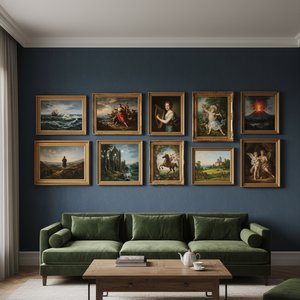
The recommended space for "Seashore by Moonlight" by Caspar David Friedrich is a living room. The suggestion can of course be adapted to your interior.

What is the recommended use of a print of "Seashore by Moonlight"?

A reproduction of "Seashore by Moonlight" by Caspar David Friedrich is recommended for statement. This suggestion follows from the work's subject, mood and colors.

What is the dominant hue of "Seashore by Moonlight" by Caspar David Friedrich?

The dominant hue of "Seashore by Moonlight" by Caspar David Friedrich is green to violet spectrum. The hue is the underlying tone of the palette.

More about this painting

Preview AR preview Switch to Print Switch to Digital Image Send
Details Guide Add to favorites Download Similars X-Ray Diaporama Q&A Stats

In numbers

  • 29frames to choose from
  • standard sizes, in its own proportions
  • 5weeks to paint and deliver it
Caspar David Friedrich

Caspar David Friedrich

1774 - 1840, Germany

Quick facts about Caspar David Friedrich

  • Full Name: Caspar David Friedrich
  • Nationality: German
  • Date Of Birth: 1774
  • Date Of Death: 1840
  • Place Of Birth: Greifswald, Germany
  • Notable Artworks:
    • Abbey in the Oakwood
    • Wanderer above the Sea...
    • Chalk Cliffs on Rügen
    • The Sea of Ice
  • Artistic Movement Or Style: Romanticism
  • Artists Who Influenced This Artist:
    • Dutch Masters
    • J.C. Dahl
  • Artists Or Movements Influenced By This Artist:
    • Symbolists
    • Surrealists

Artist Biography

A Solitary Vision: The Life and Art of Caspar David Friedrich

Born in the Baltic port city of Greifswald in 1774, Caspar David Friedrich’s life was steeped in a melancholic atmosphere that would profoundly shape his artistic vision. His early years were marked by loss – the deaths of his mother and siblings cast a long shadow, fostering a sensitivity to mortality and transience that became central themes in his work. Initially educated by his older brother Christian in drawing, Friedrich’s formal training began at the University of Leipzig, where he pursued both art and theology, though neither degree was completed. This dual interest – a fascination with the visual world alongside a deep spiritual questioning – would prove crucial to his development as an artist. Further studies in Copenhagen honed his technical skills, exposing him to landscape painting traditions that would serve as a foundation for his unique style, yet it was not imitation he sought but rather expression—a means of conveying inner emotional states through the language of nature.

The Birth of Romantic Landscape

Friedrich’s artistic journey wasn't merely about depicting scenery; it was about imbuing landscapes with profound symbolic meaning. He moved away from the meticulous detail favored by earlier artists, embracing a more personal and expressive approach. His paintings are characterized by an emphasis on the sublime – evoking feelings of awe, terror, and spiritual connection in the face of nature’s grandeur. The use of *Rückenfiguren*, figures seen from behind, became a signature element, inviting viewers to step into the scene and share in the contemplative experience. Natural elements like ancient trees, towering mountains, swirling fog, and crumbling ruins weren't simply picturesque details; they were potent symbols representing life’s cycles, spiritual longing, and the weight of history. His palette, often muted with blues, grays, and browns, further enhanced the mood of introspection and solemnity that pervades his work. He pioneered a way to depict landscapes not as mere views but as reflections of the human soul—a revolutionary concept for its time.

Iconic Works and Enduring Themes

Several paintings stand out as defining examples of Friedrich’s artistic achievement. "The Abbey in the Oakwood" (1809-1810), a haunting image of a ruined churchyard enveloped by bare trees, speaks powerfully to themes of mortality and spiritual decay. Perhaps his most famous work, "Wanderer above the Sea of Fog" (c. 1818), encapsulates the Romantic ideal of the individual confronting the vastness and mystery of existence. The figure, silhouetted against a swirling sea of mist, embodies both human aspiration and insignificance. "Chalk Cliffs on Rügen" (1818) demonstrates his mastery of atmospheric effects and subtly conveys a sense of national identity—a growing concern in the fragmented political landscape of early 19th-century Germany. Even more dramatic is "The Sea of Ice" (1824), a chilling depiction of an Arctic wasteland, representing nature’s immense power and indifference to human fate. Recurring throughout his oeuvre are themes of nature as a manifestation of the divine, the fragility of humanity in the face of cosmic forces, melancholy, solitude, spiritual yearning, and a burgeoning sense of German nationalism.

Legacy and Rediscovery

Friedrich’s influences were diverse, ranging from Dutch Golden Age landscape painting – particularly the works of Jacob van Ruisdael – to the philosophical writings of Immanuel Kant, which explored the limits of human perception and the power of subjective experience. His own personal experiences with loss and spirituality also played a crucial role in shaping his artistic vision. While celebrated during his lifetime, Friedrich’s popularity waned as artistic tastes shifted. However, he experienced a significant rediscovery in the late 20th century, becoming widely recognized as one of the most important figures in German Romanticism. His emphasis on subjective experience and emotional expression paved the way for later movements like Symbolism and Surrealism, influencing generations of artists who sought to explore the inner world through visual means. He remains a pivotal figure whose work continues to resonate with audiences today, reminding us of the profound connection between humanity and the natural world, and the enduring power of art to evoke contemplation and spiritual awakening.

Historical Significance

Caspar David Friedrich’s art captured the very spirit of the Romantic era—a period defined by a rejection of Enlightenment rationalism in favor of emotion, imagination, and individualism. His landscapes served as powerful symbols of German national identity during a time of political fragmentation, fostering a sense of shared cultural heritage. Though he died in Dresden in 1840, his legacy extends far beyond the confines of 19th-century Germany. He didn’t simply paint what he saw; he painted what he *felt*, and it is this emotional honesty that continues to captivate and inspire. His work stands as a testament to the enduring power of art to explore the deepest questions of human existence, reminding us of our place within the vastness of nature and the mysteries of the universe.

Quick Facts

  • Artistic style: Evocative landscape
  • Title: Seashore by Moonlight
  • Medium: Oil on canvas
  • Subject or theme: Seashore, moonlight
  • Influences:
    • Nature
    • German art

Art Quiz

There is only one correct answer for each question.

Question 1:
What artistic movement is ‘Seashore by Moonlight’ primarily associated with?
Question 2:
The painting utilizes a technique known as ‘chiaroscuro’. What does this term refer to?
Question 3:
What is the primary subject matter depicted in ‘Seashore by Moonlight’?
Question 4:
Considering Caspar David Friedrich's historical context, what broader theme is the painting likely exploring?
Question 5:
Based on the image description, what is a prominent feature of the scene?