Read More


 For artworks or reproductions larger than 105 cm (approximately 41 inches) on any side, the frame will be shipped as a kit, disassembled. This method ensures safe delivery and prevents damage during transport.


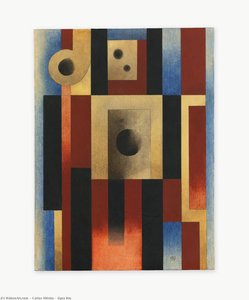
More about this painting
Text size

() ·
A painting made for you, by hand
Hand Made Oil Reproduction
Hand-painted oil on canvas in your size and frame, made to order by our artists. ( Switch to Print Switch to Digital Image)
Artist Biography
Carlos Mérida (1891-1984): Guatemalan-Mexican artist fusing European Modernism with vibrant Latin American & Mayan themes. Known for geometric abstraction and murals.
from ·
Chapter 1
How large should it be?
Slide to change the size; the picture on the left shows the frame at its real width. The proportions of the original are kept.
Standard
custom
CM
INCH
Pick from our preset sizes that match the artwork's original proportions.
Loading sizes...

width
height
Type the width and the height you need, to fit your frame or your wall. This is hand-painted, so for a size with a different shape the artist can paint a bit more around the picture, or cut a bit — you choose. We send you a digital mockup to approve before the painting starts. The picture shown on this page does not show the real result — only the mockup does.
Chapter 2
How should it arrive?
Choose the edges of the stretched canvas
Choose your frame

White $1

Blurside $1

Extended $1

P118B $10

P118H $10

P118W $10

P438Z $10

P508JH $12

P508YH $12

P805H $10

P805Z $10

P919BZ $10

P919G $10

P919XJ $10

P959ZH $10

P968JZ $12

W106C $8

W218G $10

W218JH $8

W218Y $10

W307PJ $10

W316G $10

W316PJ $8

W316Y $10

W398PJ $8

W4111J $10

W500HY $15

W500JH $15

W692G $12

W849H $8

W940BG $15

W953PJ $8

H24-GOLD $30

H24-SILVER $30

H36-GOLD $45

H36-SILVER $45
Framed
Moulding: . Overall size with the frame: .
Chapter 3
Who paints it, and should anything change?
Examples of what can be changed: Replace face with customer photo; Add pet (e.g., replace cat with dog); Include hidden message in background; Change background landscape or elements.
After order, OriginalUniqueArt.com team will email client for instructions and provide a mockup preview
After order, OriginalUniqueArt.com team will email client for instructions and provide a mockup preview
Worldwide Delivery () in 3/4 weeks instead of standard 5 weeks. (31 October). No compromise on quality.
Chapter 4
The finishing touches
A nameplate, as in a museum?
Engraved Bronze Plaque Details
This elegant plaque features the artist's name and the title of the artwork, finely engraved for a timeless presentation.
It is made from bronze with a refined, elegant finish. The text is precisely laser-engraved for a sharp and permanent result. Measuring 9x2 cm, the plaque is compact yet easy to read. It's built to be durable and scratch-resistant, offering a professional, museum-quality look. Mounting is simple thanks to the included adhesive backing.
Transparent Acrylic Plaque Details
The plaque includes essential engraved details such as the artist's name, the title of the artwork, the date it was created, the type of media used-like oil on canvas or watercolor-a brief description of the piece, and a QR code that links to the complete artwork information.
It is crafted from clear acrylic, offering a sleek, modern appearance. The text is UV-engraved in black to ensure strong visual contrast. With a size of 10x15 cm, it ensures optimal readability. It comes equipped with two metal hooks for secure wall mounting. The plaque is designed to be weather-resistant, making it suitable for various environments, and it includes interactive features that work seamlessly with smartphone scanning.
Black Acrylic Plaque Details
This elegant plaque includes engraved information such as the artist's name, the title of the artwork, the date it was created, the type of media used (like oil on canvas or watercolor), a short description of the artwork, and a QR code for quick access to more information.
The plaque itself is made from refined black acrylic with a premium finish. The text is laser-engraved in white for high contrast and readability. Its size is 10x15 cm, designed to be easy to read. It comes with two metal hooks for professional mounting. The design is sleek and fits any interior style. It is also weather-resistant and durable, with built-in digital integration for mobile compatibility.
A protective varnish?
When do you need it?
Chapter 5
Your painting, as you ordered it
Modernidad Emergente
Reproduction Medium
Reproduction Size
-
Elite Senior Artist
More detail, finesse, and extra production time
-
Reproduction Frame
-
-
For artworks or reproductions larger than 105 cm (approximately 41 inches) on any side, the frame will be shipped as a kit, disassembled. This method ensures safe delivery and prevents damage during transport.
Professional assembly required - this is not a DIY product.
The kit must be assembled and the canvas stretched by an experienced professional framer, using wood glue (not supplied), a canvas stretching plier and clamps to hold the bars square while the glue dries. Incorrect assembly or uneven canvas tension can permanently damage the artwork and is not covered by our warranty.
All solid wood bars are included, precisely cut to size.
Assembled with the screws provided, plus wood glue for the corner joints, which is not supplied and must be sourced by your framer.
Professional tools are required and not included: a canvas stretching plier (tensioner) and clamps to hold the bars square while the glue dries.
Important:
The corner joints require wood glue, the bars must be held with clamps until the glue is fully dry, and tightening the canvas on the assembled frame requires a canvas stretching plier. None of these are included in the kit. Please arrange an experienced professional framer before ordering this size.
Nameplate
-
-
Protective Varnish
Glossy Varnish (enhances colors, protects against light/moisture)
-
Customize My Artwork
Examples of what can be changed: Replace face with customer photo; Add pet (e.g., replace cat with dog); Include hidden message in background; Change background landscape or elements.
-
Urgent
Worldwide Delivery () in 3/4 weeks instead of standard 5 weeks. (31 October). No compromise on quality.
-
Express Shipping
Worldwide Delivery () in 5 weeks. (7 November).
Included
Total Price
$ 300
Glass option is only available in size under 110 CM
Included with every order
- Free Worldwide Express Shipping
- High-Quality Linen Canvas
- Full Shipping Insurance
- Customs Tax Refund Guarantee
- True Color Matching Guarantee
- 100-Day Return Policy (Defects Only)
- 100% Money-Back Guarantee
- Bulk Discount Offer
 Preview
 Send
Send Share
Share
 Details
 Guide
Guide

 Download
 Similars
 X-Ray
X-Ray Diaporama
 Q&A
Q&A Stats
StatsIn numbers
- 29frames to choose from
- standard sizes, in its own proportions
- 5weeks to paint and deliver it
About the original
 Cubism
 65.0 x 50.0 cm
This Artwork Is Under Copyright Protection
The artwork displayed on this page is protected by copyright law, which means we cannot legally create or sell an identical reproduction. This protection is enforced under international agreements such as the Berne Convention and by national laws, including those outlined by the U.S. Copyright Law - Title 17.
As a respectful and legal alternative, we offer custom, hand-painted artworks inspired by the original. Our skilled and professional artists carefully study the original's style, mood, and artistic essence to create a new, unique piece that evokes the same feeling - while remaining an original creation in its own right.
This method fully complies with copyright regulations because it does not involve copying or duplicating the protected artwork. Instead, it is a creative reinterpretation - a new painting that is influenced by the original but not identical to it.
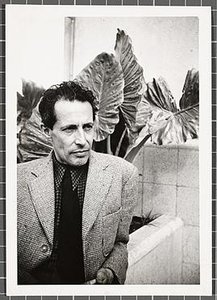
Carlos Mérida
1891 - 1984, Guatemala
Quick facts about Carlos Mérida
- Full Name: Carlos Mérida Ortega
- Nationality: Guatemalan-Mexican
- Date Of Birth: 1891
- Date Of Death: 1984
- Place Of Birth: Guatemala City, Guatemala
- Notable Artworks:
- Untitled
- Portrait of Berta Singerman
- Figura
- Artistic Movement Or Style: Geometric abstraction, Muralism
- Artists Who Influenced This Artist:
- Van Dagen
- Modigliani
- Picasso
- Mondrian
- Paul Klee
- Joan Miró
- Kandinsky
- Artists Or Movements Influenced By This Artist: ['Mexican muralism']
Artist Biography
A Fusion of Worlds: The Life and Art of Carlos Mérida
Carlos Mérida, born Carlos Santiago Ortega in Guatemala City in 1891, stands as a pivotal figure in the narrative of Latin American modern art. His journey was one of constant exploration—a compelling synthesis of European avant-garde sensibilities with the rich cultural heritage of his Guatemalan roots and, later, the vibrant artistic landscape of Mexico. Initially drawn to music, Mérida’s path shifted due to hearing loss, a circumstance that unexpectedly steered him toward painting under his father's encouragement. This redirection proved fortuitous, unlocking a talent that would blossom across continents and redefine artistic boundaries. His early studies at the Instituto de Artes y Oficios and the Instituto de Ciencias y Letras in Guatemala City laid the foundation for an artistic career marked by innovation and a relentless pursuit of a uniquely American aesthetic. Even his adoption of the surname “Mérida,” finding it more resonant, speaks to a deliberate crafting of identity—a theme that would permeate his life and work. His first exhibition in 1910 already hinted at the avant-garde tendencies that would define his artistic vision.Parisian Encounters and the Seeds of Modernism
The year 1910 marked a turning point, as Mérida embarked on a journey to Paris with a fellow artist, Carlos Valenti. This sojourn into the heart of Europe proved transformative. Immersed in the burgeoning modernist movements, he encountered giants like Van Dongen, Modigliani, Picasso, and Mondrian—artists who were dismantling traditional artistic conventions and forging new visual languages. He exhibited at the Independent Salon and Giroux Gallery, absorbing the energy of a city pulsating with creative ferment. These encounters weren’t merely observational; Mérida actively engaged with these masters, participating in discussions and debates that shaped his understanding of art's potential. The tragic suicide of Valenti deeply affected him, but he persevered, finding solace and guidance from artists like Roberto Montenegro who helped him navigate the complexities of the Parisian art scene. This period instilled within him a deep appreciation for Cubism and other emerging styles, providing the tools with which he would later articulate his own artistic vision.Returning to Roots: Guatemala and Mexico
Following World War I, Mérida returned to Guatemala in 1914, but this was not a return to the status quo. The experience of Europe had irrevocably altered his perspective. He began to look inward, captivated by Guatemalan folklore and driven by a desire to define an authentically “American” identity within his art. His exhibitions during this time were groundbreaking, signaling the dawn of modern painting in Guatemala. However, it was Mexico that ultimately became his artistic home. In 1919, he relocated to Mexico City, drawn by the fervor of the Mexican muralism movement and a sense of shared cultural purpose. He quickly integrated into the artistic community, collaborating with Diego Rivera and Xavier Guerrero on projects like the murals at the National Preparatory School as part of the *Renacimiento Mexicano* (Mexican Renaissance). Yet, Mérida’s approach differed from that of his muralist contemporaries. While they often favored figurative narratives steeped in social and political commentary, Mérida gravitated towards abstraction—a path he solidified after a second trip to Europe in the late 1920s where he further explored Mayan art.Plastic Integration and a Unique Artistic Language
Mérida’s artistic philosophy culminated in his concept of “plastic integration,” an ambitious attempt to harmonize art and architecture. This vision reached its most expansive expression in the Benito Juárez Housing Project, a large-scale endeavor that tragically fell victim to the 1985 Mexico City earthquake. The project exemplified Mérida's belief in the power of art to transform living spaces and elevate everyday life. Throughout his career, he continued to experiment with diverse mediums—designs, graphic works, scenographic sketches for dance, and tapestries—always returning to geometric variations and vibrant color palettes. His style became instantly recognizable: a dynamic interplay of abstract forms infused with Mayan symbolism and the energy of Mexican modernism. He wasn’t simply appropriating indigenous motifs; he was engaging in a dialogue between ancient traditions and contemporary aesthetics, creating a visual language that was both deeply rooted and strikingly original. His work is characterized by its bold colors, geometric shapes, and integration of Mayan cultural elements. His contributions were widely recognized with exhibitions in the United States—at Harvard University and the Museum of Fine Arts, Boston, among others—and culminated in the National Prize for Arts and Sciences in Mexico.A Lasting Legacy
Carlos Mérida passed away in Mexico City in 1985 at the age of 94, leaving behind a legacy that continues to inspire artists and scholars alike. He is remembered not merely as an artist who blended European modernism with Latin American themes but as a visionary who forged a new path for artistic expression. He successfully synthesized disparate influences—Cubism, Surrealism, Mayan art, Mexican muralism—into a cohesive and compelling aesthetic. His work transcends categorization, existing in a space between abstraction and representation, tradition and innovation. Mérida’s enduring significance lies in his ability to articulate a uniquely American identity through the universal language of art, proving that artistic boundaries are meant to be challenged and redefined. He remains a testament to the power of cultural exchange and the transformative potential of creative vision.
Explore artworks organized by themes, styles, and characteristics.