Preview
 Send
Send Share
Share
 Details
 Guide
Guide

 Download
 Similars
 X-Ray
X-Ray Diaporama
 Stats
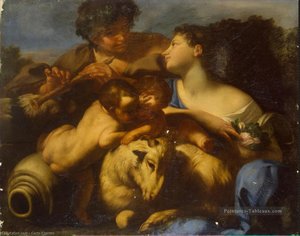
StatsShepherd and Shepherdess
 Oil On Canvas
- WallArt
- Baroque Classicism
 1670
1670- Early Modern
 103.0 x 128.0 cm
 Hermitage Museum
 Read More
Hand Made Oil Reproduction
Hand-painted oil on canvas in your size and frame, made to order by our artists. ( Switch to Print Switch to Digital Image)




P118B $10

P118H $10

P118W $10

P438Z $10

P508JH $12

P508YH $12

P805H $10

P805Z $10

P919BZ $10

P919G $10

P919XJ $10

P959ZH $10

P968JZ $12

W106C $8

W218G $10

W218JH $8

W218Y $10

W307PJ $10

W316G $10

W316PJ $8

W316Y $10

W398PJ $8

W4111J $10

W500HY $15

W500JH $15

W692G $12

W849H $8

W940BG $15

W953PJ $8




Pick from our preset sizes that match the artwork's original proportions.

Type the width and the height you need, to fit your frame or your wall. This is hand-painted, so for a size with a different shape the artist can paint a bit more around the picture, or cut a bit — you choose. We send you a digital mockup to approve before the painting starts. The picture shown on this page does not show the real result — only the mockup does.
After order, OriginalUniqueArt.com team will email client for instructions and provide a mockup preview
Worldwide Delivery () in 3/4 weeks instead of standard 5 weeks. (23 October). No compromise on quality.

Free Worldwide Express Shipping

High-Quality Linen Canvas

Full Shipping Insurance

Customs Tax Refund Guarantee

True Color Matching Guarantee

100-Day Return Policy (Defects Only)

100% Money-Back Guarantee

Bulk Discount Offer
 Glass option is only available in size under 110 CM

Shepherd and Shepherdess
Reproduction Medium
Reproduction Size
-


Total Price
$ 300
A Gentle Embrace of Pastoral Life
Carlo Cignani’s Shepherd and Shepherdess transports the viewer into a sun-dappled corner of pastoral bliss, a scene imbued with the quiet dignity of rural life. This painting is far more than a mere depiction of figures gathered outdoors; it is an intimate tableau vivant, capturing a moment suspended in time. The composition centers on a family unit—a man tenderly holding one infant, standing beside a woman who cradles another, while a third baby rests gently upon the earth nearby. Flanking this domestic core are elements that root the scene in its natural setting: the soft presence of a sheep grazes near the figures, and strategically placed pots and vases suggest human habitation amidst the open fields.
The Refined Touch of Bolognese Classicism
Painted around 1670, this work stands as a beautiful testament to Cignani’s mastery of what art historians term his ‘new manner.’ While rooted in the grand tradition of Baroque painting, Cignani eschews the dramatic, almost theatrical intensity favored by some of his predecessors. Instead, he gifts us with an atmosphere of profound serenity and refined elegance. His technique allows the light to fall softly across the skin tones and the folds of the drapery, lending the entire scene a luminous quality. One can almost feel the gentle warmth of the Italian countryside filtering through the canvas, making it a piece that speaks not of high drama, but of enduring, quiet grace.
Symbolism in Stillness
The inclusion of multiple children and the pastoral setting invites layers of symbolic interpretation. The shepherd motif itself often symbolizes guidance, innocence, and the nurturing aspect of life. The presence of the pots and vases—artistic accents placed throughout the composition—can be read as symbols of domestic bounty or perhaps even the fleeting nature of beauty, contrasting with the enduring bond depicted between the family members. Cignani masterfully balances these elements: the wildness suggested by the outdoor setting is tempered by the careful arrangement of human life and cultivated objects, creating a perfect harmony.
Bringing Baroque Serenity Home
For those seeking to infuse a space with the sophisticated calm of 17th-century Italian art, this reproduction offers an unparalleled opportunity. The scale of 103 x 128 cm allows the narrative richness and delicate brushwork to be appreciated fully in any grand hall or drawing-room. Owning a piece echoing Cignani’s gentle Baroque style means acquiring more than just decoration; it is acquiring a mood—a sense of enduring peace, familial connection, and classical refinement that transcends passing trends. It serves as a timeless focal point, inviting contemplation with every glance.
Questions & Answers
Where can I find artworks similar to "Shepherd and Shepherdess" by Carlo Cignani?
The Similars page of "Shepherd and Shepherdess" by Carlo Cignani presents related artworks.
Who created "Shepherd and Shepherdess" and in what year?
"Shepherd and Shepherdess" was created by Carlo Cignani in 1670.
How much light do the colors of "Shepherd and Shepherdess" appear to reflect?
The luminance recorded for "Shepherd and Shepherdess" by Carlo Cignani is dark.
Artist Biography
A Legacy of Gentle Baroque: The Life and Art of Carlo Cignani
Carlo Cignani, born in Bologna around 1630, stands as a fascinating figure bridging the High Baroque and the emerging Rococo styles. He wasn’t a revolutionary like some of his contemporaries, but rather a masterful consolidator, the last great exponent of the Bolognese classicism that had flourished for generations. His art embodies a ‘new manner,’ as it was known – a softening of the dramatic intensity favored by earlier Baroque masters, replaced with an intimate and reflective quality that subtly influenced artists like Guido Reni and Guercino. Cignani’s path wasn't one of radical innovation, but rather of refined elegance and intellectual depth, securing his place as a significant, if sometimes overlooked, figure in 17th-century Italian painting. Details surrounding his early life remain somewhat scarce; we know he came from a noble, though modestly resourced family, and that he would later have both a son, Felice Cignani, also a painter, and a nephew, Paolo Cignani, who followed in the family tradition.Formative Years and Artistic Development
Cignani’s artistic journey began under the tutelage of Battista Cairo, but it was his apprenticeship with Francesco Albani that truly shaped his foundational style. He absorbed Albani's meticulous technique, his vibrant use of color, and his commitment to a polished finish. However, Cignani didn’t simply mimic his master; he possessed an intellectual curiosity that led him to explore other influences. The frescoes of Correggio in the Parma Cathedral profoundly impacted his understanding of composition and chromatic harmony, while Melozzo da Forlì's mastery of perspective ignited his interest in creating illusionistic space. This synthesis of influences allowed Cignani to develop a distinctive voice – one characterized by graceful forms, balanced compositions, and a subtle emotional resonance. He established an *accademia del nudo* in Bologna, demonstrating a dedication to anatomical study and providing instruction to promising young artists, including Giuseppe Maria Crespi, who would become a celebrated painter in his own right.Major Works and Artistic Flourishes
Cignani’s career spanned several decades, producing a diverse body of work encompassing religious scenes, mythological narratives, and portraits. The *Assumption of Saint Rose of Lima*, painted for the church in Forlì, is arguably his most celebrated achievement. This monumental fresco showcases his ability to create dramatic compositions within architectural settings, echoing Correggio’s influence while establishing his own unique style. Other notable works include the *Entry of Paul III into Bologna*, a historical depiction imbued with intellectual gravitas, and *Francis I Touching for Kings Evil*, which demonstrates his skill in portraying royal figures with dignity and sensitivity. He also excelled at ceiling paintings, as evidenced by *The Power of Love*, created in collaboration with Agostino Carracci. His *Adam and Eve* gained international recognition through exhibitions in Dresden and Copenhagen, highlighting the growing demand for his work beyond Italy. Multiple versions of *Joseph and Potiphar's Wife* exist, a testament to the enduring appeal of this biblical theme within his oeuvre.A Lasting Influence on Bolognese Art
Carlo Cignani’s historical significance lies not only in his artistic output but also in his role as a preserver and transmitter of the Bolognese painting tradition. He represented the culmination of a school renowned for its classicism, intellectual rigor, and technical mastery. His commitment to anatomical study, evidenced by his *accademia del nudo*, helped maintain high standards of craftsmanship among aspiring artists. Beyond Crespi, he mentored Paolo Antonio Paderna and Sante Vandi, further contributing to the development of Bolognese art. His work found a home in prominent collections across Europe, including Dresden and Copenhagen, solidifying his international reputation. Today, several of his paintings are preserved in the Pinacoteca Civica in Forlì, ensuring that future generations can appreciate his artistry. Though he may not be as widely recognized as some of his Baroque contemporaries, Carlo Cignani remains a vital figure in art history – a master of gentle Baroque whose legacy continues to inspire and captivate. His later years were spent continuing to work diligently, including painting the *Aurora* at Circolo della Scranna in Forlì, and completing the *Incoronazione di Santa Rosa (Coronation of Saint Rose of Lima)* for the Pinacoteca Civica before his death sometime after 1719.
Carlo Cignani
1628 - 1719 , Italy
Quick Facts
- Artistic Movement Or Style: Baroque
- Artists Or Movements Influenced By This Artist:
- Crespi
- Paderna
- Vandi
- Artists Who Influenced This Artist:
- Correggio
- Melozzo da Forlì
- Albani
- Carracci
- Date Of Birth: 1628
- Date Of Death: 1719
- Full Name: Carlo Cignani
- Nationality: Italian
- Notable Artworks:
- Assumption of Saint Rose
- Entry of Paul III
- Francis I Touching
- Power of Love
- Adam and Eve
- Joseph & Potiphar's Wife
- Place Of Birth: Bologna, Italy
Related Articles

Baroque Masterpieces: 10 Paintings That Defined an Era |
Journey through the drama & grandeur of Baroque art! Explore 10 masterpieces by Caravaggio, Rembrandt, Rubens & more. Discover stunning oil paintings, rich colors & timeless stories. Find museum-quality reproductions at .

Baroque Classicism: The Grandeur of Order and Drama in 17th-Century Art History
Explore the profound elegance of Baroque Classicism. Discover how 17th-century masters synthesized dramatic emotion with classical order through the lens of the Counter-Reformation and the works of legends like Carlo Maratta and Andrea Sacchi.

Baroque Drama: Bringing Opulence & Emotion into Contemporary Interiors
Explore the opulent world of Baroque interior design! Discover key elements, modern applications & how to bring dramatic elegance into your home with OriginalUniqueArt.com's authentic reproductions.

Italian Baroque Unlocked: High-Drama Art That Hits Hard
Dive into the high-drama world of Italian Baroque art. Discover how chiaroscuro, intense emotion, and theatrical lighting redefined aesthetics. Explore the visceral power of the Counter-Reformation through a modern lens with expert insights from OriginalUniqueArt.com.
Simon Vouet: A Baroque Master's Journey from Italian Influence to French Classicism
Explore the life & art of Simon Vouet, a pivotal French Baroque painter who introduced Italian styles to France. Discover his masterpieces and lasting influence on 17th-century art.