Preview
 Send
Send Share
Share
 Details
 Guide
Guide

 Download
 Similars
 X-Ray
X-Ray Diaporama
 Q&A
Q&A Stats
StatsUntitled (AQTDLT)


 Read More
Giclée / Art Print
Museum-quality giclée or canvas print with fast production and flexible finish options. ( Buy Hand Made Painting Switch to Digital Image)




P118B $10

P118H $10

P118W $10

P438Z $10

P508JH $12

P508YH $12

P805H $10

P805Z $10

P919BZ $10

P919G $10

P919XJ $10

P959ZH $10

P968JZ $12

W106C $8

W218G $10

W218JH $8

W218Y $10

W307PJ $10

W316G $10

W316PJ $8

W316Y $10

W398PJ $8

W4111J $10

W500HY $15

W500JH $15

W692G $12

W849H $8

W940BG $15

W953PJ $8




Pick from our preset sizes that match the artwork's original proportions.

Type the width and the height you need, to fit your frame or your wall. A print can only be cut, never made bigger than the picture, so a size with a different shape loses a part of the image. We send you a digital mockup to approve before we print anything. The picture shown on this page does not show the real cut — only the mockup does.
Worldwide Delivery () in 2 weeks instead of standard 4/5 weeks. (1 November)

Free Worldwide Express Shipping

High-Quality Linen Canvas

Full Shipping Insurance

Customs Tax Refund Guarantee

True Color Matching Guarantee

100-Day Return Policy (Defects Only)

100% Money-Back Guarantee

Bulk Discount Offer
 Glass option is only available in size under 110 CM

Untitled (AQTDLT)
Giclée / Art Print
Reproduction Size
-


Total Price
$ 81
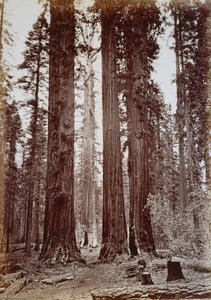
A Majestic Vista: Carleton Watkins’ 1883 Depiction of Mountain & Town Life
- Subject and Composition: This striking black and white photograph by Carleton Watkins presents a compelling juxtaposition of the natural world and burgeoning human settlement. A dominant, imposing mountain forms the backdrop, its scale dwarfing the town nestled at its base. The composition skillfully balances these elements – the rugged wilderness versus the ordered structures of civilization. Numerous buildings, identifiable by their chimneys, populate the townscape, suggesting a thriving community. The inclusion of a train adds another layer to this narrative, hinting at connectivity and progress.
- Technique & Style: Watkins was a master of the collodion wet-plate process, demanding meticulous preparation and execution in the field. This technique resulted in images characterized by incredible detail, tonal range, and sharpness – qualities readily apparent here. The photograph isn’t merely a record; it's an *interpretation* of the landscape. Watkins didn’t simply capture what was there; he carefully selected viewpoints, controlled exposure, and utilized large-format cameras to create images that conveyed his artistic vision. His style leans towards Pictorialism, emphasizing aesthetic beauty and atmospheric effects over purely documentary accuracy.
Historical Context: The American West & the Railroad’s Influence
- The Era of Expansion: Created in 1883, this photograph exists within a pivotal moment in American history – the rapid expansion westward. Following the Civil War, the completion of the transcontinental railroad spurred settlement and economic development across the West. Watkins’ work often documented these changes, serving as both artistic statements and visual records of a transforming nation.
- Watkins & Preservation: Interestingly, while documenting this expansion, Watkins' photographs also played a crucial role in advocating for the preservation of Western landscapes. His images were instrumental in convincing Congress to establish Yosemite National Park – a testament to the power of photography as an agent of conservation.
- The train visible within the scene is not merely a detail; it’s symbolic of this era, representing progress, connection, and the changing relationship between humans and the environment.
Emotional Impact & Symbolic Resonance
- A Sense of Awe: The photograph evokes a powerful sense of awe in the face of nature’s grandeur. The sheer scale of the mountain inspires humility, while the town represents human ambition and resilience.
- Contrasts & Tensions: There's an underlying tension within the image – a contrast between the untamed wilderness and the ordered world created by humans. This duality speaks to the complex relationship between civilization and nature, a theme that continues to resonate today.
- Timeless Appeal: Watkins’ masterful composition and technical skill ensure this photograph remains captivating for contemporary viewers. It offers not only a glimpse into the past but also prompts reflection on our own place within the natural world.
Questions & Answers
Is "Untitled (AQTDLT)" by Carleton Watkins a light or a dark artwork?
"Untitled (AQTDLT)" is brilliant overall, and its luminance is bright balance.
What color harmony does "Untitled (AQTDLT)" by Carleton Watkins display?
"Untitled (AQTDLT)" by Carleton Watkins displays a strong color unity color harmony.
Which color stands out most in "Untitled (AQTDLT)"?
The color that stands out most in "Untitled (AQTDLT)" is rosy brown (#c8b79d). The dominant color is useful when matching an artwork to an interior.
Artist Biography
Carleton Watkins: Pioneer of Landscape Photography
Early Life and Origins (1829-1851)
- Born: November 11, 1829, in Oneonta, New York.
- Carleton E. Watkins was the eldest of eight children born to John and Julia Watkins, a carpenter and an innkeeper respectively.
- He enjoyed a rural upbringing, developing skills as a hunter and fisherman, and participating in local activities like the glee club and Presbyterian church choir.
- In 1851, driven by the allure of fortune, Watkins journeyed to San Francisco with his childhood friend, Collis Huntington.
Early Career & Photographic Beginnings (1851-1861)
- Though initially unsuccessful in finding gold, both Watkins and Huntington found success in their respective fields.
- Watkins began working as a supply deliverer for mining operations before becoming a store clerk at George Murray’s bookstore.
- A pivotal moment: An unexpected vacancy at the studio of daguerreotypist Robert H. Vance led Watkins to an apprenticeship, despite having no prior photographic experience.
- He quickly mastered the art form, surpassing his instructor and establishing a reputation for quality work.
- By 1858, Watkins established his own photography business, undertaking commissions like illustrating California for James Mason Hutchings and documenting mining estates.
Yosemite & the Mammoth Plate Era (1861-1867)
- The turning point: In July 1861, Watkins traveled to Yosemite Valley, equipped with his mammoth-plate camera (using 18x22 inch glass plates) and a stereoscopic camera.
- He captured some of the first detailed photographs of Yosemite, showcasing its grandeur to an eastern audience.
- These images were instrumental in convincing Congress to preserve Yosemite Valley as a national park – a testament to the power of visual documentation.
- In 1864, he was commissioned by the California State Geological Survey to photograph Yosemite.
- He opened his first public gallery in 1867 and exhibited at the Universal Exposition in Paris, earning a medal for his work.
Success, Setbacks & Later Life (1867-1916)
- Watkins’ “Yosemite Art Gallery” displayed over a hundred large Pacific Coast views and thousands of stereoscopic images.
- Business Challenges: Despite artistic success, Watkins struggled with business management and lost his gallery to creditor J.J. Cook, who then reproduced his work without credit due to the lack of copyright laws for photographs at the time.
- He responded by creating a “New Series” of images, attempting to reclaim his artistic vision.
- Watkins married Frances Sneed in 1879 and had two children: Julia (born 1881) and Collis (born 1883).
- Progressive eyesight loss hampered his work in the 1890s, culminating in an inability to complete a commission from Phoebe Hearst.
Final Years & Legacy
- Financial hardship led the Watkins family to live in a railroad car for eighteen months.
- The 1906 San Francisco earthquake and fire destroyed his studio, along with countless photographs and negatives.
- Watkins retired to Capay Ranch and was declared incompetent in 1910, entering the Napa State Hospital for the Insane.
- Death: He died in 1916 and was buried in an unmarked grave on hospital grounds.
- Watkins’ legacy endures as a pioneer of landscape photography, whose images not only captured the beauty of the American West but also played a crucial role in its preservation.

Carleton Watkins
1829 - 1916
Quick Facts
- Name: Carleton Watkins
- Movement: American Landscape Photography
- Birth Date: November 11, 1829
- Death Date: 1916
- Influenced: United States conservation efforts
- Birth Place: Oneonta, New York
- Nationality: American
- Date Of Birth: 1829
- Date Of Death: 1916
- Influenced By: Robert H. Vance
- Notable Works:
- The Devil
- Pohono, Bridal Veil, 900 Feet, Yosemite
- Castle Rock, Columbia River
Related Articles

Grant Wood & American Regionalism: Identity, Myth & the Rural Landscape
Explore the world of Grant Wood & American Regionalism with OriginalUniqueArt. Discover the symbolism behind 'American Gothic', recurring themes, and the movement's lasting impact on art history. High-quality reproductions available.

Albert Bierstadt: Luminosity, Landscape & the American Ideal
Explore the breathtaking landscapes of Albert Bierstadt, master of the American West & a leading figure in the Hudson River School. Discover his luminous style and iconic paintings – a timeless investment for art lovers.
Capturing the Soul of Nature: A Journey Through the Sublime Majesty of American Romanticism
Explore the breathtaking beauty of American Romanticism. Discover how Hudson River School masters captured the sublime spirit of the wilderness through luminous oil landscapes and emotional depth. A journey into the soul of nature for the true art enthusiast.

Evocations of Place: A Historical Journey Through Landscape Art
Explore the rich history of landscape art with OriginalUniqueArt. Discover renowned artists, movements like Impressionism & Romanticism, and expert guidance for collecting timeless pieces. Find your perfect serene escape today!

Herman Herzog: Capturing American Landscapes & the Pursuit of Domestic Idealism
Explore the captivating landscapes of Herman Herzog, a pivotal American artist known for his realistic depictions of Yosemite & Florida scenes. Discover his legacy, artistic journey, and market value with OriginalUniqueArt.