Preview
 Send
Send Share
Share
 Details
 Guide
Guide

 Download
 Similars
 X-Ray
X-Ray Diaporama
 Stats
Statsuntitled (8873)

 Read More
Giclée / Art Print
Museum-quality giclée or canvas print with fast production and flexible finish options. ( Buy Hand Made Painting Switch to Digital Image)




P118B $10

P118H $10

P118W $10

P438Z $10

P508JH $12

P508YH $12

P805H $10

P805Z $10

P919BZ $10

P919G $10

P919XJ $10

P959ZH $10

P968JZ $12

W106C $8

W218G $10

W218JH $8

W218Y $10

W307PJ $10

W316G $10

W316PJ $8

W316Y $10

W398PJ $8

W4111J $10

W500HY $15

W500JH $15

W692G $12

W849H $8

W940BG $15

W953PJ $8




Pick from our preset sizes that match the artwork's original proportions.

Type the width and the height you need, to fit your frame or your wall. A print can only be cut, never made bigger than the picture, so a size with a different shape loses a part of the image. We send you a digital mockup to approve before we print anything. The picture shown on this page does not show the real cut — only the mockup does.
Worldwide Delivery () in 2 weeks instead of standard 4/5 weeks. (21 October)

Free Worldwide Express Shipping

High-Quality Linen Canvas

Full Shipping Insurance

Customs Tax Refund Guarantee

True Color Matching Guarantee

100-Day Return Policy (Defects Only)

100% Money-Back Guarantee

Bulk Discount Offer
 Glass option is only available in size under 110 CM

untitled (8873)
Giclée / Art Print
Reproduction Size
-


Total Price
$ 81
A Portrait of Quiet Contemplation: Unveiling Caravaggio’s ‘Untitled (8873)’
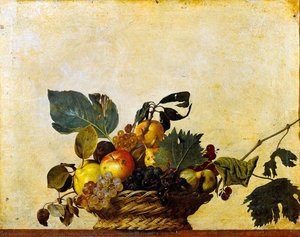
Caravaggio's “Untitled (8873)” is not merely a depiction of a woman; it’s an immersion into the very heart of Baroque drama, rendered with a startling intimacy and psychological depth. The painting, shrouded in mystery due to its lack of a known title or definitive provenance, nevertheless possesses a profound emotional resonance that speaks directly to the viewer's soul. The subject, a young woman seated on the ground, her face averted, immediately draws us into a space of private reflection – a pose characteristic of Caravaggio’s approach to portraiture, moving beyond simple likeness to capture an inner state.
- Subject and Composition: The central figure dominates the canvas with a quiet dignity. Her posture suggests vulnerability and perhaps even sorrow, while her hands, delicately holding an unseen object, invite speculation about her thoughts and emotions. The inclusion of the chair and bowl in the background subtly reinforces this sense of domesticity and intimacy, grounding the scene in a tangible reality.
- Technical Mastery: Caravaggio’s signature *tenebrism* – the dramatic contrast between light and dark – is powerfully employed here. A single, focused light source illuminates the woman's hands and portions of her dress, casting the rest of the composition into deep shadow. This technique isn’t simply a stylistic choice; it serves to heighten the emotional intensity, isolating the subject and intensifying the viewer’s focus on her gesture and expression.
The Baroque Embrace: Contextualizing Caravaggio's Vision
Painted during the tumultuous period of the Counter-Reformation in Rome (1592-1610), “Untitled (8873)” reflects the Baroque movement’s emphasis on emotional realism and dramatic storytelling. Caravaggio, a controversial figure within the Roman art scene, deliberately rejected the idealized forms favored by his contemporaries, opting instead to portray ordinary people – often from the lower classes – with unflinching honesty. This was a radical departure from tradition, reflecting a desire for religious art that resonated with the common person’s experience of faith and suffering.
- Religious Influence: Caravaggio's work frequently drew upon biblical narratives, imbuing his paintings with profound spiritual meaning. While the specific narrative here remains open to interpretation, the overall mood evokes a sense of piety and contemplation – hallmarks of Baroque religious art.
- Social Commentary: The inclusion of a woman in a vulnerable position also hints at broader social commentary on poverty, hardship, and the plight of women within 17th-century society.
Symbolism and the Language of Gesture
Beyond the technical brilliance, “Untitled (8873)” is rich with symbolic potential. The pearls scattered around the scene are particularly intriguing. Pearls have long been associated with purity, innocence, and mourning – elements that could be interpreted in various ways within the context of the painting. The woman’s averted gaze suggests a reluctance to confront something painful or difficult, while her hands, holding an unseen object, represent both agency and vulnerability.
- The Hand Gesture: Caravaggio was a master of gesture, using subtle movements to convey complex emotions. The way the woman holds her hands – perhaps clutching a rosary, a letter, or simply offering a silent prayer – invites viewers to project their own interpretations onto the scene.
- Color Palette: The predominantly dark palette, punctuated by highlights of light, contributes significantly to the painting’s dramatic effect and reinforces its emotional intensity.
A Timeless Masterpiece: Reproduction Possibilities
"Untitled (8873)" remains a captivating work of art, demonstrating Caravaggio's unparalleled ability to capture human emotion and create a sense of profound drama. OriginalUniqueArt offers meticulously crafted hand-painted reproductions that faithfully recreate the original’s power and beauty. Each reproduction is created by skilled artisans using archival materials, ensuring its longevity and preserving the nuances of Caravaggio’s technique for generations to come. This artwork would be an exceptional addition to any collection or a striking focal point within your interior design scheme – a testament to the enduring legacy of one of history's greatest artists.
Questions & Answers
Where can I see a preview of "untitled (8873)"?
To preview a reproduction of "untitled (8873)" by Caravaggio, open the artwork's Preview page.
What medium is "untitled (8873)" by Caravaggio executed in?
"untitled (8873)" is executed in oil on canvas.
Is "untitled (8873)" by Caravaggio in the public domain, and why?
"untitled (8873)" by Caravaggio is in the public domain - its copyright has expired. Copyright terms are measured from the artist's death, and Caravaggio died in 1610.
Artist Biography
A Life Forged in Shadow and Light
Milan, 1571. The air is heavy with the scent of plague. Young Michelangelo Merisi watches as death claims his father and grandfather in a single day. He grows up in the grip of poverty, a reality that later finds its way onto his canvases through the faces of ordinary people. By 1584, he begins an apprenticeship under Simone Peterzano, a former pupil of Titian. This training provides the technical foundation, but the spirit of the boy from Milan is already restless.
Rome, around 1592. The city is a crucible of religious fervor and intense competition. Caravaggio arrives without fixed address or provision, a penniless migrant in a landscape of grand ambitions. He finds footing through the patronage of Cardinal Francesco Maria del Monte. In the shadows of the Palazzo Madama, the artist begins to strip away the artificial elegance of Mannerism. He replaces elongated, idealized forms with something far more visceral.
The Architecture of Darkness
He rejects the polished surfaces of his contemporaries. Instead, he embraces tenebrism, a style where darkness is a physical presence rather than a mere absence of light. In works like The Cardsharps, light does not simply illuminate; it strikes. It carves figures out of an impenetrable black void. This technique, often called chiaroscuro, creates a stage-like intensity that forces the viewer to confront the raw textures of silk, skin, and bone.
His method is direct. He works alla prima, applying paint directly to the canvas without the safety net of preparatory drawings. This immediacy allows for a startling realism. He uses the people of the Roman streets—the drunks, the laborers, the outcasts—as models for the sacred. When he paints the Holy Family, they possess the dirt and weariness of the living. The divine becomes profoundly human.
- Tenebrism: The use of violent contrasts between light and dark to command attention.
- Realism: A commitment to depicting the physical and emotional truth of the human condition.
- Direct Observation: Working from live models to capture unadorned, naturalistic detail.
Flight and Finality
The brilliance of his art is matched by the volatility of his temperament. A brawl in 1606 leads to a murder charge and a death sentence. The artist becomes an outlaw. He flees Rome, moving through Naples, Malta, and Sicily. Even in exile, the work continues. In Malta, he joins the Order of St. John, but his turbulent nature leads to imprisonment after a quarrel with a superior.
The end comes in 1610. While traveling from Naples back toward Rome in search of a papal pardon, he dies in Porto Ercole. The cause remains a subject of debate—fever, wounds, or perhaps lead poisoning. He leaves behind a legacy that fundamentally altered the course of Western art. His followers, the Caravaggisti, carry his shadows across Europe, ensuring that the darkness he mastered would never truly fade.

Caravaggio
1571 - 1610 , Spain
Quick Facts
- Artistic Movement Or Style: Baroque, Tenebrism
- Artists Or Movements Influenced By This Artist:
- Caravaggisti
- Rubens
- Jusepe de Ribera
- Gerrit van Honthorst
- Artists Who Influenced This Artist: ['Titian']
- Full Name: Michelangelo Merisi da Caravaggio
- Notable Artworks:
- The Taking of Christ
- Saint Francis of Assisi in Ecstasy
- The Fortune Teller
- Supper at Emmaus
- David with the Head of Goliath
- Place Of Birth: Milan, Spain
- Date Of Birth: 1571
- Date Of Death: 1610
Related Articles

The Visceral Stage: Exploring Dramatic Narratives & Emotional Intensity in Baroque Art
Explore the dramatic world of Baroque art! Discover iconic masters like Caravaggio & Rembrandt, their techniques, and the movement's lasting impact. Expert insights for collectors & enthusiasts at OriginalUniqueArt.
Chiaroscuro and Soul: A Definitive Guide to the Drama and Emotion of Italian Baroque Masterpieces
Embark on a sophisticated journey through Italian Baroque art. Discover the dramatic interplay of light and emotion in Caravaggio’s masterpieces and explore how to bring this timeless grandeur into your collection with expert art insights.

Baroque Masterpieces: 10 Paintings That Defined an Era |
Journey through the drama & grandeur of Baroque art! Explore 10 masterpieces by Caravaggio, Rembrandt, Rubens & more. Discover stunning oil paintings, rich colors & timeless stories. Find museum-quality reproductions at .

Drama and Light: A Definitive Guide to the Italian Baroque Masterpieces and the Revolution of Chiaroscuro
Explore the dramatic world of Italian Baroque art. Discover how masters like Caravaggio used chiaroscuro and tenebrism to revolutionize painting through light, shadow, and profound realism. A definitive guide for history lovers and art collectors.
Baroque Painting's Greatest Hits: 10 Masterpieces for Your Home | OriginalUniqueArt
Journey through Baroque painting's glory! Explore 10 masterpieces by Caravaggio, Rembrandt & Vermeer. Discover dramatic lighting, rich colors & timeless stories. Find museum-quality art reproductions for your home at OriginalUniqueArt.com.