

 Preview
 Send
Send Share
Share
 Details
 Guide
Guide

 Download
 Similars
 X-Ray
X-Ray Diaporama
 Stats
StatsThe Vapor


 Read More
The artwork displayed on this page is protected by copyright law, which means we cannot legally create or sell an identical reproduction. This protection is enforced under international agreements such as the Berne Convention and by national laws, including those outlined by the U.S. Copyright Law - Title 17.
As a respectful and legal alternative, we offer custom, hand-painted artworks inspired by the original. Our skilled and professional artists carefully study the original's style, mood, and artistic essence to create a new, unique piece that evokes the same feeling - while remaining an original creation in its own right.
This method fully complies with copyright regulations because it does not involve copying or duplicating the protected artwork. Instead, it is a creative reinterpretation - a new painting that is influenced by the original but not identical to it.
Hand Made Oil Reproduction
Hand-painted oil on canvas in your size and frame, made to order by our artists. ( Switch to Print Switch to Digital Image)




P118B $10

P118H $10

P118W $10

P438Z $10

P508JH $12

P508YH $12

P805H $10

P805Z $10

P919BZ $10

P919G $10

P919XJ $10

P959ZH $10

P968JZ $12

W106C $8

W218G $10

W218JH $8

W218Y $10

W307PJ $10

W316G $10

W316PJ $8

W316Y $10

W398PJ $8

W4111J $10

W500HY $15

W500JH $15

W692G $12

W849H $8

W940BG $15

W953PJ $8




Pick from our preset sizes that match the artwork's original proportions.

Type the width and the height you need, to fit your frame or your wall. This is hand-painted, so for a size with a different shape the artist can paint a bit more around the picture, or cut a bit — you choose. We send you a digital mockup to approve before the painting starts. The picture shown on this page does not show the real result — only the mockup does.
After order, OriginalUniqueArt.com team will email client for instructions and provide a mockup preview
Worldwide Delivery () in 3/4 weeks instead of standard 5 weeks. (27 October). No compromise on quality.

Free Worldwide Express Shipping

High-Quality Linen Canvas

Full Shipping Insurance

Customs Tax Refund Guarantee

True Color Matching Guarantee

100-Day Return Policy (Defects Only)

100% Money-Back Guarantee

Bulk Discount Offer
 Glass option is only available in size under 110 CM

The Vapor
Reproduction Medium
Reproduction Size
-


Total Price
$ 300
A Moment Frozen: The Genesis of "The Vapor"
Bill Viola's "The Vapor," created in 1975, isn’t merely a video installation; it’s an invitation to reconsider the very nature of perception and time. Born from a near-drowning experience that profoundly altered Viola’s understanding of life and death – a moment he described as “the most beautiful world I've ever seen in my life” – the work embodies a deep exploration of consciousness and the ephemeral quality of existence. Viola, already experimenting with television technology at P.S. 20 in Flushing during his youth, was driven by a desire to move beyond traditional representational art, seeking instead to capture fleeting moments and evoke visceral emotional responses. “The Vapor” represents a pivotal shift toward this goal, utilizing the nascent possibilities of video as a medium for creating immersive, meditative experiences.
The piece itself is deceptively simple in its execution. A single monitor displays a continuous loop of footage: Bill Viola, standing before a low platform covered in woven matting, slowly pours distilled water into a cast iron saucepan using his mouth. The process is deliberately unhurried, almost ritualistic, and the resulting vapor rises from the liquid, obscuring the image momentarily before clearing again. The sound of the pouring water is subtly amplified and layered within the space, creating an auditory component that further enhances the immersive quality of the work.
Technique and Materials: A Synthesis of Media
Viola’s genius lies not in elaborate technical complexity but in a masterful synthesis of disparate media. “The Vapor” is a prime example of his signature approach – blending video projection with live performance, sound design, and carefully chosen materials. The use of a standard black-and-white monitor, coupled with the deliberate simplicity of the action, creates an almost stark, minimalist aesthetic. The woven matting beneath Viola’s feet provides textural contrast to the smooth surface of the monitor, while the cast iron saucepan – a humble, everyday object – elevates the mundane act of pouring water into something imbued with symbolic weight. The choice of distilled water, free from impurities, further emphasizes the purity and clarity of the moment being captured.
The video itself was recorded using a standard camera, highlighting Viola’s commitment to capturing authentic experience rather than manipulating the image through digital effects. The deliberate lack of color reinforces the work's focus on fundamental human emotions – contemplation, vulnerability, and the acceptance of mortality. The slow-motion aspect, though not explicitly emphasized in the original recording, is inherent in the extended duration of the loop, allowing viewers to fully absorb each movement and sensation.
Symbolism and Emotional Resonance: A Journey into the Self
“The Vapor” operates on multiple symbolic levels. The act of pouring water can be interpreted as a metaphor for cleansing, renewal, or even the cyclical nature of life and death. Viola’s deliberate use of his own body to perform this action – a stark contrast to traditional artistic representations – immediately draws attention to the viewer's own physicality and mortality. The vapor itself represents the ephemeral nature of existence, constantly shifting and disappearing, mirroring the fleeting moments that constitute our lives.
Furthermore, the work’s meditative quality invites viewers to engage in a process of self-reflection. The slow pace encourages stillness and contemplation, prompting us to consider our own relationship with time, presence, and the beauty of the ordinary. The obscured image creates a sense of mystery and uncertainty, inviting us to project our own interpretations onto the scene.
Legacy and Reproduction: Bringing Viola’s Vision to Life
Bill Viola's "The Vapor" remains one of his most iconic works, demonstrating his pioneering role in shaping contemporary video art. Reproductions of this piece offer a powerful opportunity to experience its profound emotional impact within a domestic setting. When selecting a reproduction, consider the quality of the materials and the attention to detail – ensuring that the subtle nuances of Viola’s original work are faithfully captured. The use of high-resolution digital printing on archival-quality canvas or fine art paper will best preserve the piece's depth and luminosity, allowing its meditative qualities to resonate fully.
Questions & Answers
Is "The Vapor" free of copyright?
Regarding copyright, "The Vapor" is still protected by copyright.
Is "The Vapor" typical of what Bill Viola usually created?
Among Bill Viola's recorded themes - video, performance, ritual, meditation, spirituality, consciousness, reflection, time - "The Vapor" brings its own focus on video art, spirituality, consciousness, time, reflection, darkness, light, performance.
Which color stands out most in "The Vapor"?
The dominant color of "The Vapor" by Bill Viola is gray (#737373).
Artist Biography
A Life Illuminated: The Visionary World of Bill Viola
Born January 25, 1951, in Queens, New York, and passing on July 12, 2024, Bill Viola emerged as a pivotal figure in the landscape of contemporary art. His journey, beginning amidst the bustling energy of New York City and extending through diverse cultural encounters, shaped an artistic practice deeply concerned with the fundamental experiences of human existence. From his early fascination with television technology – evidenced by his role as captain of the TV Squad at P.S. 20 in Flushing – to a near-drowning experience that profoundly impacted his perception of life and death, Viola’s formative years were imbued with elements that would later resonate powerfully within his work. He pursued formal training at Syracuse University, graduating in 1973 with a BFA in Experimental Studies, a program that fostered interdisciplinary exploration and laid the groundwork for his innovative approach to visual storytelling. Even early roles, like video technician at the Everson Museum of Art, served as crucial stepping stones, immersing him in the world of art and technology.Forging a New Language: Influences and Artistic Development
Viola’s artistic trajectory was significantly influenced by his collaborations and travels during the 1970s. His time with composer David Tudor within the experimental music group “Rainforest” (later “Composers Inside Electronics”) instilled in him an appreciation for sonic landscapes and performance art. A residency at Art/tapes/22 in Florence, Italy, brought him into contact with pioneers of video art such as Nam June Paik, Bruce Nauman, and Vito Acconci, exposing him to the burgeoning possibilities of the medium. These encounters were transformative, encouraging him to push the boundaries of artistic expression. Further enriching his perspective, Viola embarked on journeys to the Solomon Islands, Java, and Indonesia, meticulously documenting traditional performing arts – a practice that instilled in him a deep respect for ritual, gesture, and cultural narratives. A pivotal period followed with a U.S./Japan Cultural Exchange Fellowship in 1980-1981, where he studied Zen Buddhism under Master Daien Tanaka and served as an artist-in-residence at Sony Corporation’s Atsugi Laboratories. This immersion into Eastern philosophy profoundly shaped his artistic vision, emphasizing themes of mindfulness, impermanence, and the search for inner peace. His marriage to Kira Perov in 1978 marked not only a personal partnership but also a crucial professional collaboration; Perov became instrumental in managing his studio and documenting his evolving body of work.Landmark Creations: Major Works and Recognition
Throughout his career, Bill Viola created a series of groundbreaking works that garnered international acclaim. Buried Secrets (1995), commissioned for the 46th Venice Biennale, demonstrated his ability to reinterpret classical art through a contemporary lens – notably, *The Greeting* offered a powerful reimagining of Pontormo’s *The Visitation*. The late 1990s saw a major 25-year retrospective of his work touring internationally, solidifying his reputation as a leading figure in video art. His appointment as Getty Scholar-in-Residence in 1998 allowed for further research and exploration. Going Forth by Day (2002), a monumental digital “fresco” cycle commissioned by the Deutsche Guggenheim Berlin and the Guggenheim Museum, New York, showcased his mastery of large-scale installations and high-definition video technology. Perhaps most notably, The Passions (2003) – an exhibition inspired by Renaissance devotional painting – captivated audiences with its emotionally charged, slow-motion depictions of human experience, exhibited in Los Angeles, London, Madrid, and Canberra. These works, and many others, established Viola as a master storyteller capable of evoking profound emotional responses through the innovative use of video and sound.The Essence of Being: Style, Themes, and Legacy
Bill Viola’s artistic style is characterized by an unwavering focus on fundamental human experiences – birth, death, love, emotion, consciousness, and spirituality. He drew inspiration from a diverse range of sources, including Zen Buddhism, Christian mysticism, Islamic Sufism, and Western medieval and Renaissance devotional art. A central tenet of his work is the exploration of dualism—the idea that understanding requires embracing opposing forces like life and death, light and dark. He masterfully employed slow motion video, not merely as a technical device but as a means to encourage deep connection with the image and its underlying meaning, allowing viewers to contemplate each moment with heightened awareness. Viola’s work seamlessly blends conceptual rigor with visual poetry, often exhibiting a painterly quality that belies its technological foundation. He wasn't simply creating videos; he was crafting immersive environments designed to provoke introspection and emotional resonance. His pioneering spirit expanded the scope of video art, establishing it as a vital contemporary art form and influencing countless artists who followed in his wake. Viola’s exploration of universal human experiences continues to resonate with diverse audiences worldwide, ensuring his enduring legacy as a visionary artist who dared to confront the mysteries of existence through the power of image and sound.
Bill Viola
1951 - , United States of America
Quick Facts
- Full Name: Bill Viola
- Nationality: American
- Date Of Birth: 1951
- Date Of Death: July 12, 2024
- Place Of Birth: Queens, United States of America
- Notable Artworks:
- Songs of Innocence
- Ancestors
- Science of the Heart
- Buried Secrets
- Going Forth by Day
- The Passions
- Artistic Movement Or Style: Video art, New media
- Artists Who Influenced This Artist:
- David Tudor
- Nam June Paik
- Bruce Nauman
- Vito Acconci
- Artists Or Movements Influenced By This Artist: Contemporary artists
Related Articles

Serene Waters: A Curated Journey Through the World's Most Iconic Water Lily Masterpieces
Embark on a visual journey through Claude Monet's most iconic water lily masterpieces. Discover the profound beauty of Impressionism, explore the evolution of Giverny's light, and learn how to bring these serene, museum-quality landscapes into your private collection.
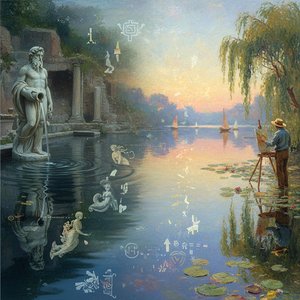
Fluid Reflections: Exploring Water's Symbolism in Art History – From Myth to Impressionism
Explore the rich symbolism of water in art history – from ancient myths to Impressionism's fleeting beauty. Discover masterpieces & find your perfect serene artwork with OriginalUniqueArt.com.

Beyond the Screen: Transforming Video Game Worlds into Contemporary Canvas Art
Explore the captivating world where video games meet fine art! Discover how iconic gaming imagery is transformed into stunning contemporary canvas paintings – a new frontier for collectors and enthusiasts alike.

Bridging Realities: Exploring Aesthetic Crossovers Between Video Game Universes and Fine Art Traditions
Explore the fascinating intersection of video game aesthetics & fine art traditions. Discover how gaming influences design, collect iconic art reproductions, and elevate your space with expert guidance from OriginalUniqueArt.
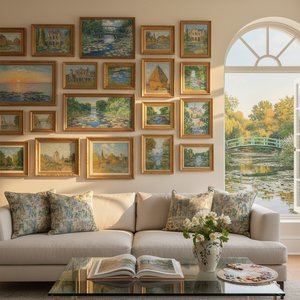
Monet's Masterpieces: 25 Iconic Artworks to Transform Your Home
Journey through 25 iconic Claude Monet masterpieces! Explore Impressionism’s beauty, from Water Lilies to Rouen Cathedral. Discover stunning art reproductions & curated decor ideas – explore the full collection online at OriginalUniqueArt.com.


