Switch to Print
 Read More







































 For artworks or reproductions larger than 105 cm (approximately 41 inches) on any side, the frame will be shipped as a kit, disassembled. This method ensures safe delivery and prevents damage during transport.


A Sacred Encounter with the Divine
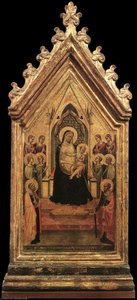
In the quiet contemplation of fourteenth-century Florence, few objects commanded as much spiritual gravity as the Portable, Double Sided Cross (verso) by the master Bernardo Daddi. This exquisite piece is not merely a painting but a profound liturgical instrument, an "astile" cross designed to be mounted upon a long pole and carried through the streets during solemn religious processions. As it moved through the crowds, it served as a mobile altar, bringing the celestial realm into the tactile reality of the faithful. The verso side of this masterpiece presents a breathtakingly complex narrative, where the golden, ethereal background acts as a window into eternity, illuminating a sacred assembly that transcends time and space.
< p>The composition is a delicate dance of devotion and mortality. On this side of the cross, we encounter the tender presence of the Virgin Mary alongside Saint John the Evangelist and the Redeemer. Yet, Daddi masterfully juxtaposes this divine grace with a startlingly visceral element: the figure of a fleshless corpse. This unusual, haunting detail represents the condemned man, dressed in the black tunic of an execution, serving as a stark memento mori. It is a poignant reminder of the fragility of human life and the heavy weight of mortality, designed specifically to offer solace to prisoners facing death by connecting their earthly suffering to the eternal promise of salvation.The Mastery of the Florentine School
Bernardo Daddi stands as a pivotal bridge between the stylized elegance of the Gothic tradition and the burgeoning realism of the Italian Renaissance. A student of the legendary Giotto, Daddi inherited a profound sensitivity to human emotion and naturalism, which he refined into a style of unparalleled lyrical grace. In this cross, his technique is on full display; the meticulous detail in the drapery, the subtle modeling of the figures, and the vibrant use of color demonstrate a craftsman at the height of his maturity. His ability to balance the rigid iconographic requirements of the era with a soft, approachable humanity allows the viewer to feel an intimate connection to the saints depicted.
For the discerning collector or interior designer, a high-quality reproduction of this work offers more than just aesthetic beauty; it provides a focal point of historical depth and spiritual resonance. The interplay of gold leaf and rich pigments creates a luminous quality that can transform a space, bringing an atmosphere of classical sophistication and meditative calm. Whether placed in a curated gallery setting or used to anchor a room with historical character, this piece invites a continuous dialogue between the viewer and the profound mysteries of art history, making it an incomparable treasure for those who appreciate the enduring power of the Florentine masters.
Questions & Answers
What historical period is "Portable, Double Sided Cross (verso)" by Bernardo Daddi from?
The historical period of "Portable, Double Sided Cross (verso)" by Bernardo Daddi is Late-Medieval. This classification situates the work in art history.
How saturated is the palette of "Portable, Double Sided Cross (verso)"?
"Portable, Double Sided Cross (verso)" by Bernardo Daddi is recorded with a muted saturation.
Is "Portable, Double Sided Cross (verso)" typical of what Bernardo Daddi usually created?
Among Bernardo Daddi's recorded themes - giotto's influence on realism, christian devotion for processions, transitioning gothic to renaissance style, focus on sacred narrative cycles - "Portable, Double Sided Cross (verso)" brings its own focus on processional cross, christian saints, martyrdom scene, religious iconography, medieval art, florentine painting.
More about this painting
 Preview
 Send
Send Share
Share
 Details
 Guide
Guide

 Download
 Similars
 X-Ray
X-Ray Diaporama
 Q&A
Q&A Stats
Stats