The Dawn of an International Style: Origins & Influences
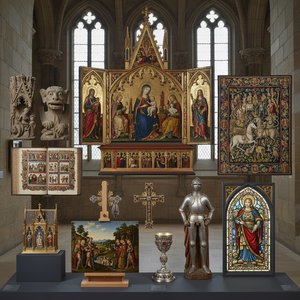
The late fourteenth century witnessed a remarkable shift in European art, one that moved beyond the regional variations of earlier Gothic styles and blossomed into what we now recognize as International Gothic. This wasn’t a sudden revolution, but rather a gradual convergence of artistic ideas, fueled by increased trade, royal patronage, and the mobility of artists themselves. The seeds of this new aesthetic were sown in Burgundy, France, and northern Italy – centers of wealth, power, and sophisticated courtly life. Prior to International Gothic, art was often deeply rooted in local traditions; however, a growing network of diplomatic marriages, religious pilgrimages, and merchant routes facilitated an unprecedented exchange of artistic techniques and motifs. The courts of Philip the Bold, Duke of Burgundy, and wealthy Italian city-states like Milan and Siena became vital hubs for this cross-cultural pollination.
The influence of Sienese painting is particularly crucial to understanding the origins of International Gothic. Artists like Simone Martini, with his refined elegance and lyrical compositions, established a precedent for the delicate figures, rich colors, and elaborate ornamentation that would become hallmarks of the style. Simultaneously, in northern Europe, French artists were developing a distinct approach characterized by intricate detail and narrative complexity, particularly evident in illuminated manuscripts. The fusion of these two traditions – the Italian emphasis on grace and emotional depth with the Northern focus on meticulous realism – created a uniquely compelling visual language.
Courtly Refinement & Religious Devotion: Key Characteristics
International Gothic art is often described as embodying courtly refinement, and for good reason. It was largely commissioned by aristocratic patrons who sought artworks that reflected their status, taste, and piety. This resulted in a style characterized by elegance, luxury, and an emphasis on decorative detail. Figures are typically elongated and graceful, with flowing drapery and delicate facial features. A hallmark of the style is the use of rich, vibrant colors – often achieved through the application of gold leaf, which not only added to the visual splendor but also symbolized divine light.
However, International Gothic was far more than just a celebration of worldly beauty. Religious devotion remained central, and many artworks were created for private chapels or as altarpieces intended to inspire contemplation and reverence. The narratives depicted often focused on scenes from the life of Christ, the Virgin Mary, and the saints, but they were rendered with a new level of emotional sensitivity and psychological realism. Artists skillfully employed symbolism – hidden meanings embedded within objects, colors, and gestures – to convey complex theological ideas. The attention to detail wasn’t merely aesthetic; it served to enhance the narrative power and spiritual impact of the work.
Masters of Elegance: Simone Martini, Pol de Limbourg & Jacquemart de Hesdin
 Jacquemart de Hesdin
Jacquemart de Hesdin (c. 1355-1414) was a leading French International Gothic painter & miniaturist. Known for exquisite illuminated manuscripts like the Très Belles Heures, he blended Flemish detail with Sienese space, serving Duke John of Berry's c
Several artists stand out as pivotal figures in the development and dissemination of International Gothic. Simone Martini, whose *Burial of St Martin* (1312) exemplifies the Sienese grace that influenced the style, is considered a precursor to many of its key characteristics. His work demonstrates an exquisite sensitivity to line, color, and composition, creating a sense of emotional depth and spiritual resonance.
Pol de Limbourg, along with his brothers, achieved renown for their breathtaking *Très Riches Heures du Duc de Berry* (c. 1412-16), an illuminated manuscript that is arguably the most famous example of International Gothic painting. The calendar scenes within this masterpiece showcase not only exceptional technical skill but also a remarkable understanding of landscape and natural detail, offering glimpses into medieval life and beliefs. The sheer opulence of the gold leaf and jewel-like colors further underscores the patronage of the Duke.
Jacquemart de Hesdin, a leading French painter and miniaturist, blended Flemish realism with Sienese spatial sensibilities while serving Duke John of Berry. His *Très Belles Heures* is another testament to the style’s intricate detail and narrative complexity. These artists weren't merely replicating existing forms; they were innovating, pushing the boundaries of artistic technique and expression.
Symbolism and Narrative in International Gothic Painting
The power of International Gothic painting lies not only in its aesthetic beauty but also in its rich symbolism and compelling narratives. Artists employed a complex visual language to convey theological ideas, moral lessons, and historical events. Every element within a composition – from the colors used to the objects depicted – carried meaning.
For example, gold leaf wasn’t simply decorative; it represented divine light and the heavenly realm. Certain flowers symbolized specific virtues (lilies representing purity, roses representing love), while animals often held allegorical significance. The meticulous attention to detail in depicting everyday objects – clothing, furniture, architecture – served not only to create a sense of realism but also to ground the narrative within a recognizable world. The compositions themselves were carefully constructed to guide the viewer’s eye and emphasize key moments or figures.
Furthermore, International Gothic paintings often incorporated multiple scenes within a single panel, creating complex narratives that unfolded before the viewer's eyes. These weren’t simply isolated images; they were visual stories designed to engage the intellect and inspire contemplation.
The Spread Across Europe: Regional Variations & Lasting Legacy
From its origins in Burgundy and Italy, International Gothic rapidly spread across Europe, adapting to local traditions and tastes along the way. In England, artists like Herman Scheerre incorporated native decorative elements into their work, while in Bohemia, under the patronage of Charles IV, a distinct style emerged characterized by mystical religious imagery and bold color contrasts. The Low Countries saw an increased emphasis on realism in portraiture and detailed interior scenes.
Despite these regional variations, certain core characteristics remained consistent – the elongated figures, rich colors, and elaborate ornamentation that defined the style. The spread of International Gothic was facilitated by the mobility of artists, the exchange of manuscripts, and royal marriages, which served as conduits for artistic ideas and techniques. The style’s influence extended beyond painting to sculpture, tapestry, and even architecture.
International Gothic’s Enduring Appeal: A Bridge to the Renaissance
While International Gothic eventually gave way to the Renaissance in Italy, its legacy continued to resonate throughout Europe for centuries. In Northern Europe, “Late Gothic” continuations of the style persisted well into the 16th century, particularly in its decorative elements. The emphasis on realism and detail paved the way for the development of Early Netherlandish painting, while the focus on emotional sensitivity foreshadowed the humanistic concerns of the Renaissance.
Today, International Gothic art continues to captivate audiences with its exquisite beauty, spiritual depth, and technical mastery. Works by artists like Simone Martini, Pol de Limbourg, and Jacquemart de Hesdin offer a glimpse into a world of courtly refinement, religious devotion, and artistic innovation. At OriginalUniqueArt.com, we are proud to offer high-quality reproductions of these masterpieces, allowing you to experience the beauty and wonder of International Gothic art in your own home.