Preview
 Send
Send Share
Share
 Details

 Download
 Similars
 X-Ray
X-Ray Diaporama
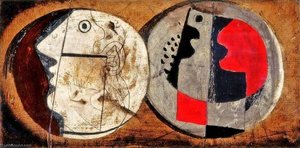
1926 (still life with fruit – version 2)
 Oil On Canvas
- WallArt
- Abstract Modernism
 1926
1926 55.0 x 61.0 cm
 British Council Collection
 Read More
Giclée / Art Print
Museum-quality giclée or canvas print with fast production and flexible finish options. ( Buy Hand Made Painting Buy Image)




P118B $10

P118H $10

P118W $10

P438Z $10

P508JH $12

P508YH $12

P805H $10

P805Z $10

P919BZ $10

P919G $10

P919XJ $10

P959ZH $10

P968JZ $12

W106C $8

W218G $10

W218JH $8

W218Y $10

W307PJ $10

W316G $10

W316PJ $8

W316Y $10

W398PJ $8

W4111J $10

W500HY $15

W500JH $15

W692G $12

W849H $8

W940BG $15

W953PJ $8




Pick from our preset sizes that match the artwork's original proportions.

You may enter your own dimensions to fit a specific frame or space. If your selected size does not match the original image's proportions, we will either crop the artwork or extend the image with a mirrored or solid-fill edge. A digital mockup will be sent for your approval before production begins.
Please note that the on-screen preview does not reflect the actual cropping or extension. Only the mockup will accurately show the final composition.
While custom sizes are available, we recommend selecting a dimension from the predefined list to preserve the original proportions.
Worldwide Delivery () in 2 weeks instead of standard 4/5 weeks. (21 August)

Free Worldwide Express Shipping

High-Quality Linen Canvas

Full Shipping Insurance

Customs Tax Refund Guarantee

True Color Matching Guarantee

60-Day Return Policy (Defects Only)

100% Money-Back Guarantee

Bulk Discount Offer
 Glass option is only available in size under 110 CM

1926 (still life with fruit – version 2)
Giclée / Art Print
Reproduction Size
-


Total Price
$ 81
Collectible Description
A Moment Frozen in Time: Ben Nicholson’s “1926 (Still Life with Fruit – Version 2)”
Ben Nicholson's "1926 (Still Life with Fruit – Version 2)" isn’t merely a depiction of apples and oranges; it’s a carefully constructed meditation on form, stillness, and the very essence of observation. Painted in 1926, during a pivotal period of experimentation for the artist, this work embodies Nicholson's evolving approach to abstraction, bridging the gap between representational beginnings and a fully realized commitment to reductive geometry. The painting invites us into a quiet domestic space, imbued with an understated elegance that speaks volumes about the artist’s profound understanding of visual language.
The scene is deceptively simple: a table, striped in a bold red and white, supports a bowl overflowing with fruit – apples, oranges, and grapes. Yet, within this apparent simplicity lies a complex interplay of shapes and planes. Nicholson masterfully employs a technique he termed “flattening,” reducing the three-dimensional forms to their essential two-dimensional outlines. The table itself becomes a single, expansive plane, mirroring the flattened depiction of the fruit bowl above. This deliberate simplification wasn’t an abandonment of observation but rather a heightened awareness of how we *perceive* objects – how they are presented to our eyes and subsequently processed by our minds.
Influences and Artistic Context
Nicholson's exploration of still life during this period was deeply influenced by his travels abroad, particularly his time in Paris. He encountered the work of Cézanne, Picasso, and Braque, artists who were dismantling traditional perspective and exploring new ways to represent space and form. However, Nicholson wasn’t simply imitating these influences; he adapted them to his own unique sensibility, creating a distinctly British modernism. The echoes of Italian Renaissance masters like Giotto, Uccello, and Piero della Francesca – known for their meticulous depictions of objects and their use of linear perspective – are subtly present in Nicholson's careful rendering of the fruit’s contours.
Furthermore, Nicholson’s own artistic background—his father, Sir William Nicholson, was a prominent painter—provided him with an early exposure to art and its possibilities. Anecdotally, he even found aesthetic pleasure in the geometry of billiards, suggesting a lifelong fascination with structured forms and spatial relationships. This confluence of influences – Parisian modernism and Renaissance tradition – shaped Nicholson’s distinctive style, characterized by its quiet intensity and intellectual rigor.
Symbolism and Emotional Resonance
While seemingly straightforward, “1926 (Still Life with Fruit – Version 2)” is rich in symbolic meaning. The still life itself—a recurring motif in Nicholson's work—represents a moment of suspended time, a captured instant devoid of narrative or action. The fruit, particularly the apples and grapes, are often associated with themes of mortality, transience, and the passage of time – concepts known as *vanitas*. The careful arrangement of the objects suggests a deliberate consideration of their inherent qualities: the solidity of the table, the plumpness of the fruit, the delicate curves of the grapes.
However, Nicholson avoids overt moralizing or didacticism. Instead, he presents these symbols with an almost detached objectivity, inviting the viewer to contemplate their significance without imposing a specific interpretation. The painting’s emotional impact is one of serene contemplation—a quiet invitation to appreciate the beauty and complexity of the everyday world.
A Legacy in Reproduction
OriginalUniqueArt's faithful reproductions capture the essence of Nicholson’s original vision, offering art lovers the opportunity to experience this remarkable work firsthand. The meticulous attention to detail ensures that every curve, every shadow, and every subtle nuance is faithfully reproduced, allowing viewers to appreciate the artist’s masterful technique and profound insights. Whether displayed in a gallery or adorning a wall at home, “1926 (Still Life with Fruit – Version 2)” continues to resonate as a testament to Nicholson's enduring legacy.
Artist Biography
Ben Nicholson OM: A Life in Abstract Art
- Born: April 10, 1894, Denham, Buckinghamshire, United Kingdom
- Died: February 6, 1982, London, United Kingdom
Early Life and Artistic Training
- Ben Nicholson was born into an artistic family; his father, Sir William Nicholson, and mother, Mabel Pryde, were both accomplished painters. This environment fostered a deep appreciation for art from a young age.
- He received early education at Tyttenhangar Lodge Preparatory School, Seaford, Heddon Court, Hampstead, and Gresham's School in Holt, Norfolk.
- Nicholson formally studied at the Slade School of Fine Art (1910-1911), where he was a contemporary of notable artists like Paul Nash, Stanley Spencer, Mark Gertler, and Edward Wadsworth. Anecdotally, he spent considerable time playing billiards during this period, finding aesthetic appeal in the game's geometry and movement.
Artistic Development and Influences
- Early Works: Nicholson’s initial artistic endeavors involved naturalistic still lifes, influenced by his father’s style.
- Cubist Influence: Around 1926, he began to explore abstraction, heavily influenced by Synthetic Cubism and the work of Pablo Picasso.
- Neoplasticism & Primitive Style: A meeting with Piet Mondrian introduced him to Neoplasticism, while his encounter with Henri Rousseau sparked an interest in a primitive style. These influences significantly shaped his artistic direction.
- Key Movements: Nicholson became involved with several important art movements of the time, including the Seven and Five Society (of which he was chair), Unit One, and Abstraction-Création.
Major Works and Artistic Style
- Reliefs: Nicholson is particularly renowned for his abstract reliefs, beginning in 1933. These works combined painting with sculptural elements, creating a unique visual experience. The white reliefs of the mid-1930s are considered among his most significant achievements.
- Still Lifes and Landscapes: While known for abstraction, Nicholson also produced compelling still lifes and landscapes, often incorporating geometric forms and muted colors.
- The Nicholson Wall: A notable public work is the "Nicholson Wall," a mural created for the garden of Sutton Place in Guildford, Surrey, demonstrating his belief that abstract art should be accessible to a wider audience.
- Materials & Techniques: He experimented with various materials and techniques, including oil paint, pencil, gravel, and masonite, often combining them in innovative ways.
Legacy and Historical Significance
- Modern British Art: Ben Nicholson is recognized as a pivotal figure in modern British art, contributing significantly to the development of abstraction and relief sculpture.
- International Recognition: His work garnered international acclaim, with exhibitions at prestigious venues like the Venice Biennale and retrospectives at major museums worldwide. He received numerous awards, including the Order of Merit in 1968.
- Auction Records: Nicholson’s paintings command high prices at auction, reflecting their artistic merit and historical importance. For example, "Sept 53 (Balearic)" sold for $1,650,500 at Christie's New York in 2011, and “Fiddle and Spanish Guitar” fetched €3,313,000 at Christie’s Paris in 2012.
- Influence on Subsequent Artists: Nicholson’s innovative approach to abstraction and his exploration of form and space have influenced generations of artists.

Ben Nicholson OM
1894 - 1982 , United Kingdom
Quick Facts
- Artistic Movement Or Style:
- Abstract art
- Cubism
- Constructivism
- Artists Who Influenced This Artist:
- Henri Rousseau
- Piet Mondrian
- Pablo Picasso
- Cezanne
- Date Of Birth: April 10, 1894
- Date Of Death: 1982
- Full Name: Ben Nicholson OM
- Nationality: British
- Notable Artworks:
- Sept 53 (Balearic)
- Fiddle and Spanish guitar
- 1946 (still life)
- Place Of Birth: London, United Kingdom
Related Articles

Geometric Abstraction's 10 Defining Masterpieces | Art for Your Home - OriginalUniqueArt
Explore 10 defining masterpieces of Geometric Abstraction! Discover Kandinsky, Mondrian & Malevich’s iconic works. Find museum-quality art reproductions and curated decor ideas to elevate your home at OriginalUniqueArt.com.

Ben Nicholson OM: Modernism's Abstract Pioneer & the Poetics of Relief
Explore the revolutionary abstract art of Ben Nicholson OM. Discover his geometric masterpieces, collaborations with Barbara Hepworth & investment potential. Expert insights for collectors.

Neo-Abstract Art: The High-Impact Evolution of Modern Visual Energy and Geometric Sophistication
Discover the power of Neo-Abstract art. Explore how bold geometric forms and high-impact visual energy are redefining modern design. Learn to curate sophisticated, high-energy spaces with the latest trends in contemporary abstraction and structural color.

Beyond Form & Color: Geometric Abstraction's Evolution in 20th/21st Century Art
Explore the evolution of geometric abstraction from Cubism to contemporary art. Discover key artists like Malevich & Mondrian, investment insights, and expert collecting advice at OriginalUniqueArt.
Beyond Form & Color: Geometric Abstraction's Enduring Legacy in Art History
Explore the captivating world of geometric abstraction! Discover its origins, key artists like Malevich & Mondrian, and why this movement remains highly valued by art collectors today. Expert insights at OriginalUniqueArt.