Preview
 Send
Send Share
Share
 Details
 Guide
Guide

 Download
 Similars
 X-Ray
X-Ray Diaporama
 Stats
StatsLabret, Eagle Head


 Read More
Giclée / Art Print
Museum-quality giclée or canvas print with fast production and flexible finish options. ( Buy Hand Made Painting Switch to Digital Image)




P118B $10

P118H $10

P118W $10

P438Z $10

P508JH $12

P508YH $12

P805H $10

P805Z $10

P919BZ $10

P919G $10

P919XJ $10

P959ZH $10

P968JZ $12

W106C $8

W218G $10

W218JH $8

W218Y $10

W307PJ $10

W316G $10

W316PJ $8

W316Y $10

W398PJ $8

W4111J $10

W500HY $15

W500JH $15

W692G $12

W849H $8

W940BG $15

W953PJ $8




Pick from our preset sizes that match the artwork's original proportions.

Type the width and the height you need, to fit your frame or your wall. A print can only be cut, never made bigger than the picture, so a size with a different shape loses a part of the image. We send you a digital mockup to approve before we print anything. The picture shown on this page does not show the real cut — only the mockup does.
Worldwide Delivery () in 2 weeks instead of standard 4/5 weeks. (22 October)

Free Worldwide Express Shipping

High-Quality Linen Canvas

Full Shipping Insurance

Customs Tax Refund Guarantee

True Color Matching Guarantee

100-Day Return Policy (Defects Only)

100% Money-Back Guarantee

Bulk Discount Offer
 Glass option is only available in size under 110 CM

Labret, Eagle Head
Giclée / Art Print
Reproduction Size
-


Total Price
$ 81
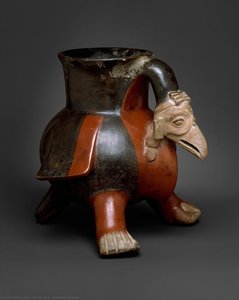
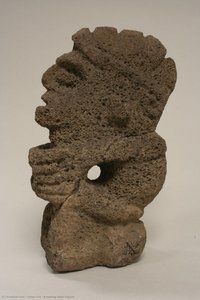
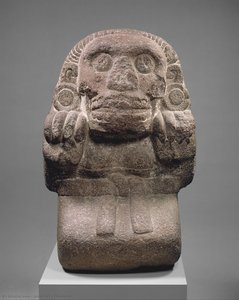
The Golden Gaze of Power: An Aztec Labret
To gaze upon this artifact is to be transported across the vast expanse of time, directly into the heart of the mighty Aztec Empire. This exquisite labret, fashioned into the fearsome yet magnificent head of an eagle, is far more than a mere piece of adornment; it is a tangible echo of a civilization's profound spiritual and martial power. The sheer artistry captured in this golden casting speaks to a culture where daily life, ritual, and supreme aesthetics were inextricably bound together. Notice how the metal seems to drink the light, transforming simple gold into something almost alive—a testament to the unparalleled skill of its creators.
Symbolism Woven in Metal
The eagle itself was not just an animal to the Aztecs; it was a potent symbol, intrinsically linked to divinity, warfare, and the very zenith of their cosmic understanding. By rendering this powerful creature as a piece worn upon the lip—a labret—the wearer claimed a visible connection to these elevated concepts. The piercing gaze sculpted into the metal seems to follow the viewer, suggesting that the owner was not merely adorned, but ritually empowered. This object whispers tales of status, of lineage, and of participation in sacred rites where such emblems held undeniable weight.
Mastery of Form and Technique
The technique employed here is one of breathtaking metallurgical skill. The casting process required an intimate understanding of both the material's properties and the desired visual outcome. Observe the intricate detailing: the sharp delineation of the beak, the stylized musculature around the jawline, and the elaborate ornamentation forming a collar that frames the head. These elements are not simply decorative flourishes; they demonstrate a sophisticated mastery over casting gold alloys. The resulting texture—polished yet retaining the subtle marks of its creation—offers a dialogue between flawless artistry and painstaking human labor.
A Touch for the Modern Collector
For the contemporary collector, interior designer, or connoisseur of global history, this piece offers an unparalleled narrative anchor. While it speaks to the grandeur of Tenochtitlan in 1521, its presence in a modern setting introduces a dramatic tension between antiquity and the present day. Imagine this golden gaze gracing a mantlepiece or serving as a focal point in a curated space; it does not merely decorate—it commands attention, inviting contemplation on themes of power, nature, and enduring human artistry. It is an object that demands to be seen, studied, and cherished.
Questions & Answers
Is "Labret, Eagle Head" available as a fine art print?
A print of "Labret, Eagle Head" by Aztec Empire can be ordered directly on its Fine Art Print page: a fine art print on cotton canvas or archival canvas paper.
What luminance does "Labret, Eagle Head" by Aztec Empire have?
"Labret, Eagle Head" by Aztec Empire has a gentle luminance luminance. Luminance describes how much light the colors appear to reflect.
What is the recommended use of a print of "Labret, Eagle Head"?
The suggested use for "Labret, Eagle Head" by Aztec Empire is statement. It can serve other purposes as well.
Artist Biography
The Echoes of Stone: Exploring the Art and Legacy of the Aztec Empire
The name “Aztec” – derived from the Nahuatl word *ātl-ce-tlācati–tlān*, meaning "people of many forms" – conjures images of a vast, complex empire that dominated Mesoamerica for centuries. More than just warriors and conquerors, the Aztecs were profoundly artistic individuals, weaving intricate beauty into every facet of their lives—from monumental architecture to delicate featherwork, from sacred rituals to daily objects. Their art wasn’t merely decorative; it was a vibrant language, communicating religious beliefs, political power, historical narratives, and social hierarchies within a society both rigidly structured and remarkably innovative.
Born in the early 14th century in Tenochtitlan, the heart of the Aztec Empire, the artistic traditions of the Aztecs were deeply rooted in the legacies of earlier Mesoamerican civilizations. The Olmecs, with their colossal heads and sophisticated calendar systems, the Teotihuacans, renowned for their massive pyramids and urban planning, and the Toltecs, masters of metalworking and sculpture, all contributed to the rich artistic tapestry that the Aztecs inherited. However, the Aztecs weren’t simply imitators; they synthesized these influences with their own unique aesthetic sensibilities, developing a distinctive style characterized by bold colors, intricate geometric patterns, and symbolic representations.
A Palette of Power: Materials and Techniques
Aztec art was remarkably diverse, employing an astonishing range of materials and techniques. Stone carving held a prominent place, exemplified by monumental sculptures depicting deities, rulers, and mythical creatures. The massive Sun Stone (Calendar Stone), discovered in 1946, stands as a testament to their mastery of this medium—a complex, layered stone relief that combined calendrical information with cosmological symbolism. Skilled artisans also worked with wood, clay, feathers – particularly the vibrant quetzal plumes – jade, turquoise, obsidian, and gold, reflecting both wealth and status.
Featherwork was perhaps the most visually arresting aspect of Aztec art. Intricately crafted headdresses, cloaks, shields, and other decorative items were created using thousands of meticulously arranged feathers—a process requiring immense skill and patience. These objects weren’t merely beautiful; they served as potent symbols of authority, religious devotion, and social rank. The colors themselves held specific meanings: blue represented the heavens, green symbolized fertility, red signified warfare, and yellow represented the sun.
Furthermore, Aztec artists were masters of mosaic work, creating stunning decorative panels using small, precisely cut stone tiles. These mosaics adorned temples, palaces, and private residences, adding a layer of visual richness to the built environment. Their pottery was equally impressive, featuring intricate geometric designs and depictions of animals and deities.
The Language of Symbols: Themes and Motifs
Aztec art is replete with symbolism, each image carrying layers of meaning that required careful interpretation by priests, scribes, and rulers. The central deity, Huitzilopochtli, the god of war and sun, was frequently depicted in elaborate headdresses adorned with feathers and precious stones. Quetzalcoatl, the feathered serpent god associated with knowledge, wisdom, and creation, held a prominent place in their pantheon and appeared in numerous artistic representations.
The calendar system—a remarkably sophisticated combination of solar and ritual cycles—was another recurring motif. Images of calendars, glyphs, and astronomical symbols were incorporated into sculptures, mosaics, and codices (illustrated books), reflecting the Aztecs’ deep understanding of time and cosmology. Representations of maize, the staple crop of their diet, symbolized sustenance and fertility. Animal imagery—particularly jaguars, eagles, snakes, and hummingbirds—carried symbolic significance related to power, courage, and divinity.
A Legacy in Fragments: Art and Historical Significance
The Aztec Empire’s sudden collapse at the hands of Spanish conquistadors in 1521 resulted in a devastating loss for Mesoamerican culture. Tragically, much of their artistic heritage was destroyed during the conquest—temples were razed, sculptures smashed, and codices burned. However, despite these losses, fragments of Aztec art survive today, offering invaluable insights into this remarkable civilization.
Notable examples include the Sun Stone, a monumental sculpture that showcases the Aztecs’ advanced knowledge of astronomy and mathematics; intricate featherwork headdresses and cloaks preserved in museums around the world; and surviving codices—handwritten books containing historical accounts, religious beliefs, and calendrical information. The *Colección Andrés Blaisten* in Mexico houses a significant collection of Latin American art, including examples that illuminate Aztec artistic traditions.
The influence of the Aztec Empire’s artistic legacy can still be seen today, inspiring contemporary artists and designers alike. Their innovative techniques, symbolic imagery, and profound connection to nature continue to resonate with audiences worldwide. Exploring the art of the Aztecs is not merely an exercise in historical appreciation; it's a journey into the heart of a complex and captivating civilization—a testament to human creativity, ingenuity, and spiritual depth.
To explore more artworks from the Aztec Empire and other notable artists, visit OriginalUniqueArt.com.

Aztec Empire
1300 - 1521 , Mexico
Quick Facts
- Full Name: Aztec Empire
- Nationality: Mexican
- Date Of Birth: 1300
- Date Of Death: 1521
- Place Of Birth: Tenochtitlan, Mexico
- Notable Artworks:
- Aztec calendar
- Pyramid of sun
- Mexica featherwork
- Artistic Movement Or Style: Mesoamerican art
- Artists Who Influenced This Artist:
- Olmec
- Teotihuacan
- Toltec
- Artists Or Movements Influenced By This Artist: ['Modern art']
Related Articles

The Enduring Form: Sculpture Across History, Technique & Emotional Resonance
Explore the rich history of sculpture with OriginalUniqueArt. Discover key techniques, influential artists & investment potential for discerning collectors. Expert insights into valuing and collecting timeless masterpieces.

The Enduring Form: Exploring Themes & Techniques in Sculpture Across Historical Periods
Explore the rich history of sculpture from ancient masterpieces to contemporary innovations. Discover key techniques, influential artists & investment potential for discerning art collectors.

Bronze Sculptures That Defined Art History | OriginalUniqueArt
Journey through art history with our Top 10 bronze sculptures! Explore masterpieces by Rodin, Michelangelo & more. Discover stories behind iconic statues and find museum-quality reproductions for your home decor at OriginalUniqueArt.com.

Bronze Age to Modern Masters: 10 Sculptures That Redefined Art | OriginalUniqueArt
Journey through art history with 10 legendary bronze sculptures – from Michelangelo's David to Rodin’s Thinker. Explore the stories, techniques & timeless beauty of these masterpieces. Find museum-quality reproductions & elevate your home decor on OriginalUniqueArt.com.

Golden Glow: How to Use Metallic Gold Artworks to Elevate Your Home Decor with Timeless Luxury
Discover how to elevate your home with the timeless elegance of metallic gold artworks. From sculptural metal pieces to gilded oil paintings, learn expert interior design tips for integrating luxurious gold accents into your space with sophistication and grace.