

 Preview
 Send
Send Share
Share
 Details
 Guide
Guide

 Download
 Similars
 X-Ray
X-Ray Diaporama
 Stats
StatsJack the Giant-Killer 4

 Read More
Hand Made Oil Reproduction
Hand-painted oil on canvas in your size and frame, made to order by our artists. ( Switch to Print Switch to Digital Image)




P118B $10

P118H $10

P118W $10

P438Z $10

P508JH $12

P508YH $12

P805H $10

P805Z $10

P919BZ $10

P919G $10

P919XJ $10

P959ZH $10

P968JZ $12

W106C $8

W218G $10

W218JH $8

W218Y $10

W307PJ $10

W316G $10

W316PJ $8

W316Y $10

W398PJ $8

W4111J $10

W500HY $15

W500JH $15

W692G $12

W849H $8

W940BG $15

W953PJ $8




Pick from our preset sizes that match the artwork's original proportions.

You may enter your own dimensions to fit a specific frame or space. If your selected size does not match the original image's proportions, we will either crop the artwork or extend the painting with additional hand-painted elements. A digital mockup will be sent for your approval before production begins.
Please note that the on-screen preview does not reflect the actual cropping or extension. Only the mockup will accurately show the final composition.
While custom sizes are available, we recommend selecting a dimension from the predefined list to preserve the original proportions.
After order, OriginalUniqueArt.com team will email client for instructions and provide a mockup preview
Worldwide Delivery () in 3/4 weeks instead of standard 5 weeks. (10 October). No compromise on quality.

Free Worldwide Express Shipping

High-Quality Linen Canvas

Full Shipping Insurance

Customs Tax Refund Guarantee

True Color Matching Guarantee

100-Day Return Policy (Defects Only)

100% Money-Back Guarantee

Bulk Discount Offer
 Glass option is only available in size under 110 CM

Jack the Giant-Killer 4
Reproduction Medium
Reproduction Size
-


Total Price
$ 325
Jack the Giant-Killer 4: A Gothic Tale Illuminated
Arthur Rackham’s “Jack the Giant-Killer 4” isn't merely an illustration; it’s a distillation of Victorian gothic fantasy, rendered with breathtaking precision and imbued with a palpable sense of unease. Published in 1906 as part of his celebrated adaptation of Peter Pan, this piece exemplifies Rackham’s unparalleled ability to transform folklore into hauntingly beautiful visual narratives. The artwork captures the pivotal moment when Jack confronts the colossal giant, a confrontation fraught with peril yet underpinned by an unwavering determination.Composition and Technique: Mastering Scale and Shadow
Rackham's masterful compositional choices immediately establish dominance. A diagonal line bisects the canvas, guiding the viewer’s gaze from Jack’s diminutive stature atop his wooden stool – symbolizing vulnerability – to the overwhelming presence of the giant. This deliberate imbalance isn’t accidental; it underscores the thematic core: a lone hero battling insurmountable odds. Rackham achieves this dramatic effect through meticulous linework and hatching techniques. Thick, bold lines delineate the giant's form, conveying immense power and solidity, while finer lines meticulously capture details in Jack’s clothing and facial expression. Hatching creates nuanced shading, simulating texture – particularly evident in the rough surface of the stool and the tangled hair of both figures – deepening the scene’s atmosphere and enhancing its visual impact.Symbolism: Courage Amidst Darkness
The artwork resonates deeply with Victorian anxieties surrounding mortality and the supernatural. Jack's unwavering gaze embodies courage—a refusal to succumb to fear—facing a monstrous adversary representing primal terror. The giant, depicted with exaggerated features – colossal eyes and a menacing beard – embodies evil incarnate, reflecting the gothic tradition’s fascination with grotesque imagery. Furthermore, the muted color palette—primarily shades of black and white—amplifies the dramatic mood. It eschews vibrant hues in favor of tonal variation, mirroring the bleak landscapes often found in gothic literature and emphasizing the psychological tension inherent in the confrontation.Historical Context: Rackham's Gothic Vision
Rackham’s “Jack the Giant-Killer” aligns perfectly with the broader artistic movement of its time—the Golden Age of Illustration. Influenced by Romanticism and Symbolism, illustrators sought to evoke emotion and explore psychological complexities rather than simply depicting narratives faithfully. Rackham’s work distinguishes itself through a blend of realism and fantasy, capturing the spirit of Victorian storytelling while simultaneously tapping into universal themes of heroism and overcoming adversity. His meticulous attention to detail—evident in every strand of hair and crease of clothing—reflects a commitment to artistic excellence that cemented his legacy as one of Britain's greatest illustrators.Emotional Resonance: A Moment Frozen in Time
Ultimately, “Jack the Giant-Killer 4” succeeds in transporting viewers back to a bygone era, capturing not just a fairytale tale but also the anxieties and aspirations of Victorian society. Rackham’s evocative linework and masterful shading create an immersive experience—one that lingers long after viewing, prompting contemplation on themes of bravery, resilience, and the enduring power of imagination. It remains a testament to Rackham's artistic genius and his ability to transform literature into unforgettable visual art.Questions & Answers
What stage of Arthur Rackham's development does "Jack the Giant-Killer 4" represent?
Within Arthur Rackham's career, "Jack the Giant-Killer 4" falls in the Mature Period. The phase helps compare it with the artist's other works.
Who is the artist behind "Jack the Giant-Killer 4"?
"Jack the Giant-Killer 4" was created by Arthur Rackham. The information on this page describes Arthur Rackham's original work.
Where can I buy a print of "Jack the Giant-Killer 4" by Arthur Rackham?
"Jack the Giant-Killer 4" is available as a fine art print on cotton canvas or archival canvas paper. Orders are placed on this page, in the size of your choice.
How do movement and era meet in "Jack the Giant-Killer 4" by Arthur Rackham?
"Jack the Giant-Killer 4" belongs to the Golden Age Illustration movement, and its creator worked in the 19th-Century era.
What technique was used for "Jack the Giant-Killer 4" by Arthur Rackham?
The medium of "Jack the Giant-Killer 4" by Arthur Rackham is acrylic on canvas. Reproductions aim to render the appearance of this technique.
Where can I buy a hand-painted reproduction of "Jack the Giant-Killer 4" by Arthur Rackham?
You can order a hand-painted reproduction of "Jack the Giant-Killer 4" by Arthur Rackham directly on this page: a hand-painted oil reproduction on linen canvas, made to order.
What is the luminance of "Jack the Giant-Killer 4" by Arthur Rackham?
"Jack the Giant-Killer 4" by Arthur Rackham has a luminous luminance. Luminance describes how much light the colors appear to reflect.
Artist Biography
A Luminary of the Golden Age: The Life and Art of Arthur Rackham
Arthur Rackham, a name synonymous with the enchanting world of British book illustration, emerged during a period often celebrated as its “Golden Age.” Born in 1867 in Lewisham, Kent, amidst a large family of twelve children, his early life hinted at the artistic path he would forge. A journey to Australia at seventeen, undertaken for health reasons alongside two aunts, proved formative, sparking an exploration that would define his career. Though initially destined for a more conventional profession – clerking at the Westminster Fire Office – Rackham’s passion led him to evening studies at the Lambeth School of Art, a pivotal decision that set him on course to become one of the most beloved illustrators of all time. His beginnings were humble, contributing illustrations and reporting for the *Westminster Budget*, but it was his dedication to honing his craft that ultimately distinguished him.The Blossoming of a Unique Style
Rackham’s artistic voice wasn't immediately defined; it evolved through diligent practice and exposure to diverse influences. Early commissions, such as those for Anthony Hope’s *The Dolly Dialogues* in 1894, provided valuable experience, but it was the turn of the century that witnessed the full flowering of his distinctive style. He quickly became renowned for a robust aesthetic characterized by intricate pen-and-ink drawings imbued with a whimsical fantasy and subtly enhanced by watercolor washes. This technique, born from his journalistic background, allowed him to capture both detail and atmosphere with remarkable skill. His illustrations weren’t merely accompaniments to text; they were integral interpretations, breathing new life into classic tales. Works like *The Ingoldsby Legends* (1898), *Gulliver's Travels*, and *Fairy Tales of the Brothers Grimm* (both 1900) established his reputation, showcasing a unique ability to depict both the grotesque and the beautiful with equal mastery. These weren’t simply illustrations; they were portals into worlds brimming with imagination.Mastering Color and Achieving Recognition
While Rackham's pen-and-ink work was already celebrated, it was his innovative use of color that truly cemented his place in art history. The publication of *Rip Van Winkle* by Washington Irving in 1905 marked a turning point. Utilizing advanced color separation printing techniques, the book accurately reproduced the vibrancy of Rackham’s watercolors, offering readers an unprecedented visual experience. This success was followed by another triumph: J.M. Barrie's *Peter Pan in Kensington Gardens* (1906). These works weren’t just commercially successful; they garnered critical acclaim and prestigious awards. He received gold medals at the Milan International Exhibition in 1906 and the Barcelona International Exposition in 1912, and his art was even exhibited at the Louvre in Paris in 1914—a testament to his international recognition. Rackham’s ability to capture the essence of childhood wonder, coupled with a sophisticated artistic technique, resonated deeply with audiences worldwide.Legacy and Enduring Influence
Arthur Rackham's influence extends far beyond the realm of book illustration. He wasn’t merely an illustrator; he was a storyteller who used visual language to evoke emotion and transport viewers to fantastical realms. His work continues to inspire artists, designers, and dreamers today. Though his output slowed in later life, with moves to West Sussex and Surrey, his legacy remained secure. He passed away in 1939 at the age of seventy-one, leaving behind a body of work that remains cherished for its artistry, imagination, and enduring appeal. His original drawings and paintings are highly sought after by collectors, and his images continue to grace greeting cards, posters, and countless other reproductions. Rackham’s contribution to the Golden Age of British book illustration is undeniable; he wasn't just a participant in that era—he was one of its defining figures. He remains a master whose work continues to captivate and inspire generations.Notable Works
- The Ingoldsby Legends (1898): A collection of macabre and humorous tales brought to life with Rackham’s signature dark fantasy style.
- Gulliver's Travels (1900): His illustrations capture the satirical spirit and fantastical landscapes of Swift’s classic novel.
- Fairy Tales of the Brothers Grimm (1900): Rackham’s interpretations of these timeless stories are both enchanting and slightly unsettling, reflecting the darker undercurrents within the tales.
- Rip Van Winkle (1905): A landmark achievement in color illustration, showcasing his mastery of watercolor and innovative printing techniques.
- Peter Pan in Kensington Gardens (1906): Perhaps his most iconic work, capturing the magic and wonder of J.M. Barrie’s beloved character.

Arthur Rackham
1867 - 1939 , United Kingdom
Quick Facts
- Full Name: Arthur Rackham
- Nationality: British
- Date Of Birth: 1867
- Date Of Death: 1939
- Place Of Birth: Lewisham, United Kingdom
- Notable Artworks:
- The Ingoldsby Legends
- Gulliver's Travels
- Peter Pan
- Rip Van Winkle
- Artistic Movement Or Style: Golden Age Illustration
Related Articles
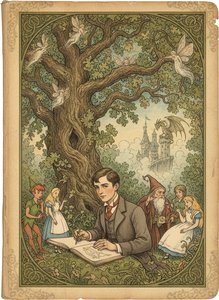
Arthur Rackham: A Master of British Illustration & the Enchanted Realm of Fairy Tales
Explore the enchanting world of Arthur Rackham (1867-1939), a leading figure in British Golden Age illustration. Discover his iconic fairy tale art, classic book illustrations & lasting legacy. Learn more at OriginalUniqueArt.
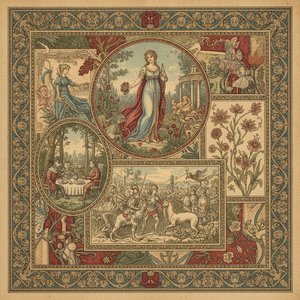
Victorian Illustration: The Golden Age of Narrative Art and Intricate Detail
Explore the exquisite world of Victorian Illustration. Discover the masters of the Golden Age, from Arthur Rackham to Edmund Dulac, through an in-depth historical journey into the era's unparalleled detail and narrative artistry.

Angelo Chiacchio: A Mid-Century American Illustration Master & the Rise of Commercial Art
Explore the captivating world of Angelo Chiacchio, a master of mid-century American illustration. Discover his evolution, signature style, and lasting impact on commercial art & design. Learn about his legacy at the Museum of American Illustration.
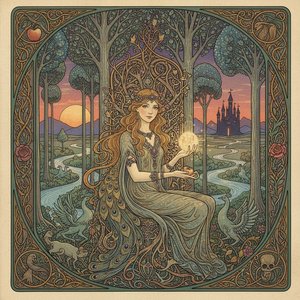
Kay Rasmus Nielsen: A Golden Age Illustrator's Enchanting Legacy of Symbolism & Narrative
Explore the captivating world of Kay Rasmus Nielsen, a celebrated Golden Age illustrator renowned for his Art Nouveau fairy tale art & Disney contributions. Discover his unique style, enduring legacy, and how to collect his enchanting works.
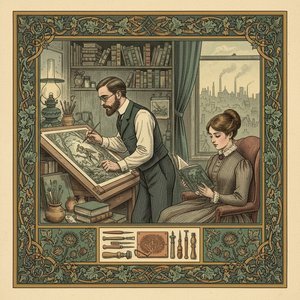
The Refined Aesthetic of Victorian Illustration: A Study in Narrative & Technique
Explore the captivating world of Victorian illustration! Discover Pre-Raphaelite influences, key artists like Rossetti & Stephens, and the era's rich narrative detail. A deep dive for art enthusiasts.


