

 Preview
 Send
Send Share
Share
 Details
 Guide
Guide

 Download
 Similars
 X-Ray
X-Ray Diaporama
 Stats
StatsOn the Cliffs
 Oil On Canvas
- WallArt
- Impressionism
 1898
1898- 19th Century
 56.0 x 43.0 cm
 Smithsonian American Art Museum
 Read More
Giclée / Art Print
Museum-quality giclée or canvas print with fast production and flexible finish options. ( Buy Hand Made Painting Switch to Digital Image)




P118B $10

P118H $10

P118W $10

P438Z $10

P508JH $12

P508YH $12

P805H $10

P805Z $10

P919BZ $10

P919G $10

P919XJ $10

P959ZH $10

P968JZ $12

W106C $8

W218G $10

W218JH $8

W218Y $10

W307PJ $10

W316G $10

W316PJ $8

W316Y $10

W398PJ $8

W4111J $10

W500HY $15

W500JH $15

W692G $12

W849H $8

W940BG $15

W953PJ $8




Pick from our preset sizes that match the artwork's original proportions.

You may enter your own dimensions to fit a specific frame or space. If your selected size does not match the original image's proportions, we will either crop the artwork or extend the image with a mirrored or solid-fill edge. A digital mockup will be sent for your approval before production begins.
Please note that the on-screen preview does not reflect the actual cropping or extension. Only the mockup will accurately show the final composition.
While custom sizes are available, we recommend selecting a dimension from the predefined list to preserve the original proportions.
Worldwide Delivery () in 2 weeks instead of standard 4/5 weeks. (26 September)

Free Worldwide Express Shipping

High-Quality Linen Canvas

Full Shipping Insurance

Customs Tax Refund Guarantee

True Color Matching Guarantee

100-Day Return Policy (Defects Only)

100% Money-Back Guarantee

Bulk Discount Offer
 Glass option is only available in size under 110 CM

On the Cliffs
Giclée / Art Print
Reproduction Size
-


Total Price
$ 81
A Symphony of Light and Myth: Rediscovering Arthur B. Davies
In the quiet transition between the nineteenth and twentieth centuries, few artists captured the ethereal boundary between reality and dream as poignantly as Arthur Bowen Davies. His 1898 masterpiece, On the Cliffs, serves as a breathtaking window into an era where American landscape painting began to shed its rigid academic skin to embrace the fluid, emotive possibilities of Impressionism and Symbolism. At first glance, the viewer is greeted by a sweeping coastal vista, yet as the eyes linger, the scene reveals itself to be much more than a mere topographical study. It is a profound dialogue between the physical world and the human spirit, rendered with a delicate touch that suggests the fleeting nature of memory itself.
The composition is anchored by a sense of vertical grandeur, dominated by a towering, ancient tree that stands as a silent sentinel on the right side of the canvas. Through this arboreal presence, Davies guides our gaze across a landscape where mountains dissolve into layers of hazy blue and soft grey, receding into an infinite distance. A winding river carves its way through the valley below, acting as a silver thread that connects the rugged foreground to the misty horizon. The integration of nude female figures within this wild, natural setting elevates the work from a simple landscape to a classical allegory. These figures do not appear as intruders upon the land, but rather as organic extensions of it, embodying a primordial harmony between humanity and the untamed beauty of the earth.
The Mastery of Atmosphere and Technique
To behold On the Cliffs is to experience the tactile magic of oil on canvas. Davies employs a technique that leans heavily into the Impressionist tradition, utilizing loose, rhythmic brushstrokes that prioritize the sensation of light over the precision of line. There are no harsh boundaries here; instead, forms emerge from soft tonal gradations and blended pigments. The artist skillfully manipulates texture to create a sensory feast—the rough, weathered bark of the foreground tree provides a striking contrast to the smooth, luminous sky and the glass-like surface of the distant water. This interplay of textures enhances the painting's depth, pulling the viewer into a world that feels both tangible and otherworldly.
The color palette is a masterclass in subtlety, dominated by muted greens, deep blues, and earthy browns. These tones work in concert to evoke a tranquil, perhaps even slightly melancholic, atmosphere, reminiscent of an overcast day by the sea where the air is thick with salt and mist. This deliberate use of color avoids the jarring brilliance of high Impressionism, opting instead for a Symbolist depth that invites introspection. The soft, diffused lighting eliminates harsh shadows, bathing the entire scene in a gentle, pearlescent glow that softens the edges of reality and allows the imagination to wander through the landscape's many mysteries.
An Eternal Inspiration for the Modern Collector
For the discerning collector or interior designer, On the Cliffs offers much more than aesthetic beauty; it provides a focal point of profound emotional resonance. The painting’s ability to evoke themes of classical mythology and the eternal connection to nature makes it a timeless addition to any curated space. Whether placed in a sunlit gallery or a sophisticated study, the artwork brings with it an aura of serenity and intellectual depth. It is a piece that rewards repeated viewing, revealing new nuances of light and shadow with every encounter.
Investing in a high-quality reproduction of this Davies masterpiece allows one to bring this fragment of American art history into the contemporary home. It serves as a bridge between the historical grandeur of the Hudson River School influences and the avant-garde spirit of early Modernism. As a decorative element, it introduces a sense of movement, peace, and classical elegance, making it an ideal choice for those seeking to inspire wonder and contemplation within their living environments.
Artist Biography
A Mystic in the Modern Age: The Life and Art of Arthur B. Davies
Arthur Bowen Davies, born in Utica, New York, in 1862, occupies a uniquely complex position within the narrative of American art. He wasn’t simply *of* his time—the tumultuous era bridging the 19th and 20th centuries—but actively shaped it, serving as both a conduit for European modernism and a champion of distinctly American artistic voices. His journey began with an early fascination for landscape painting, sparked by a touring exhibition that showcased the works of George Inness and the Hudson River School masters. This initial exposure instilled in him a reverence for nature’s beauty and a technical proficiency that would remain hallmarks of his style throughout his career. However, Davies wasn't destined to become merely another practitioner of traditional landscape; he possessed an inner vision, a yearning to express something beyond the purely representational. After studies at the Chicago Academy of Design and the Art Students League in New York, he began to forge a path that blended romantic sensibilities with emerging modernist ideals. His early career involved illustration work, but his true calling lay in painting—in creating worlds imbued with symbolism and emotional resonance.The Ashcan School & The Armory Show: A Catalyst for Change
Davies’s artistic development unfolded against a backdrop of significant social and cultural shifts. He became associated with “The Eight,” a group of artists who challenged the conservative norms of the National Academy of Design in 1908. While often linked to the Ashcan School—a movement known for its gritty depictions of urban life—Davies stood somewhat apart. Where artists like John Sloan focused on the raw realities of city streets, Davies sought refuge in a more ethereal realm. His paintings weren't about documenting the visible world; they were about evoking moods, dreams, and spiritual longings. Nevertheless, his involvement with The Eight demonstrated his commitment to artistic independence and his willingness to challenge established conventions. This spirit of rebellion culminated in his pivotal role as one of the organizers of the 1913 Armory Show—a watershed moment that introduced European modernism (Cubism, Fauvism, Futurism) to a largely unsuspecting American public. The show was met with both outrage and excitement, irrevocably altering the course of American art history. Davies’s contribution wasn't merely logistical; he possessed an exceptional understanding of contemporary artistic trends and a keen eye for talent, making him instrumental in selecting the works exhibited. He understood that art needed to reflect the changing world, even if that meant embracing radical new forms.A Language of Symbolism & Ethereal Visions
Davies’s mature style is characterized by its lyrical quality, delicate brushwork, and evocative use of color. His paintings often feature figures—often women or mythological beings—immersed in dreamlike landscapes. These aren't portraits in the traditional sense; they are archetypal representations of human emotions and spiritual states. Unicorns: Legend, Sea Calm, perhaps his most famous work, exemplifies this approach. The painting depicts a group of ethereal figures frolicking with unicorns on a tranquil shore—a scene that is both enchanting and deeply symbolic. His works frequently explore themes of longing, loss, and the search for transcendence. He wasn’t interested in depicting reality as it *is*, but rather as it *feels*. This emphasis on subjective experience aligns him with Symbolist painters like Odilon Redon and Pierre Puvis de Chavannes, artists who sought to express inner truths through evocative imagery. Davies's palette is often muted and harmonious, creating a sense of atmosphere and mystery. He masterfully employed techniques such as glazing and scumbling to achieve luminous effects and subtle gradations of tone. His art invites contemplation, urging viewers to look beyond the surface and delve into the realm of the imagination.Contradictions & Legacy
The life of Arthur B. Davies was marked by contradictions. While publicly advocating for artistic freedom and innovation, he maintained a relatively conservative personal life—at least, the one presented to the world. The revelation after his death in Florence, Italy, in 1928, that he had lived a double life with two families—Virginia Meriwether Davies, whom he married in 1892, and Edna—shocked the art community. This hidden aspect of his biography adds another layer of complexity to his artistic persona. Despite this personal turmoil, or perhaps because of it, Davies left an indelible mark on American art. He was a pivotal figure in the development of American modernism, bridging the gap between traditional aesthetics and avant-garde experimentation. His influence can be seen in the work of subsequent generations of artists who continued to explore themes of spirituality, symbolism, and emotional expression.- He remains a testament to the power of art to transcend boundaries—both artistic and personal.
- His paintings continue to resonate with viewers seeking beauty, mystery, and a glimpse into the hidden depths of the human soul.

Arthur B. Davies
1862 - 1928 , United States of America
Quick Facts
- Artistic Movement Or Style: Modernism, Symbolism
- Artists Or Movements Influenced By This Artist:
- American Modernism
- Ashcan School
- Artists Who Influenced This Artist:
- George Inness
- Corot
- Millet
- Date Of Birth: 1862
- Date Of Death: 1928
- Full Name: Arthur Bowen Davies
- Nationality: American
- Notable Artworks: ['Unicorns: Legend, Sea Calm']
- Place Of Birth: Utica, USA
Related Articles

Romantic Landscapes: 10 Masterpieces for Your Home | OriginalUniqueArt
Journey through 10 Romantic landscape masterpieces by Friedrich, Turner & Cole. Explore emotional art, sublime nature scenes & iconic 19th-century paintings. Find museum-quality reproductions for your home at OriginalUniqueArt.com – discover the full collection online!
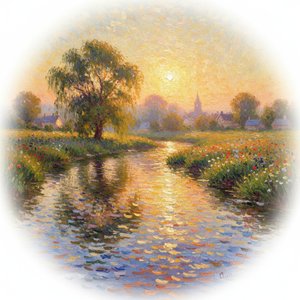
Capturing Light: A Masterclass in the Ethereal Beauty of Impressionistic Landscapes
Explore the ethereal beauty of Impressionist landscapes. Discover how masters like Monet captured fleeting light through color and texture, and learn to curate these timeless, luminous masterpieces for your home collection.

Impressionistic Landscapes: 10 Masterpieces That Changed Art & Decor
Journey into the heart of Impressionism! Explore 10 masterpieces by Monet, Renoir & Degas that revolutionized landscape art. Discover their stories, techniques & find museum-quality reproductions to elevate your home decor on OriginalUniqueArt.com.

Impressionist Landscapes: 10 Masterpieces for Your Home | OriginalUniqueArt
Journey through 10 iconic Impressionist landscapes by Monet, Renoir & Degas. Explore the history, techniques & emotions behind these masterpieces. Find museum-quality reproductions for your home at OriginalUniqueArt.com – where art comes to life! Discover all masterpieces on OriginalUniqueArt.com

Evocations of Place: A Historical Journey Through Landscape Art
Explore the rich history of landscape art with OriginalUniqueArt. Discover renowned artists, movements like Impressionism & Romanticism, and expert guidance for collecting timeless pieces. Find your perfect serene escape today!


